Ezra Huston
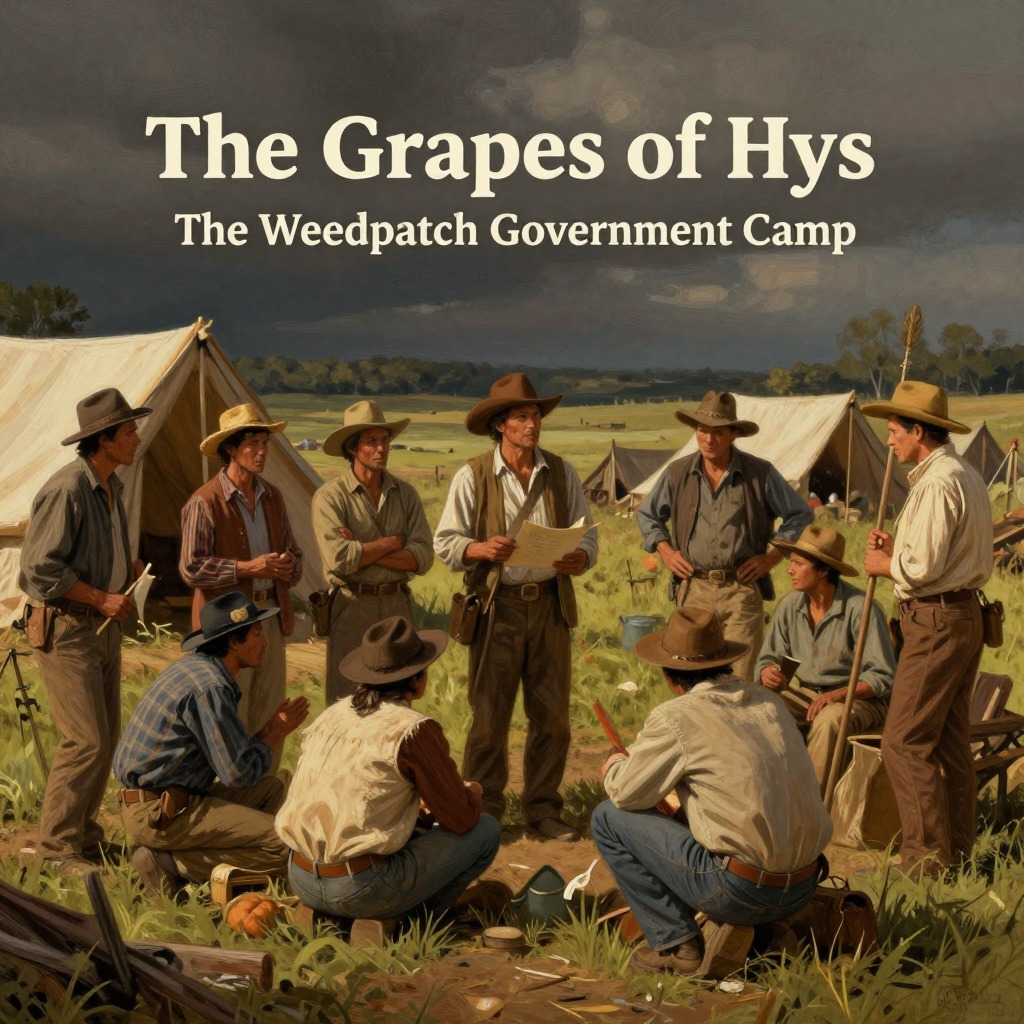
Ezra Huston, the chairman of the Central Committee at the Weedpatch government camp, embodies the camp's principle of democratic self-rule. A tall, spare man with wind-blackened skin and eyes like little blades, Huston is the calm, authoritative center around which the camp's internal order revolves. He is responsible for the welfare of the entire community and for protecting its fragile autonomy from the hostile forces of the surrounding agricultural establishment.
Role and Authority in the Camp
Huston is the chairman of the Central Committee, a governing body composed of one representative from each of the camp's five sanitary units. The committee makes the laws for the camp, and its authority is absolute within the fence. Huston takes this responsibility seriously, stating, "All them people. We're doin' our best." He understands that the camp's existence is a direct challenge to the power of the large farmers and the local law enforcement, who cannot send deputies inside without a warrant. The camp's success, he knows, breeds resentment: "They're scairt we'll organize, I guess. An' maybe they're right. This here camp is a organization." Huston's leadership is not dictatorial; he works through the committee, listening to reports from its members, such as the tubby representative from Unit Three who recounts a women's garbage fight that the Ladies' Committee could not handle. Huston approves of the decision to keep such matters at the unit level, saying, "You done good."
Orchestrating the Defense of the Dance
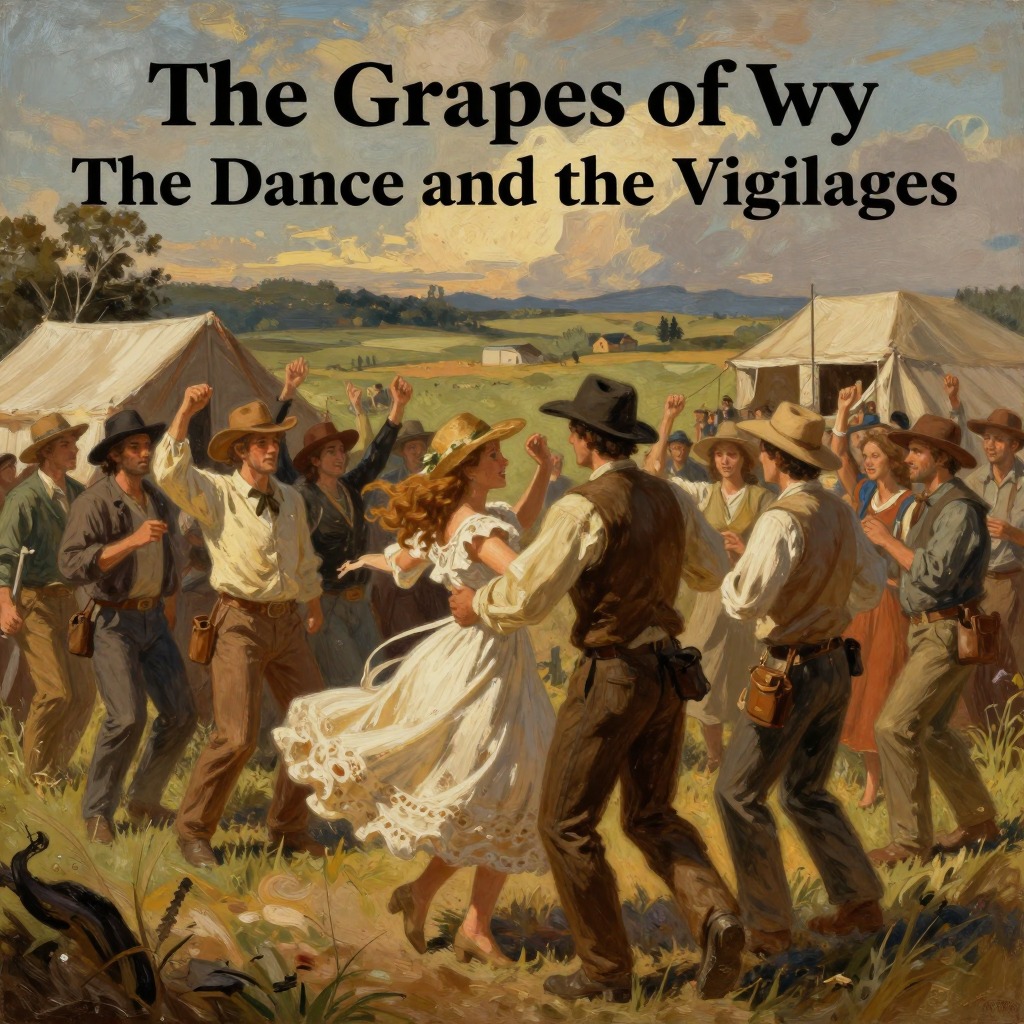
When Huston learns through a tip from a sympathetic small farmer, Mr. Thomas, that the Farmers' Association plans to provoke a fight at the Saturday night dance in order to justify a police raid, he takes immediate and decisive action. He calls a meeting of the Central Committee, where he lays out the threat: "It's goddamn lucky we got the word they was gonna try to bust up the dance!" He rejects the idea of a violent confrontation, understanding that a fight is exactly what the provocateurs want. "That's what they want. No, sir. If they can git a fight goin', then they can run in the cops an' say we ain't orderly." Instead, he devises a plan of nonviolent containment. He summons Willie Eaton, the chairman of the Entertainment Committee, and instructs him to use a team of twenty strong men to quietly isolate and eject any troublemakers. Huston gives explicit orders: "Don't you let nothing happen, Willie. Don' you hurt them fellas. Don' you use no stick nor no knife or arn, or nothing like that." He worries about Willie's reliability, asking, "I wisht I knowed I could trus' you, Willie. If you got to sock 'em, sock 'em where they won't bleed." When a boy reports that cars full of armed men are waiting outside the camp, Huston's eyes grow "hard and cruel," but he maintains his strategy of restraint, asking Willie, "you sure you got ever'thing ready?" and reminding him, "Don't hurt 'em." After the three provocateurs are successfully and bloodlessly ejected, Huston confronts them. He does not rage but speaks with a sad authority, asking, "What did you wanta do it for?" and then, more pointedly, "Who sent you? Who paid you to come?" When they refuse to answer, he delivers a quiet but powerful rebuke: "Don't knife your own folks. We're tryin' to get along, havin' fun an' keepin' order. Don't tear all that down. Jes' think about it. You're jes' harmin' yourself." He then orders the men released unharmed, telling his squad, "put 'em over the back fence. An' don't hurt 'em. They don't know what they're doin'."
Significance and Thematic Role
Ezra Huston is a crucial figure in the novel's political argument. He demonstrates that the migrant people are capable of self-government and order without the oppressive hand of the state or the violence of vigilantes. His leadership at the dance is a microcosm of the larger social transformation Steinbeck envisions: the shift from the isolated "I" to the collective "we." Huston's authority is not based on force but on the consent of the governed, and his success in protecting the camp proves that the migrants can create a just and functional society from the ground up. He represents the hope that organization and solidarity can prevail over the brute force of the landowners and their deputies.