Jule Vitela
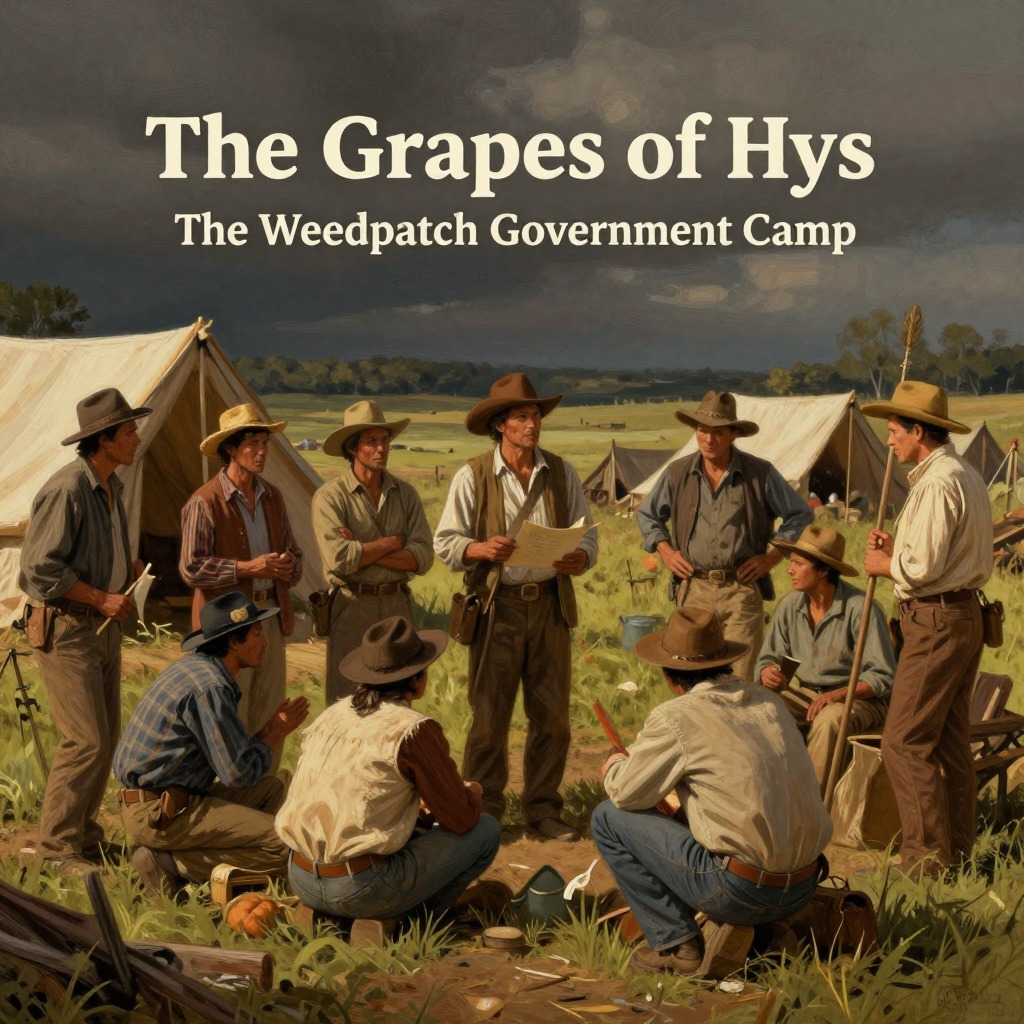
Jule Vitela is a minor but sharply drawn figure in the Weedpatch government camp, a half-Cherokee migrant whose hawk nose, high brown cheekbones, and slender receding chin mark him as visibly Native American. He is a quiet, watchful man, and his mixed heritage gives him a particular alertness that the camp's Central Committee values. When the committee learns that outside agents plan to start a fight at the Saturday night dance so that deputies can raid the camp, Jule is assigned to the gate to help spot the troublemakers as they arrive.
Identity and Background
Jule Vitela is introduced as a half-Cherokee man with a hawk nose, high brown cheekbones, and a slender receding chin. When Tom Joad first meets him at the gate, Tom remarks, "They says you're half Injun. You look all Injun to me." Jule replies, "No, Jus' half. Wisht I was a full-blood. I'd have my lan' on the reservation. Them full-bloods got it pretty nice, some of 'em." This brief exchange reveals both his pride in his heritage and his awareness that full-blooded Cherokee people on reservations have a measure of security that mixed-blood migrants like him lack. He carries himself with a quiet dignity, and his instincts are trusted by the camp's leadership.
Role in the Camp and the Dance Defense
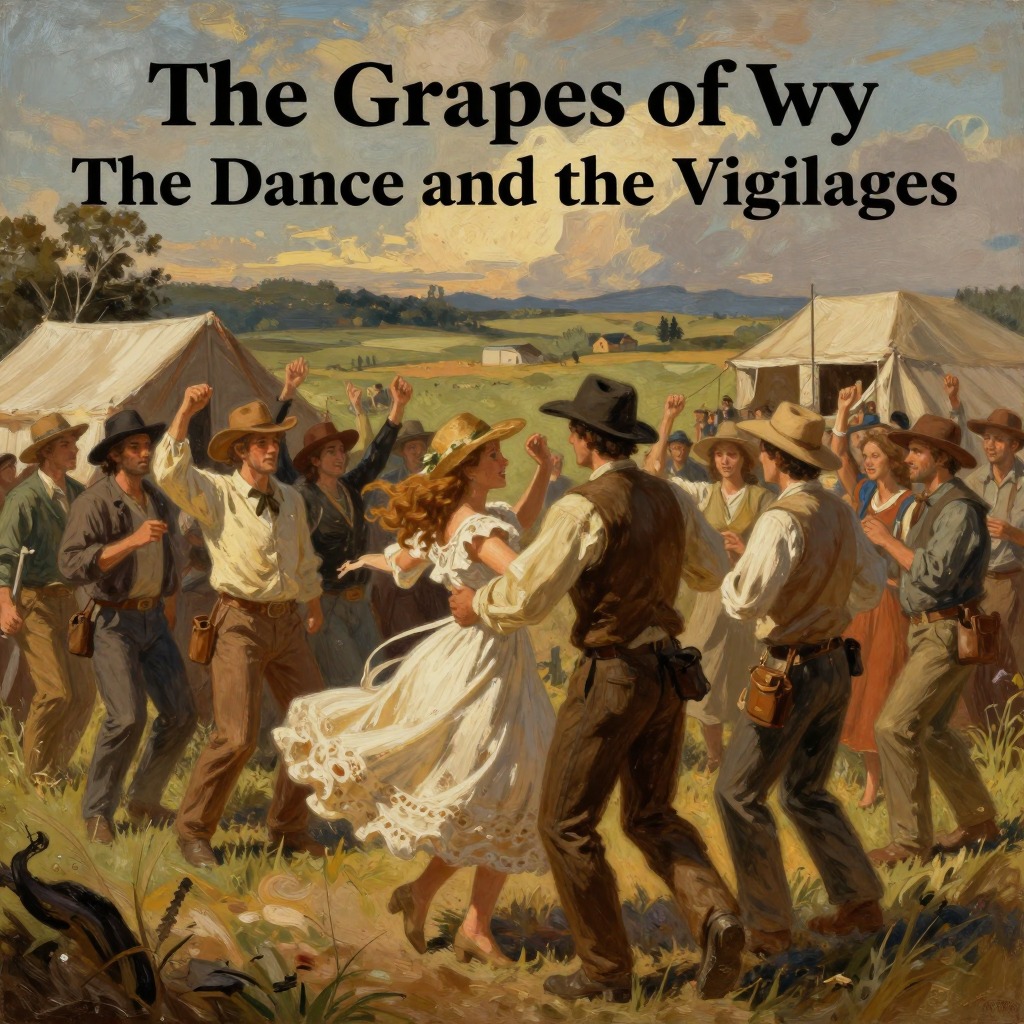
Jule is a member of the Entertainment Committee, which is chaired by Willie Eaton. When the Central Committee learns that the Farmers' Association plans to send men to start a fight at the Saturday night dance, Willie Eaton organizes a squad of twenty strong young men to patrol the floor and quietly eject any troublemakers. Jule is stationed at the gate alongside Tom Joad to scrutinize incoming guests. His Cherokee blood is credited with giving him an almost preternatural ability to sense danger. When three young men enter the gate claiming to have been invited by a camper named Jackson, Jule immediately tells Tom, "I think them's our fellas." Tom asks how he knows, and Jule replies, "I dunno how. Jes' got a feelin'. They're kinda scared." He instructs Tom to follow them and alert Willie, while he stays at the gate. Later, when the three are confirmed as the provocateurs, Willie Eaton says, "Hell, no wonder," and adds, "His Injun blood smelled 'em." Jule's instinct proves correct, and the squad moves in to surround the three men before they can start a fight.
Key Actions and Objectives
Jule's primary objective is to protect the camp's autonomy and the safety of its residents. When the three provocateurs are captured and brought before Ezra Huston, Jule pleads with Willie Eaton, "Le's jes' take one good kick at 'em." Willie refuses, insisting they will not mark the men. Jule persists: "Jes' one nice little kick. Jes' loft 'em over the fence." But Willie holds firm, and the men are escorted to the back fence and released unharmed. Jule's desire for a more violent resolution reflects the anger and frustration that many migrants feel toward those who betray their own people for money, but he ultimately submits to the committee's discipline.
Relationships and Conflict
Jule's relationship with Tom Joad is one of mutual respect. They work together at the gate and later sit together on the edge of the dance floor, sharing a sack of Durham tobacco. Jule offers Tom a smoke, saying, "I got a sack of Durham. Like a smoke?" Tom accepts gratefully, noting he hasn't had a smoke in a long time. In their conversation, Jule reveals his deep worry about his young daughter. "I got a little girl. Thought when I come out here she'd get some schoolin'. But hell, we ain't in one place hardly long enough. Jes' gits goin' an' we got to drag on." He speaks of her beauty—"One week they give her a prize in this camp 'cause she's so purty"—and his fear that she is growing spindly from hunger. "I ain't gonna stan' it. She's so purty. I'm gonna bust out." When Willie asks what he will do—steal and go to jail, or kill and be hanged—Jule admits, "I don' know. Gits me nuts thinkin' about it. Gits me clear nuts." This confession reveals the desperation that underlies his quiet exterior, a desperation shared by many migrant fathers.
Change and Ending
Jule does not undergo a dramatic transformation in the novel. He remains a watchful, competent, and deeply worried man. His role in the dance defense is successful, and the camp is saved from a violent raid. But his personal situation—no steady work, a hungry child, constant movement—remains unchanged. When Tom Joad says goodbye before the Joads leave the camp, Jule shakes his hand and says, "Sure will." He stays behind in the Weedpatch camp, still searching for a way to feed his family and still hoping for a better future for his daughter.
Narrative Role and Evaluation
Jule Vitela serves as a representative figure of the Cherokee and mixed-blood migrants who were part of the Dust Bowl exodus, a group often overlooked in the novel's focus on white Okies. His sharp instincts and quiet competence make him an effective member of the camp's self-governing system, and his brief appearance underscores the novel's theme that the migrants, when allowed to organize themselves, can maintain order more effectively than any outside authority. His worry for his daughter echoes the larger anxiety of all migrant parents, and his restrained anger hints at the potential for violence that simmers beneath the surface of the dispossessed. He is a minor character, but his presence adds depth and diversity to the portrait of the migrant community.