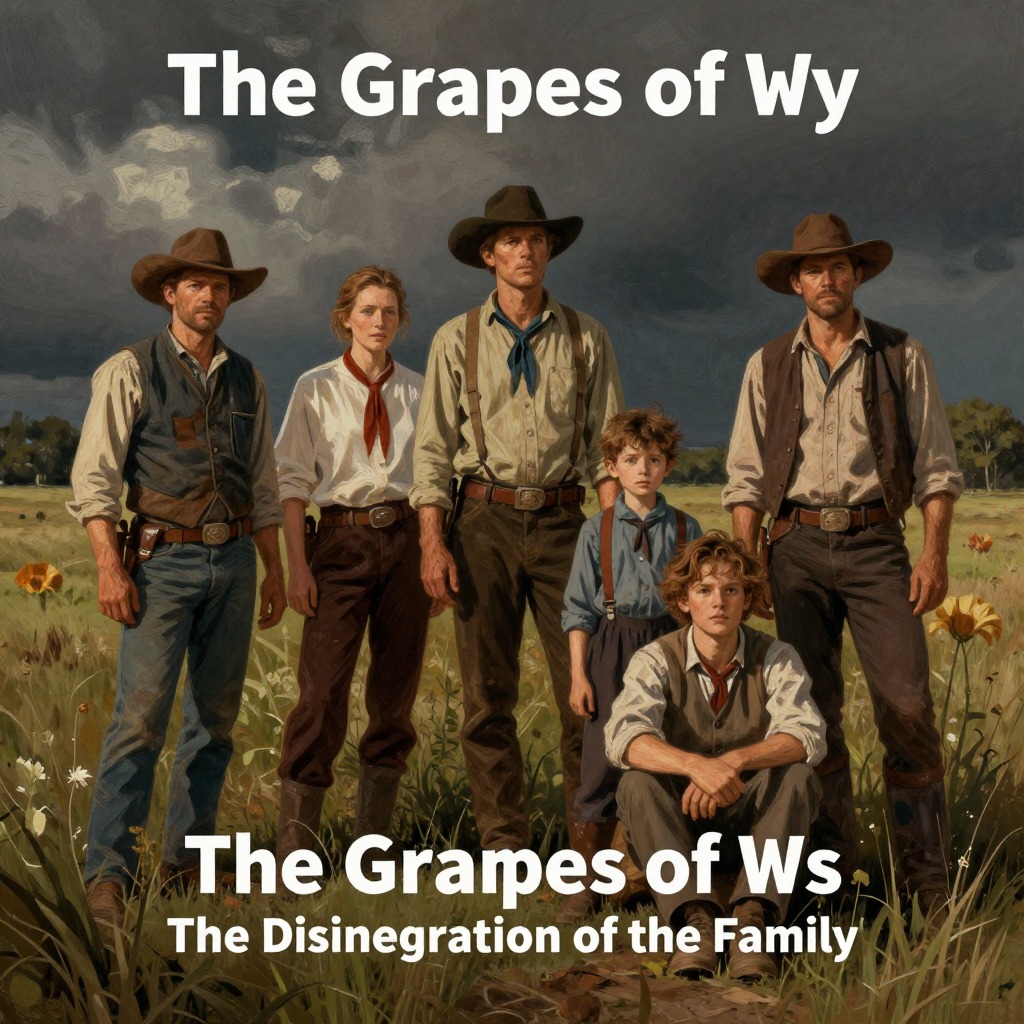
Mr. Wainwright
Mr. Wainwright is a minor but significant character in the latter part of The Grapes of Wrath, representing the quiet dignity and practical anxieties of the migrant families who, like the Joads, struggle to maintain their moral codes and family structures in the face of economic collapse and social displacement. He is the father of Aggie Wainwright and the husband of Mrs. Wainwright, and his primary narrative function revolves around his concern for his daughter's reputation and future, which leads him to seek a formal understanding with the Joads regarding the relationship between Aggie and Al Joad. His character embodies the tension between traditional values of family honor and the harsh, destabilizing realities of migrant life.
Appearance and Demeanor
Mr. Wainwright is described as an elderly man with a delicately chiseled face, deep-set eyes under prominent brows, and blue-white, fine hair. A patina of silver beard covers his jaws and chin, giving him an appearance of age and weariness. His demeanor is earnest and anxious, driven by a deep-seated fear of shame and a desire to protect his family's standing. He approaches the Joads not with anger but with a quiet, respectful plea, revealing a man who is both proud and vulnerable.
The Embassy to the Joads
Mr. Wainwright's most significant action is his visit to the Joads' end of the boxcar to discuss his daughter Aggie's relationship with Al Joad. He comes to Pa and Ma Joad with a worry that has been troubling him and his wife. He explains that Aggie, a big girl of nearly sixteen, and Al have been walking out every night. He states plainly that Aggie is a good, healthy girl who ought to have a husband, else she might get in trouble. He emphasizes that his family has never had any shame, and the prospect of Aggie getting into trouble now, given their poverty, is a source of great anxiety. He does not complain about Al as a person, saying they like him, but he is scared by the possibility that the families might separate and Aggie could be left in trouble. His plea is for the Joads to help keep shame from his family, acknowledging that it is not Aggie's fault but that she is simply grown up. This direct, humble request demonstrates his adherence to traditional codes of family honor and his reliance on communal responsibility in a world where formal institutions offer no safety net.
Role in the Flood and Aftermath
During the catastrophic flood that threatens the boxcar camp, Mr. Wainwright is initially hesitant about the Joads' plan to build a levee. When Pa Joad proposes that everyone help throw up a bank to keep the rising water out, Mr. Wainwright expresses doubt, saying they were just talking about getting out of there. He acknowledges the difficulty of finding another dry place but remains uncertain. His reluctance highlights the exhaustion and despair that pervades the camp, where even the effort to fight the flood seems futile. However, he and his family remain with the Joads, sharing the same space and fate. After the stillbirth of Rose of Sharon's baby, it is Mrs. Wainwright who takes charge, helping Ma with the birth and later suggesting that the dead infant be buried to avoid causing more sorrow. Mr. Wainwright's presence in the background during these events underscores the shared burden of the migrant community, where even a minor character like him is part of the collective struggle for survival and dignity.
Thematic Significance
Mr. Wainwright's character serves as a foil to the Joads, illustrating that the pressures of displacement affect all migrant families in similar ways. His primary concern—his daughter's sexual purity and the family's honor—reflects a traditional, patriarchal value system that is under immense strain. His willingness to approach the Joads directly and ask for their help in safeguarding his family's reputation shows that even in the breakdown of social order, a code of mutual responsibility and respect persists among the displaced. His quiet dignity and his family's integration with the Joads during the flood and its aftermath reinforce the novel's central theme that survival depends on solidarity and the willingness to share burdens, even when personal resources are exhausted.