Timothy Wallace
Timothy Wallace, a lean, wind-blackened farmer from near Galena, Kansas, arrives in California with his son Wilkie and their family, carrying the same desperate hope as the Joads. He and his son are among the first people the Joads meet at the Weedpatch government camp, and their immediate, unforced hospitality—sharing breakfast with Tom Joad before he has even introduced himself—establishes the camp's ethos of mutual aid. Wallace is a man whose weathered face and quiet dignity mask a deep, simmering anger at the system that has stripped him of his livelihood and his independence.
Identity and Background
Timothy Wallace is introduced as a man of few words but sharp observation. When Tom Joad first encounters him and his son at dawn, they are dressed in stiff new blue dungarees, the first new clothes they have owned in twelve days of steady work. This detail is a point of quiet pride for the family, a tangible reward for labor. Wallace's background is that of a small farmer who, like the Joads, was forced off his land. He reveals the brutal economics of the migrant trail when he tells Tom how he lost his car: "We sol’ our car. Had to. Run outa food, run outa ever’thing. . . . Give us ten dollars for her." Later, in Bakersfield, Wilkie sees the same car on a used-car lot with a seventy-five-dollar price tag. This experience of being cheated by hunger has left Wallace with a bitter, clear-eyed understanding of the system that exploits the desperate.
Role in the Weedpatch Camp and the Central Committee
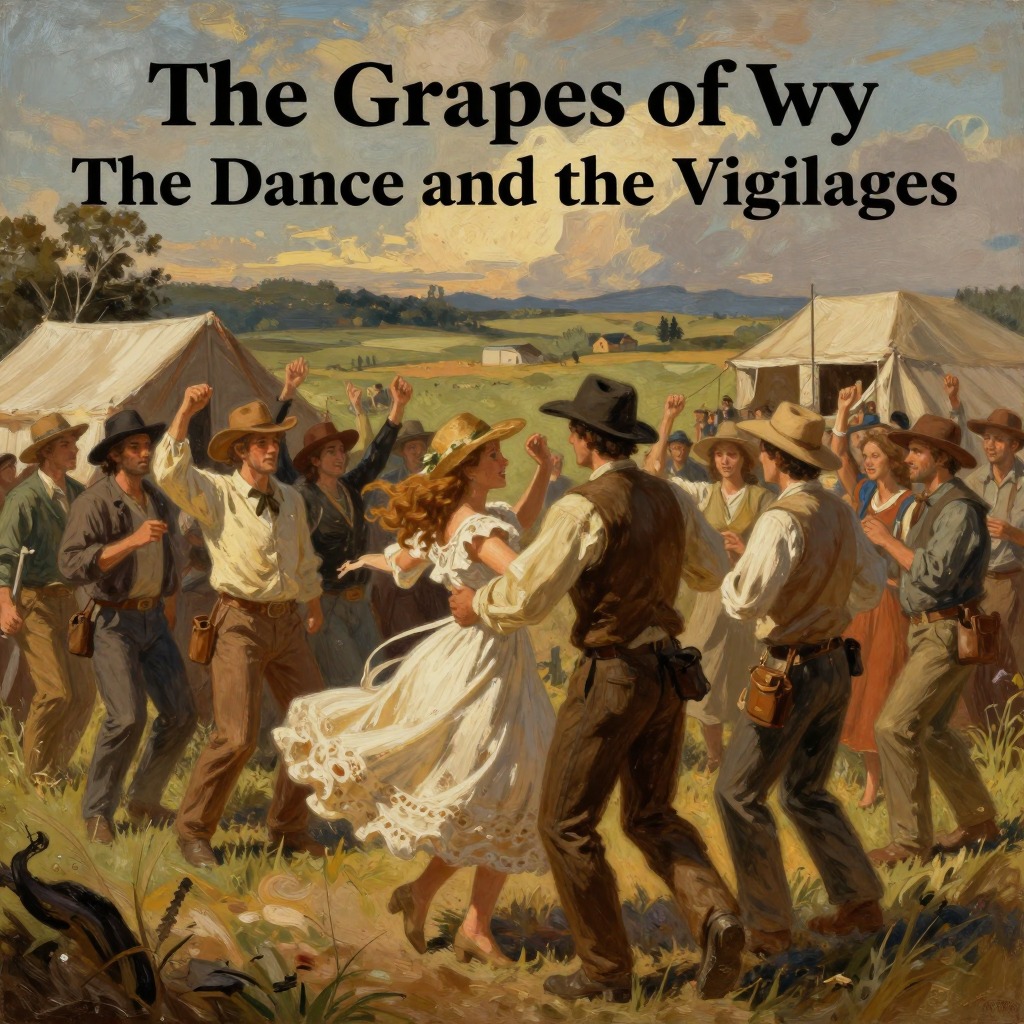
Wallace is not merely a resident of the Weedpatch camp; he is a leader. He serves on the camp's Central Committee, the elected body of migrants that governs the community. This role gives him a profound sense of responsibility for the welfare of the hundreds of people living there. When Tom asks about the committee, Wallace explains its function with a gravity that reflects the weight of the position: "Yes, sir. And it’s a responsibility. All them people. We’re doin’ our best." His leadership is tested when he learns from Mr. Thomas, the farmer for whom he works, that the Farmers' Association plans to provoke a fight at the camp's Saturday night dance, providing a pretext for deputies to raid and shut it down. Wallace immediately takes the information to the committee chairman, Ezra Huston, demonstrating his loyalty to the camp's self-governance over any individual interest. He is a key figure in the quiet, organized resistance that prevents the provocation from succeeding.
Work and Economic Struggle
Wallace's life is a constant, grinding struggle for survival. He works for Mr. Thomas, a small farmer who is himself trapped by the Bank of the West. When Thomas is forced to cut wages from thirty cents to twenty-five cents an hour, Wallace accepts the cut without protest, but his acceptance is laced with a weary understanding of the larger forces at play. He explains the cynical logic of the handbills that lure migrants west: they are designed to create a labor surplus, driving wages down. His own experience confirms this; he has scoured the country for work and found only scarcity. Despite his own hardship, he tries to get Tom Joad hired on the same job, an act of solidarity that Mr. Thomas sarcastically notes will only shorten the work for everyone. Wallace's reply is a simple, almost fatalistic statement of his character: "I dunno. Got no sense, I guess."
Thematic Significance
Timothy Wallace represents the best of the migrant spirit: the capacity for cooperation, the maintenance of dignity in the face of degradation, and the quiet, stubborn refusal to be broken. His story of the stolen car is a microcosm of the larger theft of the migrants' lives and labor. His role on the Central Committee shows that the displaced people are capable of governing themselves with more justice and humanity than the system that oppresses them. He is a man who has lost everything—his farm, his car, his security—but has not lost his sense of community or his will to help his fellow man. In the novel's moral landscape, Wallace is a figure of quiet heroism, a testament to the idea that the people themselves, when they stick together, are the only reliable source of salvation.