Jay Gatsby
Jay Gatsby, born James Gatz, is the central figure of F. Scott Fitzgerald's novel, a self-invented millionaire whose entire existence is a monument to a single, consuming dream: the recapture of Daisy Buchanan. His story, narrated by his neighbor Nick Carraway, is a profound exploration of the American Dream, the corrupting power of wealth, and the impossibility of repeating the past. Gatsby's lavish parties, his mysterious fortune, and his tragic end all serve as a powerful indictment of the Jazz Age's glittering surface and its hollow core.
Identity and Background
Gatsby was not born into wealth. He was originally James Gatz, the son of "shiftless and unsuccessful farm people" from North Dakota. His imagination never truly accepted them as his parents; instead, he sprang from a "Platonic conception of himself," inventing the persona of Jay Gatsby at the age of seventeen. The moment of his transformation occurred when he saw Dan Cody's yacht drop anchor on Lake Superior. Borrowing a rowboat, the young James Gatz introduced himself as Jay Gatsby to the wealthy copper magnate, a man who would become his mentor for the next five years. Cody took Gatsby on as a personal assistant, and through this relationship, Gatsby learned the ways of the wealthy, though he ultimately lost the $25,000 Cody left him in his will to a newspaper woman named Ella Kaye. This early experience of being cheated out of a fortune shaped his later, more ruthless pursuit of wealth. His formal education was brief; he spent two weeks at St. Olaf College in Minnesota, working as a janitor, before dropping out. He later claimed to have been educated at Oxford, a statement that was partially true—he spent five months there after the war as part of a program for officers.
Life and Plot Trajectory
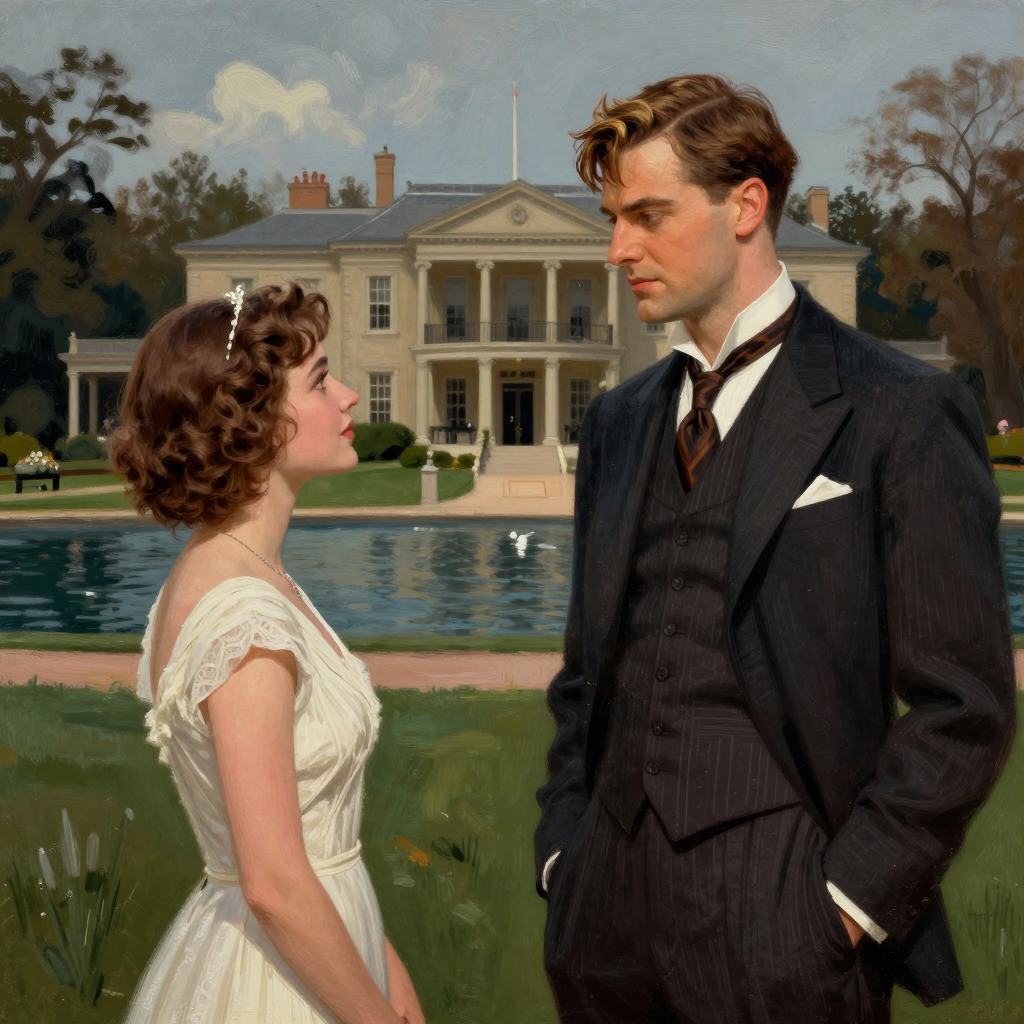
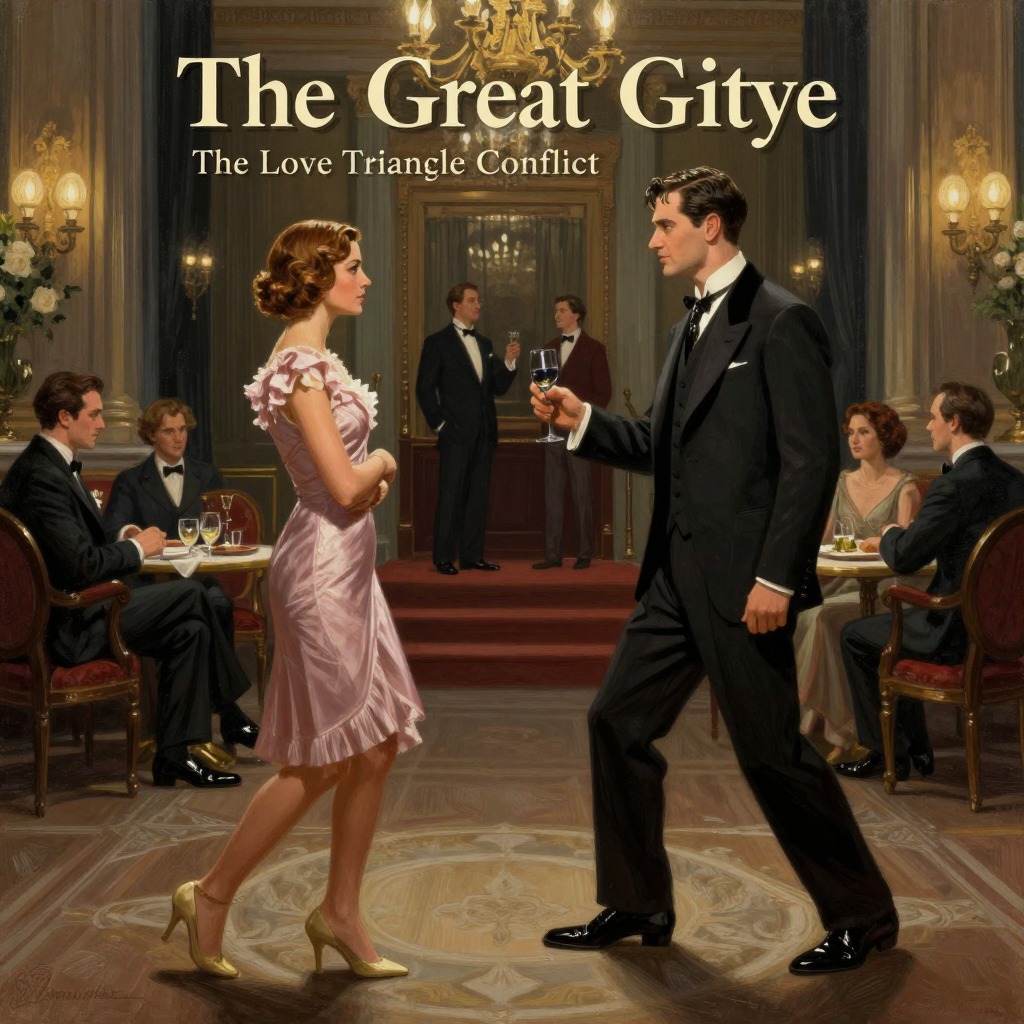
Gatsby's life is a relentless drive toward a single goal: Daisy Buchanan. He met her in 1917 in Louisville while stationed at Camp Taylor as a young officer. He fell deeply in love with her, but he was a penniless soldier, and she was a wealthy debutante. After he went to war, Daisy married Tom Buchanan, a decision that devastated Gatsby. He dedicated himself to becoming the kind of man she would have chosen. He entered the criminal underworld, becoming a bootlegger and associate of the gambler Meyer Wolfsheim, who "fixed the World's Series" in 1919. Gatsby amassed a vast fortune, buying a colossal mansion in West Egg, Long Island, directly across the bay from Daisy's home in East Egg. He threw extravagant parties every weekend, hoping she would wander in. When she did not, he orchestrated a meeting through Nick Carraway, Daisy's cousin and his neighbor. The reunion was initially awkward, but Gatsby's radiant hope soon rekindled their affair. He pressured Daisy to tell Tom she never loved him, leading to a tense confrontation at the Plaza Hotel. After the confrontation, Daisy, driving Gatsby's yellow car, accidentally struck and killed Myrtle Wilson, Tom's mistress. Gatsby resolved to take the blame, waiting outside the Buchanan mansion to protect Daisy. The next day, George Wilson, Myrtle's husband, believing Gatsby was the driver and Myrtle's lover, shot and killed Gatsby in his swimming pool before turning the gun on himself.
Key Actions and Objectives
Gatsby's primary objective is to erase the past five years and reclaim Daisy as if she had never married Tom. He tells Nick, "Can't repeat the past? Why of course you can!" This belief drives every action he takes. He buys a mansion specifically to be near her, saying he "read a Chicago paper for years just on the chance of catching a glimpse of Daisy's name." He throws his famous parties as a lure, and when that fails, he enlists Jordan Baker and Nick to arrange a private meeting. He meticulously prepares for their reunion, sending a man to cut Nick's grass and filling his house with flowers. He shows Daisy his vast collection of shirts, a display of wealth that moves her to tears. He wants nothing less than for Daisy to tell Tom she never loved him, believing that this single sentence can obliterate the past. His willingness to take the blame for Myrtle's death is the ultimate act of this devotion, a final, desperate attempt to secure Daisy's love and protect her from the consequences of their shared tragedy.
Relationships and Conflict
Gatsby's central relationship is with Daisy, a woman he has idealized into a symbol of everything he desires. Nick observes that Daisy's voice is "full of money," and Gatsby's love for her is inextricably linked to the wealth and social status she represents. His conflict with Tom Buchanan is a clash of old money versus new, of inherited privilege versus criminal ambition. Tom, a brutish and arrogant man, sees through Gatsby's facade, calling him a "common swindler" and exposing his bootlegging business. Gatsby's relationship with Meyer Wolfsheim is purely transactional, a partnership built on illegal enterprise. Wolfsheim, despite claiming to have "made" Gatsby, refuses to attend his funeral, adhering to his rule of non-involvement. Gatsby's only genuine friendship is with Nick Carraway, who, despite disapproving of Gatsby's methods and his criminality, becomes his sole advocate and the one who arranges his funeral. Nick is the only person who sees the "incorruptible dream" behind Gatsby's corrupt reality.
Change and Ending
Gatsby's arc is one of tragic disillusionment. The climax of his dream occurs during the confrontation at the Plaza Hotel, where Daisy admits she loved Tom once, shattering Gatsby's fantasy of a past that can be perfectly recreated. Nick notes that Gatsby's expression looked as if he had "killed a man," a moment of profound defeat. His death is the final, brutal extinguishing of his dream. He is shot by George Wilson while floating on a pneumatic mattress in his pool, a victim of his own misplaced faith and the careless cruelty of the Buchanans. His funeral is a stark contrast to his vibrant parties; almost no one attends. His father, Henry C. Gatz, arrives from Minnesota, bringing with him a copy of Hopalong Cassidy in which the young James Gatz had written a schedule for self-improvement, a poignant reminder of the boy who had dreamed of greatness. The owl-eyed man, a former party guest, is the only one who shows genuine grief, murmuring, "The poor son-of-a-bitch."
Narrative Role and Evaluation
Gatsby is the novel's tragic hero, a figure of immense romantic power and profound failure. He is a self-created myth, a man who built an empire of wealth on a foundation of lies and crime, all in service of a pure, incorruptible dream. Nick Carraway, the narrator, is both fascinated and repelled by him, ultimately concluding that Gatsby "turned out all right at the end" and that it was "what preyed on Gatsby, what foul dust floated in the wake of his dreams" that was truly contemptible. Gatsby's story is a cautionary tale about the American Dream, revealing how the pursuit of wealth and status can corrupt the very soul it seeks to elevate. He is a symbol of the Jazz Age's glittering excess and its underlying moral decay, a man who believed so fiercely in the "orgastic future" that he was destroyed by the past he tried so desperately to repeat. His final, haunting image—stretching his arms toward the green light at the end of Daisy's dock—encapsulates the eternal human longing for an unattainable ideal.