Bard
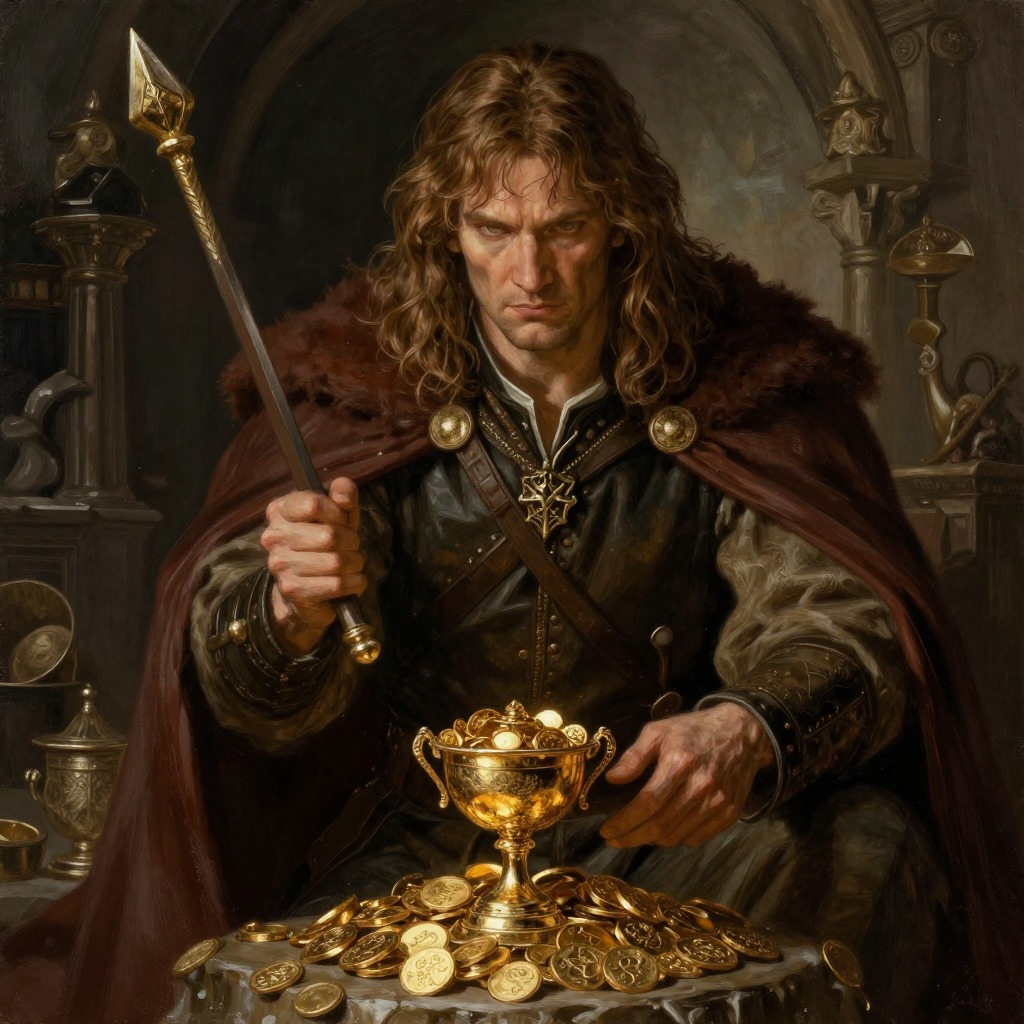
Bard is the grim-voiced and grim-faced bowman of Lake-town who, by killing the dragon Smaug with a single black arrow, becomes the central human figure in the final act of the quest for the Lonely Mountain. A descendant of Girion, the last Lord of Dale, Bard rises from a position of obscure courage to become the spokesman for the Lake-men and, ultimately, the rebuilder of Dale. His actions—from the desperate defense of Esgaroth to the tense parley at the Mountain's gate and his role in the Battle of Five Armies—define him as a figure of grim integrity, practical leadership, and a capacity for mercy that contrasts sharply with the dragon-sickness that afflicts others.
Identity and Background
Bard is introduced not by name but as "the grim-voiced man" who runs "hotfoot to the Master" when the first glow of Smaug's approach is mistaken for the return of the King under the Mountain. He is a descendant in a long line of Girion, Lord of Dale, whose wife and child escaped down the Running River from the ruin long ago. This lineage gives him a hereditary claim to the treasure hoard that Smaug stole, a claim he later presses against Thorin. His friends have accused him of "prophesying floods and poisoned fish," but they know "his worth and courage." He is a man apart from the Master's mercantile calculations, a warrior whose grimness is a mark of his clear-eyed realism.
The Slaying of Smaug
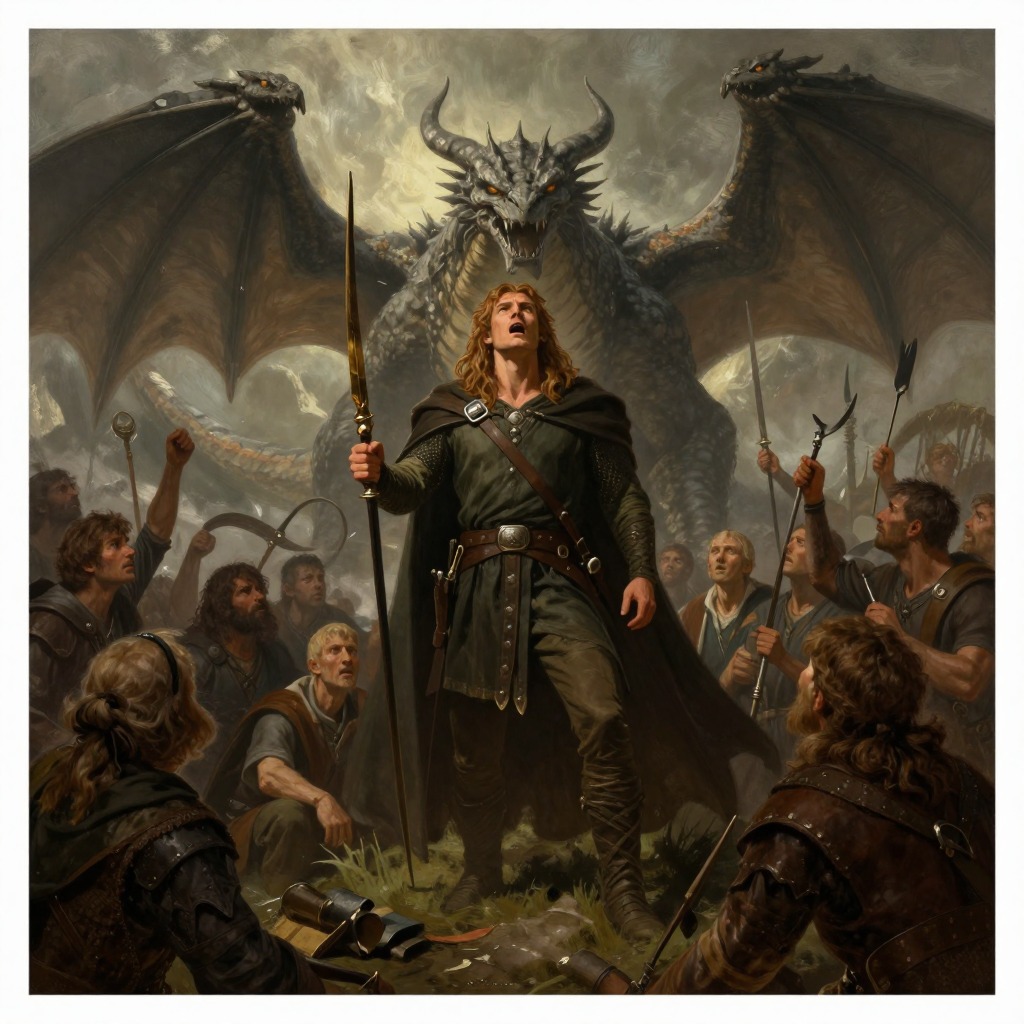
When Smaug attacks Lake-town, Bard is the captain of a company of archers who hold their ground among the burning houses. He shoots with a great yew bow until all his arrows but one are spent. As the flames near him and his companions leave him, he bends his bow for the last time. At that moment, an old thrush—the same bird that had listened to Bilbo's conversation with the dwarves—perches on his shoulder and brings him news of the dragon's bare patch in the hollow of his left breast. Marvelling, Bard finds he can understand its tongue, for he is of the race of Dale. He draws his bow-string to his ear, speaks to his last black arrow—"If ever you came from the forges of the true king under the Mountain, go now and speed well!"—and shoots straight into the hollow. The arrow vanishes, barb, shaft, and feather, and Smaug crashes down onto the town. Bard dives from Esgaroth and survives, emerging from the shadows to declare himself the slayer of the dragon.
Leadership and Political Role
In the aftermath of the dragon's fall, Bard takes the lead in ordering the camps and caring for the sick and wounded, though he acts always in the Master's name. The people, who had sung of the return of the King under the Mountain, now cry "King Bard!" but the Master, grinding his chattering teeth, reminds them that Girion was lord of Dale, not king of Esgaroth, and that they have always elected masters from among the old and wise. Bard does not press his claim; instead he serves still, though he says he may later think again of the Master's words and go North with any that will follow him. He sends messengers to the Elvenking for aid, and when the joined armies of Lake-men and Wood-elves march to the Mountain, it is Bard who stands forward to parley with Thorin, speaking fair words and true, though proudly and grimly. He demands a twelfth portion of the treasure for himself as dragon-slayer and heir of Girion, and a contribution from Thorin for the comfort of the Lake-men. When Thorin shoots an arrow at his messenger, Bard declares the Mountain besieged.
The Arkenstone Negotiation and the Battle
Bard is the recipient of the Arkenstone when Bilbo secretly brings it to the camp. He holds the jewel as though dazed, and when he returns to the Gate with the Elvenking and Gandalf, he uses it to force Thorin to bargain. After Thorin's angry rejection of Bilbo, Bard agrees to wait until noon for the promised gold and silver. But before the exchange can be completed, Dain's dwarves arrive, and battle is about to be joined when the goblin host appears. Bard then takes his place on the Eastern spur, fighting to defend it and giving slowly back. He is among those who, after the Eagles and Beorn turn the tide, survive the battle. Afterward, he lays the Arkenstone upon Thorin's breast and says, "There let it lie till the Mountain falls! May it bring good fortune to all his folk that dwell here after!" He receives a fourteenth share of the hoard, sends much gold to the Master of Lake-town, rewards his followers, and gives the emeralds of Girion to the Elvenking. He rebuilds Dale, and men gather to him from the Lake and from South and West, so that all the valley becomes tilled again and rich.
Narrative Role and Significance
Bard functions as the human counterweight to the dwarvish obsession with treasure. Where Thorin succumbs to the dragon-sickness, Bard remains clear-eyed and practical, concerned with the welfare of his people and the justice of his claims. His slaying of Smaug is the decisive turning point of the adventure, making possible the recovery of the treasure and the resolution of the siege. His lineage ties him to the lost glory of Dale, and his actions restore that glory. He is a figure of grim integrity, a leader who earns his authority through courage and wisdom rather than through birth or wealth alone. In the end, he becomes the new King of Dale, and his reign brings prosperity and friendship among elves, dwarves, and men.