Madge Undersee
Madge Undersee is the daughter of Mayor Undersee, the highest-ranking official in District 12. She lives in the nicer part of the district, among the merchant class, and her family's relative wealth means she has never needed to sign up for tesserae, the emergency food rations that force poor children to multiply their entries in the reaping. This privilege sets her apart from the vast majority of her peers, who live in the Seam and struggle daily against starvation. Despite her status, Madge is not a snob. She is quiet and keeps to herself, much like Katniss Everdeen, and the two girls, though from vastly different worlds, find themselves drawn together by their shared solitude. They eat lunch together, sit next to each other at assemblies, and partner for sports activities, all while rarely speaking. This silence suits them both perfectly, creating a bond that is more about mutual understanding than conversation.
Life and Plot Trajectory
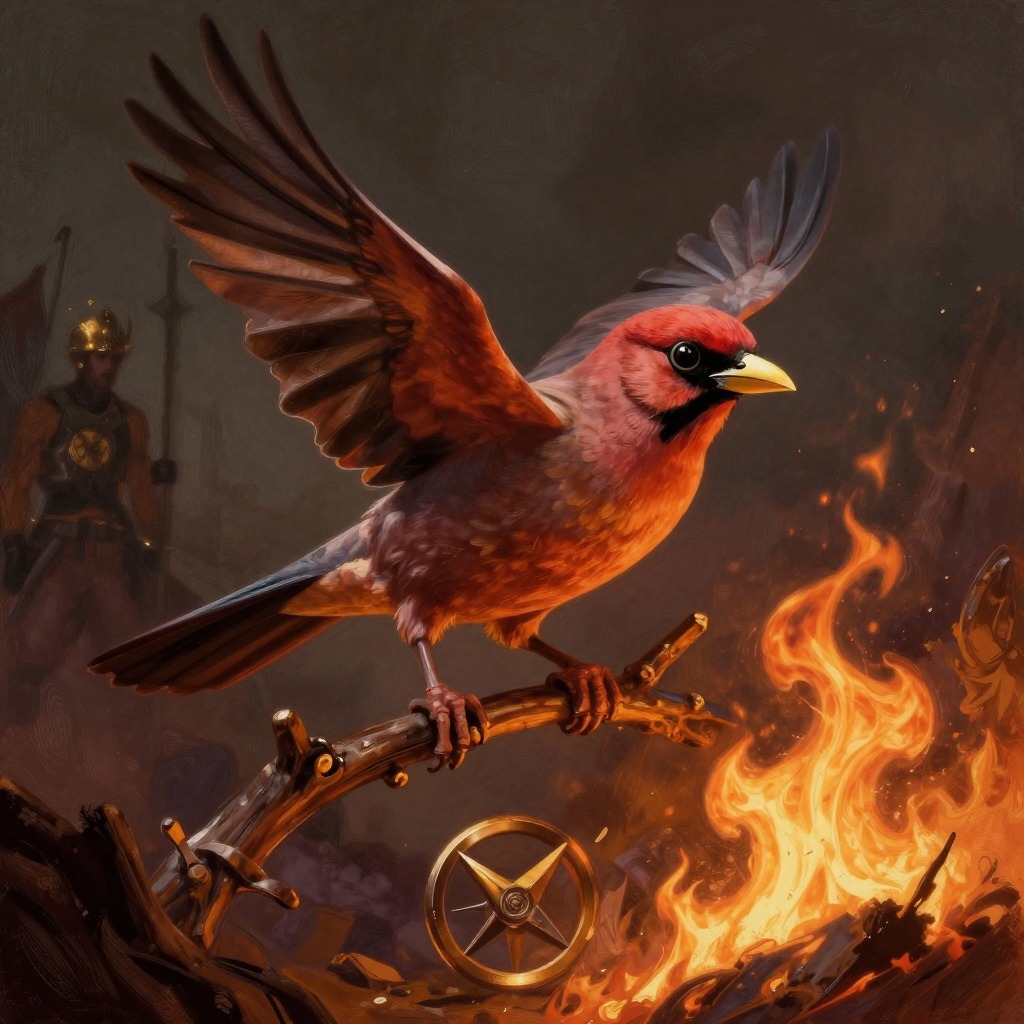
On reaping day, Madge appears at the back door of her house to buy strawberries from Katniss and Gale Hawthorne. She is dressed in an expensive white dress with her blonde hair done up with a pink ribbon, a stark contrast to her usual drab school outfit. When Gale makes a pointed comment about her having only five entries in the reaping, Madge's face becomes closed off, but she does not retaliate. She simply pays for the berries and wishes Katniss good luck. Later, after Katniss volunteers for her sister Primrose, Madge visits her in the Justice Building. She is not weepy or evasive; instead, she is urgent and direct. She gives Katniss her circular gold pin, a small bird in flight, and insists she wear it into the arena as her district token. She pins it on Katniss's dress herself, makes her promise to wear it, and then gives her a kiss on the cheek before leaving. This act of generosity and friendship is a turning point, as Katniss realizes that Madge may have been her friend all along.
Relationships and Conflict
Madge's relationship with Katniss is defined by a quiet, unspoken understanding. They are not close in the way Katniss is with Gale or Prim, but there is a mutual respect and a recognition of each other's isolation. Madge's gift of the mockingjay pin is a profound gesture of trust and friendship, one that Katniss accepts and treasures. The pin itself becomes a symbol of home and resistance, a connection to her father and the woods, and a reminder of the girl who gave it to her. Madge's relationship with Gale is more strained. He resents her for her privilege, and his comment about her having only five entries in the reaping is a sharp reminder of the unfairness of the system. Madge, however, does not hold a grudge, and her later actions show a depth of character that transcends the class divisions of District 12.
Change and Ending
Madge's character undergoes a subtle but significant change. She begins as a quiet, almost invisible figure, the mayor's daughter who keeps to herself. But her decision to give Katniss the mockingjay pin is an act of defiance and courage. It is a personal gift, one that she insists Katniss wear into the arena, and it carries with it a promise of remembrance and hope. By the end of the reaping day, Madge has transformed from a background figure into a friend who has given Katniss a tangible piece of home to carry into the Games. Her final appearance is a kiss on the cheek, a gesture that leaves Katniss thinking that maybe Madge really has been her friend all along.
Narrative Role and Evaluation
Madge Undersee serves as a crucial narrative device, providing Katniss with the mockingjay pin that becomes her token and a symbol of her identity in the Games. She represents the possibility of friendship across class lines in a deeply divided district. Her quiet, observant nature contrasts with the more vocal and active characters, but her actions are no less significant. She is a reminder that even in a world of brutal inequality and oppression, small acts of kindness and solidarity can have profound consequences. Her gift of the pin is not just a token; it is a connection to home, a symbol of resistance, and a promise that she will be remembered.