Nastasia Philipovna Barashkoff
Nastasia Philipovna Barashkoff is the beautiful, proud, and tormented central female figure of Dostoevsky's The Idiot, whose tragic life and violent death drive the novel's exploration of innocence, suffering, and redemption. Orphaned and seduced as a child by the wealthy libertine Afanasy Ivanovitch Totski, she becomes a kept woman who oscillates between self-loathing and defiant pride, rejecting offers of rescue from both the passionate merchant Parfen Rogojin and the Christ-like Prince Muishkin. Her fate—murdered by Rogojin on the night she was to marry Muishkin—crystallizes the novel's darkest themes: the impossibility of escaping a ruined past, the destructive power of pride, and the failure of pure goodness to save a soul that cannot forgive itself.
Origins and Early Life
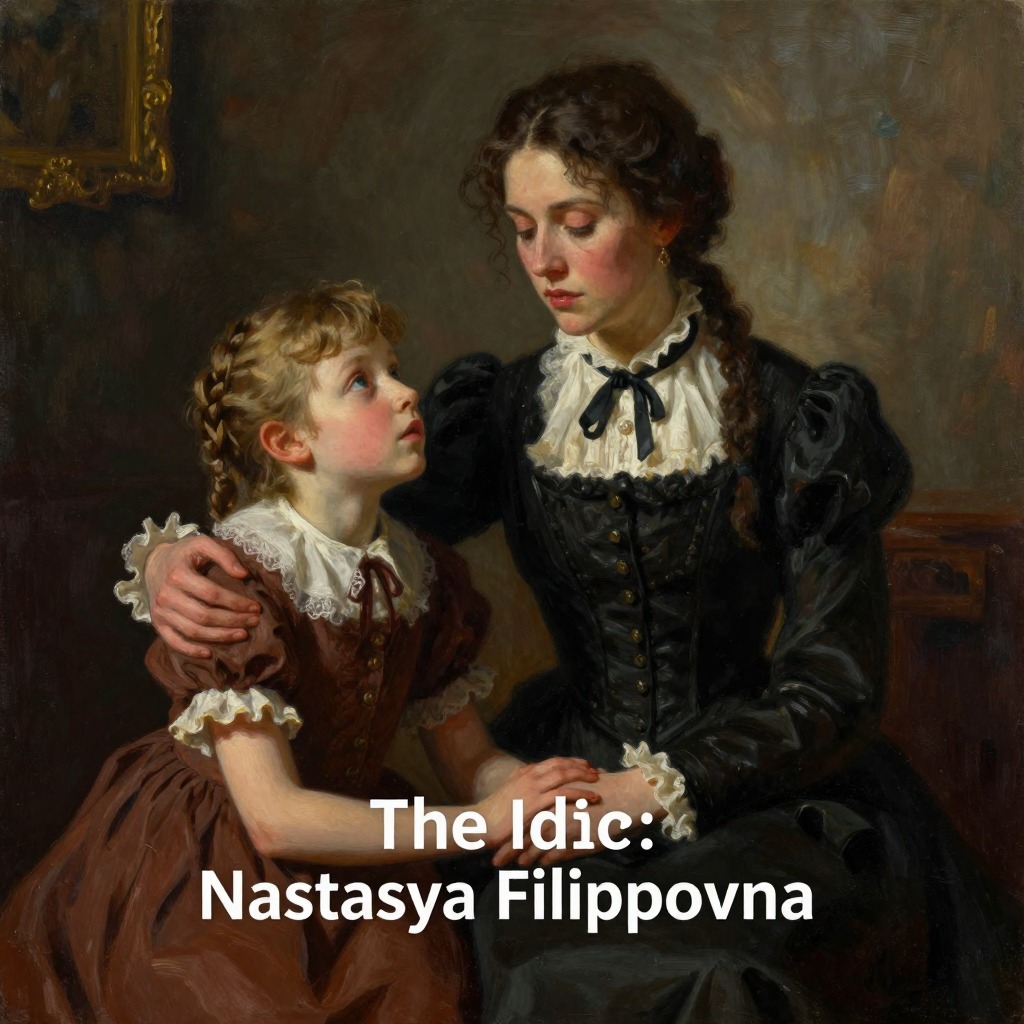
Nastasia's story begins in tragedy. She was the daughter of a poor gentleman, Barashkoff, whose estate was mortgaged to the last acre. When she was seven or eight years old, her family's house burned down, her mother perished in the fire, and her father went mad and died shortly after in the town hospital. The two orphaned girls—Nastasia and a younger sister—were taken in by their wealthy neighbor, Totski, who lived on a neighboring estate. The younger sister soon died of whooping cough, leaving Nastasia alone. Totski, a man of immense wealth and refined tastes, was living abroad at the time and forgot about the child. But when he returned to Russia five years later, he discovered that among his bailiff's children there now dwelt a most lovely little girl of twelve, sweet and intelligent, and promising to develop beauty of most unusual quality. He immediately arranged for her education: a good governess, a Swiss lady of experience and culture, was engaged, and for four years she resided with little Nastia. When the education was considered complete, Nastasia was transported to another of Totski's estates, where she found a delightful little house, musical instruments, a charming library, pictures, paint-boxes, a lap-dog, and everything to make life agreeable. Within a fortnight Totski himself arrived, and from that time he appeared to have taken a great fancy to this part of the world, coming down each summer and staying two or three months at a time. So passed four years peacefully and happily, in charming surroundings.
Transformation and Rebellion
The turning point came when Nastasia, now about twenty, heard a report that Totski was about to be married in St. Petersburg to a rich, eminent, and lovely woman. She suddenly displayed unusual decision of character. Without wasting time in thought, she left her country home and came up to St. Petersburg, straight to Totski's house, all alone. The man who had groomed her for his own pleasure found himself confronting an entirely new and different woman. She informed him to his face that she had never had the faintest feeling for him of any kind, except loathing and contempt—contempt which had followed closely upon her sensations of surprise and bewilderment after her first acquaintance with him. She further gave him to understand that though it was absolutely the same to her whom he married, she had decided to prevent this marriage—for no particular reason, but because she chose to do so, and because she wished to amuse herself at his expense, for that it was "quite her turn to laugh a little now!" Totski, a man of fifty with a solid position in society, was terrified. He realized that Nastasia was quite capable of ruining herself, and even of perpetrating something which would send her to Siberia, for the mere pleasure of injuring a man for whom she had developed so inhuman a sense of loathing and contempt. He decided to conciliate her by giving up the marriage project. For the next five years, he established her in St. Petersburg, surrounding her with all the comforts and luxuries his wealth could command. But she lived almost entirely alone, reading, studying, loving music. Her principal acquaintances were poor women of various grades, a couple of actresses, and the family of a poor schoolteacher. Among these people she was much beloved. Totski tried to tempt her to lose her heart by inviting princes, hussars, secretaries of embassies, poets, novelists, even Socialists to see her; but not one of them all made the faintest impression upon Nastasia. It was as though she had a pebble in place of a heart.
The Marriage Scheme and the Birthday Party
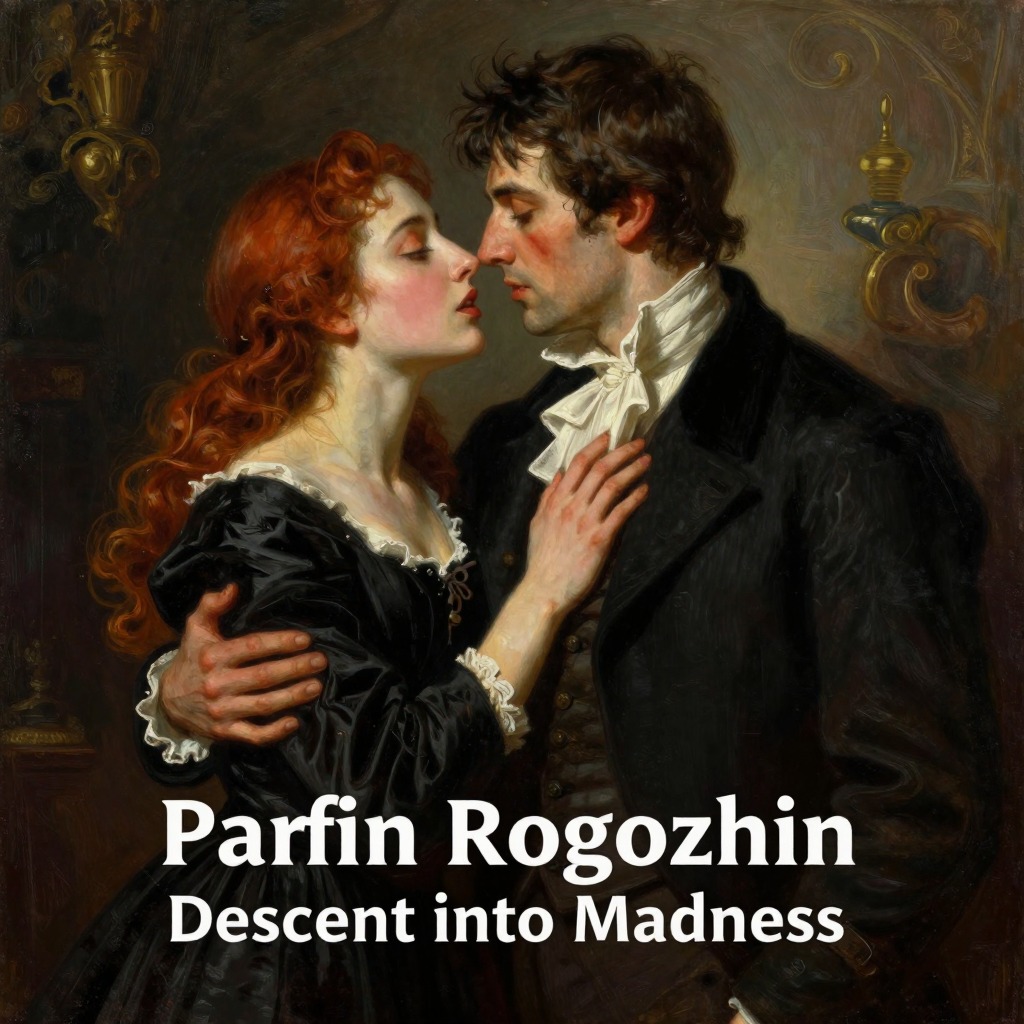
By the time the novel opens, Totski and General Epanchin have devised a plan to free Totski from Nastasia's hold. They propose that she marry Gavrila Ardalionovitch Ivolgin, a young clerk who is ambitious and poor, and Totski offers her a gift of seventy-five thousand roubles as a dowry. Nastasia, with a sad smile and then a twinkle of merriment in her eyes, seems to accept the arrangement, but her true feelings are revealed on the evening of her twenty-fifth birthday party. There, in front of a small gathering that includes Totski, General Epanchin, Gania, and the prince, she stages a spectacular scene of defiance. When Rogojin arrives with a band of rowdy followers and throws a packet of one hundred thousand roubles on the table, offering to buy her, Nastasia mocks the entire transaction. She then turns to the prince, who has just offered her his hand in marriage, and declares that she will not ruin him. In a final, theatrical gesture, she throws the packet of money into the fire, daring Gania to retrieve it with his bare hands. When he cannot bring himself to do so, she pulls it out with the tongs and gives it to him anyway, declaring that his self-respect has earned it. Then she leaves with Rogojin, crying, "I have seen a man for the first time in my life."
Flight, Return, and Final Confrontation
Nastasia's flight with Rogojin is not the end of her story. She runs away from him twice, once from the very altar rails, and returns to St. Petersburg, where she takes refuge with Lebedeff's sister-in-law. She is terrified of Rogojin, yet she cannot break free from him entirely. She writes passionate, delirious letters to Aglaya Ivanovna, the woman the prince loves, begging Aglaya to marry him and declaring that she herself is unworthy of him. These letters reveal a woman tormented by jealousy and self-loathing, who believes that her only salvation lies in uniting the two people she loves most. The climax comes when Aglaya, driven by jealousy and pride, arranges a meeting with Nastasia at Daria Alexeyevna's house. The two women confront each other with undisguised malice. Aglaya accuses Nastasia of being too proud and vain to love the prince, and of wanting only to revel in her own shame. Nastasia, in a fury, retaliates by claiming that she can command the prince to stay with her, and that he will obey. When the prince, seeing Nastasia's despair, murmurs to Aglaya, "How can you? She is so unhappy," Aglaya flees in horror and hatred. Nastasia, triumphant and broken, falls into the prince's arms, crying, "Mine, mine!"
Death and Aftermath
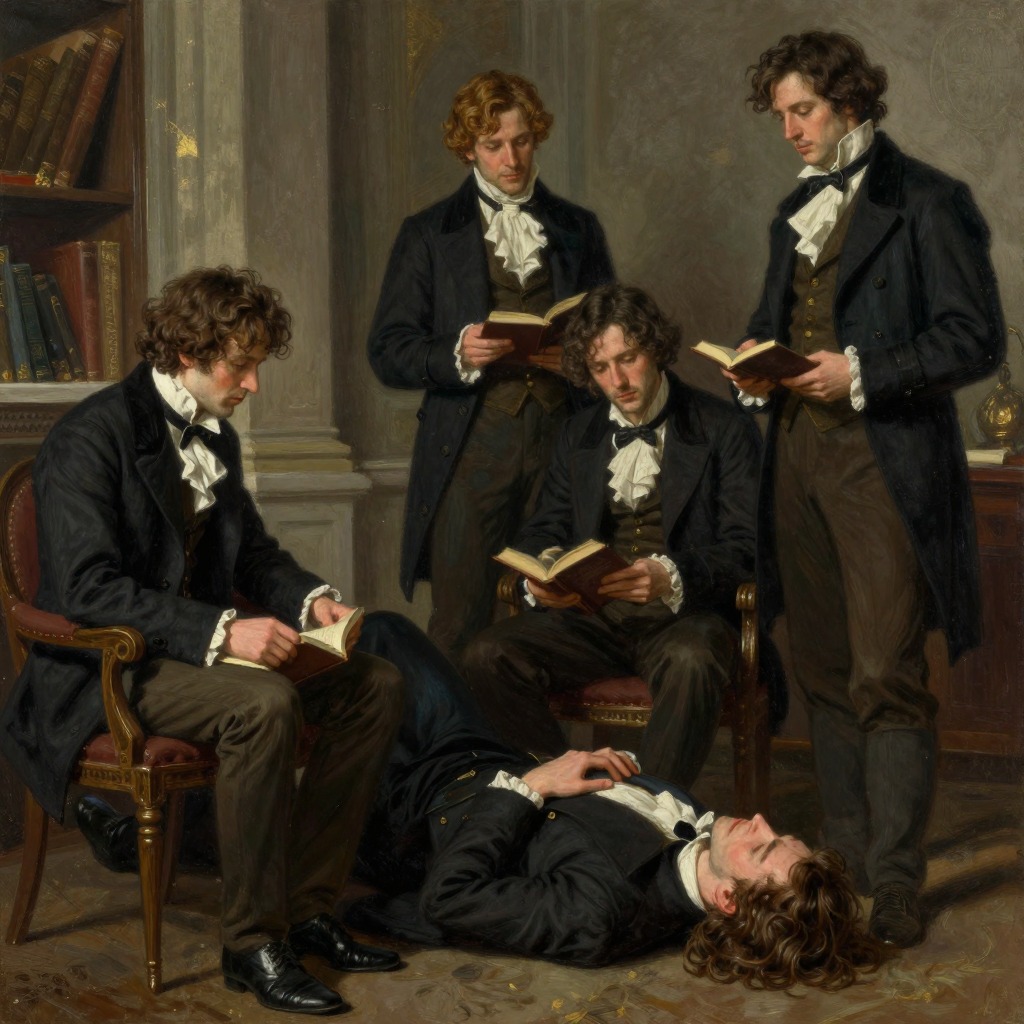
The wedding is set for eight o'clock in the evening, a week later. Nastasia is dressed in a magnificent white silk dress, ready to marry the prince. But as she steps out of the house and sees Rogojin in the crowd, she rushes to him, crying, "Save me! Take me away, anywhere you like, quick!" Rogojin seizes her, throws a hundred-rouble note to the coachman, and they drive to the station. He buys an old cloak and kerchief from a young girl on the platform to cover her wedding finery, and they take the train to St. Petersburg. That night, in Rogojin's dark, gloomy house, he murders her with a garden knife. The prince, who has followed them, finds Rogojin in a state of brain fever, sitting beside the body. The murder weapon, Rogojin explains, was the same knife he had once intended to use on the prince. Nastasia's body is covered with American oilcloth and a white sheet, with jars of disinfectant placed around it to mask the smell. The prince lies down beside Rogojin, stroking his hair and cheeks, and when the police break in the next morning, they find the murderer unconscious and the prince sitting by him, motionless, having lost his mind entirely. Rogojin is sentenced to fifteen years of hard labor in Siberia. The prince is sent back to Dr. Schneider's establishment in Switzerland, where he remains, incurable, an idiot once more.