Parfen Rogojin
Parfen Rogojin is the dark, passionate merchant-heir whose obsessive love for Nastasia Philipovna drives the novel's central tragedy. From his first appearance on the train to St. Petersburg, he embodies a raw, elemental force of jealousy, violence, and desperate longing that stands in stark contrast to Prince Muishkin's Christian compassion. His trajectory—from rejected suitor to murderer—reveals the destructive power of unmediated passion in a world governed by money and social hypocrisy.
Identity and Background
Parfen Rogojin is the son of Semen Rogojin, a hereditary honourable citizen who died a month before the novel opens, leaving a fortune of two and a half million roubles. When he first appears in a third-class carriage on the Warsaw and Petersburg railway, he is returning from Pskoff, where he had been ill with fever, having run away from his father after a violent quarrel. He is a young fellow of about twenty-seven, not tall, with black curling hair, small grey fiery eyes, a broad flat nose, high cheekbones, and thin lips constantly compressed into an impudent, ironical—almost malicious—smile. His most striking feature is a death-like pallor that gives him an emaciated, passionate, suffering expression at odds with his sarcastic smile and self-satisfied bearing. He wears a large astrachan overcoat that kept him warm all night while his neighbour suffered the cold. His family consists of his mother, who is described as old and almost demented after her husband's death, and his brother Senka, whom he accuses of cutting the gold tassels from their father's coffin for their monetary value. Rogojin declares that his brother treated him like a dog after their father's death, sending no word or money while he lay ill in Pskoff.
Life and Plot Trajectory
Rogojin's story unfolds in a series of escalating confrontations. On the train, he tells Prince Muishkin how he first saw Nastasia Philipovna on the Nevsky, became instantly infatuated, and stole money from his father to buy her diamond earrings worth four hundred roubles more than he had. His father discovered the theft, went to Nastasia on his knees begging for the earrings back, and Rogojin fled to Pskoff, where he fell into a fever and spent his time drinking in public-houses. After inheriting his father's fortune, he pursues Nastasia with increasing intensity, first offering eighteen thousand roubles, then forty thousand, then a hundred thousand at her birthday party. He appears at Gania Ivolgin's house with a rowdy band of followers, throws the packet of money on the table, and declares he will buy her. When Nastasia throws the money into the fire and challenges Gania to retrieve it, Rogojin watches in ecstasy, calling her a queen. After Nastasia flees from the wedding ceremony with him, he takes her to his house and murders her with a garden knife. He then brings Prince Muishkin to spend the night beside her body, and is later found unconscious with brain fever.
Key Actions and Objectives
Rogojin's actions are driven by a single, all-consuming objective: to possess Nastasia Philipovna. He pursues her with money, first offering eighteen thousand roubles, then forty thousand, and finally a hundred thousand at her birthday party. He appears at Gania Ivolgin's house with a rowdy band of followers, throws the packet of money on the table, and declares he will buy her. When Nastasia throws the money into the fire and challenges Gania to retrieve it, Rogojin watches in ecstasy, calling her a queen. After Nastasia flees from the wedding ceremony with him, he takes her to his house and murders her with a garden knife. He then brings Prince Muishkin to spend the night beside her body, and is later found unconscious with brain fever.
Relationships and Conflict
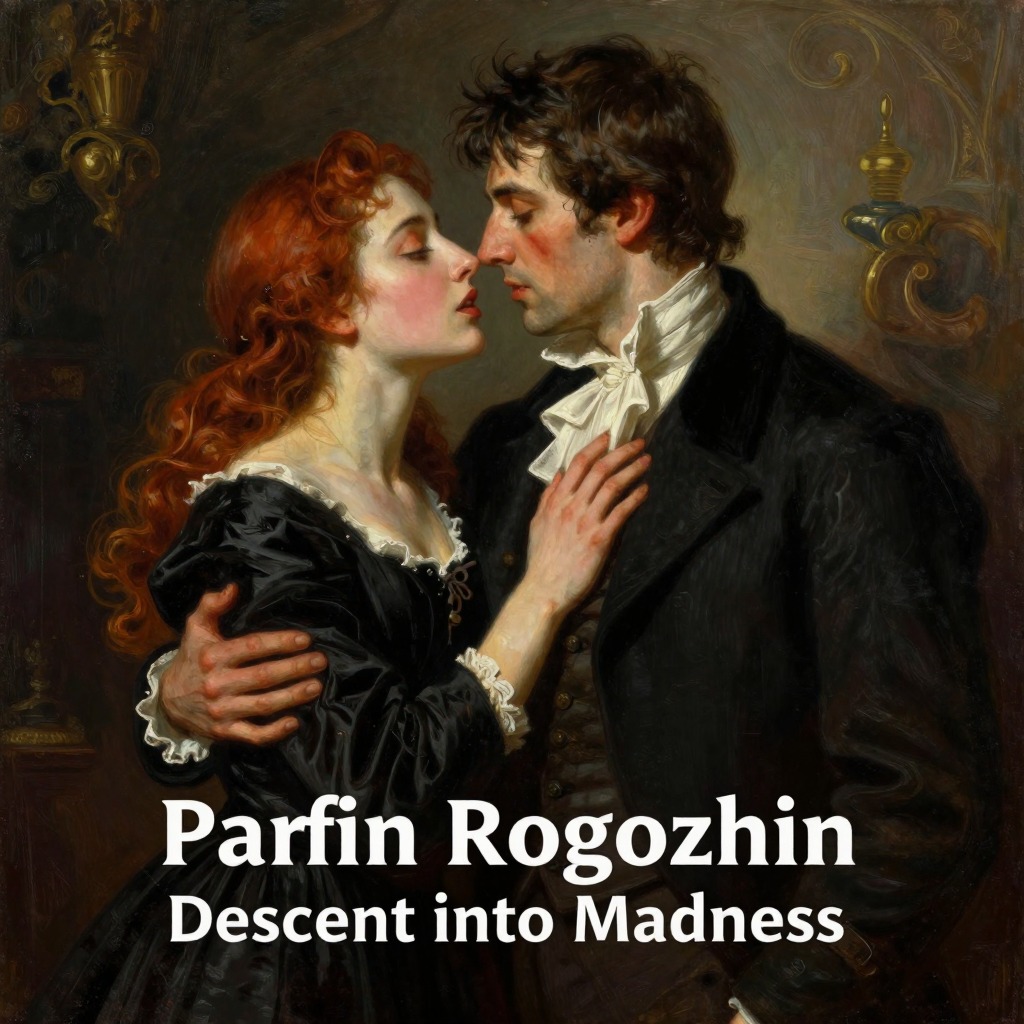
Rogojin's relationship with Prince Muishkin is the novel's most complex and ambivalent bond. They meet on the train, and Rogojin immediately takes a fancy to the prince, inviting him to visit and offering to buy him clothes. They exchange crosses in a ritual of brotherhood, and Rogojin takes the prince to receive his mother's blessing. Yet Rogojin also attempts to murder Muishkin with a knife on the dark staircase of the prince's hotel, and later confesses that when the prince is not with him, he hates him and could poison him. His relationship with Nastasia Philipovna is one of violent oscillation between adoration and abuse. He beats her till she is bruised all over, then kneels at her feet for a day and a half without eating or drinking, begging forgiveness. She tells him she would not have him for a footman, yet agrees to marry him, then runs away, then agrees again. Rogojin is consumed by jealousy, convinced that Nastasia loves Muishkin and that she is marrying him out of spite. He also has a fraught relationship with his family, accusing his brother of stealing from their father's coffin and his mother of sending him no money while he was ill.
Change and Ending
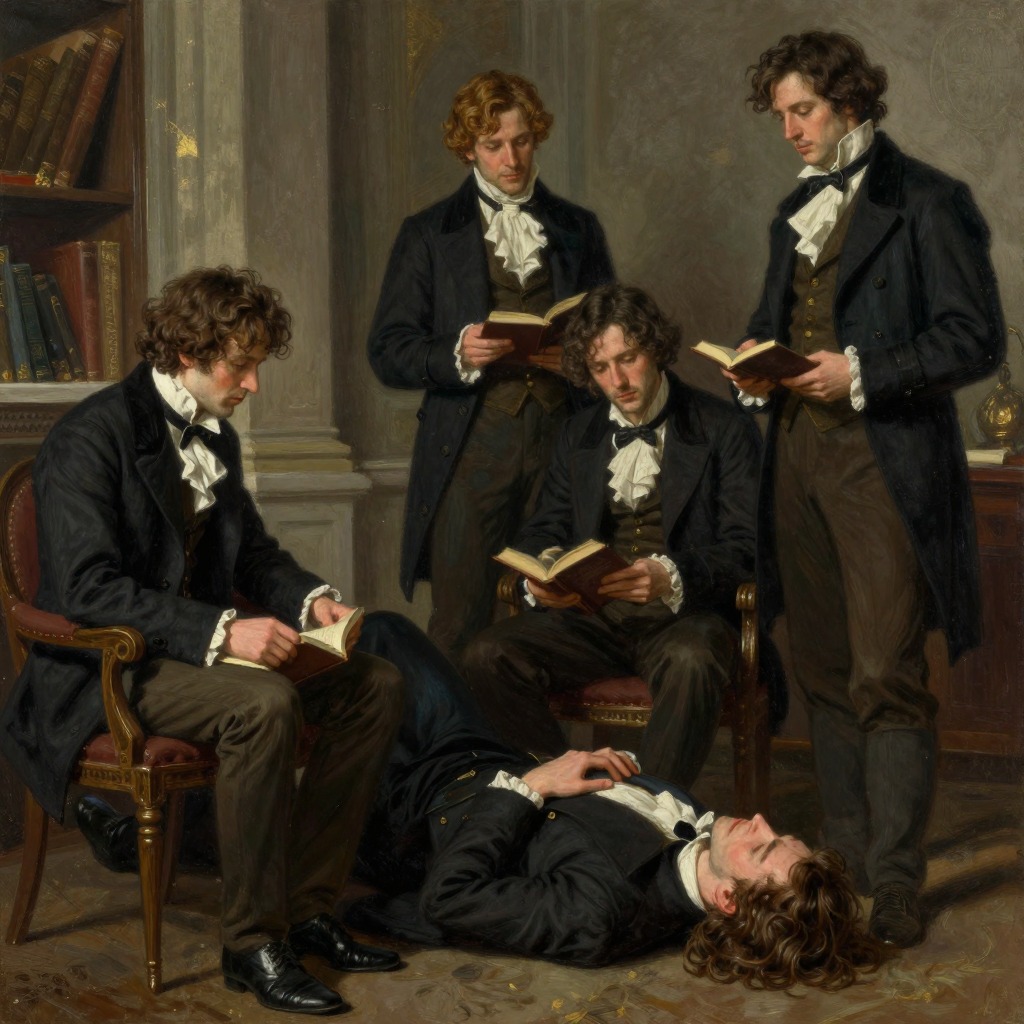
Rogojin's trajectory ends in murder and madness. After Nastasia flees from the wedding ceremony with him, he takes her to his house and kills her with a garden knife, a weapon he had kept hidden inside a book. He then brings Prince Muishkin to spend the night beside her body, lying on cushions next to the corpse. When the police break in the next morning, they find Rogojin unconscious with brain fever. He recovers after two months, is tried for murder, and sentenced to fifteen years of hard labour in Siberia. He hears his sentence grimly, silently, and thoughtfully. His colossal fortune, except for the portion wasted in his first wanton period of inheritance, goes to his brother. His mother, who never learns of the catastrophe, remembers him only vaguely.
Narrative Role and Evaluation
Rogojin functions as the novel's dark double to Prince Muishkin, embodying the destructive potential of passion unmediated by Christian compassion or moral restraint. Where Muishkin offers forgiveness and pity, Rogojin offers money and violence. Where Muishkin seeks to save Nastasia, Rogojin seeks to possess and ultimately destroy her. His character illustrates the novel's central theme: that love without pity becomes a form of madness, and that the attempt to possess another human being as property leads inevitably to ruin. Rogojin's trajectory—from rejected suitor to murderer—reveals the destructive power of unmediated passion in a world governed by money and social hypocrisy.