Amir
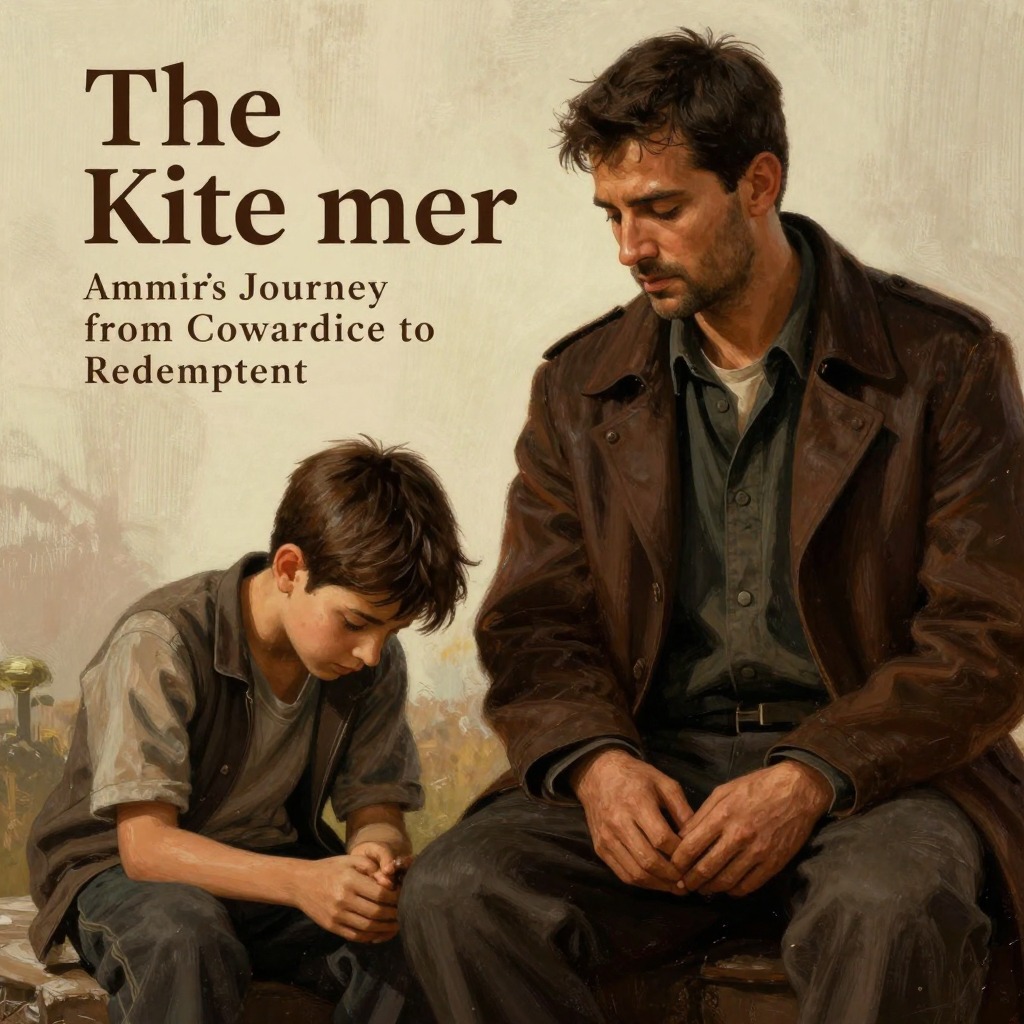
Amir is the first-person narrator and protagonist of The Kite Runner, whose journey from a privileged but guilt-ridden boy in 1970s Kabul to a man seeking redemption in America and Taliban-era Afghanistan forms the novel's central arc. His defining act—witnessing the rape of his half-brother and servant Hassan and doing nothing—shapes his identity for twenty-six years, driving him to betray Hassan further, flee the Soviet invasion, build a new life in California, and ultimately return to a war-ravaged Kabul to rescue Hassan's orphaned son, Sohrab, in a final attempt to atone for his past.
Identity and Early Life
Amir was born in 1963 in Kabul, the only son of Baba, a wealthy and powerful Pashtun merchant, and Sofia Akrami, a university professor who died giving birth to him. He grew up in the most beautiful house in the Wazir Akbar Khan district, a sprawling mansion with marble floors, a crystal chandelier, and a large garden. His first word was "Baba," while Hassan, the son of the servant Ali and his wife Sanaubar, spoke Amir's name as his first word. Amir spent the first twelve years of his life playing with Hassan, climbing poplar trees, flying kites, and reading stories to him under a pomegranate tree in an abandoned cemetery, where they carved "Amir and Hassan, the sultans of Kabul" into the trunk. Despite this closeness, Amir never thought of Hassan as a friend in the usual sense, acutely aware that he was a Pashtun and Sunni while Hassan was a Hazara and Shi'a—a hierarchy history and religion made impossible to overcome.
Arc Through the Plot: Guilt, Betrayal, and Flight
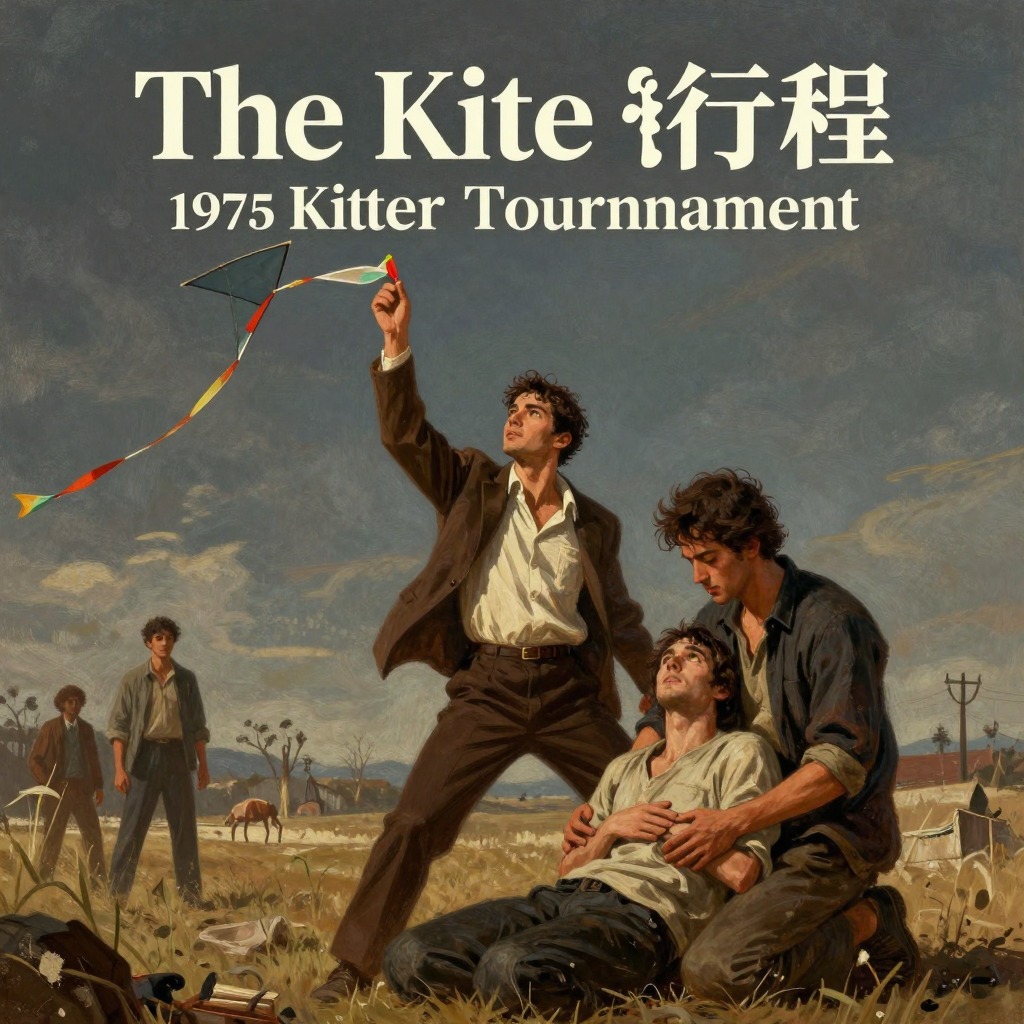
The winter of 1975 changed everything. Amir won the annual kite-fighting tournament, and Hassan ran the last fallen blue kite for him—"For you, a thousand times over"—but was cornered in an alley by Assef and his friends, who raped him while Amir watched from around the corner. Amir did nothing, paralyzed by fear and, he later admits, by the thought that Hassan was "just a Hazara" and perhaps the price he had to pay to win Baba's approval. Afterward, Amir could not bear Hassan's unwavering loyalty and framed him for stealing his watch and cash, hoping to drive him away. Hassan falsely confessed, and Ali, knowing the truth, insisted on leaving. Baba wept and pleaded, but Amir watched from his rain-soaked window as Hassan and Ali loaded their belongings into the car and disappeared. In March 1981, as the Soviet occupation tightened, Baba and Amir fled Kabul in a fuel truck, enduring a harrowing journey through a Russian checkpoint where Baba nearly died confronting a soldier, a rat-infested basement in Jalalabad, and the suffocating darkness of a fuel tank. Kamal, a boy from the basement, died from fumes, and his father shot himself. They reached Peshawar and eventually immigrated to Fremont, California.
Life in America and Marriage
In America, Amir graduated from high school at twenty, the oldest in his class, and Baba—now a gas station attendant—beamed with pride. Amir enrolled at San Jose State University as an English major, against Baba's wishes, and began writing stories. He met Soraya Taheri, the daughter of General Iqbal Taheri, at the San Jose flea market, and after a courtship conducted under the watchful eyes of the Afghan community, Baba—dying of cancer—went to ask for her hand. They married in a lavish ceremony, and Soraya moved in to care for Baba until he died peacefully a month later. Amir published his first novel in 1989, but he and Soraya struggled with infertility, and after years of failed treatments, they began to consider adoption.
The Call to Redemption and Return to Kabul
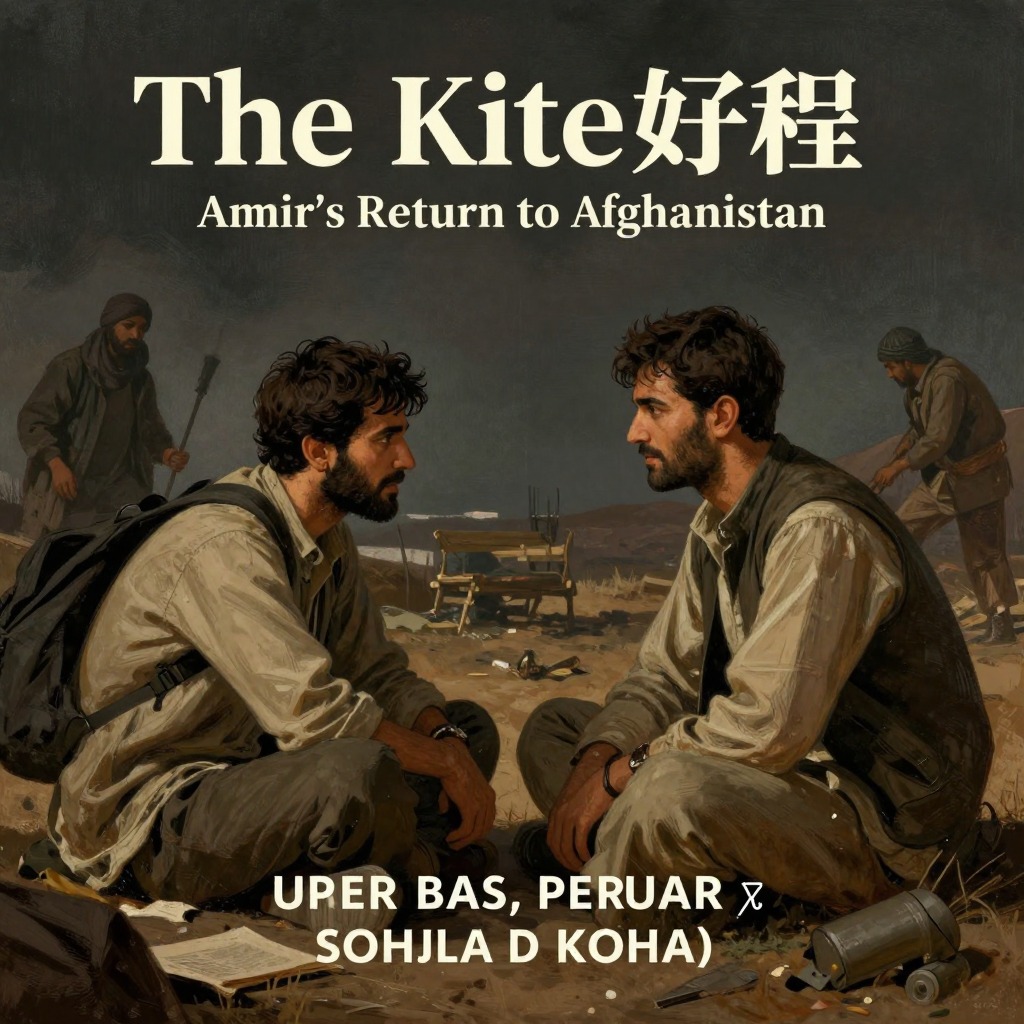
In June 2001, Rahim Khan, Baba's old friend and Amir's mentor, called from Pakistan, saying, "There is a way to be good again." Amir traveled to Peshawar, where Rahim Khan revealed that Hassan was his half-brother—Baba's son with Sanaubar—and that Hassan and his wife Farzana had been executed by the Taliban. Their son, Sohrab, was in an orphanage in Kabul. Despite his fear, Amir agreed to go. With a driver named Farid, he crossed the Khyber Pass into a devastated Afghanistan, found the orphanage, and learned that a Talib official had taken Sohrab. At Ghazi Stadium, he witnessed a public stoning, then confronted the official, who turned out to be Assef. Assef beat Amir nearly to death with brass knuckles, but Sohrab shot out Assef's left eye with a slingshot, allowing them to escape. Amir brought Sohrab to Pakistan, where the boy, traumatized by sexual abuse, attempted suicide by slitting his wrists in the bathtub. Amir prayed desperately, and Sohrab survived. After a long struggle with immigration bureaucracy, Amir brought him to San Francisco.
Change and Ending
Sohrab fell into a deep, silent depression, barely speaking for nearly a year. Amir and Soraya tried to reach him, but he remained withdrawn. Then, in March 2002, at an Afghan New Year gathering in Fremont's Lake Elizabeth Park, Amir bought a kite and flew it. He performed the old "lift-and-dive" trick Hassan had taught him, cutting down a green kite. Sohrab, who had followed him, took the string, and when Amir asked if he should run the fallen kite, Sohrab nodded. Amir ran, shouting, "For you, a thousand times over," and saw a lopsided smile cross Sohrab's face—a tiny thing, but the first flake of snow melting in spring.
Thematic Significance
Amir's narrative is a study in guilt, cowardice, and the long, painful path to redemption. His entire identity is shaped by the secret of his inaction in the alley and his subsequent betrayal of Hassan, and his journey to rescue Sohrab is an attempt to atone not only for his own sins but for Baba's as well. The novel traces his evolution from a boy who believed "there is only one sin... and that is theft" to a man who understands that redemption is not a single act but a lifelong commitment to doing good, even when it is terrifying. His final act—running the kite for Sohrab—echoes Hassan's loyalty and completes a cycle of betrayal and forgiveness, suggesting that while the past cannot be undone, it can be transformed into a foundation for a new beginning.