Dr. Rosen
Dr. Rosen is the fertility specialist who treats Amir and Soraya Taheri for their inability to conceive a child, a course of treatment that spans months, involves multiple invasive procedures, and ultimately fails, leaving the couple with a diagnosis of "Unexplained Infertility" and the suggestion of adoption. Though a minor character, Dr. Rosen embodies the clinical, impersonal face of modern medicine as it collides with the couple's private hopes, and his repeated, reductive metaphor for human reproduction—"plumbing"—underscores the emotional distance between the doctor's technical optimism and the couple's growing sense of failure.
Identity and Professional Persona
Dr. Rosen is a round-bellied man with a plump face, small even teeth, and a faint Eastern European accent that Amir describes as "remotely Slavic." His office is decorated with a passion for trains: books about railroad history, model locomotives, and paintings of trains trundling through green hills and over bridges. A sign above his desk reads "LIFE IS A TRAIN. GET ON BOARD." This motif, cheerful and reductive, establishes him as a man who sees life's journey as a linear, manageable track—a worldview that will prove inadequate for the complexities of infertility and the emotional wreckage it leaves behind.
Clinical Approach and the "Plumbing" Metaphor
Dr. Rosen lays out the diagnostic plan with a breezy confidence that Amir finds jarring. He tells the couple that men are easy: "A man's plumbing is like his mind: simple, very few surprises. You ladies, on the other hand... well, God put a lot of thought into making you." Amir wonders if he feeds that line to all his couples. Soraya's response—"Lucky us"—is met with a laugh from Dr. Rosen that "fell a few notches short of genuine." The metaphor reduces the deeply personal, emotionally fraught process of conception to a mechanical system, and Dr. Rosen's insistence on it—he later announces, after a hysteroscopy on Soraya, "The plumbing's clear"—reveals a clinical detachment that contrasts sharply with the couple's anguish. When Amir notes that he wishes Dr. Rosen would stop calling it that, the reader registers the gap between the doctor's professional routine and the couple's lived experience.
Treatment and Failure
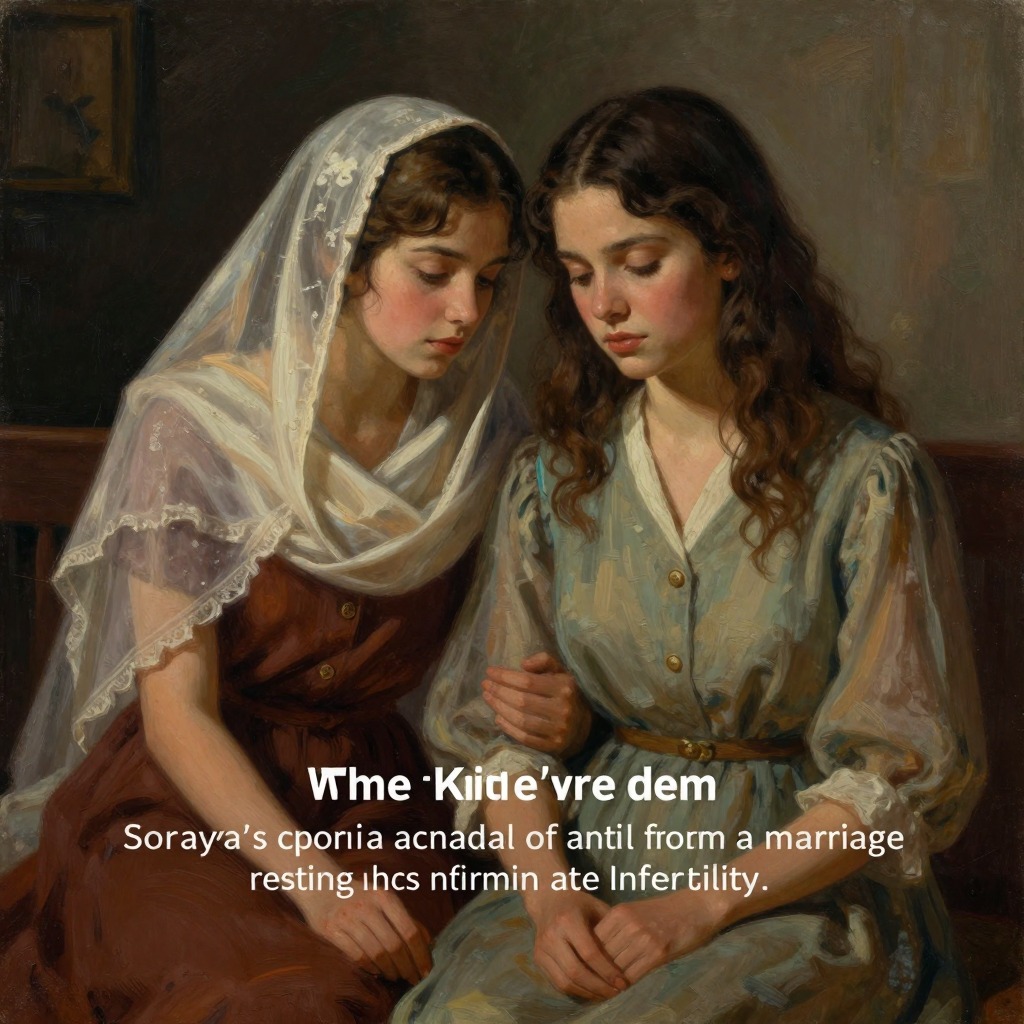
After Amir passes his tests "with flying colors," Soraya undergoes a blur of procedures: basal body temperature charts, blood tests for every conceivable hormone, urine tests, a cervical mucus test, ultrasounds, and a hysteroscopy in which Dr. Rosen inserts a telescope into Soraya's uterus. He finds nothing wrong. The diagnosis is "Unexplained Infertility." The treatment phase follows: Clomiphene, then hMG injections that Soraya administers to herself. When these fail, Dr. Rosen advises in vitro fertilization. The couple uses the advance from Amir's first novel to pay for it, but IVF proves "lengthy, meticulous, frustrating, and ultimately unsuccessful." After months of waiting rooms, paper gowns, sterile exam rooms, and the repeated humiliation of discussing every detail of their sex life with a stranger, they return to Dr. Rosen and his trains. It is at this point that he uses the word "adoption" for the first time. Soraya cries all the way home.
Narrative Significance
Dr. Rosen functions as a narrative marker of the couple's failed hopes and the limits of medical science. His cheerful, mechanical approach—the trains, the "plumbing" metaphor, the sign on his desk—stands in stark contrast to the emotional devastation his treatments leave in their wake. He is not a villain; he is a competent professional doing his job. But his inability to see beyond the clinical, to acknowledge the human cost of failure, makes him a figure of quiet pathos. The couple's journey through his office traces the arc from hope to exhaustion, from the belief that medicine can fix anything to the acceptance that some things cannot be fixed. When Dr. Rosen finally suggests adoption, the word lands like a verdict, and Soraya's tears on the drive home mark the end of one kind of dream and the beginning of another, more uncertain one.