Hassan
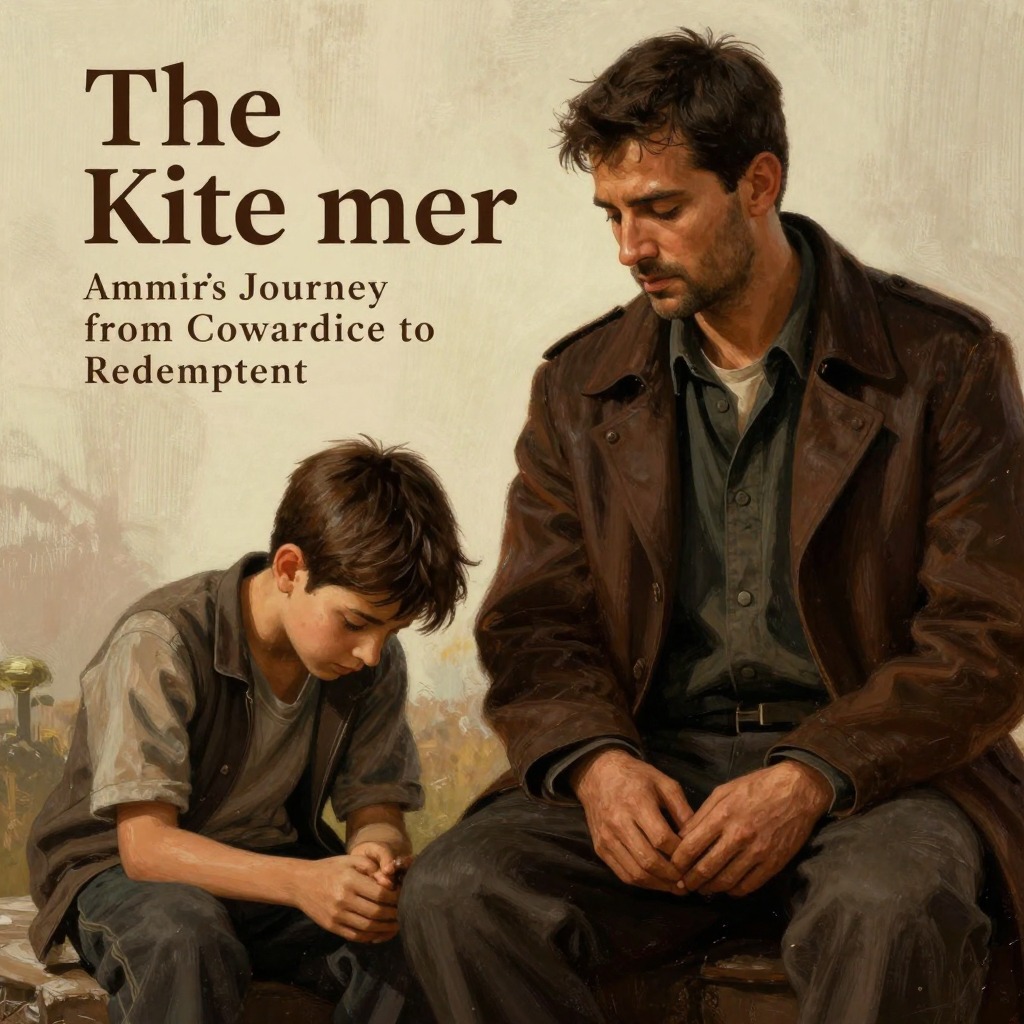
Hassan is the harelipped Hazara servant and childhood companion of Amir, whose unwavering loyalty, tragic fate, and secret identity as Amir's half-brother form the moral and emotional core of the novel. His first spoken word was "Amir," and his final act of devotion—running the blue kite for Amir in the winter of 1975—sets in motion a chain of betrayal, guilt, and eventual redemption that spans a quarter of a century. Hassan's life, from his birth in a mud shack to his execution by the Taliban, embodies both the innocence that the novel mourns and the unbreakable bond that ultimately compels Amir to confront his past.
Identity and Background
Hassan was born in the winter of 1964 in the servants' quarters of Baba's estate in the Wazir Akbar Khan district of Kabul. His mother, Sanaubar, a beautiful but notoriously unscrupulous Hazara woman, took one glance at his cleft lip after birth, barked a bitter laughter, and refused to hold him; she eloped with a clan of traveling singers and dancers just five days later. Hassan was raised by his father, Ali, a gentle, polio-stricken man with a paralyzed face who could only reveal himself through his eyes. Baba hired the same nursing woman who had fed Amir to nurse Hassan, creating a kinship between the two boys that Ali often invoked: "There is a brotherhood between people who have fed from the same breast." Hassan grew up illiterate, as did most Hazaras, but he was drawn to the mystery of words, and Amir would read to him for hours under a pomegranate tree near an abandoned cemetery, where they carved their names: "Amir and Hassan, the Sultans of Kabul." His favorite story was "Rostam and Sohrab" from the Shahnamah, the tale of a great warrior who mortally wounds his own son in battle—a story that would later echo with devastating irony through their own lives.
Life and Plot Trajectory
Hassan's childhood was marked by both joy and persecution. He and Amir spent their days climbing poplar trees, reflecting sunlight into neighbors' homes with a shard of mirror, and firing walnuts with his slingshot at the neighbor's German shepherd—though Hassan never wanted to, he never denied Amir anything. He was a natural athlete, a deadly shot with his slingshot, and by far the greatest kite runner in the neighborhood, possessing an uncanny ability to predict where a falling kite would land. But as a Hazara, he was also the target of relentless bigotry. The neighborhood boys, led by the sociopathic Assef, taunted him with slurs like "flat-nosed" and "Babalu," and soldiers once mocked him about his mother's reputation. When Assef confronted the two boys after the 1973 coup, threatening Amir with his brass knuckles, Hassan stepped forward with his slingshot pointed at Assef's left eye and forced him to retreat, saying flatly, "If you make a move, they'll have to change your nickname from Assef 'the Ear Eater' to 'One-Eyed Assef.'"
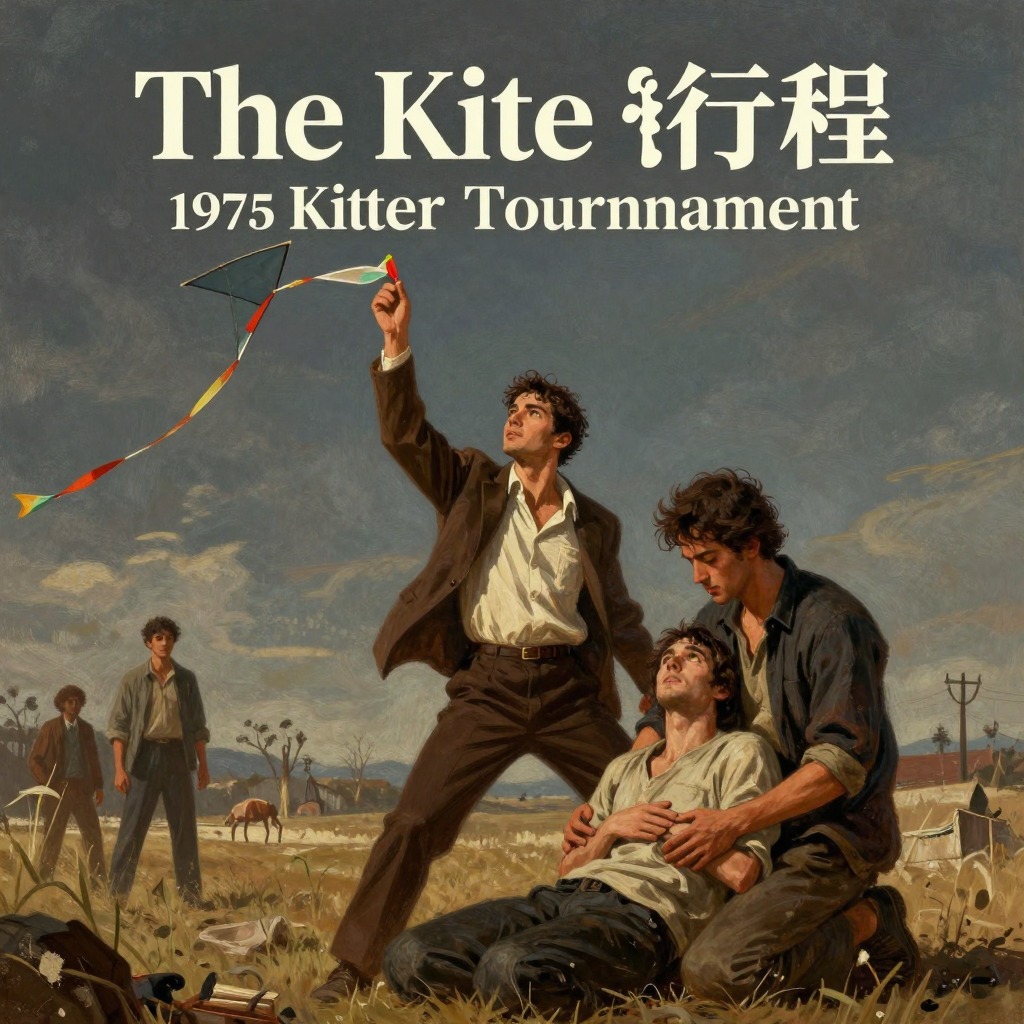
The pivotal event of Hassan's life—and of the novel—occurred in the winter of 1975. Amir won the annual kite-fighting tournament, and Hassan promised to run the last fallen kite for him: "For you, a thousand times over!" He found the blue kite, but Assef and his friends cornered him in an alley. When Hassan refused to surrender the kite, Assef raped him while Wali and Kamal held him down. Amir witnessed the assault from behind a wall but did nothing, paralyzed by cowardice and the whispered thought, "He was just a Hazara, wasn't he?" Afterward, Hassan limped back to Amir with the kite, his pants stained with blood, and never spoke of what had happened. The relationship between the two boys disintegrated; Amir, unable to bear his guilt, framed Hassan for stealing his watch and money. When Baba confronted him, Hassan confessed to the theft—his final sacrifice for Amir—and left with Ali for Hazarajat, despite Baba's tearful pleas.
Key Actions and Objectives
Hassan's defining characteristic is his absolute, unquestioning loyalty. He never told on Amir, never revealed that the mirror or the walnut-shooting was always Amir's idea. He defended Amir against Assef with his slingshot, ran the kite that cost him his innocence, and took the blame for a theft he did not commit to protect Amir from exposure. After leaving Baba's house, he moved to a small village near Bamiyan with Ali, married a young Hazara woman named Farzana, and became a father. Years later, when Rahim Khan found him in 1986 and asked him to return to Kabul to care for Baba's house, Hassan agreed, though he refused to move into the main house out of respect for Amir, insisting on living in the mud hut where he was born. He rebuilt a wall destroyed by a rocket with his own hands, tended the garden, and prepared the house as if for someone's return. He learned to read and write from an old Farsi teacher in Bamiyan, and wrote letters to Amir that were never answered. He taught his son, Sohrab, to read and write, to shoot the slingshot, and to run kites, passing on the traditions of his own childhood.
Relationships and Conflict
Hassan's relationship with Amir is the central relationship of the novel, defined by a profound asymmetry of devotion. Amir was the Pashtun master's son, the educated one who could read and write; Hassan was the Hazara servant who could not. Yet Hassan loved Amir without reservation, calling him "Amir agha" and never wavering in his loyalty even when Amir taunted him, mocked his ignorance, or pelted him with pomegranates, screaming, "Hit me back!" Hassan's response was to crush a pomegranate against his own forehead and ask, "Are you satisfied? Do you feel better?" His relationship with Baba was warmer than Amir's; Baba never missed Hassan's birthday, bought him a leather cowboy hat, and paid for a plastic surgeon to repair his harelip—a gift that, ironically, left a faint scar just as the winter of 1975 arrived, the winter Hassan stopped smiling. The truth, revealed only after Hassan's death, was that Baba was his biological father, making Hassan and Amir half-brothers—a secret that Baba carried as his own burden of guilt.
Change and Ending
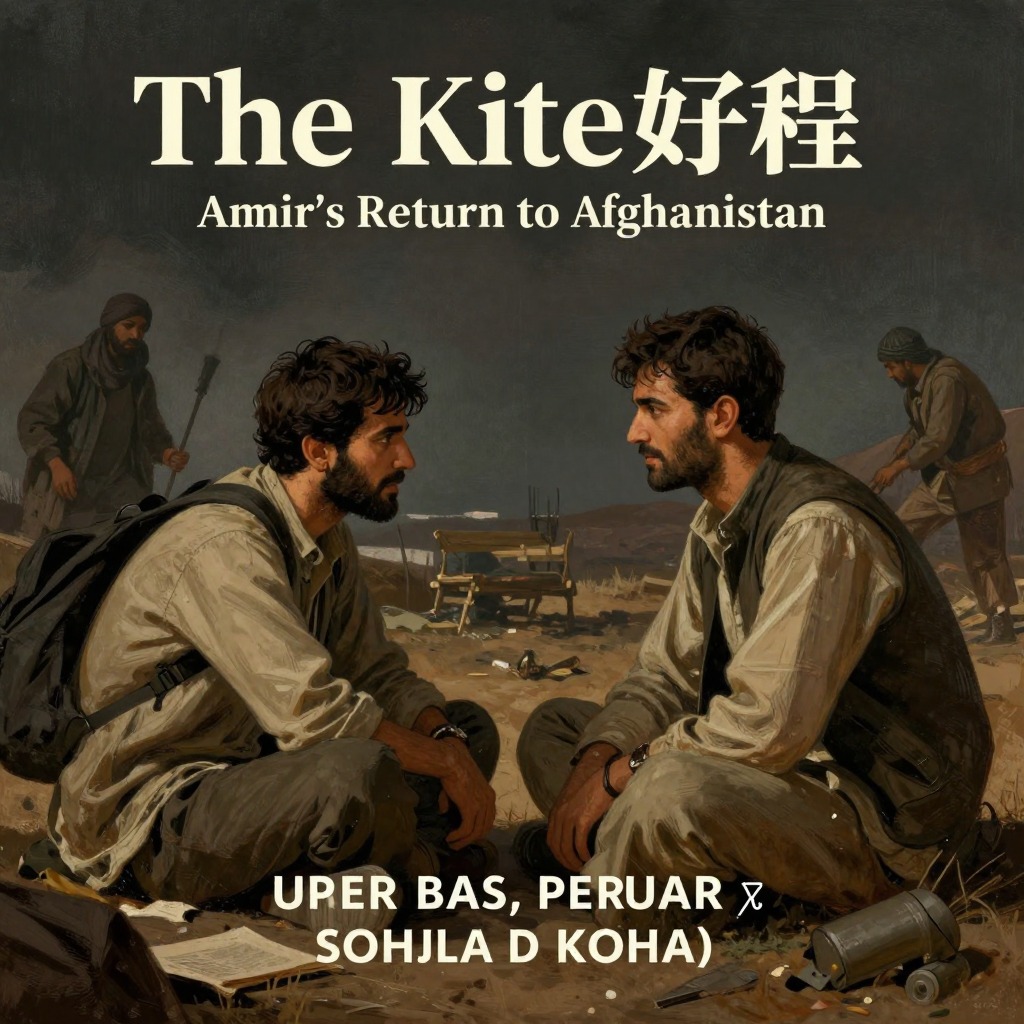
Hassan's life ended in tragedy. After Rahim Khan left for Pakistan in 2001, Taliban officials came to the house, accused Hassan of lying about his right to live there, and ordered him to leave. When he protested, they took him into the street, forced him to kneel, and shot him in the back of the head. Farzana came screaming and attacked them, and they shot her too, claiming self-defense. Their son, Sohrab, was taken to an orphanage. Hassan's death is the catalyst for Amir's final journey: Rahim Khan summons Amir to Peshawar, reveals the truth of their parentage, and asks him to rescue Sohrab. "There is a way to be good again," he says. Amir returns to Taliban-controlled Kabul, confronts Assef in a brutal fight, and, with Sohrab's help, escapes with the boy. In the novel's final scene, set in a Fremont park in March 2002, Amir flies a kite with Sohrab, performs the old lift-and-dive trick, and sees the first flicker of a smile on the traumatized boy's face. He then runs the last kite for Sohrab, echoing Hassan's words: "For you, a thousand times over."
Narrative Role and Evaluation
Hassan functions as both the moral center and the sacrificial figure of the novel. His unwavering goodness—his inability to hurt anyone, his refusal to retaliate, his willingness to absorb punishment for Amir's sins—serves as a constant reproach to Amir's cowardice and a measure of the distance Amir must travel toward redemption. He is also the embodiment of the novel's central themes: the corrosive effects of ethnic and religious prejudice, the weight of unatoned sin, and the possibility of forgiveness. His secret identity as Amir's half-brother retroactively redefines the entire narrative, transforming what seemed like a story of class and ethnic division into one of fraternal betrayal and the lies that families tell to protect themselves. Hassan's voice—"For you, a thousand times over"—becomes the novel's refrain, a phrase that Amir finally reclaims in his act of running the kite for Sohrab, suggesting that redemption, however partial, is possible when guilt is transformed into action.