Sanaubar
Sanaubar is a figure of stark contrasts in the novel, embodying both reckless abandonment and late-life devotion. Her initial flight from her family and her eventual return to care for her grandson Sohrab frame a narrative of desertion and hard-won redemption that mirrors the larger themes of the book.
Identity and Background
Sanaubar was a Hazara woman, a Shi'a Muslim, and Ali's first cousin. She was nineteen years younger than Ali, and her brilliant green eyes and impish face had, rumor has it, tempted countless men into sin. Her suggestive stride and oscillating hips sent men to reveries of infidelity. In her youth, she was a vision, with a dimpled smile and a walk that drove men crazy; no one who passed her on the street could look at her only once. Despite sharing ethnic heritage and family blood with Ali, she made no secret of her disdain for his appearance, sneering, "This is a husband? I have seen old donkeys better suited to be a husband." She joined the neighborhood kids in taunting Ali, who had a congenital paralysis of his lower facial muscles and a twisted, atrophied right leg from polio. Most people suspected the marriage had been an arrangement between Ali and her father to help restore some honor to her uncle's blemished name.
Abandonment of Hassan
In the winter of 1964, Sanaubar gave birth to Hassan in the servants' mud hut. The birth was simple: a few grunts, a couple of pushes, and out came Hassan smiling. But Sanaubar took one glance at the baby in Ali's arms, saw the cleft lip, and barked a bitter laughter. "There," she said. "Now you have your own idiot child to do all your smiling for you!" She refused to even hold Hassan. Just five days later, she ran off with a clan of traveling singers and dancers, a fate most Afghans considered far worse than death. Hassan never talked about his mother, as if she'd never existed. Years later, a soldier taunted Hassan by claiming to have known Sanaubar intimately, saying, "I knew her real good. I took her from behind by that creek over there."
Return and Redemption
In the summer of 1990, a woman covered in a sky blue burqa knocked on the front gates of Baba's house in Kabul. When Rahim Khan and Hassan helped her inside and removed the burqa, they found a toothless woman with stringy graying hair, sores on her arms, and a face grotesquely slashed with a knife—one cut went from cheekbone to hairline, sparing her left eye on the way. She had walked a long distance to see if Hassan was "as beautiful in the flesh as you are in my dreams." She wept when Hassan smiled, saying, "You smiled coming out of me, did anyone ever tell you? And I wouldn't even hold you. Allah forgive me, I wouldn't even hold you." Hassan initially bolted, but returned the next morning, took her hand, and told her she was home now, home with her family. He touched the scars on her face and ran his hand through her hair. Hassan and his wife Farzana nursed Sanaubar back to health, feeding her and washing her clothes. Rahim Khan gave her one of the guest rooms upstairs. She and Hassan spent time together, kneeling in the garden picking tomatoes or trimming rosebushes, catching up on lost years. As far as anyone knew, he never asked where she had been or why she had left, and she never told.
Relationship with Sohrab
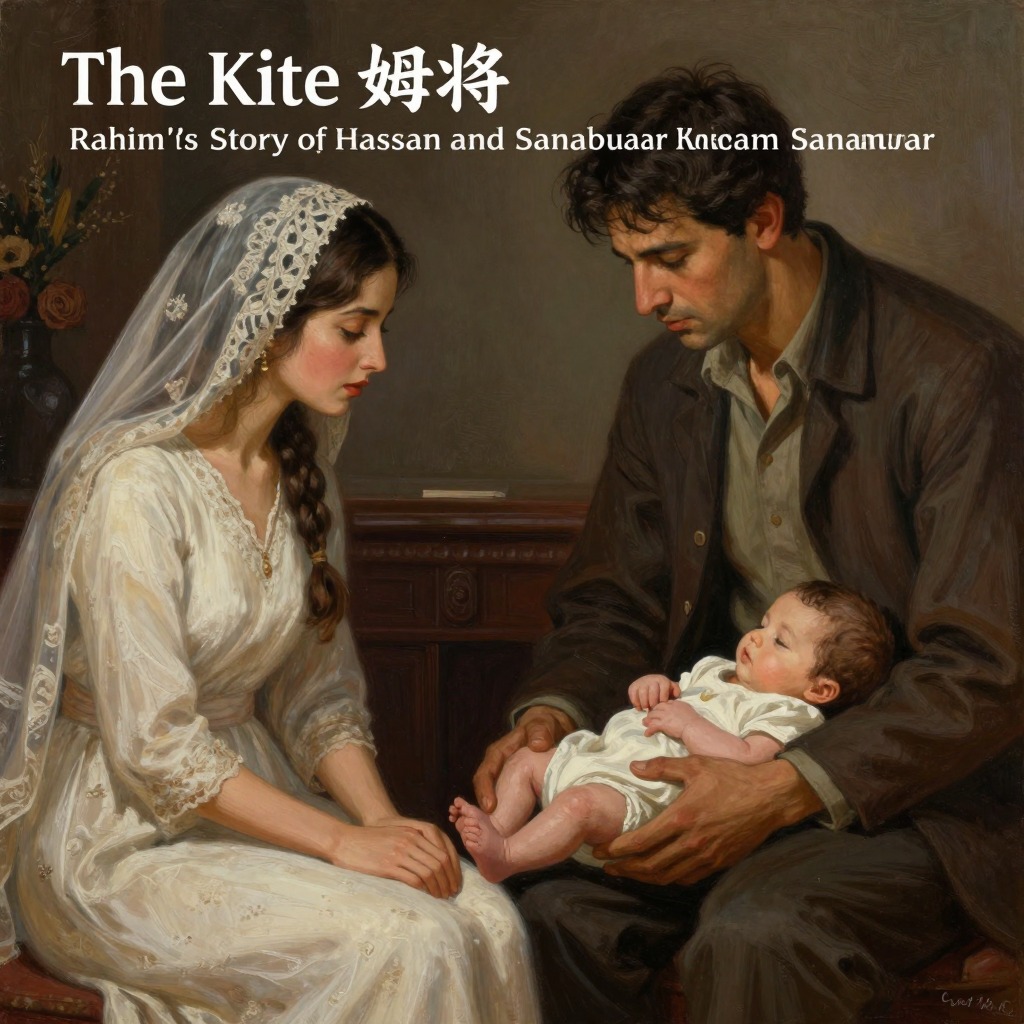
Sanaubar delivered Hassan's son, Sohrab, in the winter of 1990. She came out of the hut holding her grandson, wrapped in a wool blanket, beaming under a dull gray sky, tears streaming down her cheeks, clutching the baby in her arms like she never wanted to let go. She handed him to Hassan, who handed him to Rahim Khan, who sang the prayer of Ayat-ul-kursi in the boy's ear. Sohrab became the center of her existence. She sewed clothes for him, built him toys from scraps of wood, rags, and dried grass. When he caught a fever, she stayed up all night and fasted for three days. She burned isfand on a skillet to cast off the evil eye. By the time Sohrab was two, he was calling her Sasa. The two were inseparable. She lived to see him turn four, and then, one morning, she simply did not wake up. She looked calm, at peace, as if she did not mind dying. They buried her in the cemetery on the hill, by the pomegranate tree. The loss was hard on Hassan, but even harder on little Sohrab, who kept walking around the house looking for Sasa.