White Witch
The White Witch, whose true name is Jadis, is the self-proclaimed Queen of Narnia and the story's central antagonist. She has seized control of the entire land, enforcing a perpetual winter that never reaches Christmas, and rules through fear, magical coercion, and a network of spies and secret police. Her reign is founded on the Deep Magic from the Dawn of Time, which grants her ownership over every traitor, and she is determined to prevent the fulfillment of the prophecy that four humans—two Sons of Adam and two Daughters of Eve—will sit on the four thrones at Cair Paravel and bring about her downfall.
Identity and Origins
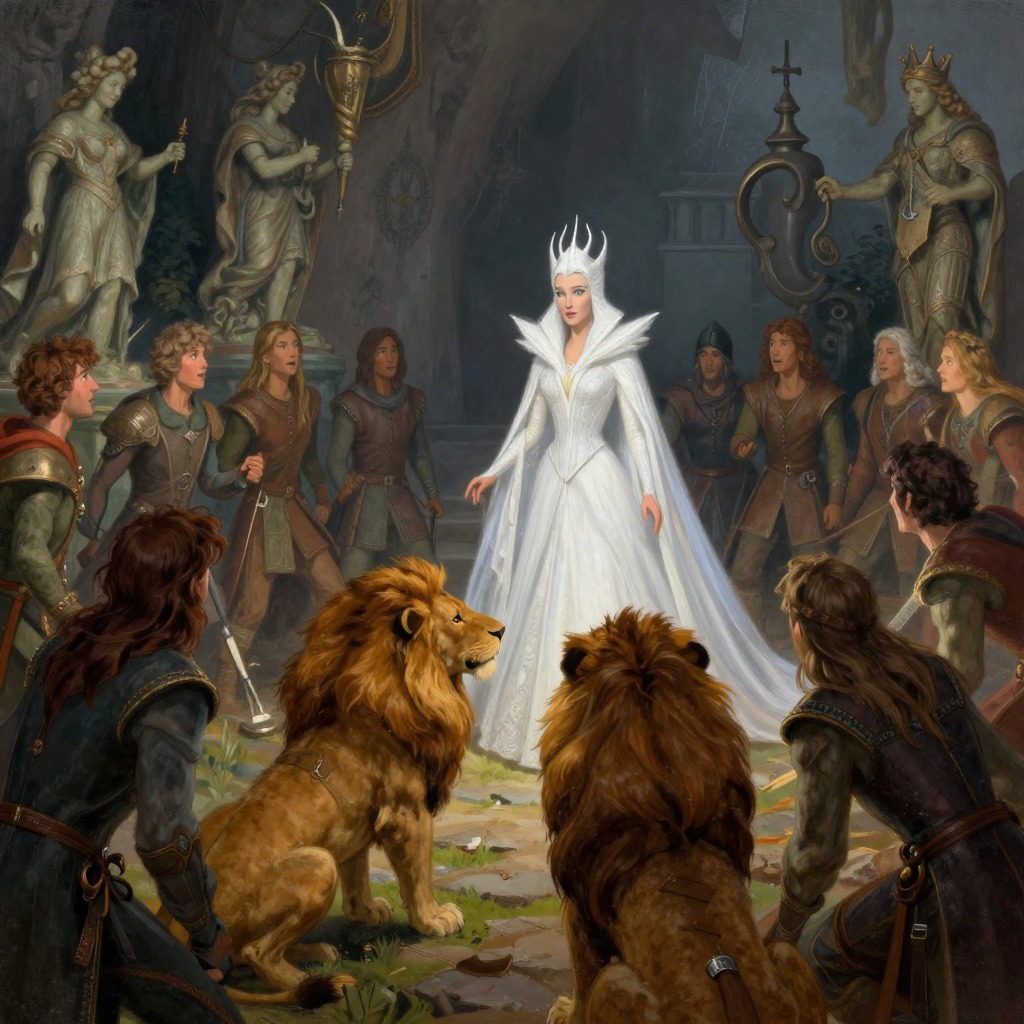
The White Witch is not human, though she claims the throne on that basis. As Mr. Beaver explains, she descends on one side from the Jinn (the race of Adam's first wife, Lilith) and on the other from giants, meaning she has "not a drop of real Human blood." This hybrid lineage makes her both powerful and utterly alien, and Mr. Beaver warns that anything that "looks like Humans and aren't" is inherently dangerous. She is described as a great lady, taller than any woman Edmund has ever seen, with a face that is white like snow or paper or icing sugar, except for her very red mouth. Though beautiful in other respects, her expression is proud, cold, and stern. She carries a long, straight golden wand, which she uses to turn living creatures into stone, and wears a golden crown. Her signature weapon is a stone knife of strange and evil shape, which she uses for ritual killings.
Role and Methods
The White Witch's power is maintained through a combination of magical tyranny and psychological manipulation. She has enchanted the entire land of Narnia so that it is always winter and never Christmas, a spell that drains the land of life and joy. She employs a Secret Police force, led by the wolf Fenris Ulf, to hunt down and arrest any who oppose her. Her most feared ability is petrification: with a wave of her wand, she can turn any living being into stone, and her castle courtyard and halls are filled with the statues of her victims—satyrs, wolves, bears, foxes, centaurs, a winged horse, a dragon, a giant, and even a little Faun who may be Lucy's friend Mr. Tumnus. She uses this power not only for punishment but also as a terror tactic, ensuring that the mere sight of her wand inspires dread. She is also a master of deception, able to make herself and her dwarf appear as a tree stump and a boulder to escape capture after Edmund's rescue.
Key Actions and Objectives
The White Witch's primary objective is to prevent the prophecy of the four thrones from being fulfilled. When she first encounters Edmund in the woods, she immediately recognizes the threat he represents and attempts to recruit him through bribery and manipulation. She feeds him enchanted Turkish Delight, which creates an addictive craving, and promises to make him a prince and later king of Narnia, provided he brings his brother and sisters to her house. She instructs him to keep their meeting a secret, knowing that the Fauns and other creatures have told the children "nasty stories" about her. When Edmund later betrays his siblings and comes to her castle alone, she is furious but uses him as bait, sending wolves to kill the Beavers and the other children. She also demonstrates her cruelty by turning a merry party of woodland creatures—a squirrel family, satyrs, a dwarf, and a fox—into stone simply for celebrating with gifts from Father Christmas, a direct challenge to her authority.
Confrontation with Aslan and the Deep Magic
The central conflict between the White Witch and Aslan revolves around the Deep Magic. When Edmund is rescued, the Witch appears before Aslan's camp and demands the boy's life, citing the ancient law that "every traitor belongs to me as my lawful prey" and that she has "a right to a kill." She insists that unless she has blood as the Law says, all Narnia will be overturned and perish in fire and water. Aslan acknowledges the truth of her claim and negotiates privately with her. The Witch eventually renounces her claim on Edmund's blood, but she does so with a look of fierce joy, having secured a far greater prize: Aslan himself agrees to die in Edmund's place. At the Stone Table, she oversees the humiliation and sacrifice of the Lion, shaving his mane, muzzling him, binding him, and finally killing him with her stone knife, believing that this act will appease the Deep Magic and give her Narnia forever.
Defeat and Death
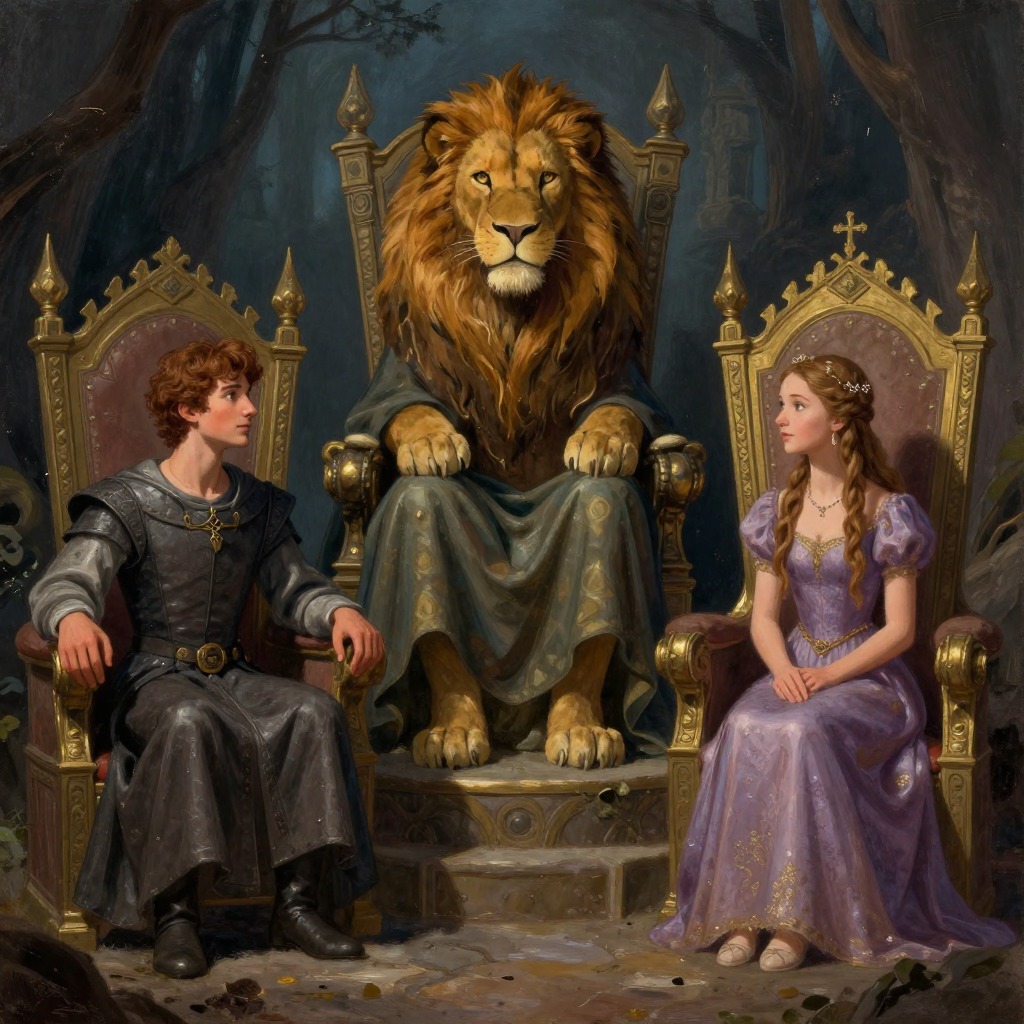
The White Witch's triumph is short-lived. Aslan's resurrection, made possible by a Deeper Magic from before the Dawn of Time that she did not know, breaks the Stone Table and restores the Lion to life. Aslan then leads the liberated statues from her castle into the final battle. During the fight, the Witch uses her wand to turn Aslan's troops into stone, but Edmund, in a crucial act of courage, smashes her wand with his sword, breaking her primary weapon. She then fights Peter with her stone knife, but Aslan himself intervenes, flinging himself upon her with a roar that shakes all Narnia. The Lion and Witch roll over together with the Witch underneath, and she is killed. Her death marks the end of her reign and the beginning of a golden age under the four Pevensie monarchs.
Thematic Significance
The White Witch embodies the forces of cold, death, and sterile tyranny. Her eternal winter is a literal and symbolic denial of life, growth, and joy—a world without Christmas, without spring, without hope. She represents the temptation of power and the corruption that comes from treating others as objects to be used or destroyed. Her defeat by Aslan's willing sacrifice and the children's courage underscores the novel's central themes: that love and self-sacrifice are stronger than hatred and magic, that true kingship is earned through service and bravery, and that even the deepest darkness cannot withstand the arrival of light and spring.