The Narrator
The Narrator is the pilot and first-person teller of the story, the one who met the Little Prince in the African desert and who, six years later, finally breaks his silence to recount what happened. He is the story's memory and its conscience: it is through his eyes that the reader sees the Little Prince, and through his lingering sorrow that the tale's true weight is carried. His narrative is not a simple report but a confession, shaped by grief, doubt, and an almost unbearable uncertainty about what became of the boy he loved.
Identity and Background
The Narrator is an aviator, a man whose life has been defined by flight and solitude. He is the one who, as a child, was misunderstood by grown-ups who could not see the meaning in his drawings, and who chose to become a pilot rather than pursue the respectable careers they urged on him. In the desert, after a crash, he finds himself alone, facing his own mortality, and it is there that the Little Prince appears. The Narrator's identity is thus forged in isolation and in the encounter with the extraordinary: he is the ordinary man who is granted a glimpse of a truth that grown-ups have forgotten.
The Encounter and the Telling
The Narrator's account begins with a confession: "And now six years have already gone by . . . I have never yet told this story." He explains that when he returned from the desert, his companions were "well content to see me alive," but he was sad, and he told them only, "I am tired." This admission reveals the depth of his experience: he could not speak of what had truly happened, and his sadness was hidden behind a simple excuse. The story he tells is thus a delayed revelation, a memory that has been held inside for six years before it can be released.
The telling itself is marked by a strange and moving uncertainty. The Narrator does not present the events as settled facts but as questions that still haunt him. He wonders what is happening on the Little Prince's planet, whether the sheep he drew has eaten the flower, and whether the Little Prince is safe. His narrative is not a confident recollection but a living, unresolved meditation on loss.
The Unfinished Drawing and Its Consequences
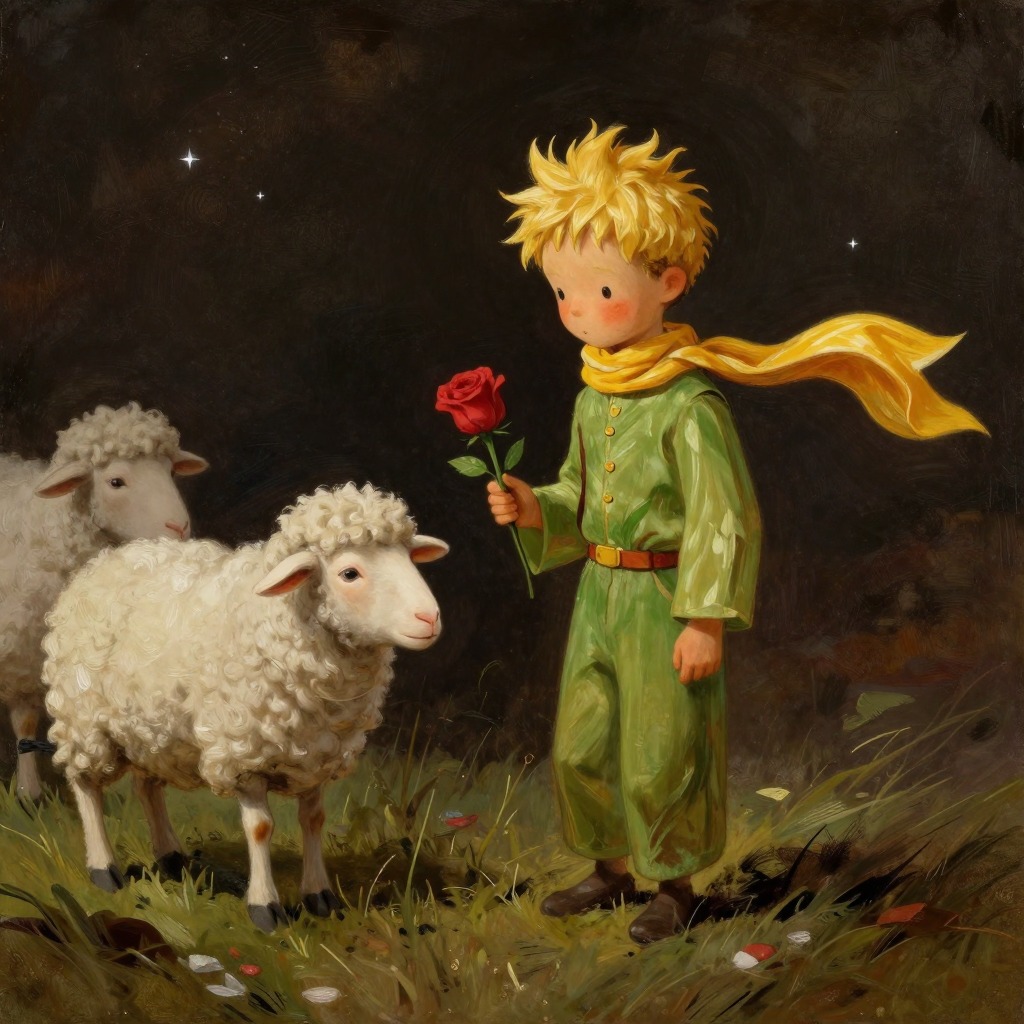
A central detail of the Narrator's account is the drawing of the muzzle for the sheep. He drew it for the Little Prince, but he forgot to add the leather strap. This small omission becomes a source of profound anxiety. The Narrator reflects, "He will never have been able to fasten it on his sheep. So now I keep wondering: what is happening on his planet? Perhaps the sheep has eaten the flower . . ." The forgotten strap is not a trivial mistake; it is the hinge on which the entire story's tragedy turns. Because of it, the Narrator cannot be sure that the Little Prince's beloved rose is safe, and this uncertainty colors everything.
The Narrator's mind oscillates between hope and fear. At one moment he tells himself, "Surely not! The little prince shuts his flower under her glass globe every night, and he watches over his sheep very carefully . . ." and then he is happy, and "there is sweetness in the laughter of all the stars." But at another moment he thinks, "At some moment or other one is absent-minded, and that is enough! On some one evening he forgot the glass globe, or the sheep got out, without making any noise, in the night . . ." and then "the little bells are changed to tears." This alternation between reassurance and dread is the emotional rhythm of his narrative, and it shows how the fate of a single flower can hold the power to change the universe.
The Great Mystery and the Reader's Role
The Narrator elevates this personal worry into a universal mystery. He writes, "Here, then, is a great mystery. For you who also love the little prince, and for me, nothing in the universe can be the same if somewhere, we do not know where, a sheep that we never saw has—yes or no?—eaten a rose . . ." He invites the reader to look up at the sky and ask, "is it yes or no? Has the sheep eaten the flower?" and he insists that "no grown-up will ever understand that this is a matter of so much importance!" In this way, the Narrator makes the reader a participant in his uncertainty, and he asserts that the fate of the rose is more significant than anything the adult world considers important.
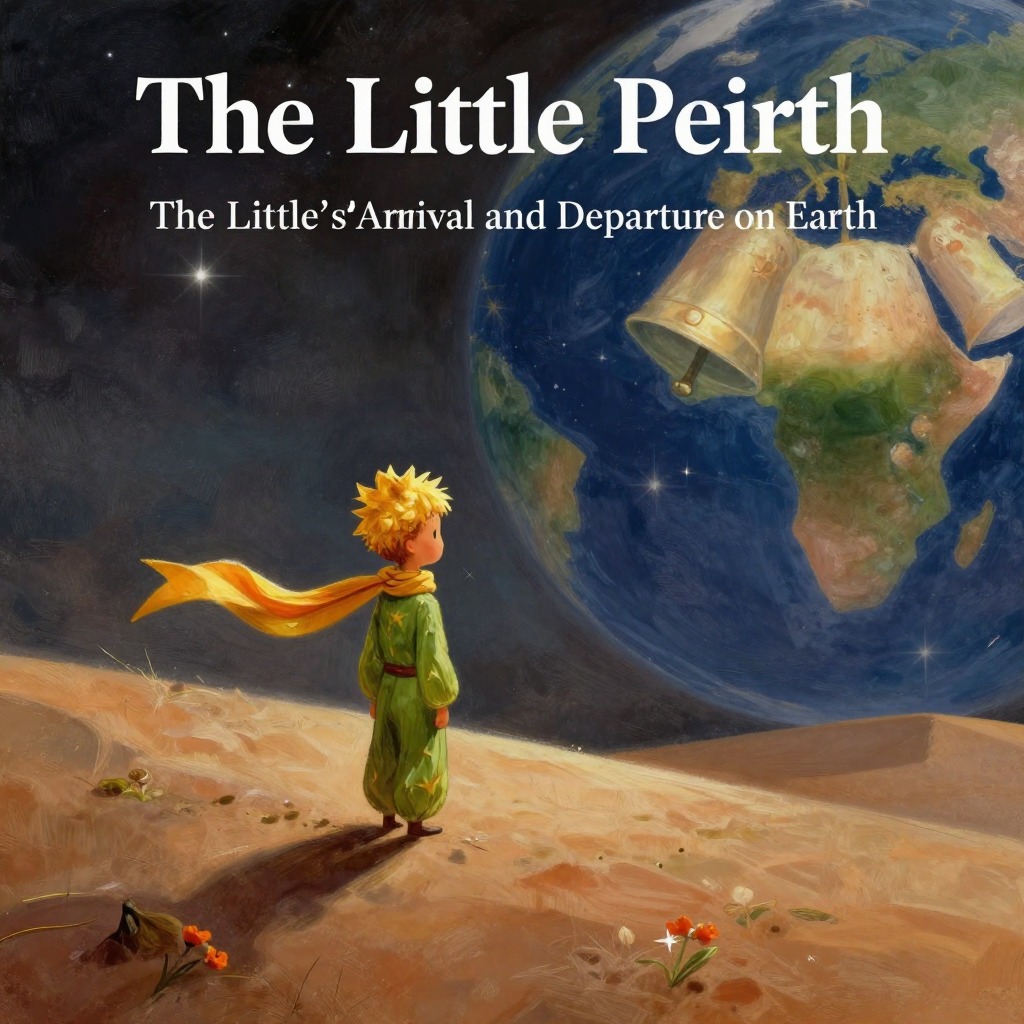
The Narrator's plea is also a request for comfort. He describes the place where the Little Prince appeared and disappeared as "the loveliest and saddest landscape in the world," and he draws it again "to impress it on your memory." He asks that if the reader ever travels to the African desert and comes upon this spot, they should not hurry on but wait "exactly under the star." If a little man appears who laughs, has golden hair, and refuses to answer questions, the reader will know who he is. And the Narrator begs, "please comfort me. Send me word that he has come back." This final request reveals the Narrator's deepest need: he is not merely telling a story but seeking reassurance that the Little Prince is alive and that his own loss is not final.
Change and Ending
The Narrator's story ends not with resolution but with an open question. He has told his tale, but his sorrow is only "comforted a little. That is to say—not entirely." He knows that the Little Prince did go back to his planet, because he did not find his body at daybreak, and he takes comfort in the thought that at night he can listen to the stars, which sound "like five hundred million little bells." Yet the uncertainty about the sheep and the rose remains, and it is this uncertainty that gives the story its enduring power. The Narrator has changed through his encounter: he has been given a glimpse of what truly matters, and he has been left with a love that is inseparable from doubt. His narrative is both a memorial and a plea, and it is through his voice that the Little Prince's story continues to live in the hearts of readers who, like him, are willing to ask the question that no grown-up can understand.