Aragorn
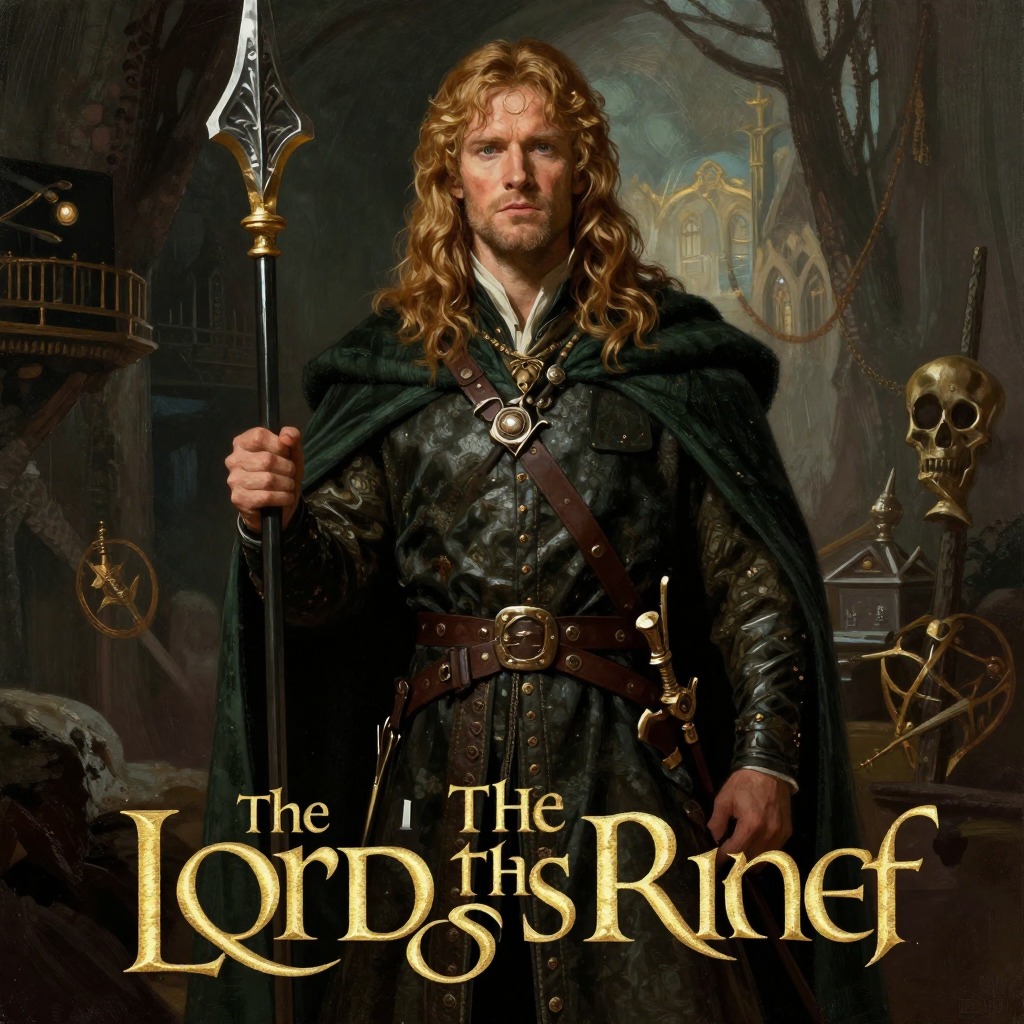
Aragorn, son of Arathorn, is the last chieftain of the Dúnedain of the North and the hidden heir to the thrones of Gondor and Arnor. For most of his life, he walked the wilds as a Ranger, known only as Strider, a weather-beaten man in worn green and grey, his true lineage a secret guarded by Elrond. His identity is encoded in the verse "All that is gold does not glitter, / Not all those who wander are lost," a prophecy that points to his destiny: to reforge the Sword that was Broken and unite the kingdoms of Men against Sauron.
Identity and Introduction
Aragorn is first encountered by the hobbits at the Prancing Pony in Bree, where he is a grim, watchful figure in the shadows, smoking a curiously carved pipe. Frodo initially distrusts him, but Gandalf's letter confirms that Strider is a friend, a Man "lean, dark, tall" who knows their business. His true name, Aragorn, is revealed only after he proves his trustworthiness by recounting the pursuit of the Black Riders and by showing the broken sword Narsil. He is a master of the wild, a healer, and a warrior, possessing a deep knowledge of ancient lore and the languages of Elves and Men.
Arc Through the Plot
Aragorn's role evolves from guide to leader. After Gandalf's fall in Moria, he takes command of the Fellowship, leading them through Lothlórien and down the Anduin. At Parth Galen, he faces the choice of pursuing the Orcs who captured Merry and Pippin or following Frodo. He chooses the former, a decision that leads him into Rohan, where he meets Éomer and proves his identity by drawing Andúril, the Flame of the West, reforged from Narsil. He then takes the Paths of the Dead, summoning the oathbreakers to fulfill their ancient vow, and leads the Grey Company to the Harlond, arriving in time to turn the tide at the Battle of the Pelennor Fields. His final act is to march to the Black Gate, drawing Sauron's eye away from Frodo, a desperate gambit that succeeds.
Relationships and Conflict
Aragorn's relationships define his journey. He is a reluctant king, bound by duty to his lineage, yet he forges deep bonds of friendship with the hobbits, especially Frodo, whom he guides and protects. His rivalry with Boromir is a key conflict; Boromir, proud and desperate, tries to take the Ring, while Aragorn, knowing its peril, refuses to claim it. His love for Arwen, Elrond's daughter, is a central motivation, but it is a love that requires him to earn his kingship. His greatest conflict is with Sauron, whom he challenges by revealing himself in the Palantír of Orthanc, a bold move that draws the Dark Lord's attention but also buys time for the Ring-bearer.
Change and Ending
Aragorn's transformation is complete by the story's end. He sheds the guise of Strider, the ragged Ranger, and is crowned King Elessar, the Elfstone, in Minas Tirith. He heals the sick in the Houses of Healing, fulfilling the prophecy that "the hands of the king are the hands of a healer." He marries Arwen, uniting the lines of Elves and Men, and rules a restored kingdom of Gondor and Arnor. His final act is to lay down his life willingly at the age of 210, passing the crown to his son Eldarion, and accepting the Gift of Men with grace.
Narrative Role and Evaluation
Aragorn is the archetypal returning king, a figure of hope and restoration. His journey from obscurity to power mirrors the classic hero's journey, but it is tempered by humility and wisdom. He is not a warrior seeking glory but a leader who bears the weight of his people's fate. His strength lies not in the Ring, which he refuses, but in his own will and the loyalty he inspires. He is a symbol of the West's endurance, a man who, in the words of the prophecy, "renewed shall be blade that was broken, / The crownless again shall be king."