Denethor
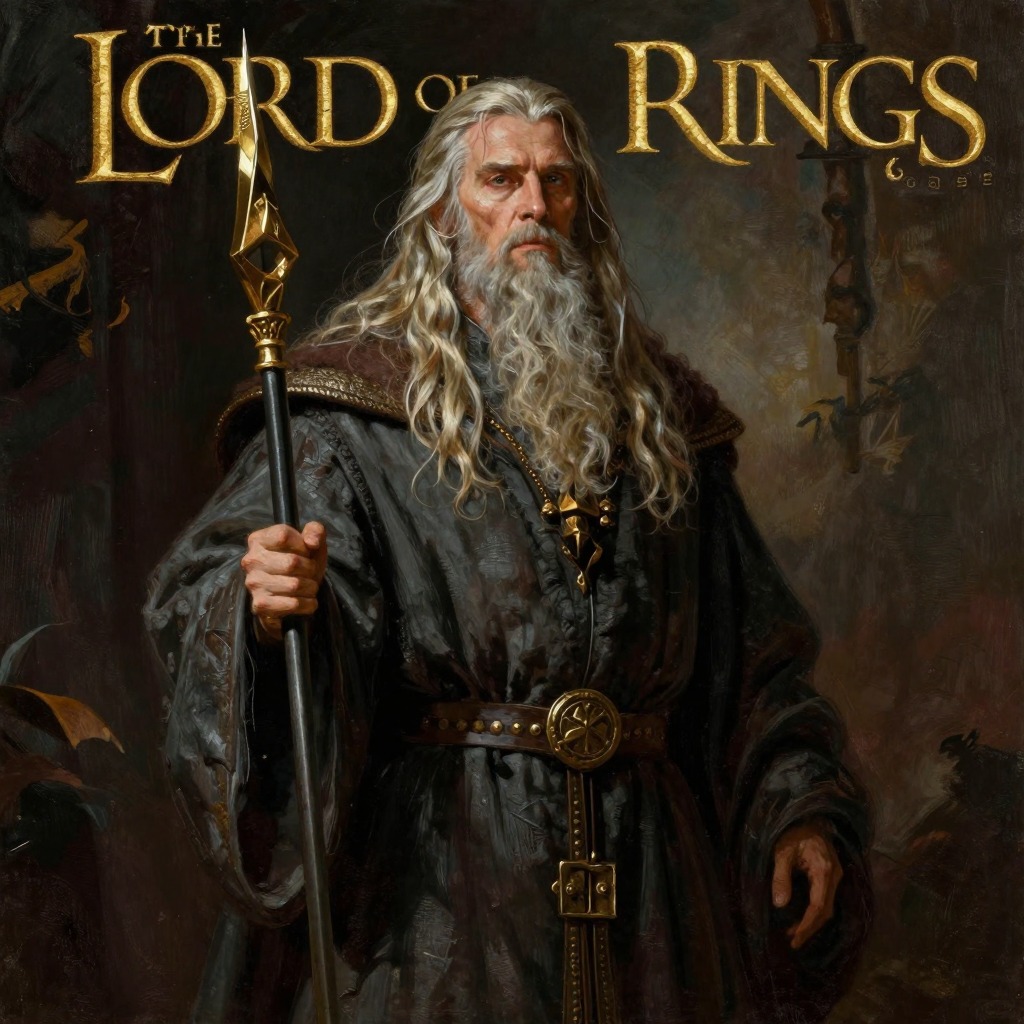
Denethor II, son of Ecthelion, was the twenty-sixth and last Ruling Steward of Gondor, a man of immense pride, wisdom, and strength of will, yet one whose long contest with the will of Sauron through the palantír of Minas Tirith consumed him in despair. His story is one of a noble lord broken by the weight of his own knowledge and grief, culminating in a spectacular and tragic fall that nearly destroyed his house and his city.
Identity and Background
Denethor was a man of high Númenórean lineage, tall, valiant, and more kingly than any who had appeared in Gondor for many lives of men. He was learned in lore and possessed a far-sightedness that allowed him to perceive much of what passed in his realm and beyond. He married late, taking as his wife Finduilas of Dol Amroth, a lady of great beauty who withered in the guarded city, her heart turned always to the sea she missed. She died young, leaving Denethor with two sons, Boromir and Faramir. After her death, he became more grim and silent, often sitting alone in his high chamber in the White Tower, deep in thought. It was then that he dared to look into the palantír of Minas Tirith, a stone that was in accord with the one Sauron possessed. Through it, he gained great knowledge but at a terrible price, aging before his time and becoming filled with despair as he saw the vast might of Mordor arrayed against him.
The Steward's Pride and Despair
Denethor's pride was immense. He saw the war against Sauron as a personal combat between himself and the Dark Lord, and he mistrusted all others who resisted Sauron, unless they served him alone. This pride made him deeply suspicious of Gandalf, whom he accused of seeking to rule in his stead and of bringing the Ranger Aragorn to supplant him. When Boromir, his beloved elder son, died, Denethor's grief was overwhelming. He blamed Faramir for not having gone in Boromir's stead and, in his bitterness, sent Faramir on a near-suicidal mission to hold the fords of Osgiliath. When Faramir returned, wounded and feverish from a Morgul dart, Denethor's mind finally broke. He declared that the West had failed and that all should burn. He ordered his servants to prepare a pyre for himself and his son in the House of the Stewards in Rath Dínen, the Silent Street.
The Pyre and the Fall
Denethor's madness reached its peak when he had Faramir laid upon a table in the tomb, drenched in oil, and prepared to set the pyre alight. Beregond, a Guard of the Citadel, defied his lord's orders to save Faramir, slaying two of Denethor's servants in the process. Gandalf arrived and confronted the Steward, revealing the power of the palantír and the deception Sauron had worked upon him. Denethor, holding the palantír, laughed in defiance, declaring that he would not be the tool of any wizard or the dotard chamberlain of an upstart king. He broke his staff of office, cast it into the flames, and laid himself upon the pyre, clasping the palantír to his breast. As the fire consumed him, he gave a great cry and was never seen again by mortal men. His death was a final act of pride and despair, a refusal to accept a diminished life or a world not of his own making.
Thematic Significance
Denethor's tragedy is a powerful illustration of the corrupting influence of despair and the misuse of power. His wisdom and strength, which should have been used to defend Gondor, were turned inward and became instruments of his own destruction. He is a foil to both Gandalf and Aragorn: where Gandalf refuses the Ring and trusts in the strength of others, Denethor trusts only in his own will and is consumed by it; where Aragorn accepts his heritage and faces the Shadow with hope, Denethor succumbs to the very despair that Sauron sought to spread. His fall is a direct consequence of the Enemy's will entering the heart of the City through the palantír, a reminder that even the greatest can be undone by the very tools they use to fight the darkness. His final act, a suicide that nearly murders his own son, marks the absolute nadir of Gondor's fortunes, a darkness that is only broken by the arrival of Aragorn and the victory at the Pelennor Fields.