Saruman
Saruman the White, later known as Saruman of Many Colours, was the chief of the Istari, the order of Wizards sent to Middle-earth to contest the power of Sauron. For centuries he was accounted the wisest and most powerful of their number, the head of the White Council, and a master of ring-lore. Yet his long study of the arts of the Enemy, his pride, and his secret desire for the One Ring gradually corrupted him, turning him from a guardian of the Free Peoples into a treacherous servant of the Dark Lord, and finally into a petty, vengeful tyrant whose ruin was completed by his own malice.
Identity and Background
Saruman was one of the five Istari, the Wizards sent from the Far West to Middle-earth in the Third Age. He was known by many names: Curunír in the Elvish tongue, Saruman the White, and later, after his fall, Saruman of Many Colours. He was the head of the White Council, a position of great honour and authority. For a long time, he dwelt in Isengard, a ring of sheer rocks in the valley of Nan Curunír, at the centre of which stood the tower of Orthanc, a pinnacle of black stone built by the Men of Númenor. There he studied the lore of the Rings of Power, seeking the lost secrets of their making, and he was considered the greatest authority on such matters. He was also a neighbour to the Ents of Fangorn Forest, and for a time he walked among them, learning from Treebeard, though he never repaid that knowledge in kind. His face, as Treebeard remembered it, became like 'windows in a stone wall: windows with shutters inside.'
The Fall and Treachery
Saruman's fall began with his use of the palantír of Orthanc, one of the Seeing Stones of Númenor. Through it, he looked towards Barad-dûr and was ensnared by Sauron, who had mastered the Ithil-stone. From that point, Saruman became a traitor to the Council, secretly serving the Dark Lord while plotting his own rise to power. He began to breed a new race of Orcs, the Uruk-hai, who could endure the sun, and he mustered a great army of Orcs, Wolf-riders, and evil Men. He also took Wormtongue, Gríma, into his service as a spy in the court of King Théoden of Rohan, poisoning the king's mind and weakening his realm. When Gandalf came to Orthanc seeking aid, Saruman revealed his true colours, offering Gandalf a choice: join him in alliance with Sauron, or be imprisoned. He declared himself 'Saruman of Many Colours', and his robes, once white, shimmered with all hues. Gandalf refused, and Saruman held him captive on the pinnacle of Orthanc until Gwaihir the Windlord rescued him.
The War of the Ring and Downfall
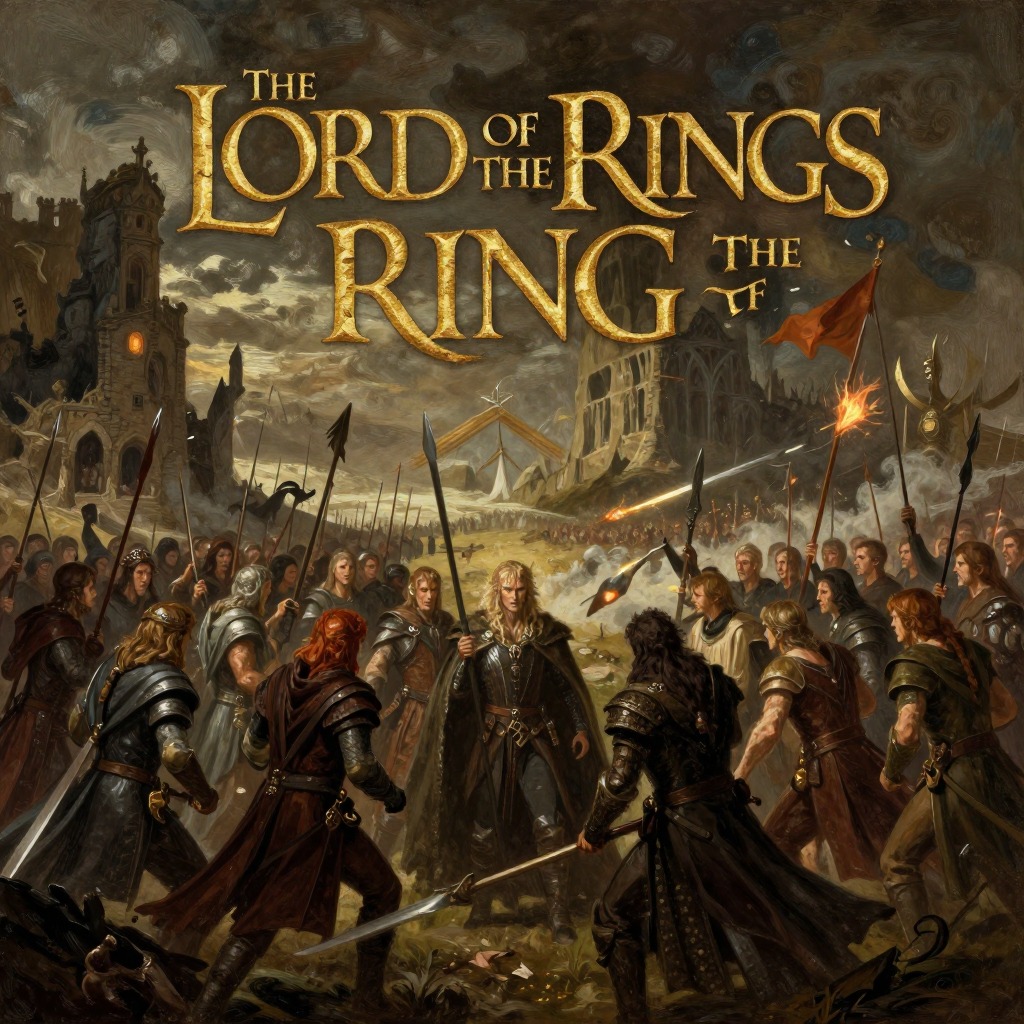
During the War of the Ring, Saruman's forces attacked Rohan, but were defeated at the Battle of the Hornburg. The Ents, roused by the destruction of their trees, marched on Isengard and tore down its walls, flooding the valley and trapping Saruman in Orthanc. After the battle, Gandalf, now the White, confronted him. He broke Saruman's staff and cast him from the order and the Council, but offered him a chance to leave Orthanc free. Saruman refused, choosing instead to remain in his tower, nursing his hatred. He was left under the watch of the Ents, but eventually, using the poison of his voice, he persuaded Treebeard to release him. He then made his way to the Shire, where he took control of Lotho Sackville-Baggins's operation, calling himself 'Sharkey'. There he oversaw the ruin of the land, cutting down trees, fouling the water, and terrorising the Hobbits.
The End in the Shire
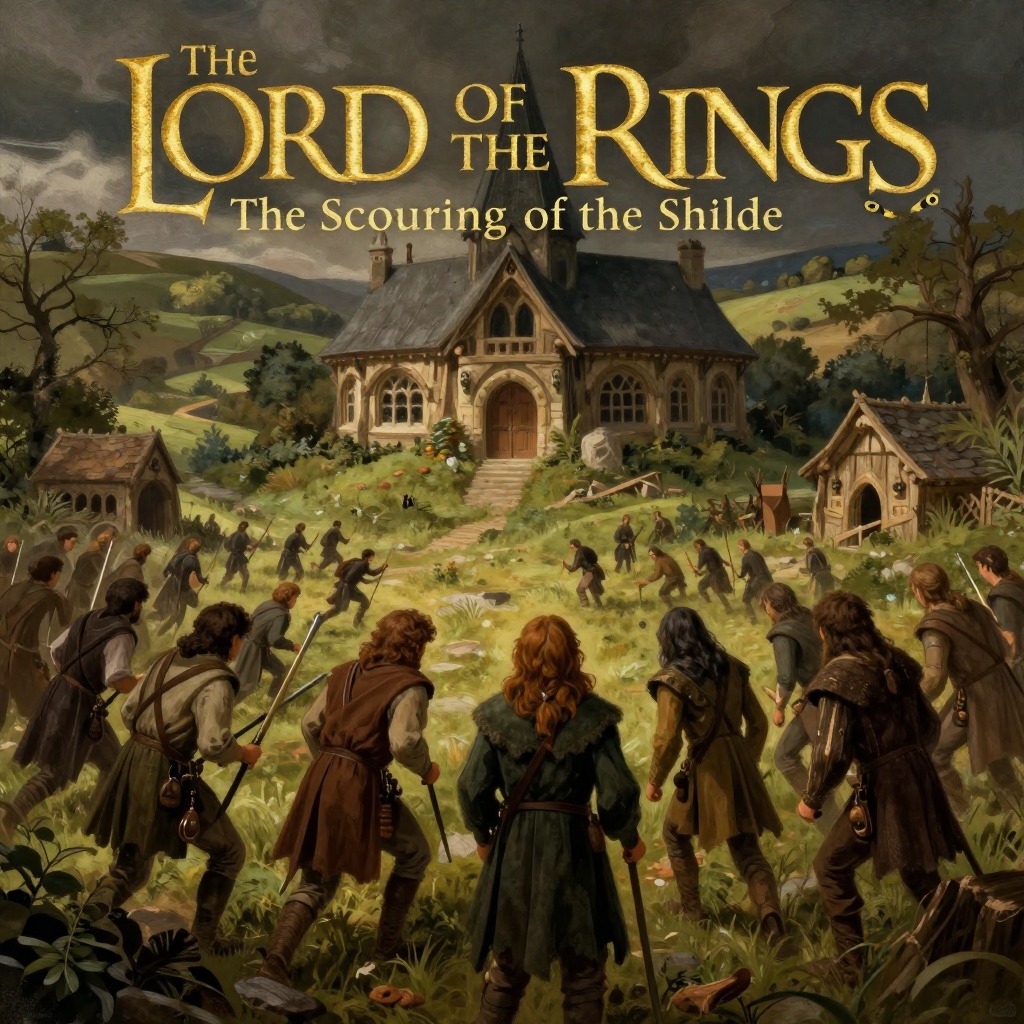
When Frodo and his companions returned to the Shire, they led a rebellion that overthrew Saruman's rule. After the Battle of Bywater, Frodo confronted Saruman at Bag End. Saruman mocked them, but Frodo offered him mercy, telling him to go and never return. As Saruman turned to leave, Wormtongue, whom he had kicked and abused, drew a hidden knife and cut his throat. Saruman's body fell, and a grey mist rose from it, looming over the Hill before dissolving into nothing. Frodo looked at the body with pity and horror, seeing it shrink into a hideous skull. He covered it and turned away. 'And that's the end of that,' said Sam. 'A nasty end, and I wish I needn't have seen it; but it's a good riddance.'
Thematic Significance
Saruman's story is a cautionary tale about the corrupting nature of power and pride. He began as a figure of immense wisdom and authority, but his desire for the One Ring and his willingness to use the Enemy's own arts led to his downfall. He became a mirror of Sauron, a lesser but still dangerous tyrant. His end is particularly ignoble: not in a grand battle, but at the hands of his own abused servant, in the very Shire he had tried to enslave. His voice, once capable of enchanting all who heard it, was reduced to a tool of petty malice. As Gandalf said, 'He is fallen, and his cure is beyond us; but I would still spare him, in the hope that he may find it.' Yet Saruman rejected that hope, choosing instead to die in bitterness and spite, a warning of what even the greatest can become when they abandon their purpose.