Paul Kasoura
Paul Kasoura is a young, cultured Japanese businessman living in San Francisco, a key figure in the novel's exploration of cultural hierarchy and aesthetic value. He and his wife Betty initially befriend Robert Childan, but Paul's sophisticated understanding of art and his subtle manipulation of Childan reveal the deep power imbalances and psychological complexities of their occupied world.
Identity and Background
Paul Kasoura is a well-dressed, modern Japanese man, part of the rising generation that does not remember the war. He is stationed in San Francisco with the Standard of Living for Unfortunate Areas Planning Commission of Inquiry, a position that marks him as a member of the elite, cultured class. He and his wife Betty live in an exclusive apartment building in the City of the Winding Mists, a district where no white people live. Paul is a connoisseur of American culture, particularly its art and music. He is a former science fiction enthusiast and collects rare books, such as Nathanael West's Miss Lonelyhearts. He also has a deep appreciation for early Dixieland jazz, owning original Genet recordings of musicians like Bunk Johnson and Kid Ory.
Arc Through the Plot
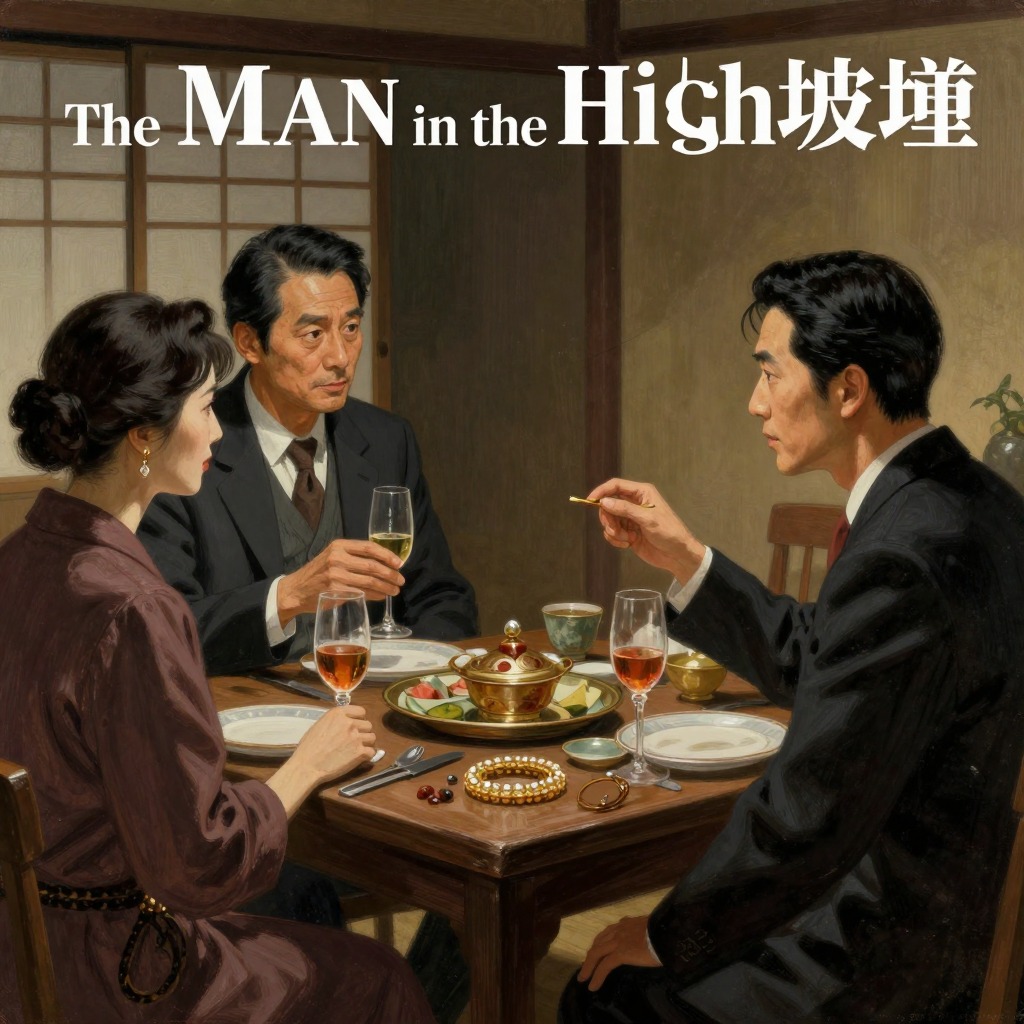
Paul first appears as a customer in Robert Childan's store, American Artistic Handcrafts Inc., where he and his wife are looking for items to decorate their new apartment. He is impressed by Childan's stock and invites him to dinner. During the dinner, Paul engages Childan in discussions about politics and art, subtly exposing Childan's insecurities and prejudices. Later, Paul becomes a crucial figure in the evaluation of the Edfrank jewelry. When Childan presents him with a piece as a gift, Paul initially dismisses it as laughable, but after prolonged contemplation, he recognizes a profound value in it, which he identifies as "wu." He then reveals that he has shown the piece to business acquaintances, one of whom is an importer interested in mass-producing the designs as good-luck charms. This revelation forces Childan into a moral crisis, ultimately leading to Childan's defiant rejection of the mass-production scheme and his assertion of pride in the American artisans' work.
Relationships and Conflict
Paul's relationship with Robert Childan is the central dynamic of his character arc. He initially treats Childan with polite condescension, but his true power is revealed in their later encounter. Paul uses his cultural authority to manipulate Childan, leading him to the conclusion that the American jewelry is only fit for mass-produced trinkets. This is a calculated act of psychological domination, a subtle but devastating demonstration of Japanese rule. However, when Childan finally rebels, demanding an apology for the insult to the artisans, Paul relents, offering a formal apology and shaking his hand. This moment of grace, however, does not erase the fundamental power imbalance. Paul's relationship with his wife Betty is one of mutual respect, though they disagree on matters of taste, such as his love of jazz. He is also connected to a powerful importer, a figure who represents the commercial forces that threaten to commodify the Edfrank jewelry.
Change and Ending
Paul's character undergoes a subtle but significant shift. He begins as a confident, culturally superior figure, but his encounter with the Edfrank jewelry and Childan's defiance forces him to confront a genuine expression of American creativity and pride. His initial amusement gives way to a serious, almost spiritual, appreciation of the object's "wu." When Childan rejects the importer's offer, Paul does not retaliate; instead, he acknowledges Childan's stance with a formal apology. This suggests a capacity for genuine respect, even within the rigid hierarchy of their world. His final act is to return the jewelry to Childan, telling him that the task of promoting it is now his. Paul's role is that of a catalyst, forcing Childan to choose between commercial compromise and artistic integrity.
Thematic Significance
Paul Kasoura embodies the novel's central themes of cultural domination, aesthetic value, and the search for authenticity. He is a representative of the Japanese victors, whose sophisticated taste and subtle psychological manipulation are a more insidious form of control than brute force. His appreciation of "wu" in the Edfrank jewelry introduces a non-Western aesthetic framework that challenges the novel's obsession with "historicity." Paul's character demonstrates that even within a system of oppression, moments of genuine connection and moral choice are possible, but they are always framed by the inescapable realities of power. He is a figure who both enforces and, in a limited way, transcends the cultural hierarchy of his world.