Margarita
Margarita is the heroine of the second half of Mikhail Bulgakov's novel, a woman whose love for the master is so absolute that it transforms her from a lonely figure in a Moscow street into a witch who presides over Satan's annual spring ball. She is the emotional and moral center of the Moscow plot, the character who acts decisively when the master can no longer act for himself, and whose bargain with Woland wins them both a form of peace beyond the reach of the literary establishment that destroyed the master's novel.
Identity and Introduction
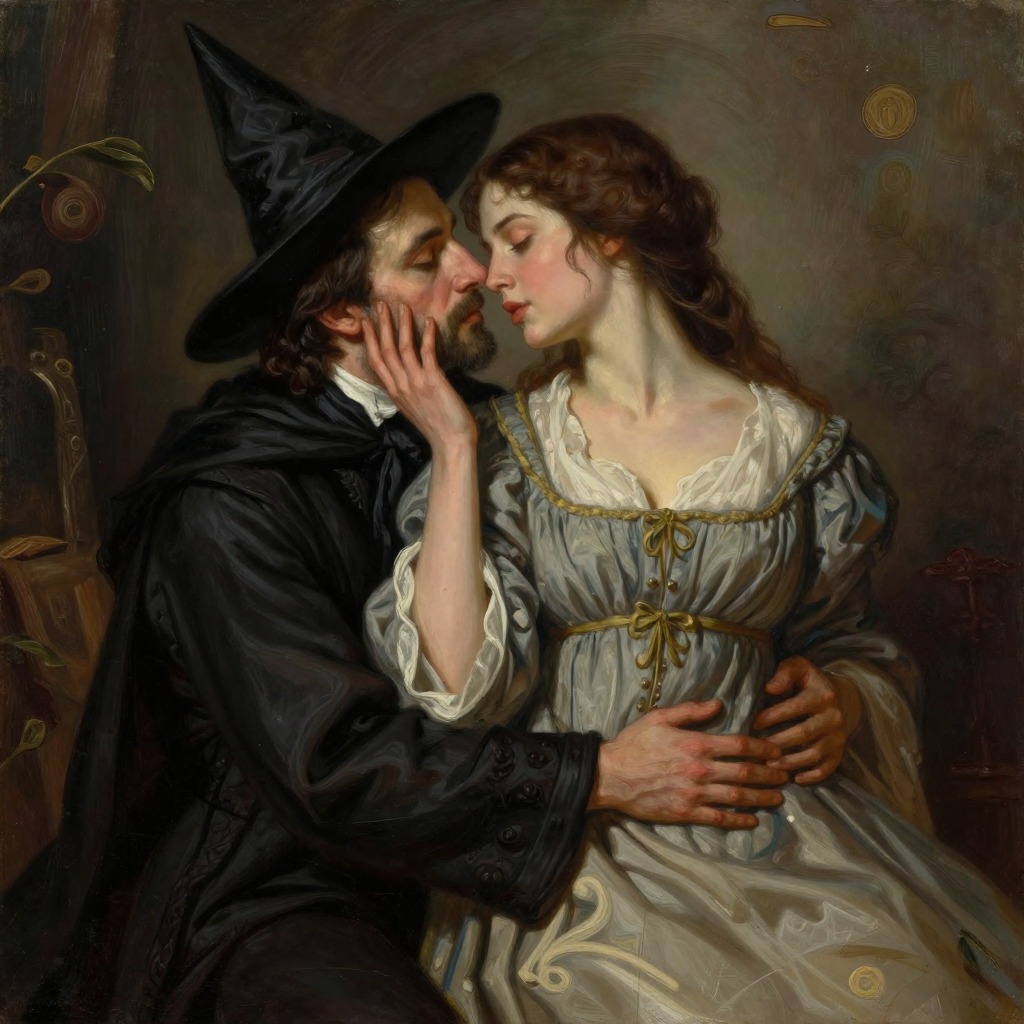
Margarita first appears not by name but as a figure carrying "repulsive, alarming yellow flowers" along Tverskaya Street, flowers that stand out sharply against her black spring coat. The master, who narrates their meeting to Ivan Homeless in the psychiatric clinic, is struck not primarily by her beauty but by "an extraordinary loneliness in her eyes, such as no one had ever seen before." She speaks first, asking if he likes her flowers; when he says he prefers roses, she throws the yellow flowers into the gutter. Love, the master says, "leaped out in front of us like a murderer in an alley leaping out of nowhere, and struck us both at once." She later insisted that they had loved each other for a long time without knowing each other, and that she went out that day with the yellow flowers so that he would find her at last; if it had not happened, she would have poisoned herself, because her life was empty. She was married to another man at the time, and the master was married to a woman whose name he could barely remember — "Varenka ... Manechka ... no, Varenka ... striped dress, the museum." Margarita became the master's secret wife, visiting him every afternoon in his basement apartment near the Arbat, and no one knew of their liaison: her husband did not know, her acquaintances did not know.
Life with the Master and the Novel
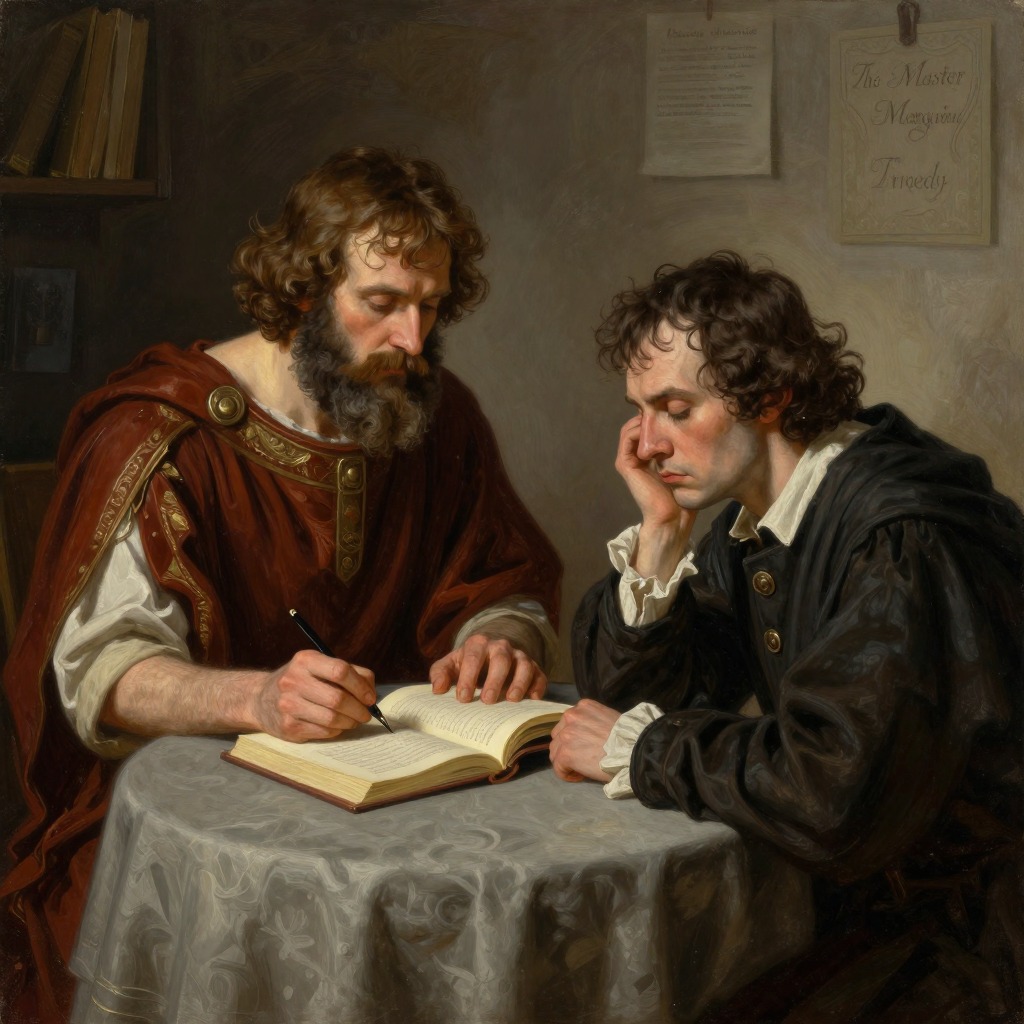
In the basement refuge, Margarita's life became entirely bound up with the master's novel about Pontius Pilate. She would arrive, put on an apron, light the kerosene stove, and prepare lunch on the wooden table in the narrow front hall. During May storms, when water rushed past the near-sighted windows, the lovers would light the stove and bake potatoes; steam rose from the potatoes, the black skins dirtied their fingers, and laughter came from the basement. When summer came, the long-awaited roses they both loved appeared in a vase. Margarita would sit with her slender fingers, sharply filed nails buried in her hair, endlessly rereading what the master had written, and after rereading it would sit sewing the black cap with the yellow letter "M" that the master later wore in the clinic. She foretold fame for him, urged him on, and it was she who first began to call him "the master." She waited impatiently for the promised last words about the fifth procurator of Judea, repeated aloud in a sing-song voice certain phrases she liked, and said that her life was in this novel.
The Collapse and the Burning of the Novel
When the novel was finished and the master took it into the world of literature, catastrophe followed. The editor rejected it; critics Latunsky, Ariman, and Mstislav Lavrovich published vicious articles attacking the novel and its author, with Latunsky's article entitled "A Militant Old Believer." The master began to suffer from fear and mental illness. Margarita changed very much — she became thinner and paler, stopped laughing, and kept asking him to forgive her for having advised him to publish an excerpt. She urged him to drop everything and go to the Black Sea, spending what was left of the hundred thousand roubles he had won on the trip. To avoid an argument, the master promised he would go, and gave her about ten thousand roubles to keep for him. She took the money, put it in her purse, kissed him, and said it would be easier for her to die than to leave him alone in such a state. She left at dusk in mid-October, promising to return the next day. That night, in a fit of despair and terror, the master burned the manuscript of the novel in the stove. Margarita arrived while the fire was still burning; she pulled the last sheaf of pages from the stove with her bare hands, threw it on the floor, and stamped out the fire. She wept irrepressibly and convulsively, then collected and smoothed out the burnt-edged pages, wrapped them in paper, and tied them with a ribbon. She told the master she would leave her husband the next morning and come back to him forever. The master refused to let her perish with him. She left, and he never saw her again; a quarter of an hour after she left, there came a knock at his window, and he was arrested. He was eventually taken to Stravinsky's clinic, where he spent four months, believing that Margarita had forgotten him.
Bargain with Satan and the Ball
Margarita does not forget the master. She appears in the second part of the novel as a woman who has learned nothing of his fate and is consumed by longing. When Woland's retinue, led by Azazello, offers her a chance to become a witch and attend Satan's ball, she accepts without hesitation. She flies naked over Moscow on a broomstick, wreaks havoc on the apartment of the critic Latunsky, and then presides over Woland's annual spring ball as its queen, receiving the infamous dead who gather there. At the ball, she is covered in blood from kissing the knee of a dead man, and her feet swell from standing. When Woland offers her any reward, she asks not for herself but for the master to be returned to her. Woland summons the master from the clinic, and they are reunited.
The Final Reward: Peace, Not Light
At the novel's end, Woland grants the master and Margarita a final departure from Moscow. They ride black horses into the sky, leaving behind the city and its torments. Matthew Levi appears, sent by Yeshua, and announces that the master "does not deserve the light, he deserves peace." Margarita's fate is tied to the master's: she goes with him to his eternal refuge, a place described in a rather German-Romantic setting with Schubert's music and blossoming cherry trees. The novel's final image is of Margarita and the master together, having found the peace that was denied them in life. Her love, courage, and willingness to sacrifice herself are what make this ending possible; she is the character who acts, who bargains, and who refuses to let the master be destroyed by the world that rejected his novel.