Pontius Pilate
Pontius Pilate, the fifth procurator of Judea, is a figure of immense moral complexity in Mikhail Bulgakov's The Master and Margarita. He is introduced not as a simple villain but as a man tormented by a debilitating hemicrania and trapped within the machinery of Roman imperial power. His pivotal encounter with the wandering philosopher Yeshua Ha-Nozri forces him to confront the truth, but his ultimate act of cowardice—condemning an innocent man to a brutal execution—condemns him to an eternity of remorse, making him one of the novel's most tragic and resonant characters.
Identity and Introduction
Pontius Pilate is introduced in the second chapter, a narrative within the novel, as a man of immense authority and physical suffering. He appears "in a white cloak with blood-red lining, with the shuffling gait of a cavalryman," a description that immediately establishes his military bearing and his role as a Roman administrator in the conquered land of Judea. His first words are a cry of agony: "Oh, gods, gods, why do you punish me?" as he is afflicted by a terrible headache, the "invincible, terrible illness... hemicrania." This physical pain is a constant presence, coloring his perception and decisions. He is a man who hates the smell of rose oil, a sensory detail that underscores his irritable and world-weary nature. His power is absolute within his domain, yet he is also a servant of a distant and terrifying emperor, Tiberius Caesar, whose authority looms over every decision.
The Encounter with Yeshua and the Moment of Truth
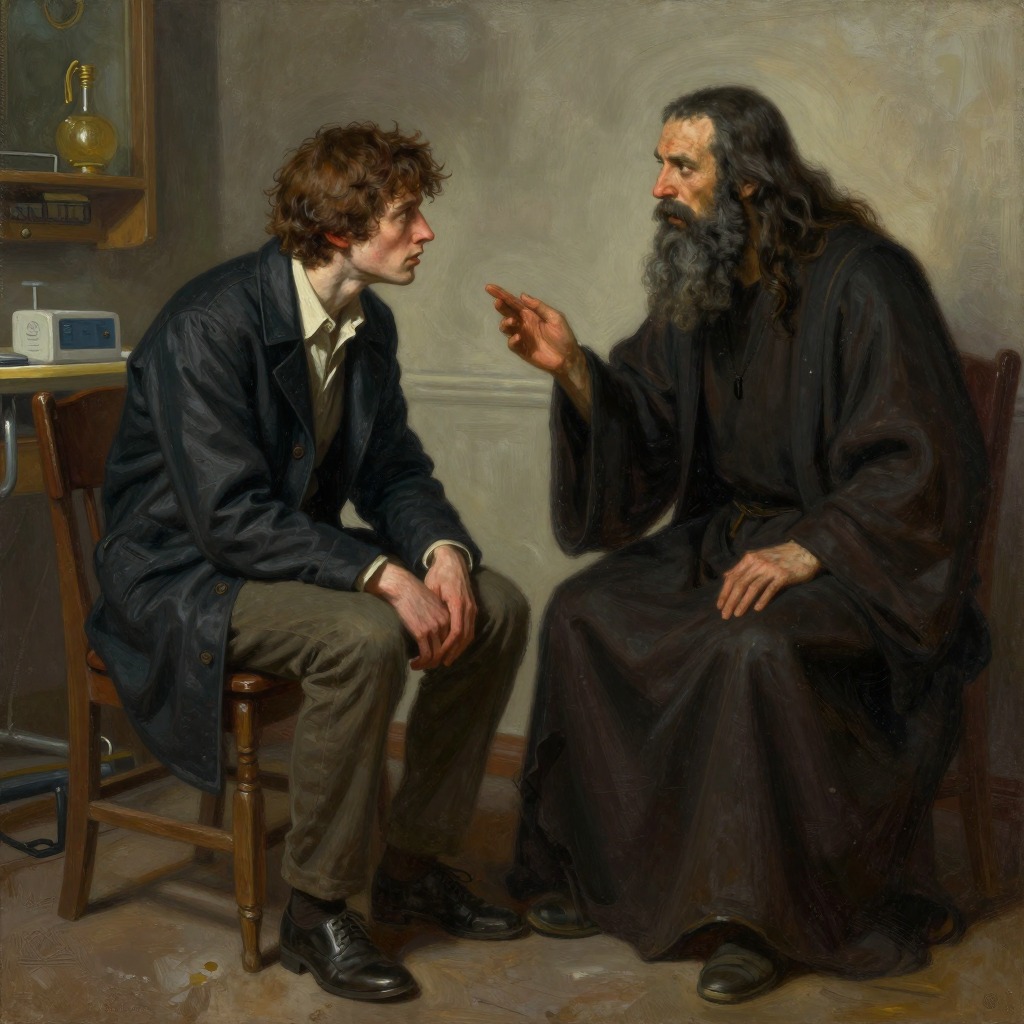
The core of Pilate's story is his interrogation of Yeshua Ha-Nozri, a vagrant philosopher accused of inciting the people to destroy the temple. Initially, Pilate is dismissive and cruel, ordering the centurion Mark Ratslayer to beat the prisoner for addressing him as "good man." However, as the dialogue unfolds, Pilate is profoundly shaken. Yeshua, with uncanny perception, diagnoses Pilate's headache and tells him, "The truth is, first of all, that your head aches... You're not only unable to speak to me, but it is even hard for you to look at me." This moment of recognition is a turning point. Pilate sees in Yeshua not a criminal but a man of extraordinary insight and goodness. He begins to formulate a plan to save him, believing the philosopher to be mentally ill and harmless. The pivotal moment occurs when Pilate reads a second charge: lese-majesty against Caesar. He experiences a terrifying vision: the prisoner's head floats away, replaced by the toothless, cankerous head of the aged Tiberius Caesar. This hallucination reveals the true source of Pilate's fear: not the law, but the absolute, arbitrary power of the emperor. He understands that to save Yeshua would mean risking his own position and life. The truth he has glimpsed is immediately crushed by the weight of political terror.
The Act of Cowardice and Its Consequences
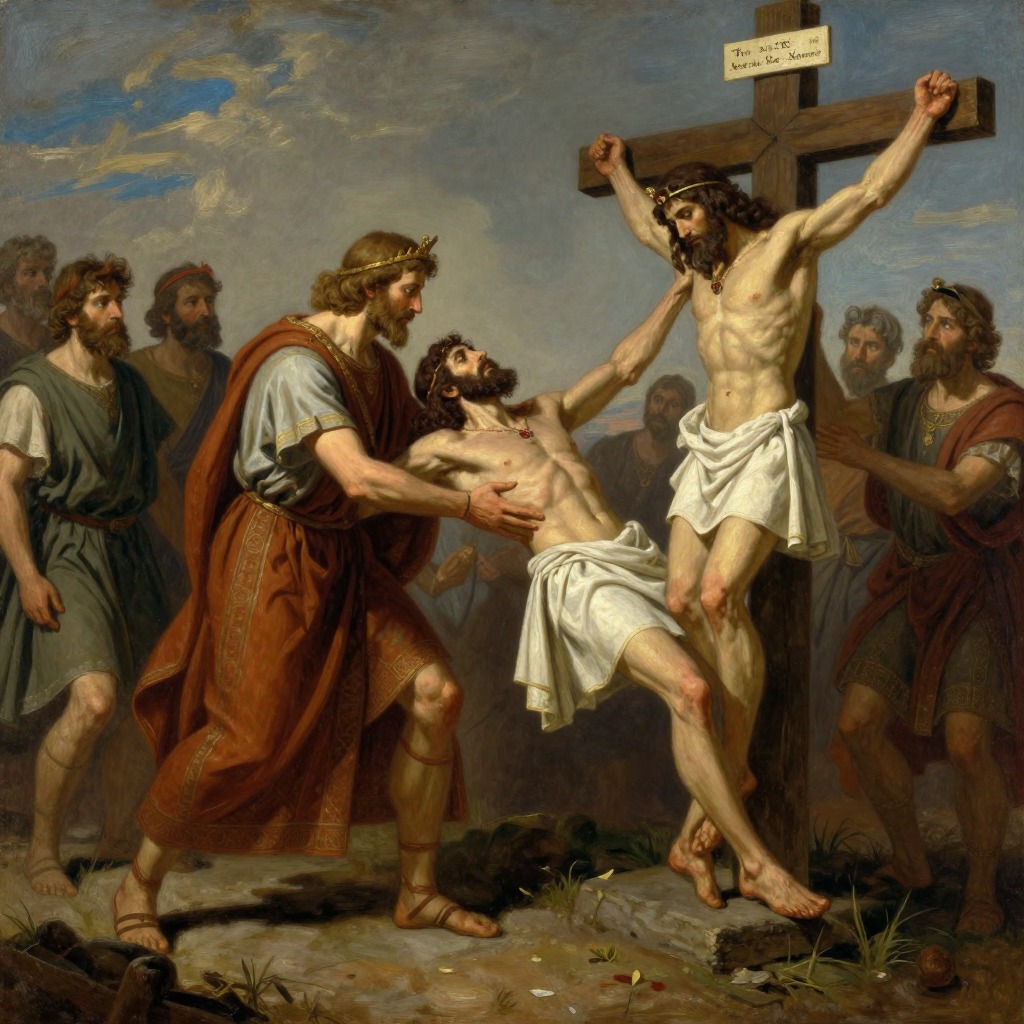
Confronted with the choice between justice and self-preservation, Pilate chooses cowardice. He confirms the death sentence, a decision that fills him with a terrible, impotent wrath. He argues with the high priest Joseph Kaifa, trying to secure the release of Yeshua instead of the rebel Bar-Rabban, but his efforts are half-hearted and ultimately futile. He knows he is condemning an innocent man. The novel's central aphorism, "Cowardice is the most terrible of vices," is directly tied to Pilate's failure. His act is not one of malice but of a profound moral failure, a refusal to act on the truth he has recognized. The consequence is immediate and eternal: he is haunted by the thought of "immortality," a curse that means he will never find peace. He is condemned to sit for two thousand years on a stone seat, waiting to continue his interrupted conversation with Yeshua, a punishment that reflects the unending torment of a guilty conscience.
Thematic Significance and Narrative Role
Pilate's story is the moral and thematic centerpiece of the novel. It serves as a historical parallel to the cowardice and compromise that Bulgakov saw in the Soviet society of his time. The "imposed terror" of Stalin's regime, which is the invisible but omnipresent force in the Moscow sections, finds its direct ancestor in the terror of Caesar's power that Pilate serves. Pilate's fate is intertwined with that of the Master, the author of the novel about him. The Master, too, is a man who fails to stand firm, burning his manuscript out of fear. In the novel's conclusion, the Master is granted not "the light" but "peace," a fate that is explicitly linked to Pilate's. The Master is told he will not see Yeshua, but he will be with the "forgiven hegemon." This ending suggests that while Pilate's sin is great, it is not beyond forgiveness, and that the Master, who shares in his guilt, can find a measure of solace in sharing his eternal refuge. Pilate is not merely a historical figure but a universal symbol of the human tragedy of choosing fear over truth.