The Master
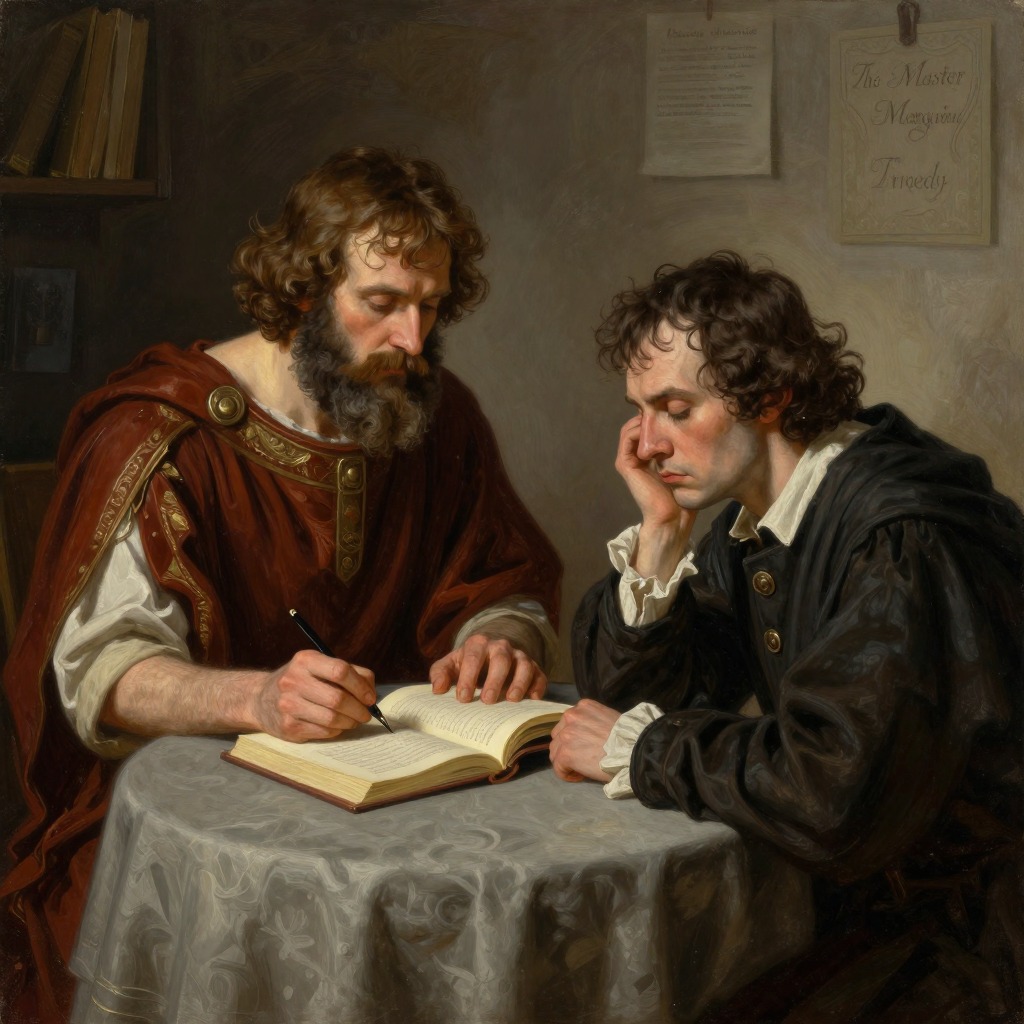
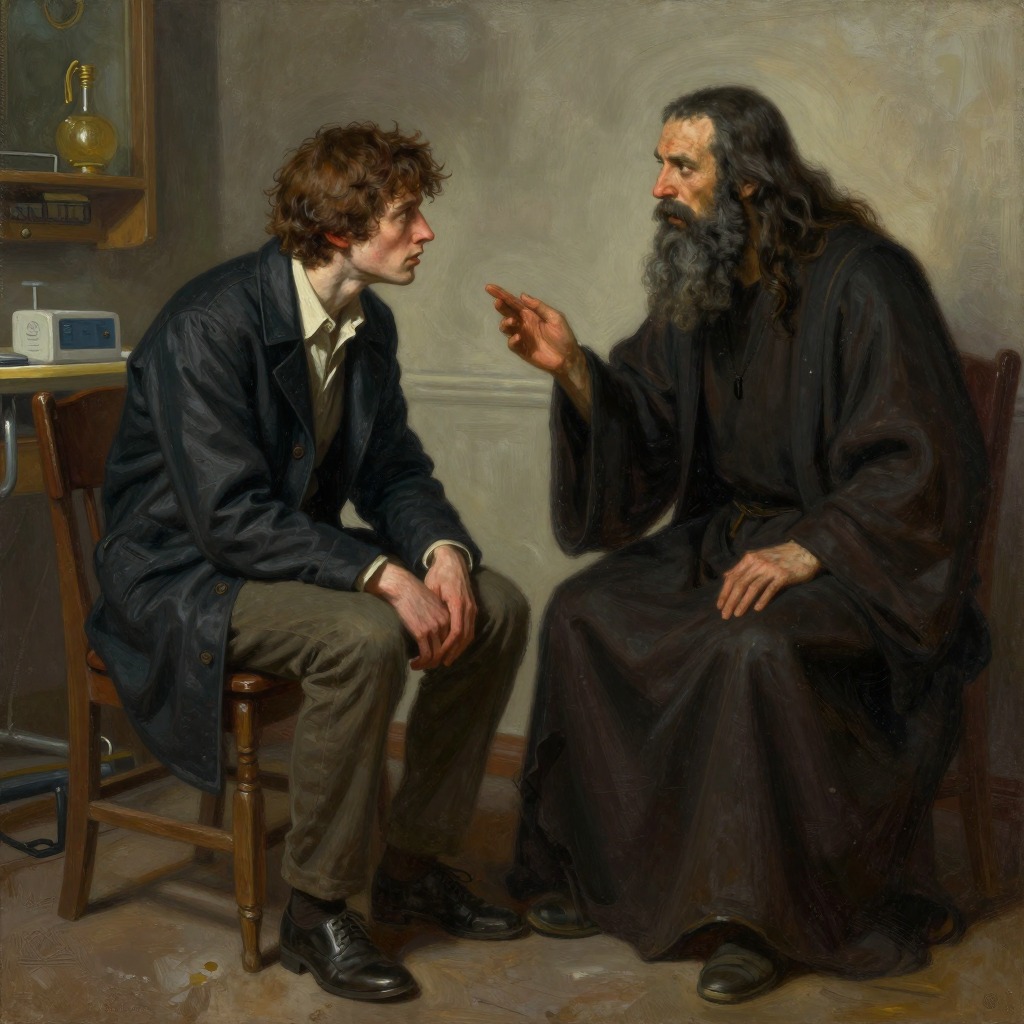
The Master is the unnamed, reclusive author of a novel about Pontius Pilate and Yeshua Ha-Nozri, whose work is rejected by the Soviet literary establishment, leading to his mental breakdown, confinement in a psychiatric clinic, and eventual supernatural release into an eternal refuge with his beloved Margarita. He is a historian by training, a translator by profession, and a writer by vocation, whose life is transformed by a lottery win, a love affair, and a literary persecution that shatters his sanity. His story, told largely through his own confession to the poet Ivan Homeless in a clinic room, forms the emotional and thematic core of the novel, linking the ancient world of Pilate to the contemporary Moscow of Woland's mischief.
Identity and Background
The Master is a man of about thirty-eight, clean-shaven, dark-haired, with a sharp nose, anxious eyes, and a wisp of hair hanging over his forehead. He is a historian by education and worked until two years before the novel's present at one of the Moscow museums, also doing translations. He knows five languages besides his own: English, French, German, Latin, and Greek, and can read Italian a little. He lived solitarily, had no family anywhere and almost no acquaintances in Moscow. His life changes when he wins a hundred thousand roubles on a state bond, a sum he discovers by putting his hand in a basket of dirty laundry and finding the same number as in the newspaper. With the money, he buys books, gives up his room on Myasnitskaya, and rents two rooms in the basement of a little house in a lane near the Arbat, with a front hall containing a sink, little windows level with the paved walk, and a view of lilacs, a linden, and a maple. He leaves his museum job and begins writing a novel about Pontius Pilate, a work that consumes him entirely.
Arc Through the Plot: Love, Creation, and Destruction
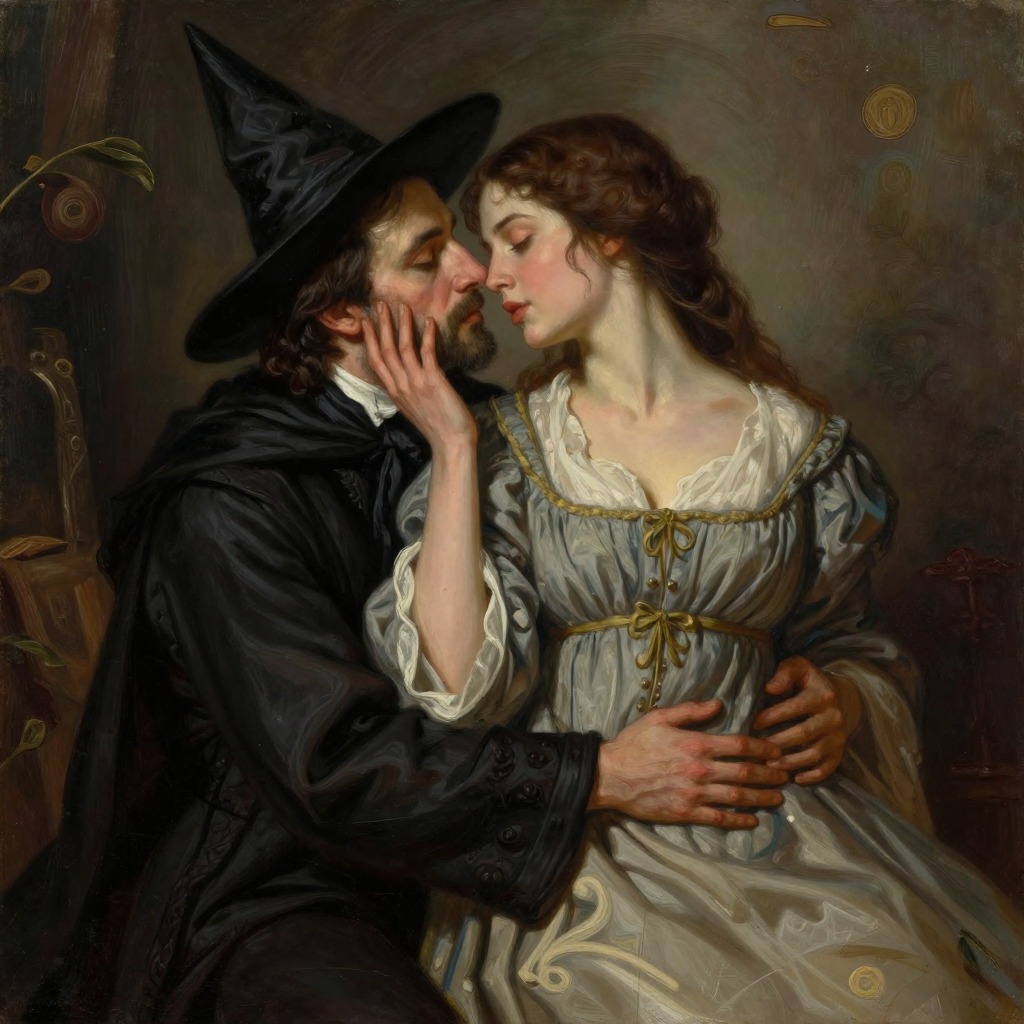
The Master's life is transformed when he meets Margarita. She appears carrying repulsive, alarming yellow flowers, the first to appear in Moscow, and he is struck not so much by her beauty as by an extraordinary loneliness in her eyes. Love leaps out in front of them like a murderer in an alley, striking both at once. She becomes his secret wife, visiting him every afternoon, and she is the one who first calls him a master, sewing for him a black cap with the letter 'M' embroidered in yellow silk. She urges him on, foretells fame, and her life becomes bound up with his novel. The novel is finished in August, typed in five copies, and the Master goes out into life holding it in his hands. But then his life ends. The editor who reads the manuscript looks at him as if he had a swollen cheek, and the novel is rejected. The critics Latunsky, Ariman, and the writer Mstislav Lavrovich publish articles attacking it, with Latunsky's article entitled 'A Militant Old Believer'. The Master is dumbfounded by the unheard-of word 'Pilatism'. A stage of fear sets in, not of the articles, but of other things: he begins to be afraid of the dark, and imagines a cold, pliant octopus stealing towards his heart. In mid-October, in a state of despair, he burns the heavy manuscript of the novel and the draft notebooks in the stove. Margarita arrives, pulls the last burning sheaf from the fire with her bare hands, and saves a portion of the manuscript. She promises to leave her husband and return to him forever, but the Master, believing himself ill and fearing for her, refuses. A quarter of an hour after she leaves, there is a knock at his window. In mid-January, in the same coat but with the buttons torn off, he is huddled with cold in his little yard, listening to a gramophone playing in his rooms. He has nowhere to go, and fear possesses every cell of his body. He makes his way on foot across the entire city to the newly opened psychiatric clinic, where he has been for four months when he meets Ivan Homeless.
Relationships and Conflict
The Master's central relationship is with Margarita, his secret wife and the only person who understands his work. She is his muse, his critic, and his protector, and he refuses to let her perish with him. His relationship with the literary establishment is one of total conflict. The editor, the critics Latunsky and Ariman, and the writer Mstislav Lavrovich reject and vilify his novel, driving him to madness. He also forms a bond with Ivan Homeless, whom he meets in the clinic. He tells Ivan his story, warns him against the consultant Woland, and becomes a kind of mentor, urging Ivan to give up poetry. The Master's relationship with Woland is indirect but decisive: Woland is the one who restores the burned manuscript and ultimately determines the Master's fate.
Change and Ending
The Master's trajectory is one of decline and then supernatural redemption. He begins as a confident, creative historian, is broken by literary persecution and mental illness, and ends as a patient in a psychiatric clinic, having renounced his name and his past. His fate is decided by Woland, acting on the instructions of Matthew Levi, who speaks for Yeshua. Levi tells Woland that the Master does not deserve the light, but deserves peace. Woland then arranges for the Master and Margarita to leave Moscow together, riding black horses into the sky. They are given an eternal refuge, a house with a Gothic window and blossoming cherry trees, where Schubert's music plays. The Master is also granted the power to finish his story: he releases Pontius Pilate, who has been sitting for two thousand years on a stone seat in the moonlight, waiting to continue his conversation with Yeshua. The Master cries out to Pilate that he is free, and Pilate finally walks up the path of moonlight to join Yeshua.
Thematic Significance
The Master embodies the novel's central themes of artistic freedom, cowardice, and the power of love. His novel about Pilate is a meditation on cowardice, the most terrible of vices, and the Master's own failure to fight for his work can be seen as a form of that same vice. His fate—peace rather than light—reflects Bulgakov's own ambivalence about the artist's role in a repressive society. The Master is not a heroic martyr; he is a flawed, frightened man who is saved by Margarita's love and Woland's mercy. His story also illustrates the novel's key aphorism, 'Manuscripts don't burn', as his burned novel is miraculously restored by Woland, proving that the free word cannot be destroyed by terror or oppression. The Master's final release into a timeless, peaceful refuge represents the triumph of imagination and love over the brutal realities of the world.