Woland
Woland is the enigmatic and formidable figure who descends upon Moscow as a professor of black magic, a historian, and, as the novel gradually reveals, Satan himself. He is the engine of the plot, a force that disrupts the mundane, atheistic reality of Soviet life with supernatural events, exposing the cowardice, greed, and hypocrisy of its citizens. More than a mere tempter, Woland is a complex agent of fate, whose actions serve to reveal the hidden truths of the human heart and to orchestrate the ultimate destinies of the Master and Margarita, bridging the gap between the contemporary world and the ancient story of Pontius Pilate and Yeshua Ha-Nozri.
Identity and Appearance
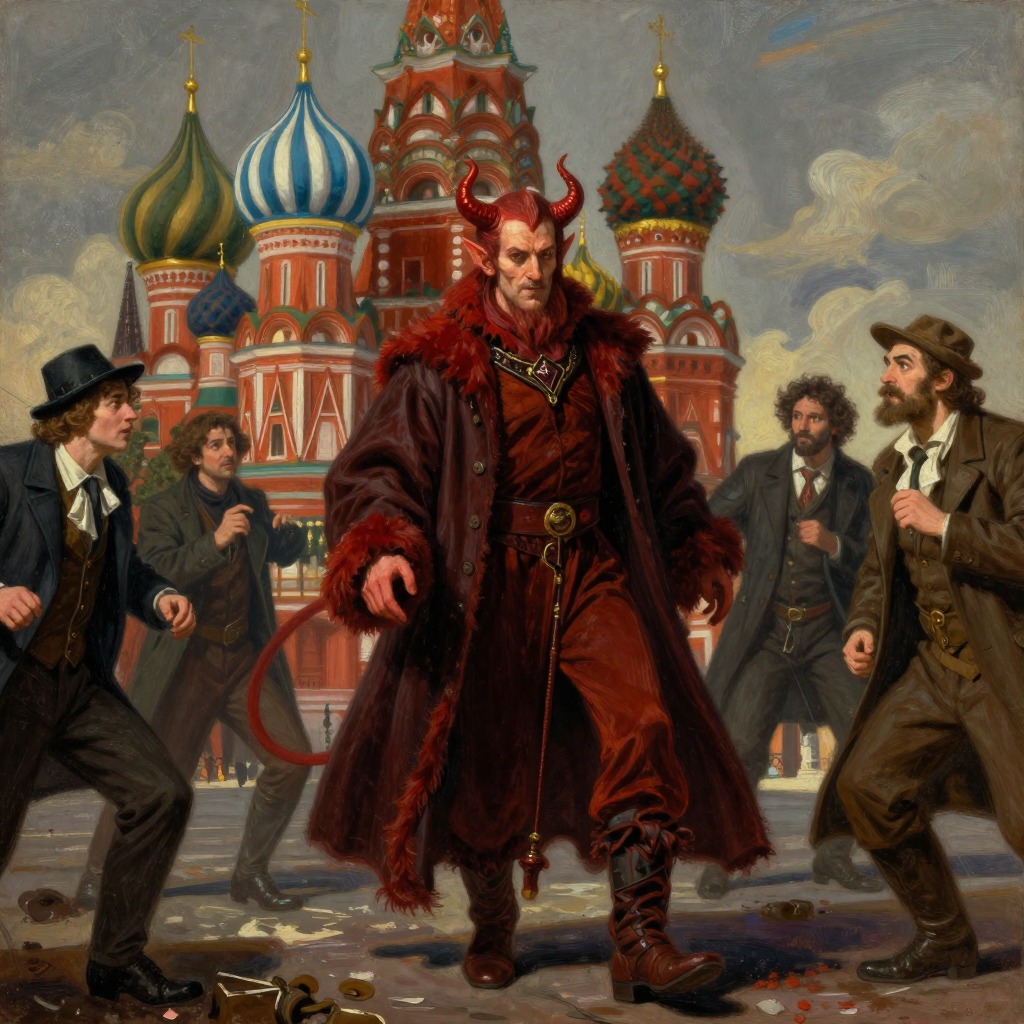
Woland first appears at the Patriarch's Ponds, a tall, dark-haired man of about forty, with a mouth somehow twisted, one black eye and one green, and dark eyebrows, one higher than the other. He is dressed in an expensive grey suit and imported shoes, carries a stick with a black knob shaped like a poodle's head, and wears a grey beret cocked rakishly over one ear. His speech is marked by a foreign accent that appears and disappears, and he introduces himself as a specialist in black magic, a historian who has come to Moscow to consult on original manuscripts of the tenth-century necromancer Gerbert of Aurillac. He presents a visiting card with the initial letter 'W', and a passport, claiming to be a polyglot. His retinue includes the checkered-clown Koroviev, the enormous black cat Behemoth, the fanged, red-haired Azazello, and the naked, red-haired vampire Hella. He is also known as "the Stranger" and "Professor Woland."
Role in the Moscow Narrative
Woland's primary function in Moscow is to expose the moral and spiritual bankruptcy of the city's inhabitants. He begins by engaging the atheist editor Mikhail Alexandrovich Berlioz and the poet Ivan Homeless in a theological debate at the Patriarch's Ponds, where he accurately predicts Berlioz's death under a tram-car, a prophecy that comes true moments later. He then takes up residence in the ill-fated Apartment No. 50 on Sadovaya Street, from which he and his retinue orchestrate a series of spectacular and devastating events. At the Variety Theatre, he conducts a seance of black magic, causing a rain of counterfeit money that turns real, opening a free ladies' shop that later leaves women in their underwear, and having the master of ceremonies Georges Bengalsky's head torn off and then replaced. He also exposes the infidelity of the Acoustics Commission chairman Arkady Apollonovich Sempleyarov. Through these acts, Woland demonstrates that the Muscovites, despite their modern trappings, are still driven by the same base desires for money and finery, and that their inner natures have not changed for the better. He observes that they are "ordinary people... only the housing problem has corrupted them."
Connection to the Yershalaim Narrative
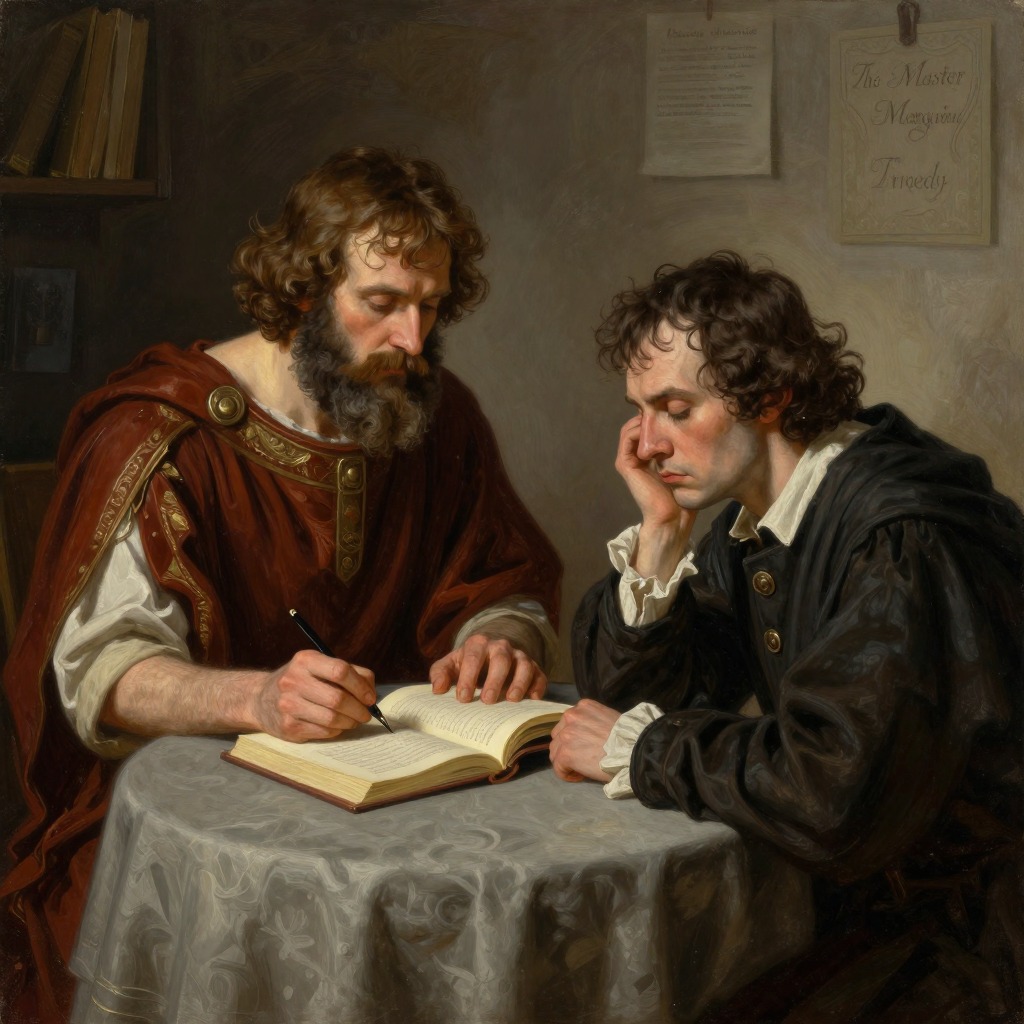
Woland is the direct link between the Moscow and Yershalaim storylines. He is the one who tells the story of Pontius Pilate and Yeshua Ha-Nozri to Berlioz and Homeless, claiming to have been personally present at the events. He is the source of the "Gospel of Woland," a version of the crucifixion story that contradicts the official Soviet atheist line. His presence in Moscow is a direct challenge to the materialist worldview, and his narrative of Pilate's cowardice and Yeshua's truth serves as a moral counterpoint to the contemporary satire. The fate of the Master, who wrote a novel about Pilate, is ultimately decided by Woland, who, acting on a message from Yeshua via Matthew Levi, grants the Master and Margarita not "the light" but "peace" in an eternal refuge.
The Nature of Woland's Power
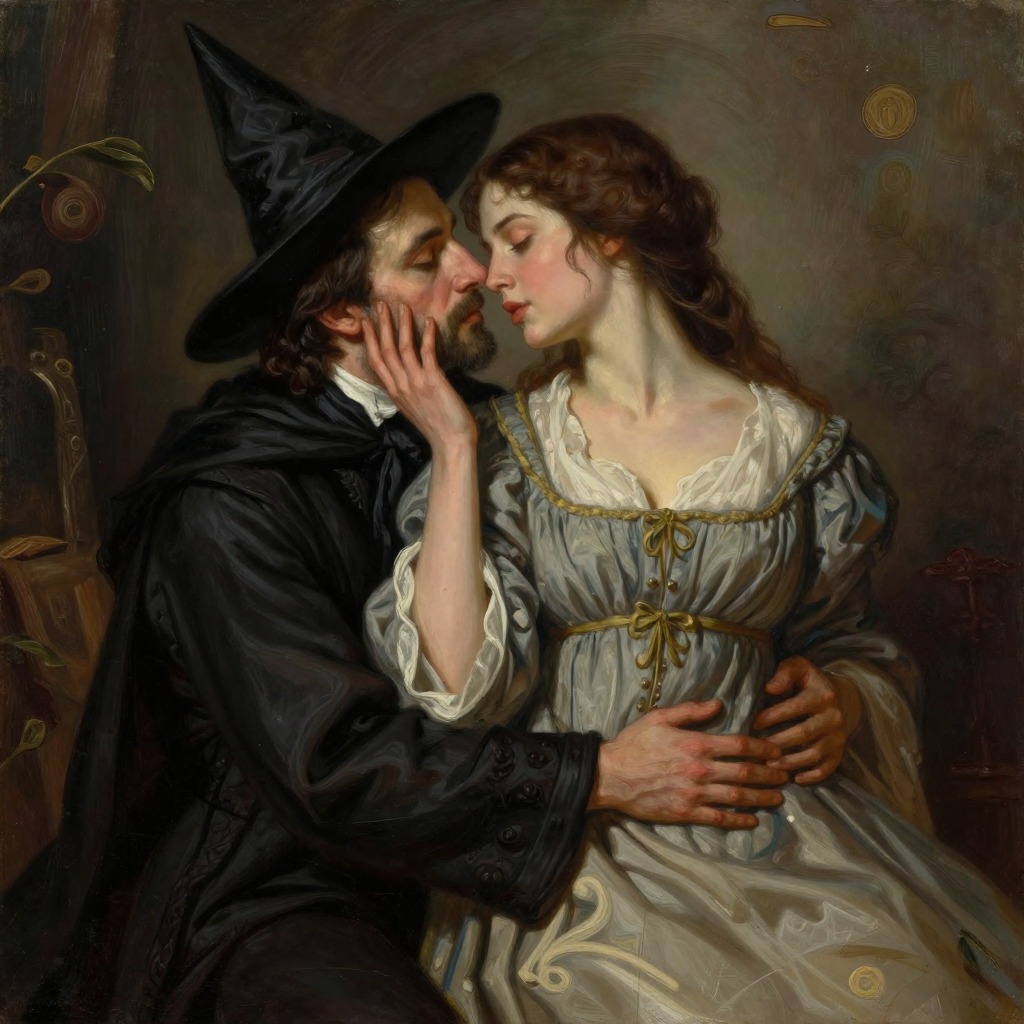
Woland's power is absolute and terrifying, yet it is also bound by a certain cosmic justice. He is not a force of pure evil but a part of that power which eternally wills evil and eternally works good. He demonstrates his power through a series of supernatural feats: predicting the future, teleporting people (as he does with Styopa Likhodeev to Yalta), transforming currency, and commanding a retinue of demons. He also shows a rare impartiality, as when he describes his servant Abaddon, who "is of a rare impartiality and sympathizes equally with both sides of the fight." His power is not arbitrary; it is used to expose and punish those who are corrupt, cowardly, or cruel, while offering a form of mercy to those who are deserving, like the Master and Margarita. He is the ultimate judge in the novel, dispensing a justice that is both terrifying and, in its own way, merciful.