Athena
Athena, the grey-eyed goddess daughter of Zeus, is the most active and influential divine figure in the Odyssey, serving as the unwavering patron of Odysseus and his household. From the poem's opening council of the gods to the final peace covenant, she initiates, guides, and safeguards every major step of Odysseus's homecoming and the restoration of his house. Her role is not that of a distant observer but of a hands-on strategist, mentor, and occasional combatant, whose interventions shape the narrative's every turn. She embodies the poem's core values of metis (cunning intelligence), strategic planning, and the righteous enforcement of xenia (hospitality) and justice.
Identity and Divine Role
Athena is introduced as the daughter of Zeus, a goddess of immense power and influence among the Olympians. In the first divine council, she is the one who raises the plight of Odysseus, arguing that he has been unjustly forgotten and that his suffering at the hands of Calypso and the wrath of Poseidon must end. She is described as "grey-eyed Athene" and "the Trito-born," epithets that emphasize her martial and wise nature. Her primary domain is strategic warfare and cunning intelligence, which she embodies perfectly. She is also the goddess of crafts, particularly weaving, a skill she imparts to mortal women like Penelope and the Phaeacian women. Unlike the more impulsive or self-interested gods, Athena's actions are consistently aimed at restoring order and justice, specifically by ensuring the return of the rightful king and the punishment of those who violate the laws of hospitality.
Protector and Guide of Odysseus
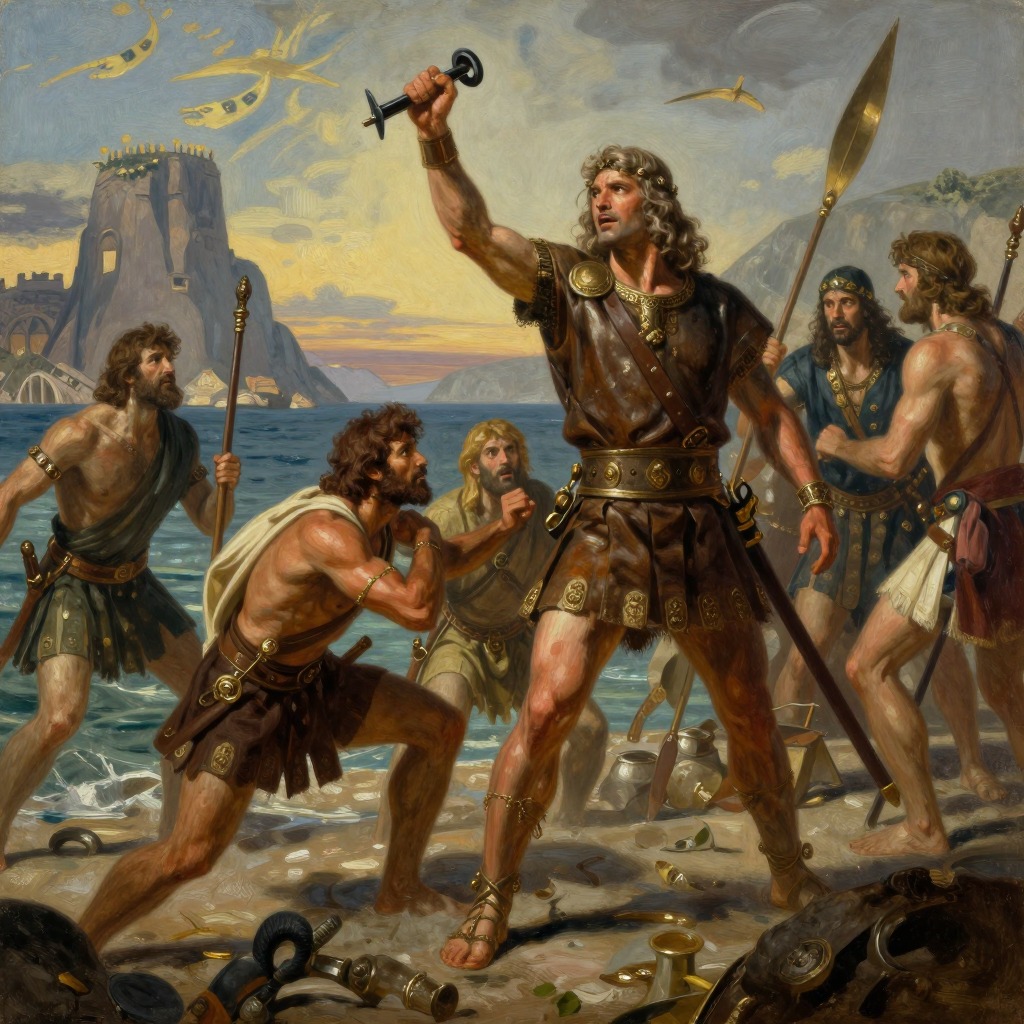
Athena's relationship with Odysseus is one of deep mutual respect and affinity, based on their shared love of cunning and stratagem. She is his most constant divine ally. She intervenes directly to secure his release from Calypso by persuading Zeus to send Hermes with the command for her to let him go. During his harrowing sea voyage, she calms the winds after Poseidon's storm and guides him safely to the shore of Scheria. She then orchestrates his meeting with Nausicaa, appearing to the princess in a dream to inspire her to go to the river where Odysseus lies. In the Phaeacian court, she beautifies Odysseus, making him appear taller and more imposing so that he will be respected. She also inspires the Phaeacians to give him rich gifts and a safe passage home. Upon his arrival in Ithaca, she is the first to meet him, disguised as a young shepherd. She reveals his true location, helps him hide the Phaeacian treasures in the cave of the Naiads, and devises the plan for his disguise as a beggar. She then guides him to the hut of the swineherd Eumaeus and later, in a crucial scene, transforms him back into his youthful, powerful self so that he can reveal his identity to his son Telemachus. Throughout the final battle with the suitors, she is present, first as Mentor to encourage the fighters, then as a swallow perched on a rafter, and finally by holding up her deadly aegis to terrify the suitors, ensuring their complete defeat.
Mentor to Telemachus
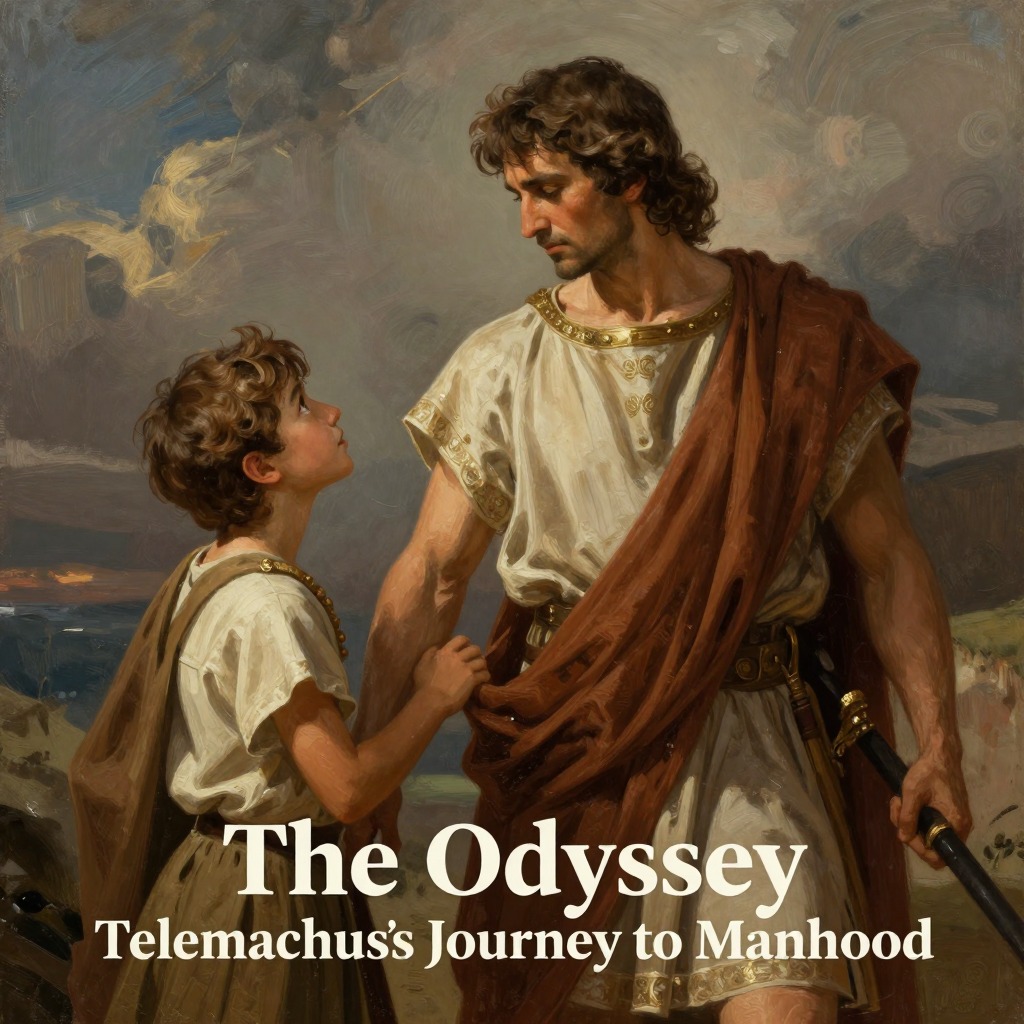
Athena's role extends beyond Odysseus to his son, Telemachus, whom she grooms to become a worthy successor. She is the catalyst for his maturation, first appearing to him disguised as the Taphian king Mentes. In this guise, she inspires him to call an assembly of the Ithacans to denounce the suitors and then to undertake a voyage to Pylos and Sparta in search of news of his father. She provides him with courage and wise counsel, telling him, "if you are made of the same stuff as your father you will be neither fool nor coward henceforward." She then accompanies him on his journey, disguised as Mentor, the old friend of Odysseus. She secures a ship and crew for him, sends a fair wind, and ensures his safe passage. She also protects him from the suitors' ambush, warning him in a dream to return by a different route. Her guidance is essential in transforming Telemachus from a passive, helpless youth into a confident young man capable of standing beside his father in the final battle.
Agent of Justice and the Restoration of Order
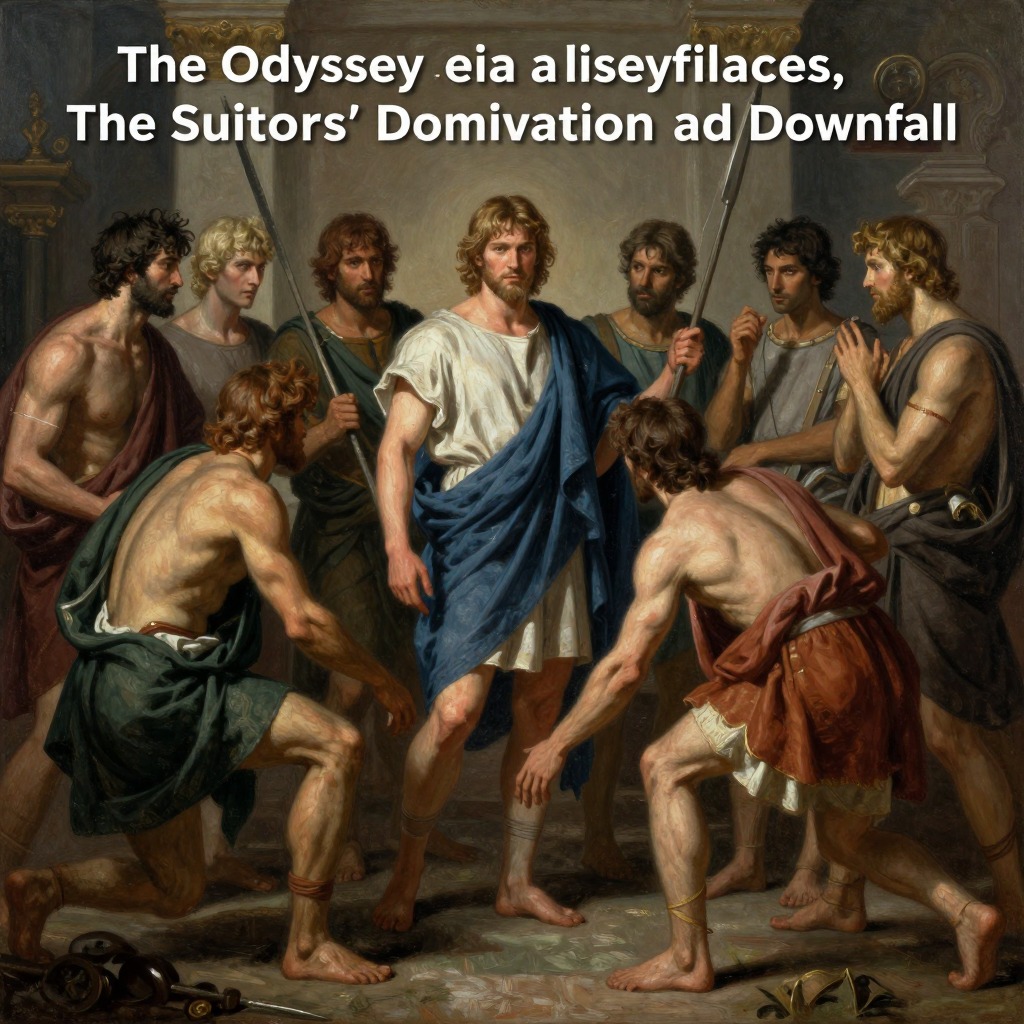
Athena's primary motivation is the restoration of order in Ithaca, which has been disrupted by the suitors' violation of xenia and their plot against Telemachus. She is the divine agent of justice, ensuring that the suitors' hubris is punished. She repeatedly incites the suitors to further insolence, such as when she prompts Eurymachus to mock Odysseus, thereby deepening Odysseus's resolve for revenge. She also ensures that the contest of the bow proceeds as planned, putting the idea into Penelope's mind. During the slaughter, she is an active participant, deflecting the suitors' spears and inspiring the defenders. After the killing, she helps to orchestrate the peace, appearing as Mentor to stop the civil war between Odysseus and the families of the slain suitors. Her final act is to establish a covenant of peace, ensuring that Odysseus can rule once more. In this, she acts as the ultimate arbiter of justice, transforming a bloody revenge into a legitimate restoration of rightful rule.
Thematic Significance
Athena is the embodiment of the poem's central themes. Her constant use of disguise, strategic planning, and manipulation reflects the supreme value placed on metis (cunning intelligence). She is the patron of the clever hero, rewarding those who, like Odysseus, use their wits to overcome obstacles. She also represents the proper use of power and the importance of divine justice. Her unwavering support for Odysseus and his family underscores the idea that the gods favor those who are pious, resourceful, and respectful of the social order. Furthermore, her role as a female deity who is both a warrior and a weaver, a strategist and a nurturer, challenges simple gender binaries. She is a complex figure who operates effectively in both the male sphere of war and politics and the female sphere of domestic craft, making her a uniquely powerful and multifaceted character in the epic.