Circe
Circe, the Aeaean goddess and daughter of the sun-god Helios, is one of the most complex and powerful female figures in the Odyssey. She is a mistress of enchantment and transformation, who first threatens Odysseus's crew with bestial degradation and then becomes an indispensable ally, lover, and source of prophetic counsel. Her island, Aeaea, marks a critical threshold in Odysseus's wanderings, where the hero confronts the dangers of female magic and, through cunning and divine aid, turns a potential catastrophe into a source of knowledge and strength for the trials ahead.
Identity and Domain
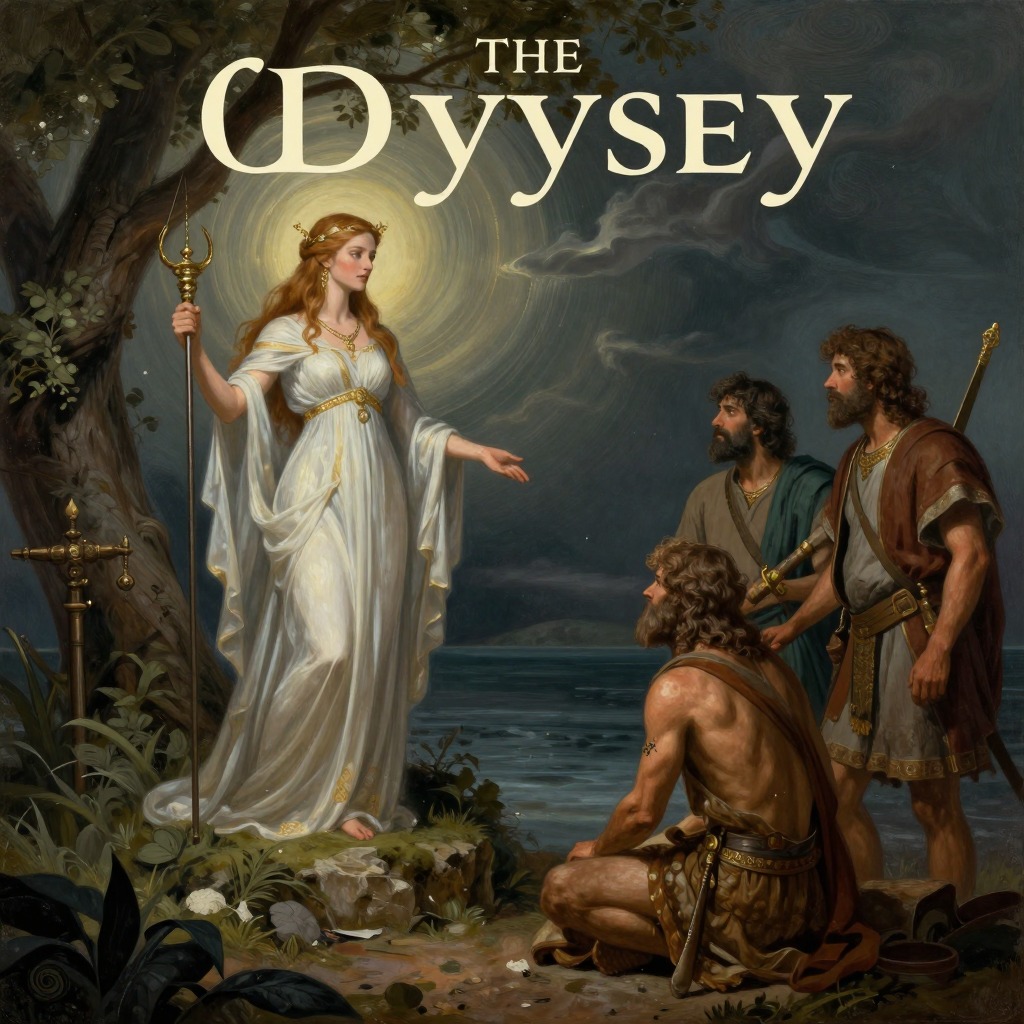
Circe is the daughter of Helios, the sun-god, by Perse, who is herself a daughter of Oceanus, making her the sister of the formidable king Aeetes. She dwells on the Aeaean island, a place of dense forest and hidden power, in a house built of cut stones that can be seen from far. Her home is surrounded by bewitched mountain wolves and lions, creatures she has tamed with drugs and reduced to docility; they fawn on visitors like hounds greeting their master, a disquieting display of her power over nature. Inside, she works at a great loom, weaving a web of such fine, soft, and dazzling colors that no mortal could replicate, while singing in a voice of enchanting beauty. This combination of domestic artistry and supernatural menace defines her domain: a space where the civilized arts of weaving and song are fused with the raw, dangerous force of pharmaka—drugs that can either enchant or destroy.
The Transformation of Odysseus's Men
When Odysseus's scout, Eurylochus, leads a party of twenty-two men to Circe's house, she invites them in with seeming hospitality. She seats them on benches and mixes them a potion of cheese, honey, meal, and Pramnian wine, but drugs it with wicked poisons to make them forget their homeland. When they drink, she strikes them with her wand and transforms them into pigs—head, hair, and all—though they retain their human minds and memories. She then drives them into her pigsties and throws them acorns and beech mast to eat. Only Eurylochus, who suspected treachery and remained outside, escapes to report the disaster to Odysseus. This episode establishes Circe as a figure of profound danger: her hospitality is a trap, her beauty a lure, and her magic a means of stripping men of their humanity while leaving their consciousness intact, a fate worse than simple death.
Odysseus's Confrontation and Alliance
Armed with the protective herb moly, given to him by Hermes, Odysseus resists Circe's potion and, when she strikes him with her wand, draws his sword and rushes at her as if to kill her. Terrified, Circe falls at his knees and recognizes him as the man Hermes had foretold would come. She invites him to her bed, and Odysseus, following Hermes's advice, makes her swear a solemn oath by the blessed gods that she will plot no further harm against him. Only then does he sleep with her. Circe proves true to her word: she releases his men from their enchantment, anointing them with a second drug that makes them younger, taller, and more handsome than before. She then welcomes the entire crew into her house, where they feast for a full year in great abundance. This transformation of Circe from predator to hostess and lover is a key turning point. It demonstrates that her power, while terrifying, can be channeled into alliance through a combination of divine protection, boldness, and the establishment of a binding oath—a contract that respects her agency while securing the hero's safety.
Guide to the Underworld and Beyond
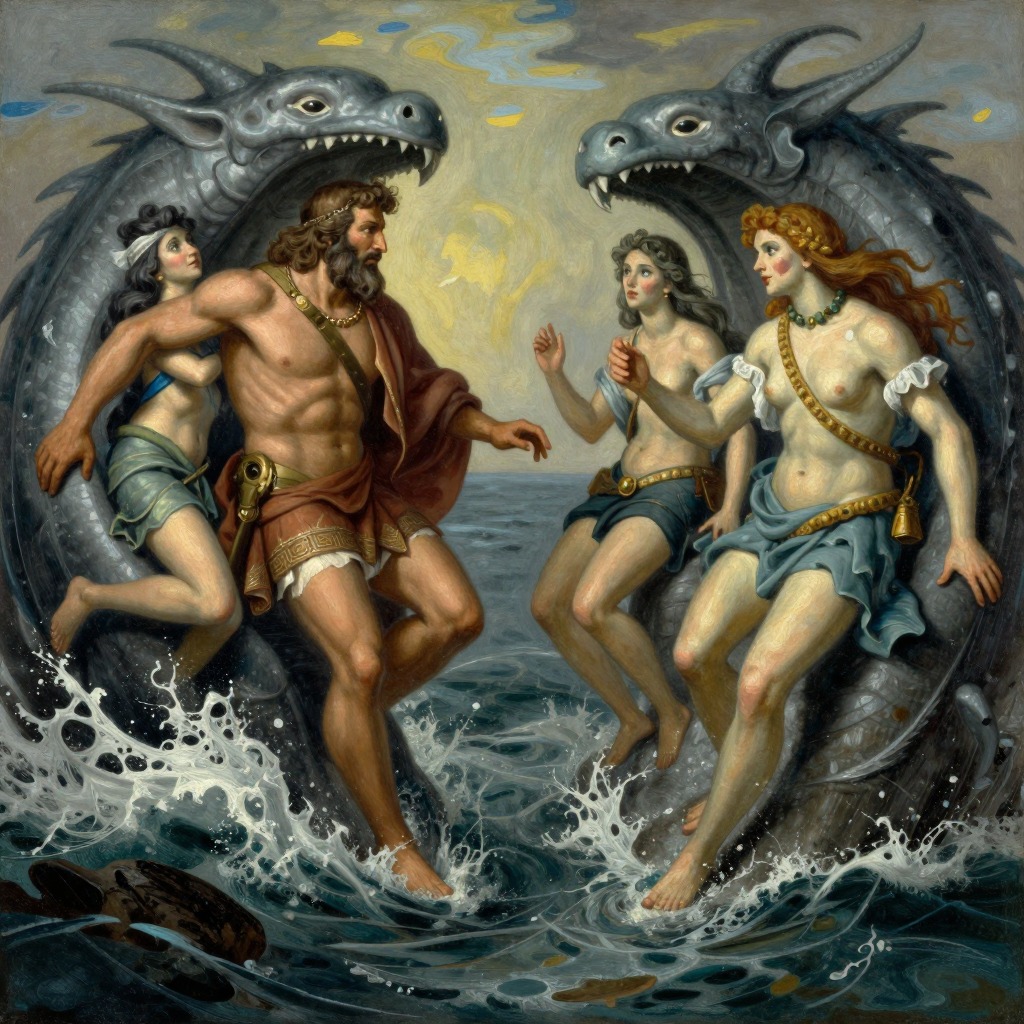
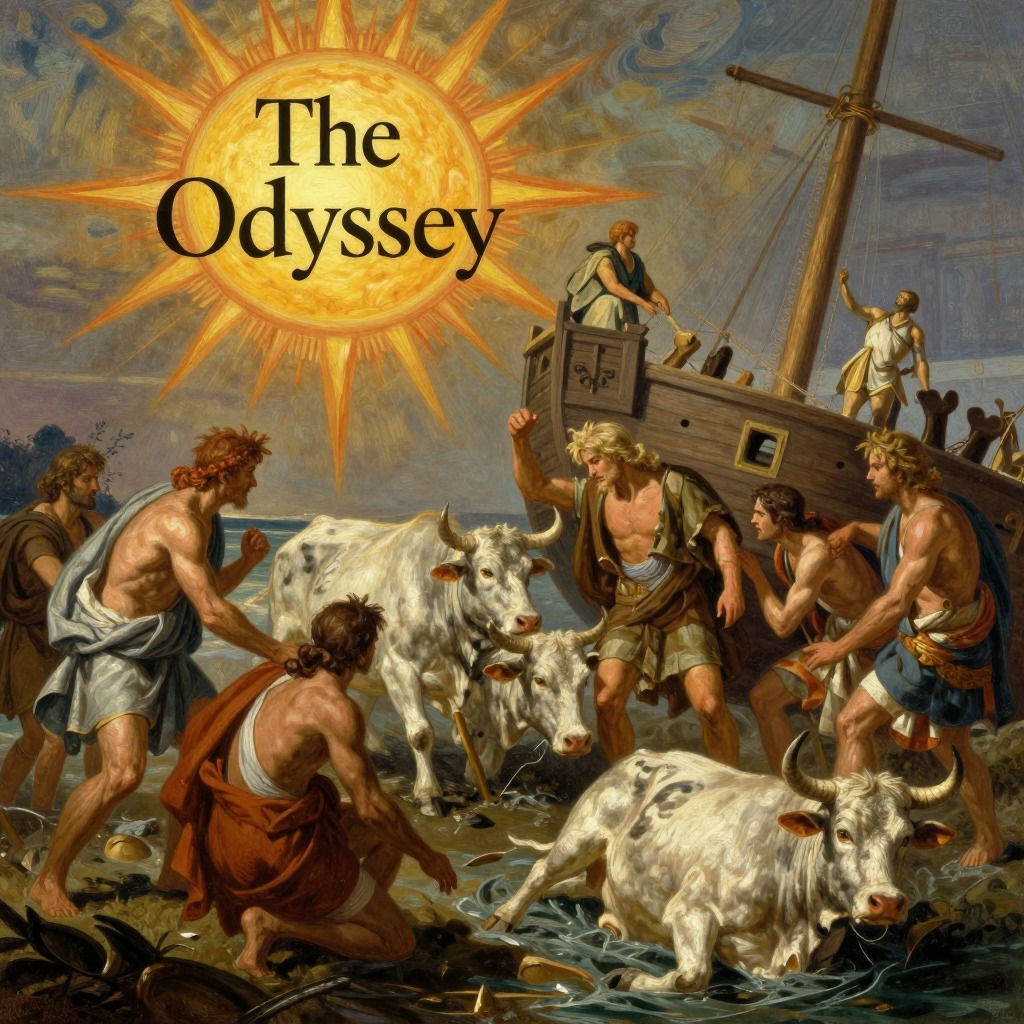
After a year has passed, Odysseus's men grow restless, and Circe does not detain them against their will. Instead, she reveals that before they can sail home, they must undertake a far more daunting journey: to the house of Hades and Persephone to consult the ghost of the blind prophet Teiresias. She provides Odysseus with precise, ritualistic instructions for summoning the dead—digging a trench, pouring libations of honey, milk, wine, and water, and offering sacrifices of a ram and a black ewe. She also warns him of the dangers that lie beyond the Underworld: the Sirens, whose song lures men to their deaths; the Wandering Rocks; and the dual terrors of Scylla and Charybdis. For Scylla, she gives stark advice: it is better to lose six men than the whole ship. Finally, she delivers the most critical prohibition: on the Thrinacian island, the crew must not harm the cattle of the sun-god Helios, no matter how great their hunger, for to do so will bring destruction. Circe thus functions as a liminal guide, possessing knowledge that spans the realms of the living and the dead. Her warnings are not merely informative but constitute a moral and strategic framework for the remainder of Odysseus's voyage, and her prophecy of doom for those who violate the sun-god's herds proves tragically accurate.
Narrative Role and Significance
Circe occupies a unique position in the Odyssey as a figure who embodies both the threat and the necessity of the feminine supernatural. Unlike Calypso, who detains Odysseus out of love and a desire for immortality, Circe's initial hostility is a test of the hero's mettle, and her subsequent aid is earned through his resourcefulness. She is a shapeshifter in a more profound sense than her literal transformations: she moves from monster to mentor, from seductress to sage. Her island is a place of both pleasure and peril, where a year of feasting can become a trap of forgetfulness, yet where the hero also receives the knowledge essential for his nostos. In the broader structure of the poem, Circe's episode marks the midpoint of Odysseus's wanderings, where the hero, having survived brute force (the Cyclops) and natural disaster (the Laestrygonians), must now master the arts of cunning, magic, and prophecy. She is, in many ways, a dark double of Athena—a female deity who uses her power to test, transform, and ultimately guide the hero, but whose methods are those of the witch rather than the warrior goddess.