Ctesippus
Ctesippus, son of Polytherses, is one of the suitors from the island of Same who courts Penelope and helps consume Odysseus's estate. He appears only in the final books of the poem, but his single act of casual cruelty and his subsequent punishment mark him as a figure of pure, unmotivated malice—a suitor whose behavior goes beyond greed into outright sadism. His death, at the hands of the loyal cowherd Philoetius, completes a small arc of retribution that mirrors the larger fate of all the suitors.
Identity and Background
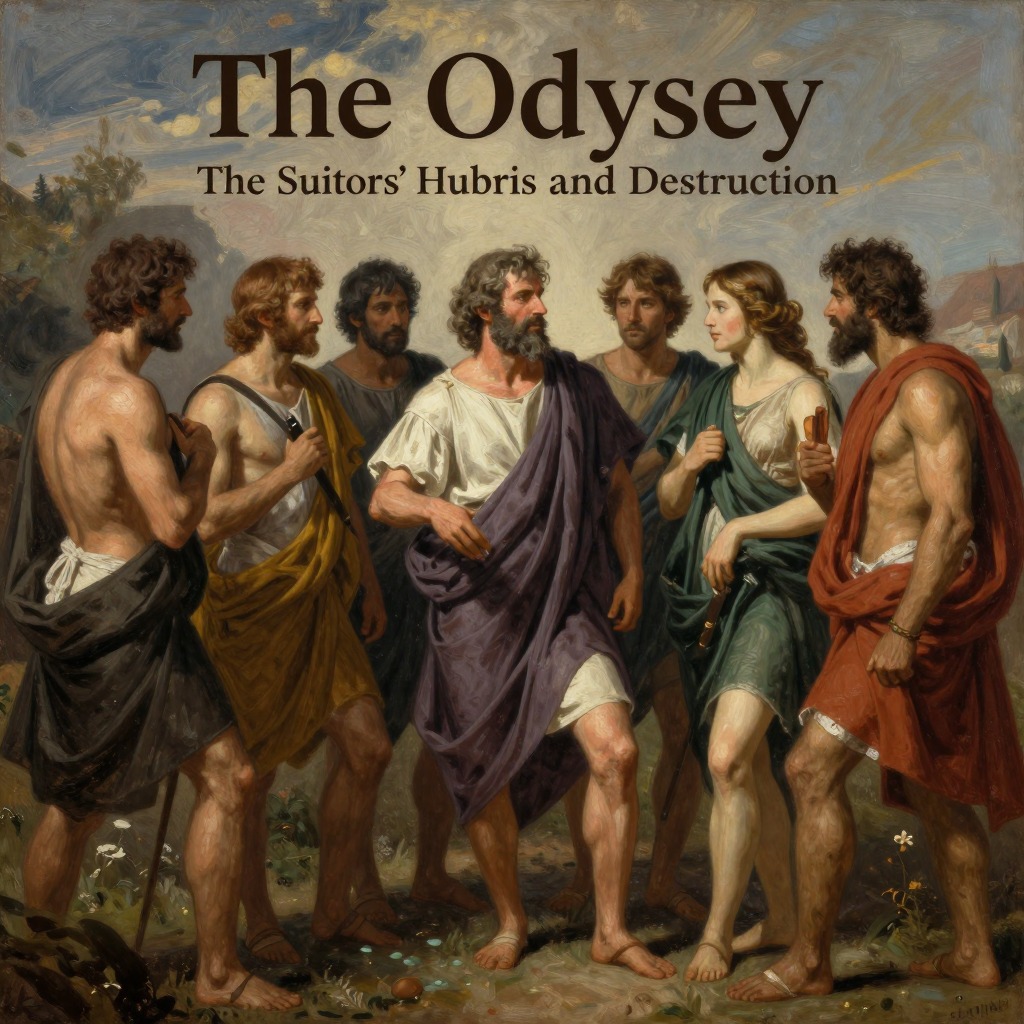
Ctesippus is introduced as a suitor from Same, one of the islands whose chieftains have gathered in Ithaca to press their claims on Penelope. He is wealthy—"confident in his great wealth," the poem says—and this confidence expresses itself not in generosity but in contempt for others. He is the only suitor named as the son of Polytherses, a patronymic that sets him apart from the more prominent leaders Antinous and Eurymachus. His role among the suitors is that of a ribald follower, eager to display his wit through cruelty.
The Assault on Odysseus
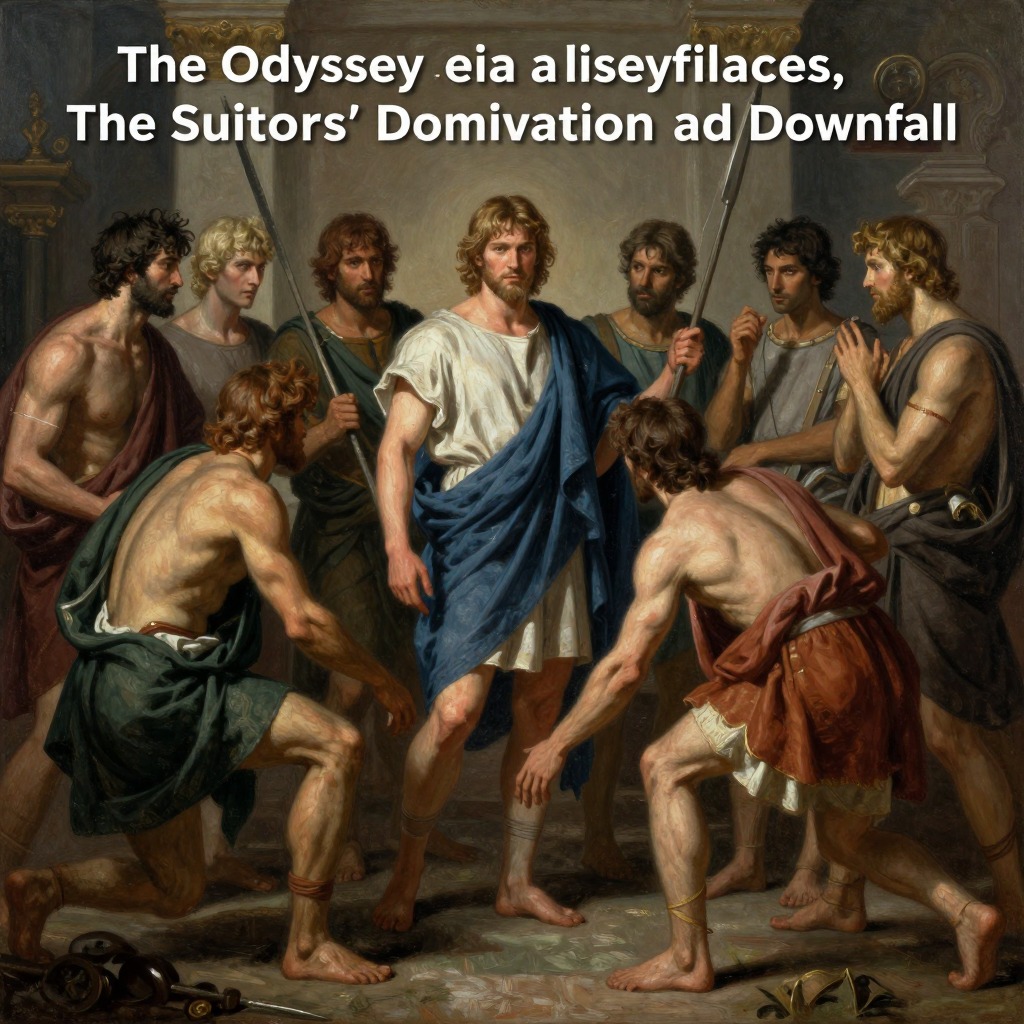
Ctesippus's defining moment comes during the final feast in Odysseus's hall, just before the contest of the bow. The disguised Odysseus, still in beggar's rags, has been given a portion of food equal to the others' by Telemachus's order. Ctesippus, resentful of this equality, announces that he will make the stranger a present of his own: a heifer's foot from the meat-basket. He picks up the heavy ox hoof and hurls it at Odysseus. Odysseus turns his head aside and avoids the blow, smiling "grimly Sardinian fashion" as the missile strikes the wall instead. The gesture is pure humiliation—an attempt to remind the beggar of his place through physical violence, unprovoked and without purpose beyond the pleasure of dominance.
Telemachus immediately threatens Ctesippus with death if he had hit his target, declaring that he would have run the suitor through with his spear. The other suitors fall silent, but Ctesippus himself offers no apology or retreat; his act stands as the last open insult before the slaughter begins.
Death and Taunt
During the battle that follows Odysseus's revelation, Ctesippus manages to graze Eumaeus's shoulder above his shield with a spear, but the wound is superficial. Immediately afterward, Philoetius the cowherd—who has armed himself alongside Odysseus and Telemachus—drives a spear into Ctesippus's breast. As the suitor falls, Philoetius taunts him: "Foul-mouthed son of Polytherses, do not be so foolish as to talk wickedly another time, but let heaven direct your speech, for the gods are far stronger than men. I make you a present of this advice to repay you for the foot which you gave Odysseus when he was begging about in his own house." The irony is precise: the "present" Ctesippus had mockingly offered is returned as a death-blow, and his own weapon—the ox's foot—is transformed into the moral justification for his execution.
Thematic Significance
Ctesippus's role, though brief, crystallizes the suitors' collective failure. Where Antinous and Eurymachus scheme for power and marriage, Ctesippus acts out of pure, gratuitous cruelty—the desire to hurt a helpless man for sport. His death at the hands of a servant, not a hero, underscores the poem's insistence that justice comes from every quarter. Philoetius, a loyal but minor figure, becomes the instrument of vengeance for an insult that was itself gratuitous. The episode also reinforces the theme of reciprocity: the mock gift of a heifer's foot is repaid with a spear, and the taunt about begging is answered with a lesson about divine justice. Ctesippus dies not in the grand melee of the hall's center but as part of the systematic clearing of the house, one more body among many, his name preserved only as an example of how the gods "are far stronger than men."