Eupeithes
Eupeithes is a minor but consequential figure in the Odyssey, remembered primarily as the father of Antinous and as the man who, after the slaughter of the suitors, rallies the Ithacan people to seek vengeance against Odysseus. His role is confined to the poem's final book, where he appears as a grieving father and a failed insurgent, yet his actions precipitate the last armed conflict of the epic and provide the occasion for the divinely ordained peace that concludes the poem.
Identity and Background
Eupeithes is introduced only through his son. Antinous, the son of Eupeithes, is the first suitor to speak in the assembly and the most aggressive of Penelope's wooers. He is the one who throws a footstool at Odysseus when the hero is disguised as a beggar, and he is the first man killed by Odysseus's arrow when the massacre begins. Eupeithes himself is not described in any detail during the main action; his character is defined entirely by his paternity and by the grief that drives him to act after his son's death. He is an Ithacan, a citizen of the island, and apparently a man of some standing, since he is able to convene a faction of the populace.
The Uprising and Death
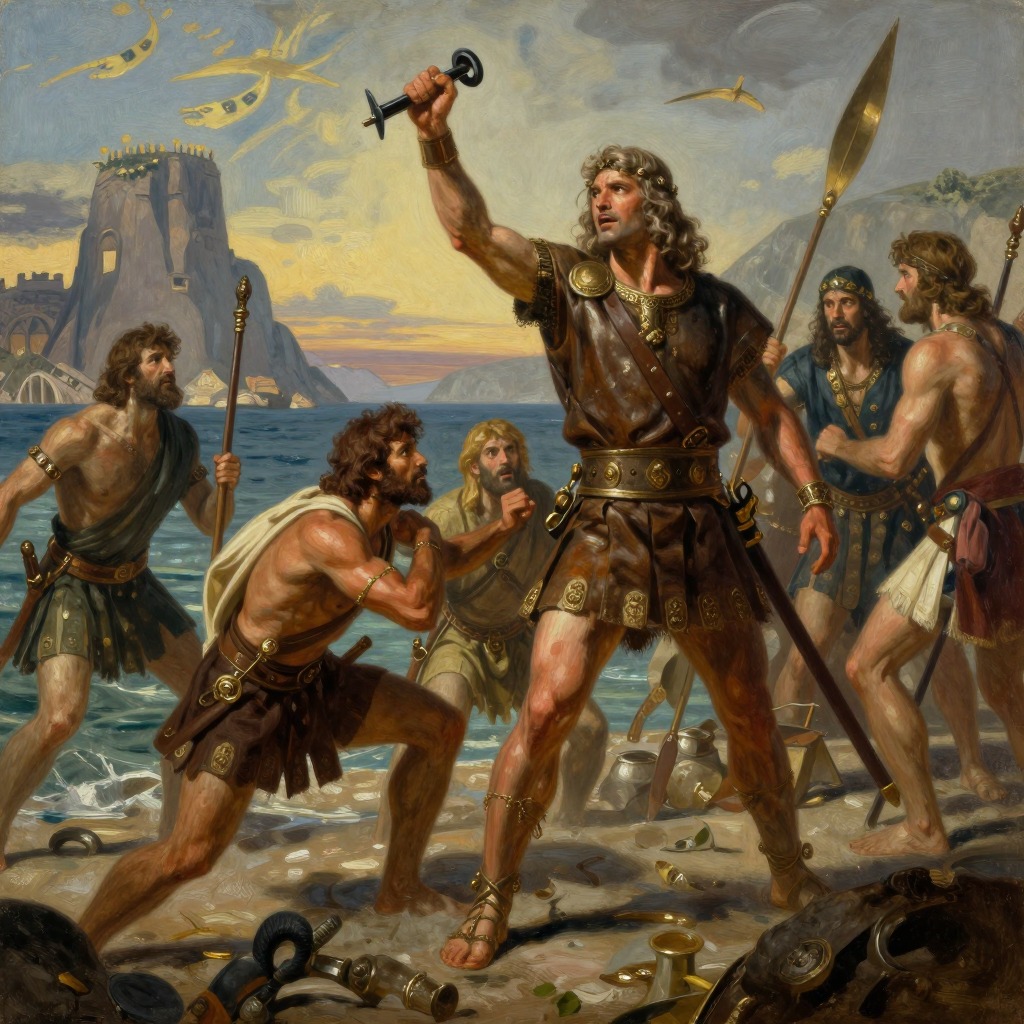
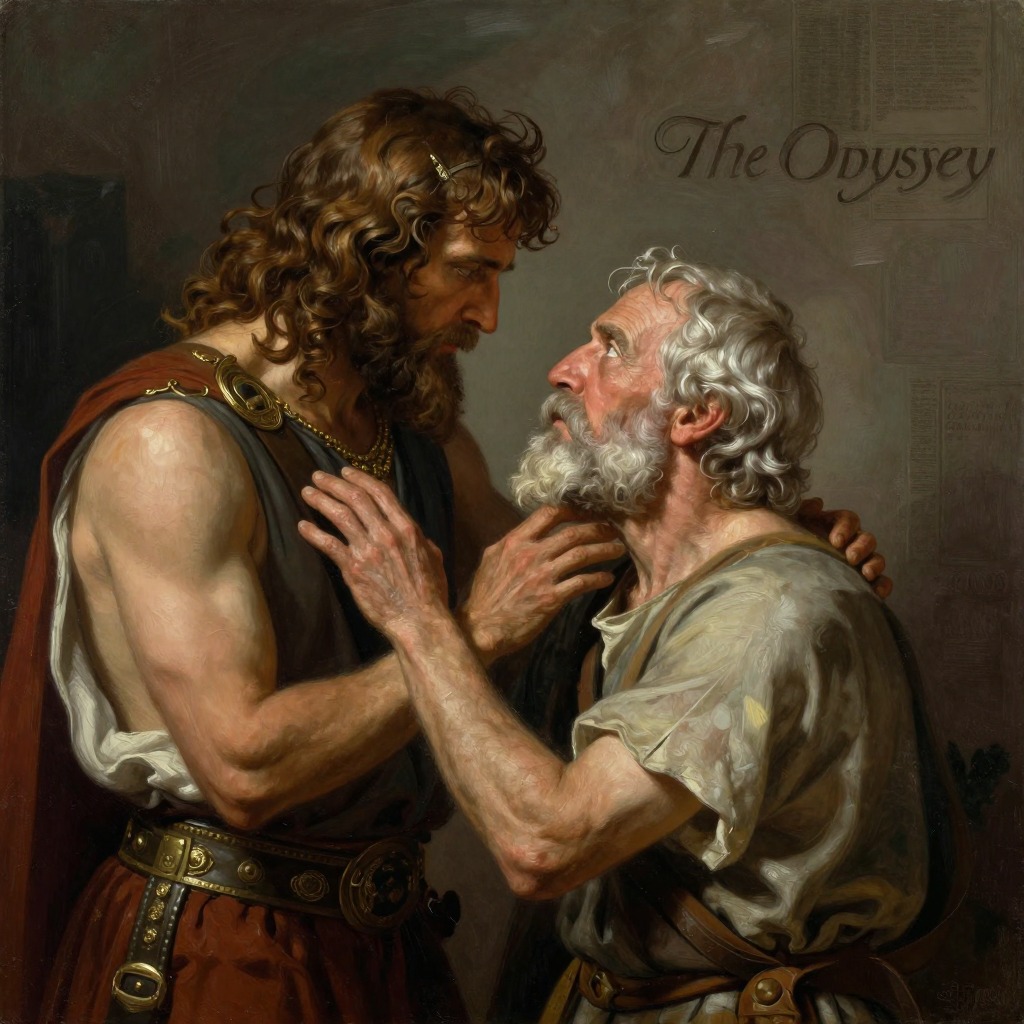
After the bodies of the suitors are buried, the people of Ithaca gather in a furious assembly. Eupeithes, overwhelmed with grief for the death of his son Antinous, who had been the first man killed by Odysseus, rises to speak. He weeps bitterly and accuses Odysseus of great wrongs: taking many of their best men with him to Troy, losing both ships and men, and now, upon his return, killing all the foremost men among the Cephallenians. He calls for immediate action before Odysseus can escape to Pylos or Elis, declaring that he himself would rather die than live with the disgrace of unavenged sons and brothers. His speech moves the crowd to pity, and a substantial number of the Ithacans arm themselves and follow him. Eupeithes leads them in their folly, believing he will avenge his son, but he is himself never to return. When the two forces meet, Minerva, in the form of Mentor, infuses fresh vigour into Laertes. The old man prays, poises his spear, and hurls it. The spear strikes Eupeithes' helmet, goes right through it, and his armour rattles around him as he falls heavily to the ground. His death is the decisive blow of the skirmish; immediately afterward, Minerva cries out to stop the war, and a covenant of peace is made.
Narrative Role and Significance
Eupeithes serves as the final antagonist of the epic, the last human obstacle to the restoration of order in Ithaca. His rebellion is the direct consequence of the suitors' destruction and represents the lingering threat of blood feud that Odysseus must overcome. The poet uses Eupeithes to dramatize the theme of inherited guilt and the cycle of vengeance: the father rises to avenge the son who was himself the chief aggressor. His death at the hands of Laertes, Odysseus's own aged father, completes a parallel generational arc—just as Telemachus fought beside Odysseus, so Laertes fights for his son, and the old man's victory over Eupeithes symbolically seals the re-establishment of the legitimate ruling house. The uprising he leads is the last test of Odysseus's return, and its peaceful resolution through divine intervention underscores the poem's ultimate movement from chaos to settled order.