Euryalus
Euryalus, the son of Naubolus, is a young Phaeacian nobleman distinguished among his people for his athletic skill and striking appearance. He is described as being like Mars himself and is the best-looking man among the Phaeacians after Laodamas, the son of King Alcinous. During the athletic contests held in honor of the newly arrived stranger, Euryalus proves himself the best wrestler, a victory that places him at the forefront of the young competitors. His role in the games, however, extends beyond mere athletic achievement; he becomes the catalyst for a crucial revelation of the stranger's true nature.
The Taunt and the Challenge
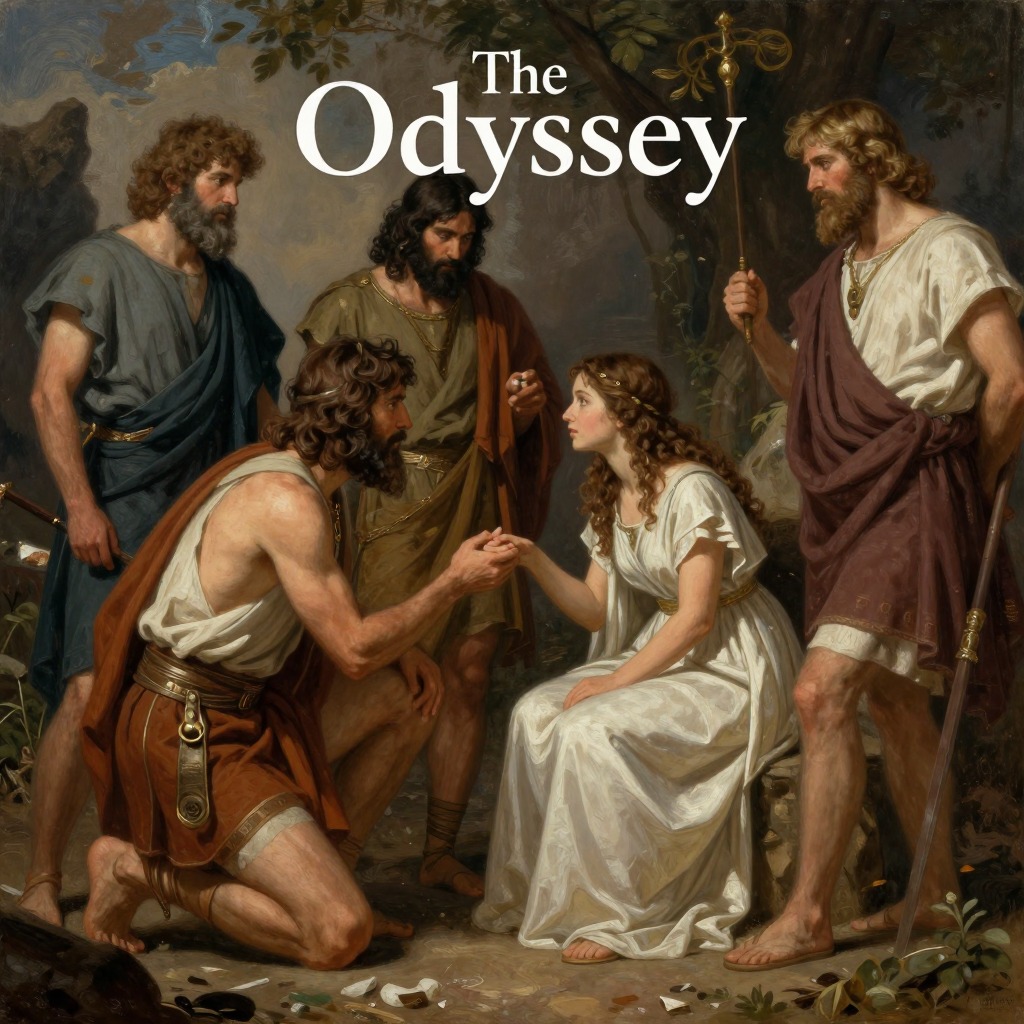
When the athletic contests have concluded, Laodamas suggests inviting the stranger to compete. Euryalus, however, does not wait for a polite invitation. He directly reviles the stranger, who is Odysseus in disguise, saying, "I gather, then, that you are unskilled in any of the many sports that men generally delight in. I suppose you are one of those grasping traders that go about in ships as captains or merchants, and who think of nothing but of their outward freights and homeward cargoes. There does not seem to be much of the athlete about you." This public insult, delivered with contempt, strikes at the core of the heroic identity Odysseus has spent his life cultivating. The taunt is not merely a personal slight but a challenge to the very concept of kleos (glory) earned through prowess, which defines a Homeric hero.
Odysseus's Response and the Display of Prowess
Stung by Euryalus's words, Odysseus responds with a fierce rebuke, contrasting the young man's handsome appearance with his lack of discretion. He declares that he will compete, for the taunts have angered him deeply. Without removing his cloak, Odysseus seizes a discus far larger and heavier than those used by the Phaeacians. He hurls it with such force that it flies far beyond all previous marks, astonishing the onlookers. Athena, in the form of a man, marks the spot and declares that no Phaeacian can come near such a throw. Odysseus then issues a broader challenge, offering to box, wrestle, or run with any man present except his host, Laodamas. He boasts of his skill as an archer, second only to Philoctetes among the Achaeans, and of his prowess with the spear, though he admits his running may be impaired by his recent hardships at sea. This demonstration of raw power and the subsequent verbal declaration of his martial capabilities completely reverses the humiliation Euryalus intended, instead showcasing the stranger as a figure of immense capability.
The Apology and Gift
King Alcinous, observing the events, is displeased with Euryalus's rudeness. He declares that Euryalus must make a formal apology and give a present to the stranger. Euryalus complies, addressing Odysseus as "father stranger" and saying, "if anything has been said amiss may the winds blow it away with them, and may heaven grant you a safe return, for I understand you have been long away from home, and have gone through much hardship." He then presents Odysseus with his own sword, which is of bronze with a silver hilt and a scabbard of newly sawn ivory. Odysseus accepts the gift and the apology, wishing Euryalus happiness in return. This exchange transforms a moment of potential conflict into a reaffirmation of the Phaeacian code of hospitality, with Euryalus's gift serving as a tangible symbol of his recantation and the restoration of social harmony.
Significance
Euryalus's role, though brief, is pivotal. His arrogance provides the dramatic mechanism through which Odysseus, still in disguise, can publicly demonstrate that he is no mere beggar or trader but a hero of the highest order. The incident foreshadows the greater tests of strength and character to come in Ithaca and solidifies Odysseus's standing among the Phaeacians, ensuring they will provide him with the lavish gifts and safe passage home that he requires. Euryalus himself serves as a foil: his youthful, unthinking hubris is contrasted with Odysseus's seasoned, controlled, and ultimately justified pride, illustrating a central theme of the poem—the difference between empty boasting and earned glory.