Eurylochus
Eurylochus serves as Odysseus's second-in-command on the voyage home from Troy, a figure whose caution curdles into insubordination and whose pragmatic instincts repeatedly override his captain's warnings. He is the only officer named as leading a detachment of men, and his actions—refusing to enter Circe's house, persuading the starving crew to slaughter the Cattle of the Sun, and openly challenging Odysseus's authority—make him the most consequential subordinate in the poem. His choices doom the entire company except Odysseus himself, and his arc illustrates how the breakdown of command, not external monsters alone, destroys the fleet.
Identity and Role
Eurylochus is introduced as one of Odysseus's most trusted officers. When Odysseus divides the crew into two companies to explore Circe's island, he gives one company to Eurylochus while taking command of the other himself; the lot falls to Eurylochus, and he sets out with twenty-two men. He is described as a near relation of Odysseus, which gives his later defiance a sharper edge of personal betrayal. His position as second-in-command is confirmed when Odysseus later entrusts him with holding the sacrificial victims during the necromancy ritual at the entrance to Hades, a task that requires both physical strength and ritual reliability.
The Encounter with Circe: Prudence or Cowardice?
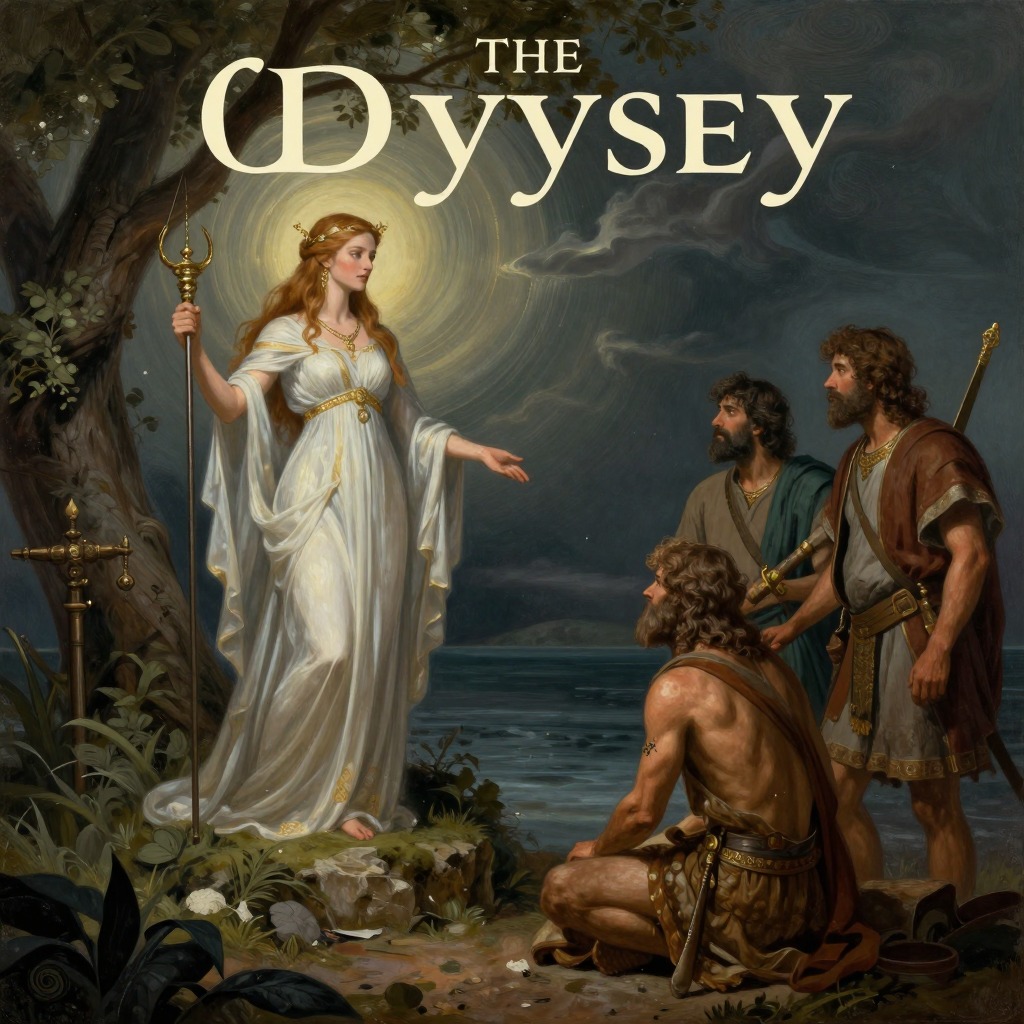
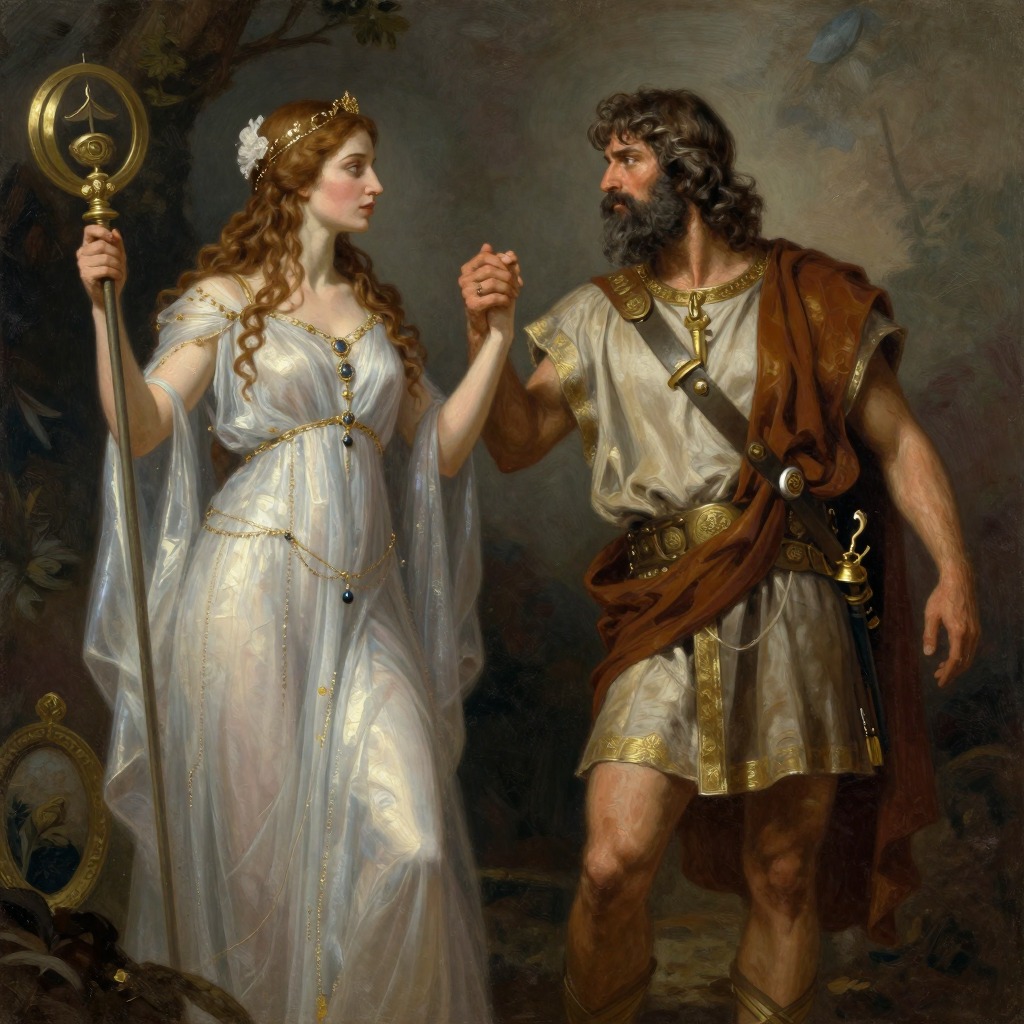
When Eurylochus and his twenty-two men reach Circe's house, the other men enter freely, drawn by her beautiful singing and weaving. Eurylochus alone suspects treachery and stays outside. From his hiding place he watches as Circe drugs the men, transforms them into pigs with a stroke of her wand, and drives them into her styes. He rushes back to the ship, so overcome with dismay that he cannot speak at first; his eyes fill with tears and he can only sob and sigh until the men force the story out of him. When Odysseus resolves to go alone to rescue the men, Eurylochus seizes him with both hands and pleads with him not to go, arguing that Odysseus will never return alive and that the survivors should flee while they can. Odysseus refuses, and Eurylochus is left behind at the ship—but when the rest of the crew later sets out for Circe's house, Eurylochus, frightened by Odysseus's severe reprimand, follows after all.
The Cattle of the Sun: The Fatal Persuasion
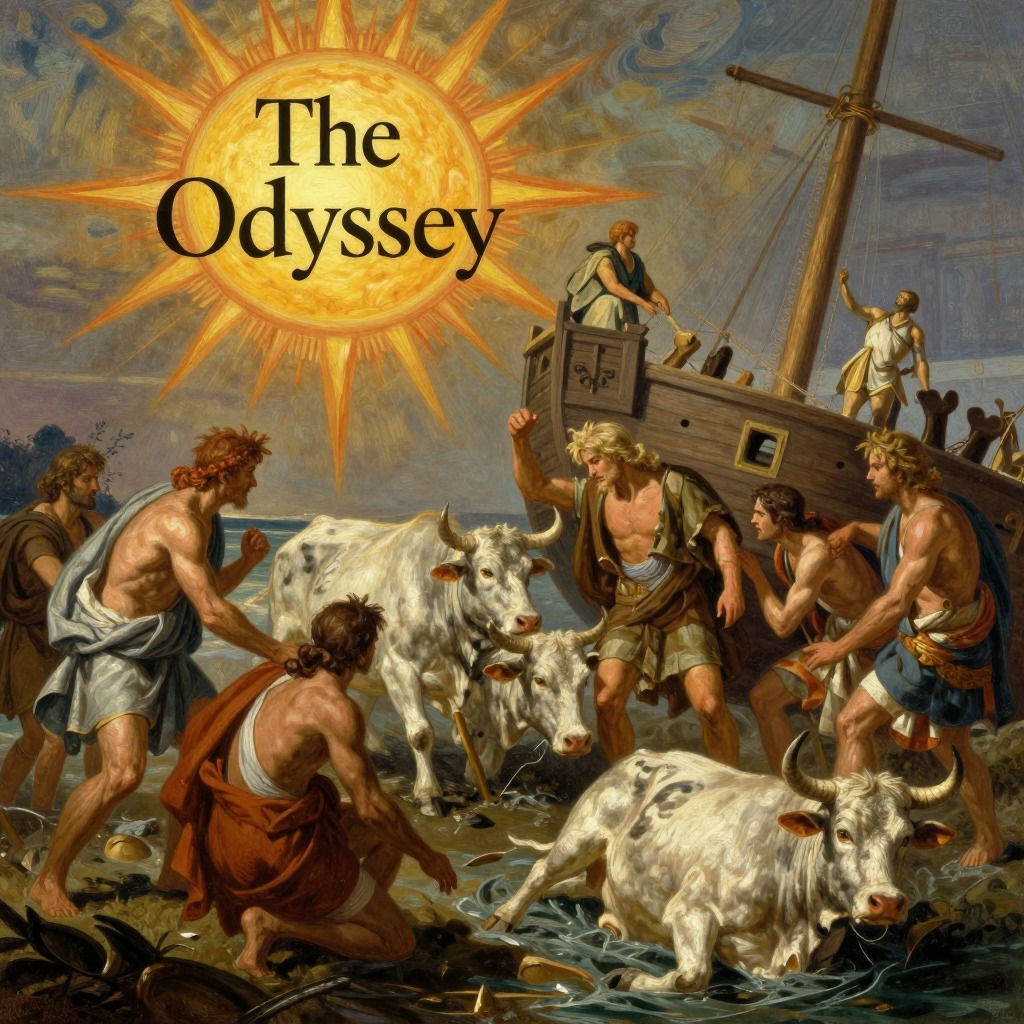
Eurylochus's most destructive act occurs on the Thrinacian island, where the sacred cattle of Helios graze. Odysseus, warned by both Teiresias and Circe, makes the crew swear a solemn oath not to touch the herds. For a month the south wind blows steadily, preventing departure, and the men exhaust their provisions. They are forced to catch birds and fish with hooks to survive. One day Odysseus goes inland to pray for a way of escape and falls into a deep sleep sent by the gods. In his absence, Eurylochus gives evil counsel to the starving men. He argues that all deaths are bad but none so bad as famine, and proposes driving in the best of the cattle and sacrificing them to the immortal gods. If they ever reach Ithaca, he says, they can build a fine temple to the sun-god; if Helios is determined to sink their ship in revenge, Eurylochus declares he would rather drink salt water once and for all than be starved to death by inches on a desert island. The men approve his words, drive in the cattle, and slaughter them, using young oak-shoots instead of barley meal because no barley is left. The omens that follow—the hides crawling, the joints lowing on the spits—confirm the sacrilege, and the subsequent destruction of the ship and drowning of the entire crew fulfills the prophecy.
Relationship with Odysseus and Narrative Significance
Eurylochus functions as Odysseus's foil and antagonist within the crew. Where Odysseus relies on cunning, endurance, and obedience to divine warnings, Eurylochus represents the voice of immediate physical need and democratic mutiny. He openly gives Odysseus an insolent answer when told to sail past the island, accusing him of being made of iron and never getting worn out. The men side with Eurylochus, and Odysseus is forced to yield, saying, "You force me to yield, for you are many against one." This moment crystallizes the breakdown of authority that leads directly to the catastrophe. Eurylochus is never punished for his insubordination; he survives the Circe episode, the Sirens, Scylla and Charybdis, and dies only in the final shipwreck that follows the slaughter of the cattle. His survival until the very end of the voyage makes him the last witness to the consequences of his own counsel, and his death alongside the rest of the crew underscores the collective doom that insubordination brings upon the whole company.