Ino
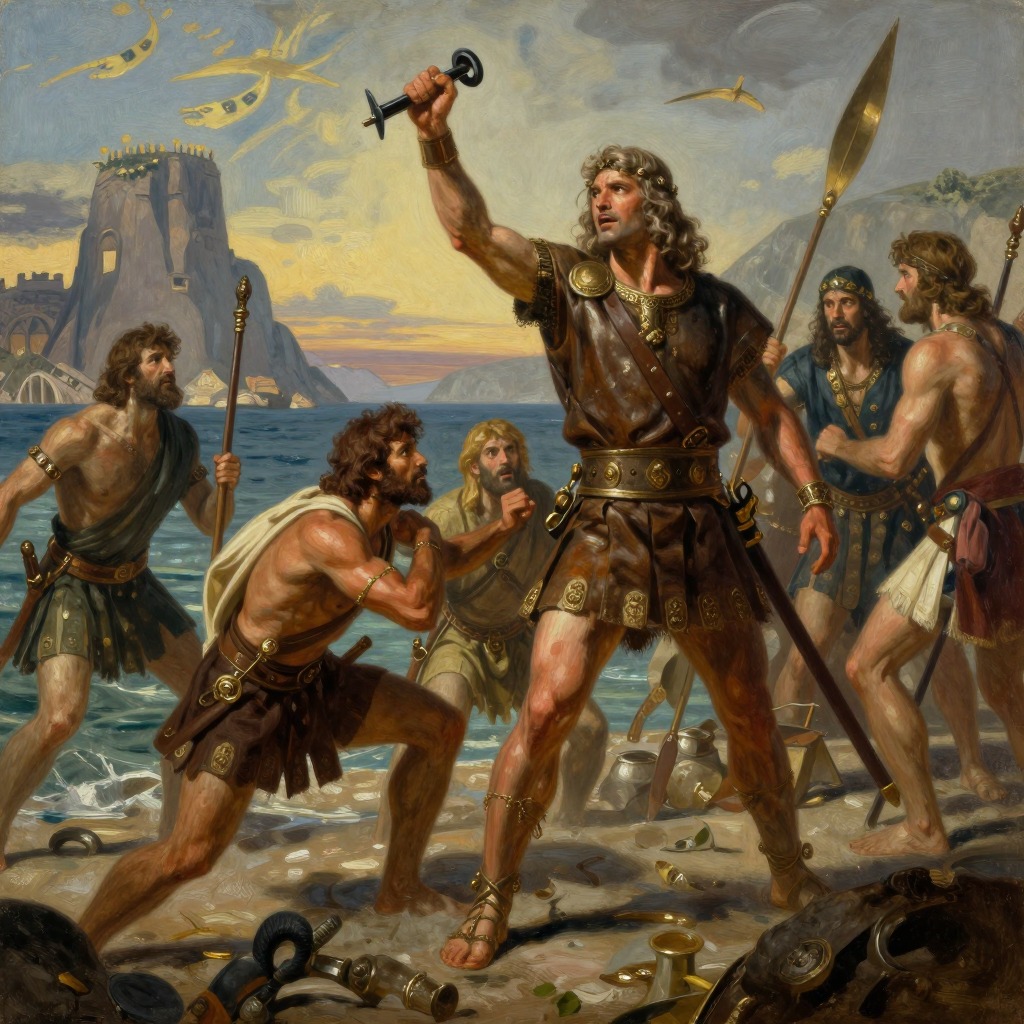
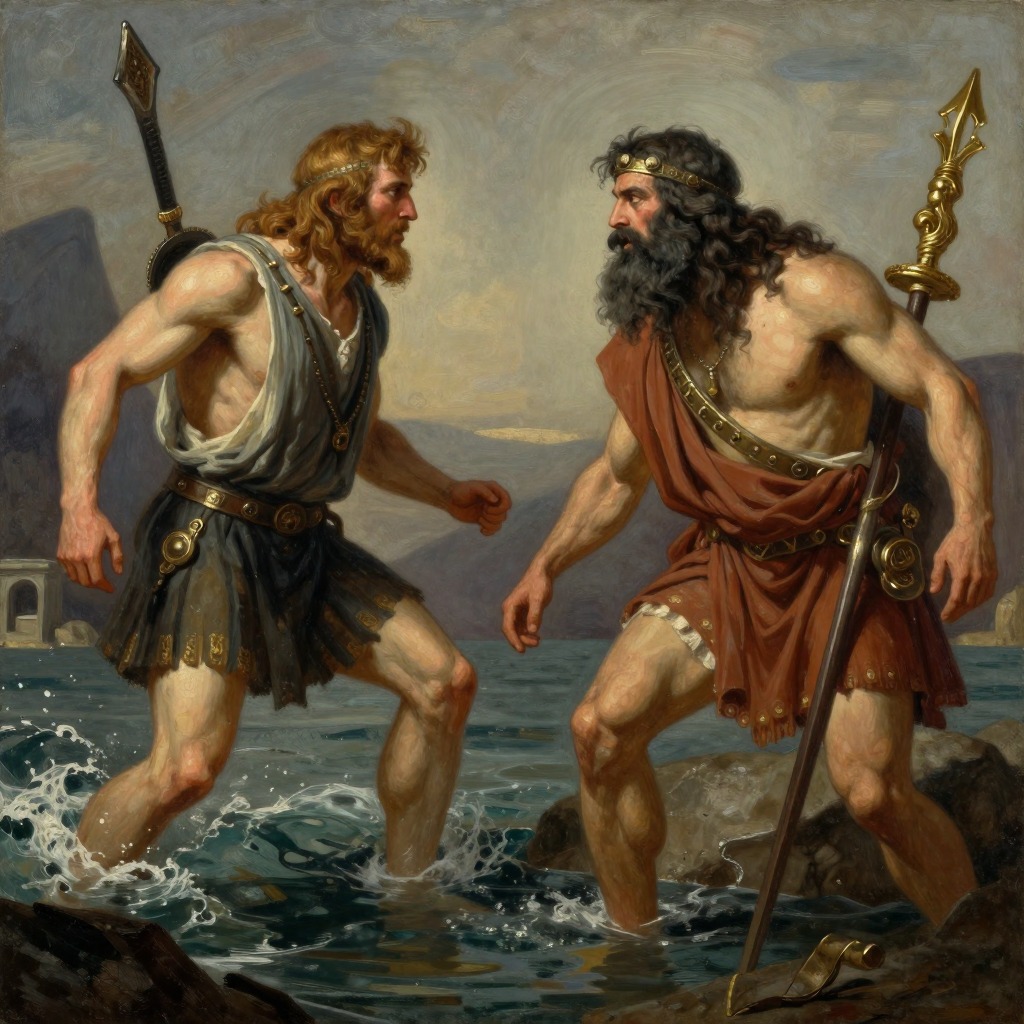
Ino, formerly a mortal woman and later raised to the rank of a marine goddess under the name Leucothea, intervenes at a critical moment to save Odysseus from drowning after Poseidon shatters his raft. Her appearance marks a turning point in Odysseus's desperate struggle to reach the land of the Phaeacians, providing him with the means to survive the raging sea when all seems lost.
Identity and Transformation
Ino is introduced as the daughter of Cadmus, a mortal who was later deified and granted a place among the sea deities. The narrative explicitly states that she "had formerly been a mere mortal, but had been since raised to the rank of a marine goddess." This transformation from human to immortal places her in a unique category among the divine helpers who assist Odysseus, bridging the mortal and immortal worlds. Her dual identity is reflected in her two names: Ino, her mortal name, and Leucothea, the name by which she is known as a goddess. When she appears to Odysseus, she rises from the waves "like a sea-gull" and takes her seat upon his broken raft, a form that emphasizes her connection to the sea and her ability to move freely between its depths and the surface.
The Rescue at Sea
Odysseus, after being swept overboard from his shattered raft and struggling to stay afloat, is in imminent danger of drowning. The sea tosses him about violently, and he is weighed down by the clothes Calypso had given him. It is at this moment that Ino sees him and takes pity on his plight. She addresses him directly, acknowledging Poseidon's fury but assuring him that despite the god's bluster, he will not die. She instructs him to strip off his clothes, abandon his raft, and swim for the Phaeacian coast. To ensure his safety, she gives him her enchanted veil, telling him to bind it under his chest, explaining that "it is enchanted, and you can come to no harm so long as you wear it." She further instructs him that as soon as he touches land, he must throw the veil back into the sea, far from the shore, and then walk away. After giving these instructions, she dives back into the water "like a sea-gull" and vanishes beneath the dark blue waves.
Odysseus's Reluctance and the Veil's Power
Despite Ino's clear instructions, Odysseus initially hesitates, suspecting that the goddess might be trying to lure him to his ruin by advising him to abandon his raft. He decides to stay with the wreckage as long as its timbers hold together, only swimming for it when the raft finally breaks apart. When a massive wave sent by Poseidon shatters the raft completely, Odysseus is forced to act. He strips off Calypso's clothes, binds Ino's veil under his arms, and plunges into the sea. The veil's protective power is immediately effective, allowing him to swim despite the heavy swell. After he finally reaches the mouth of a river and drags himself ashore, he follows Ino's final command: he takes off the scarf and throws it back into the salt stream of the river, where Ino receives it into her hands from the wave that bears it toward her. This act of returning the veil completes the transaction between mortal and goddess, and Ino disappears from the narrative, her role as rescuer fulfilled.
Significance and Narrative Role
Ino's intervention is a crucial deus ex machina that saves Odysseus from certain death at sea, a death that would have ended the poem prematurely. Her appearance underscores the theme of divine compassion that counterbalances Poseidon's relentless wrath. Unlike Athena, who guides Odysseus throughout his journey, or Calypso, who detains him, Ino appears only once, for a single, decisive act of rescue. Her gift of the enchanted veil is a tangible symbol of divine protection, a magical object that functions as a temporary shield against the elements. The episode also highlights Odysseus's characteristic wariness and cunning, as he initially doubts the goddess's intentions before ultimately trusting her. Ino's transformation from a mortal woman to a marine goddess also resonates with the poem's broader interest in the boundaries between human and divine, and the possibility of crossing that boundary through divine favor or fate.