Odysseus
Odysseus, son of Laertes and king of Ithaca, is the protagonist of Homer's Odyssey, a figure whose defining traits—polytropos (of many turns), polymetis (of many counsels), and unparalleled endurance—drive the epic's exploration of heroism, identity, and the longing for home. His ten-year struggle to return from the Trojan War, followed by his secret return and bloody vengeance on the suitors who have overrun his house, constitutes the poem's entire action. More than a warrior, Odysseus is a survivor, a storyteller, and a master of disguise, whose journey tests every resource of mind and body before he can reclaim his wife, his son, and his kingdom.
Identity and Background
Odysseus is the son of Laertes and Anticlea, husband of Penelope, and father of Telemachus. He rules Ithaca, a rugged island he loves above all other lands, and is famed among the Achaeans for his subtlety—his fame, he declares, "ascends to heaven" . Before the Trojan War, he received the great bow from Iphitus, son of Eurytus, a gift that would later become the instrument of the suitors' doom . His most intimate token of identity is a scar on his leg, inflicted by a wild boar's tusk during a hunt on Mount Parnassus with his maternal grandfather, Autolycus . This scar, recognized first by his old nurse Euryclea and later by his father Laertes, serves as the definitive proof of his identity. The poem opens with him detained on the island of Ogygia by the goddess Calypso, who longs to make him her husband, while he sits on the shore "with tears in his eyes, groaning and breaking his heart for sorrow" .
The Wanderings: Trials and Transformations
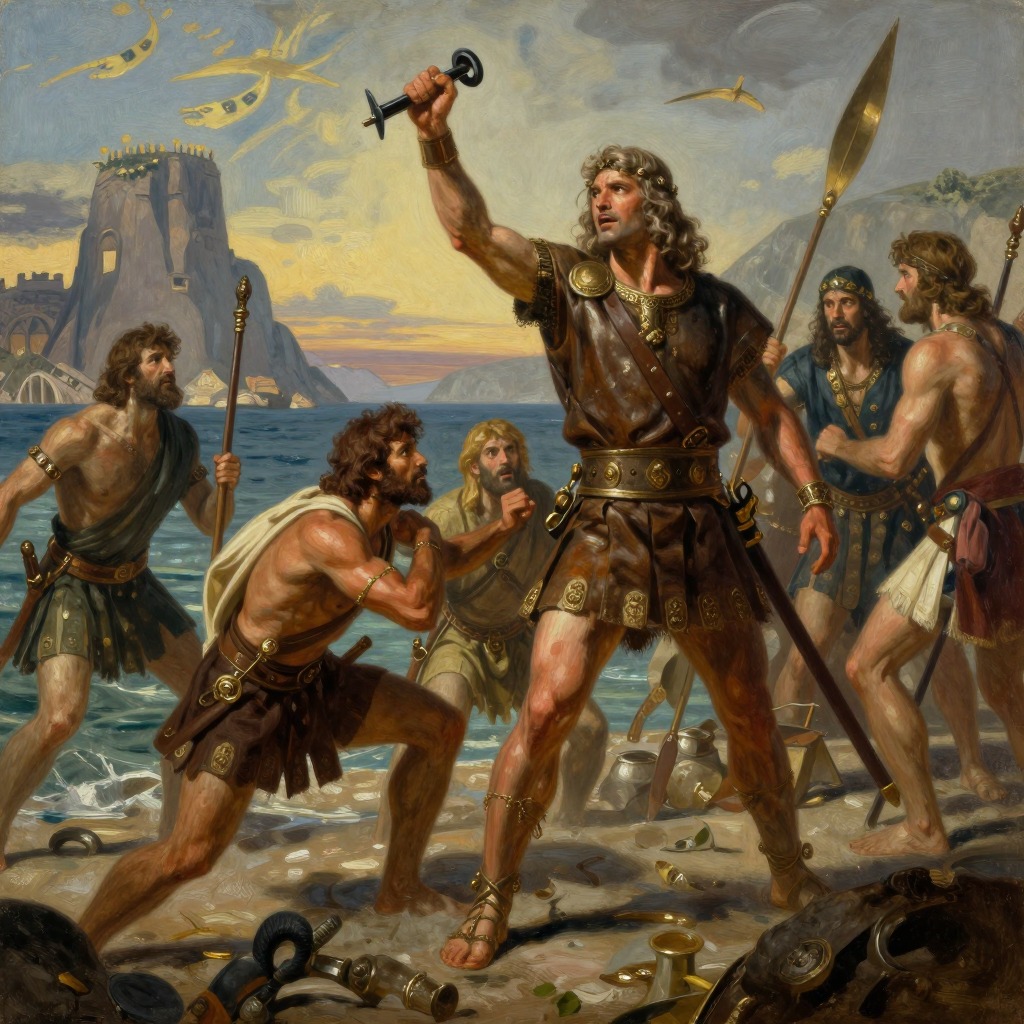
Odysseus's own narrative of his wanderings, told to the Phaeacian court in Books 9–12, reveals a hero who combines martial prowess with a cunning that often borders on the reckless. After sacking the city of the Cicons, he is driven by storms to the land of the Lotus-eaters, where he must physically drag his men back to the ships to prevent them from losing all desire for home. His encounter with the Cyclops Polyphemus is a masterpiece of strategic deception: he identifies himself as "Noman," blinds the monster, and escapes by clinging to the belly of a ram, only to ruin his own advantage by shouting his true name in a moment of pride, thereby invoking the wrath of Poseidon. He receives the bag of winds from Aeolus, only to have his men open it within sight of Ithaca, blowing them back across the sea. He loses all but one ship to the man-eating Laestrygonians, and on the Aeaean island, he overcomes the enchantress Circe through the aid of the god Hermes and the magical herb moly, forcing her to restore his transformed crew. His journey to the underworld to consult the prophet Teiresias reveals the cost of his homecoming: he must not harm the cattle of the Sun, or he will lose all his men and return in another man's ship to find trouble in his house. He passes the Sirens by having himself bound to the mast, loses six men to the monster Scylla, and finally, after his starving crew slaughters the Sun's cattle, he alone survives the shipwreck sent by Zeus, drifting for nine days before washing ashore on Calypso's island.
The Return and the Reckoning
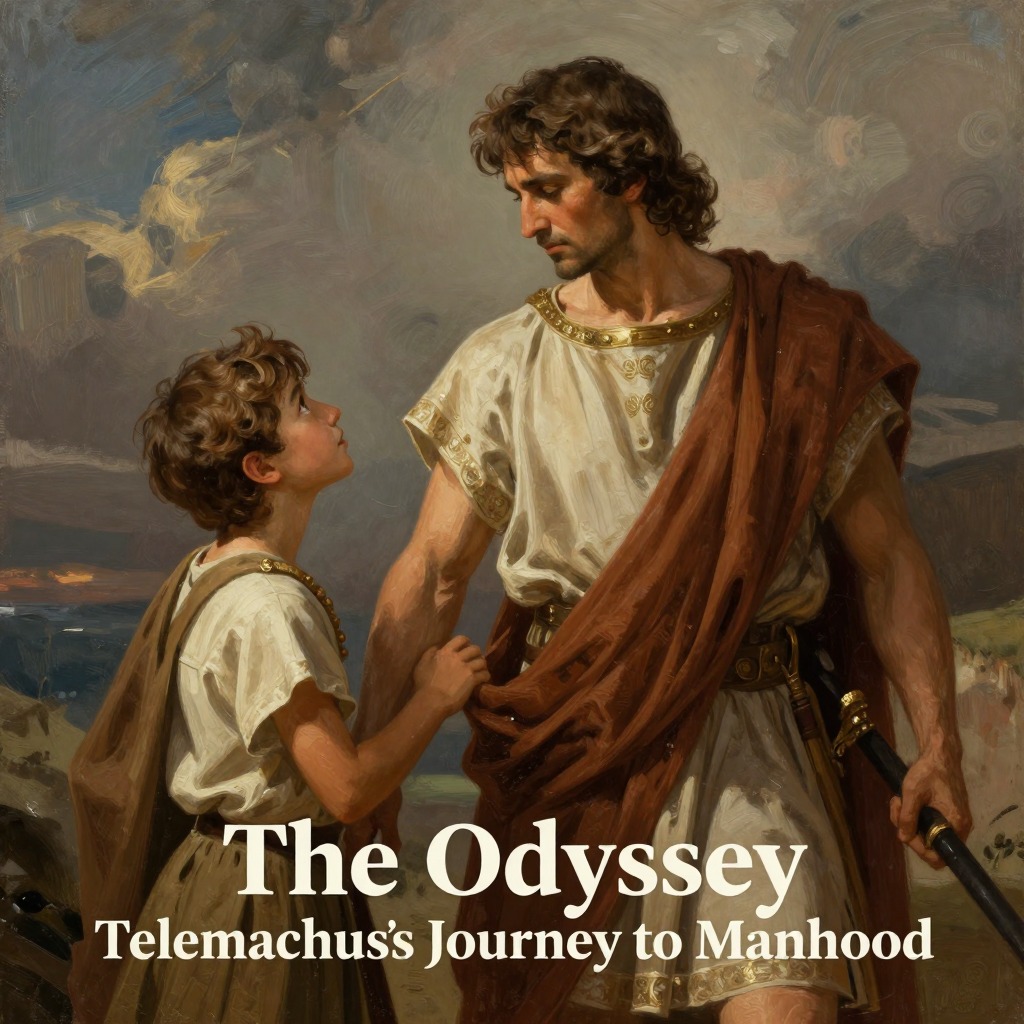
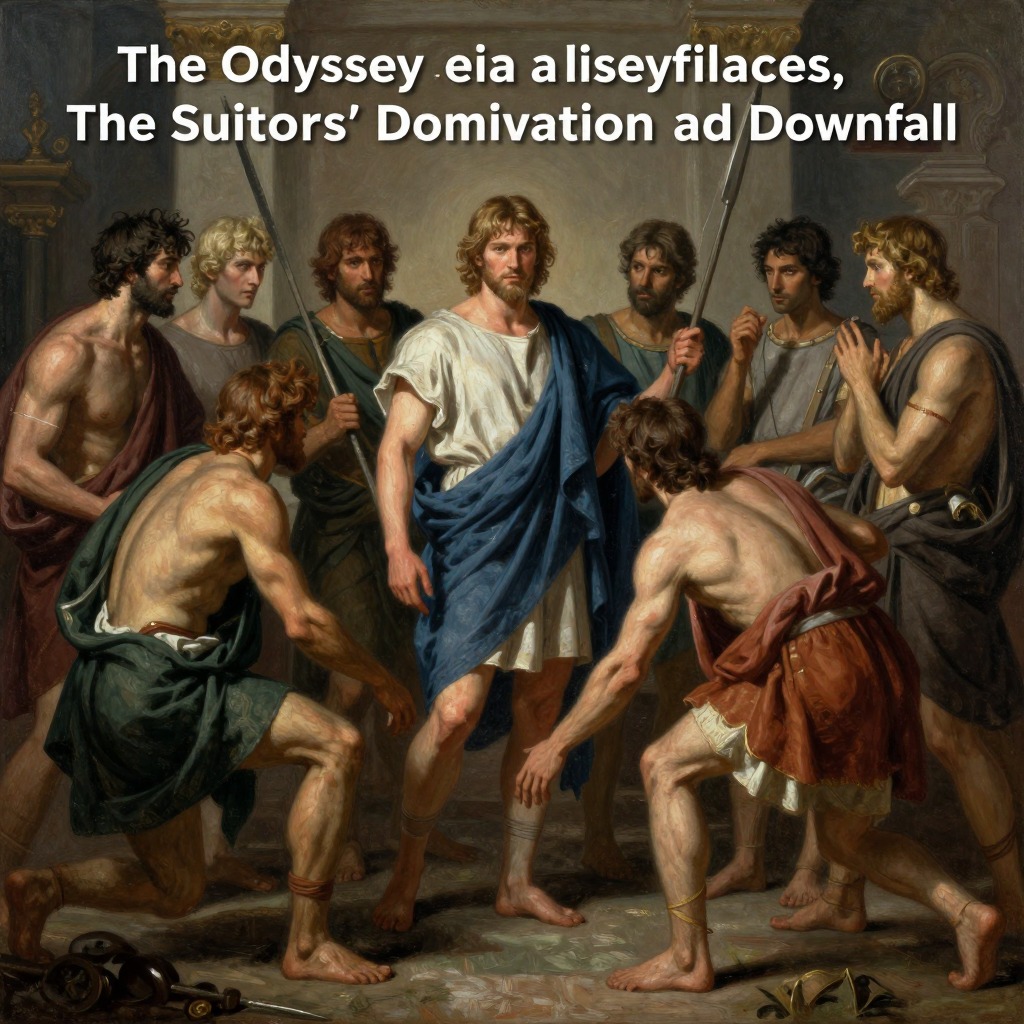
After seven years with Calypso, Odysseus is released by the command of Zeus and builds a raft, only to be shipwrecked again by Poseidon. He swims ashore on Scheria, the land of the Phaeacians, where he is found by the princess Nausicaa. Treated with great hospitality by King Alcinous and Queen Arete, he recounts his adventures and is finally conveyed to Ithaca in a magical Phaeacian ship, arriving asleep. He awakens to find his homeland unrecognizable, shrouded in mist by Athena. The goddess reveals the truth and disguises him as an aged beggar, instructing him to go first to the hut of his faithful swineherd, Eumaeus. There, he is reunited with his son Telemachus, to whom he reveals his identity in a scene of profound emotion: "I am your father, on whose account you grieve and suffer so much at the hands of lawless men" . Together, they plan the destruction of the suitors. Odysseus enters his own palace as a despised beggar, enduring insults and a blow from Antinous, and observes the suitors' arrogance. He reveals himself only to the loyal servants Eumaeus and Philoetius, showing them the scar as proof. In the contest of the bow, he alone can string the great weapon, and with it, he shoots Antinous through the throat, then turns on the rest, slaughtering them with the help of Telemachus, Eumaeus, and Philoetius, while Athena herself joins the fray.
Relationships and Recognition
Odysseus's relationships are defined by a tension between his heroic autonomy and his deep bonds of loyalty. His marriage to Penelope is the emotional core of the poem; she matches his cunning with her own weaving trick, and their final recognition is delayed until he proves his identity by describing the immovable bed he built from a living olive tree . His relationship with Telemachus is rebuilt from absence into a partnership of vengeance. With his father Laertes, the reunion is poignant: Odysseus finds him in the vineyard, old and grieving, and proves himself by naming the trees Laertes gave him as a boy. His bond with Athena is one of divine favor and mutual respect; she guides, disguises, and empowers him at every critical turn. His encounters with Calypso and Circe, while involving physical intimacy, ultimately underscore his unwavering desire for Penelope and Ithaca. His enmity with Poseidon, born from the blinding of Polyphemus, is the primary obstacle to his return, a cosmic force that only Zeus's decree can finally overrule.
Thematic Significance and Ending
Odysseus embodies the epic's central values: metis (cunning intelligence), endurance (tlemosyne), and the sanctity of the home (oikos). His journey is not merely a physical voyage but a moral and psychological ordeal that tests his identity against forces of temptation, forgetfulness, and chaos. His use of disguise—as a beggar, as a storyteller, as "Noman"—allows him to control knowledge and to test the loyalty of others, making recognition (anagnorisis) a central structural device. The poem ends not with his triumphant rule but with a final act of peacemaking: after killing the suitors, he must face their vengeful families, and only the intervention of Athena, who makes a covenant of peace, secures his place as king. The prophecy of Teiresias, that death will come to him "from the sea" in a gentle old age, hangs over his future, suggesting that even the greatest hero's story is one of ongoing, though diminished, struggle. Odysseus is thus the archetypal figure of the nostos—the hero who wins home not through brute force alone, but through a relentless, resourceful will to return.