Zeus
Zeus, the king of the Olympian gods, is the supreme arbiter of fate in the Odyssey, whose decisions set the entire plot in motion and whose authority ultimately sanctions Odysseus's return and the punishment of the suitors. He presides over the divine council, dispenses justice among mortals, and balances the competing claims of other gods, yet he is also bound by the decrees of fate and the demands of cosmic order. His role is less that of a partisan actor than of a final judge who ratifies what must be, even when it means allowing immense suffering.
Role in the Divine Council and the Fate of Odysseus
Zeus convenes the first divine council in Book I, where he reflects on the theme of human folly and divine justice, using the example of Aegisthus, who ignored divine warnings and was punished by Orestes. When Athena pleads for Odysseus, Zeus acknowledges that he cannot forget Odysseus, "than whom there is no more capable man on earth, nor more liberal in his offerings to the immortal gods that live in heaven." He explains that Poseidon's anger over the blinding of Polyphemus is the obstacle, but he agrees to a plan: Hermes will tell Calypso to release Odysseus, and Athena will go to Ithaca to embolden Telemachus. This council establishes Zeus as the authority who overrides Poseidon's opposition by securing a consensus among the gods, demonstrating that his will, when aligned with the majority, cannot be defied.
Zeus as Arbiter of Justice and Fate
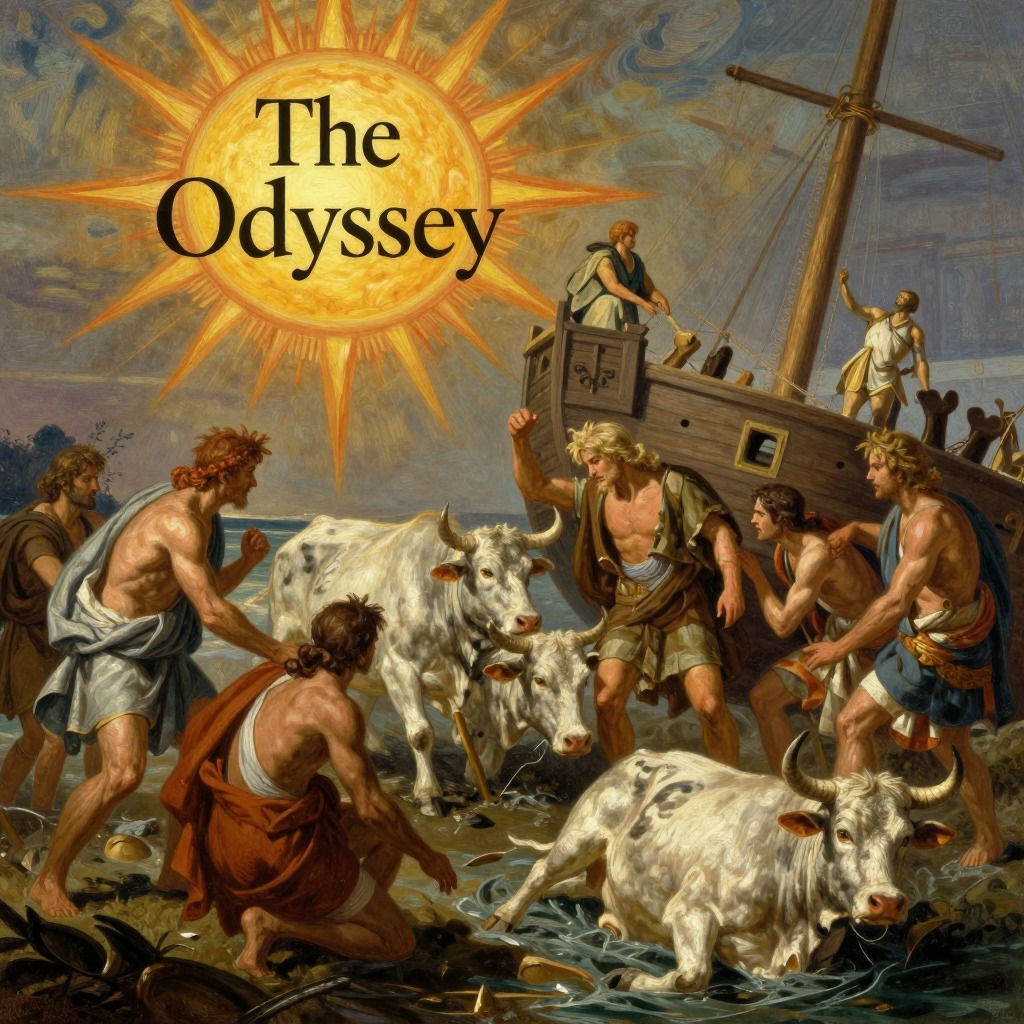
Zeus's justice is not arbitrary but operates within a framework of moral law. He explicitly states that mortals bring suffering upon themselves through their own folly, as Aegisthus did. This principle recurs throughout the poem. When the suitors are killed, Zeus later affirms to Athena that the massacre was just, saying, "Now that Ulysses is revenged, let them swear to a solemn covenant, in virtue of which he shall continue to rule, while we cause the others to forgive and forget the massacre of their sons and brothers." He thus transforms personal vengeance into a divinely sanctioned peace, restoring order to Ithaca. His thunderbolts are instruments of this justice: he destroys Odysseus's ship after his men slaughter the cattle of the Sun, and he sends a thunderbolt as a sign of approval when Odysseus strings the bow. Yet Zeus also respects the limits of fate. When Poseidon complains about the Phaeacians' escort, Zeus does not forbid him from punishing them but merely advises him on how to do so, showing that even the king of the gods works within a system of reciprocal divine rights.
Zeus's Relationship with Other Gods and Mortals
Zeus interacts with the other gods as a father and a king, but his authority is not absolute. He must negotiate with Poseidon, who holds a legitimate grudge, and he listens to Athena's persistent advocacy for Odysseus. His relationship with mortals is distant but not indifferent; he sends omens, such as the two eagles that appear during Telemachus's assembly, which the prophet Halitherses interprets as a sign of Odysseus's imminent return. He also answers prayers directly, as when he thunders from a clear sky in response to Odysseus's prayer for a sign. However, Zeus does not intervene in every detail of mortal life. He allows Odysseus to suffer for years, and he permits the suitors to persist in their hubris until the appointed time for their destruction. His ultimate concern is the maintenance of cosmic order, not the happiness of any individual.
Thematic Significance: Zeus as the Embodiment of Cosmic Order
Zeus represents the principle that justice, though delayed, will eventually prevail. His role in the Odyssey is to ensure that the narrative arc of suffering, revenge, and restoration is completed in accordance with divine law. He is the guarantor that the proper order of things—where guests are protected, oaths are kept, and the wicked are punished—will be upheld. Without his sanction, Odysseus's return would remain merely a personal desire; with it, the hero's journey becomes a cosmic necessity. Zeus's final act of imposing a peace covenant between Odysseus and the Ithacans transforms a bloody feud into a stable social order, mirroring the poem's movement from chaos to harmony.