Ponyboy Curtis
Ponyboy Curtis is the fourteen-year-old narrator and protagonist of S. E. Hinton's The Outsiders. A sensitive, bookish greaser from the East Side, he struggles with the loss of his parents, a tense relationship with his oldest brother Darry, and the violent rivalry between the greasers and the Socs. His journey through tragedy, friendship, and self-discovery forms the emotional core of the novel, culminating in his decision to tell his story in the hope of bridging the divide between social classes.
Identity and Background
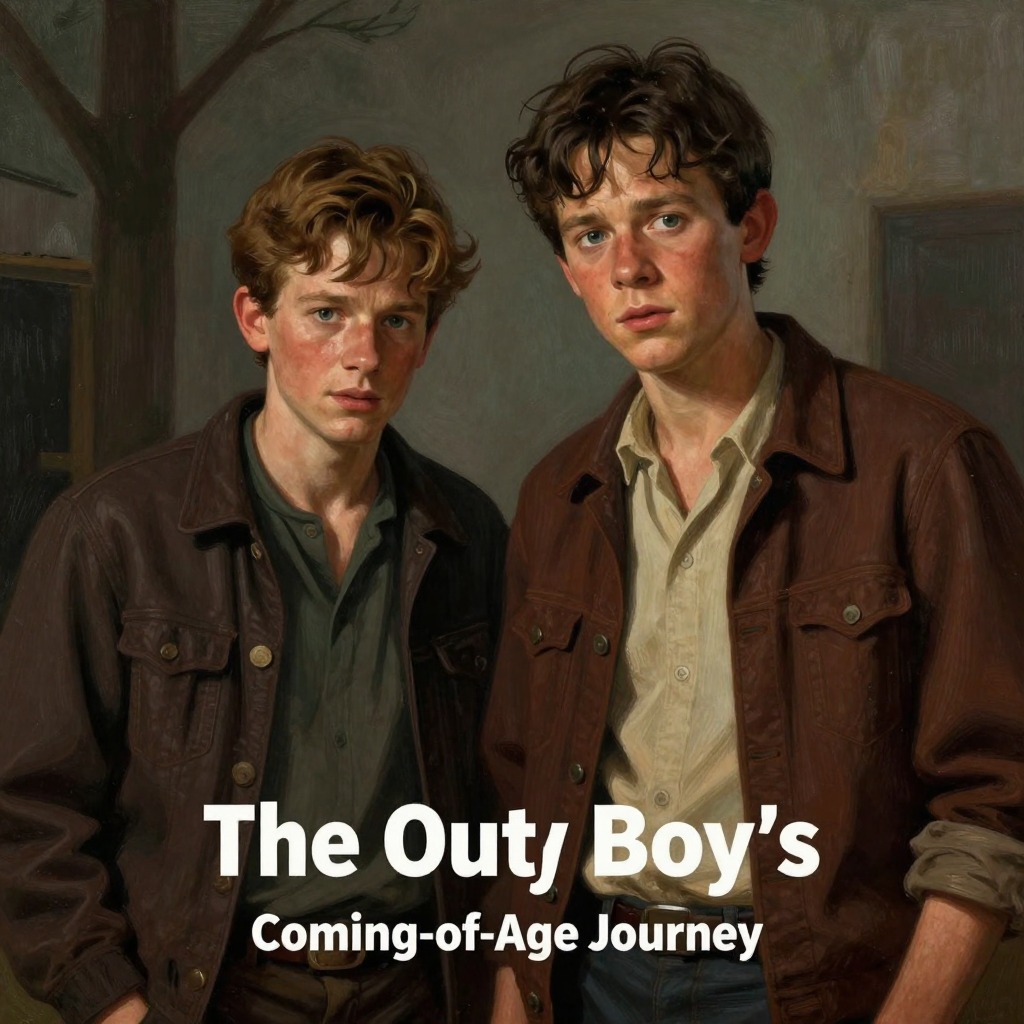
Ponyboy is the youngest of three Curtis brothers, living with his older brothers Darrel Curtis (Darry), twenty, and Sodapop Curtis, sixteen-going-on-seventeen, after their parents were killed in an auto wreck. He has light-brown, almost-red hair and greenish-gray eyes, and he wears his hair long in the greaser style—squared off in back and long at the front and sides. He is small for his age but has a good build, and he makes good grades and has a high IQ, though he often feels he does not use his head for common sense. Unlike most of his gang, Ponyboy loves movies and books, and he often goes to the movies alone so he can immerse himself in the story without distraction. He is on the A-squad track team, the youngest member, and is a good runner. His favorite book is Gone with the Wind, and he is deeply moved by Robert Frost's poem "Nothing Gold Can Stay."
Life and Plot Trajectory
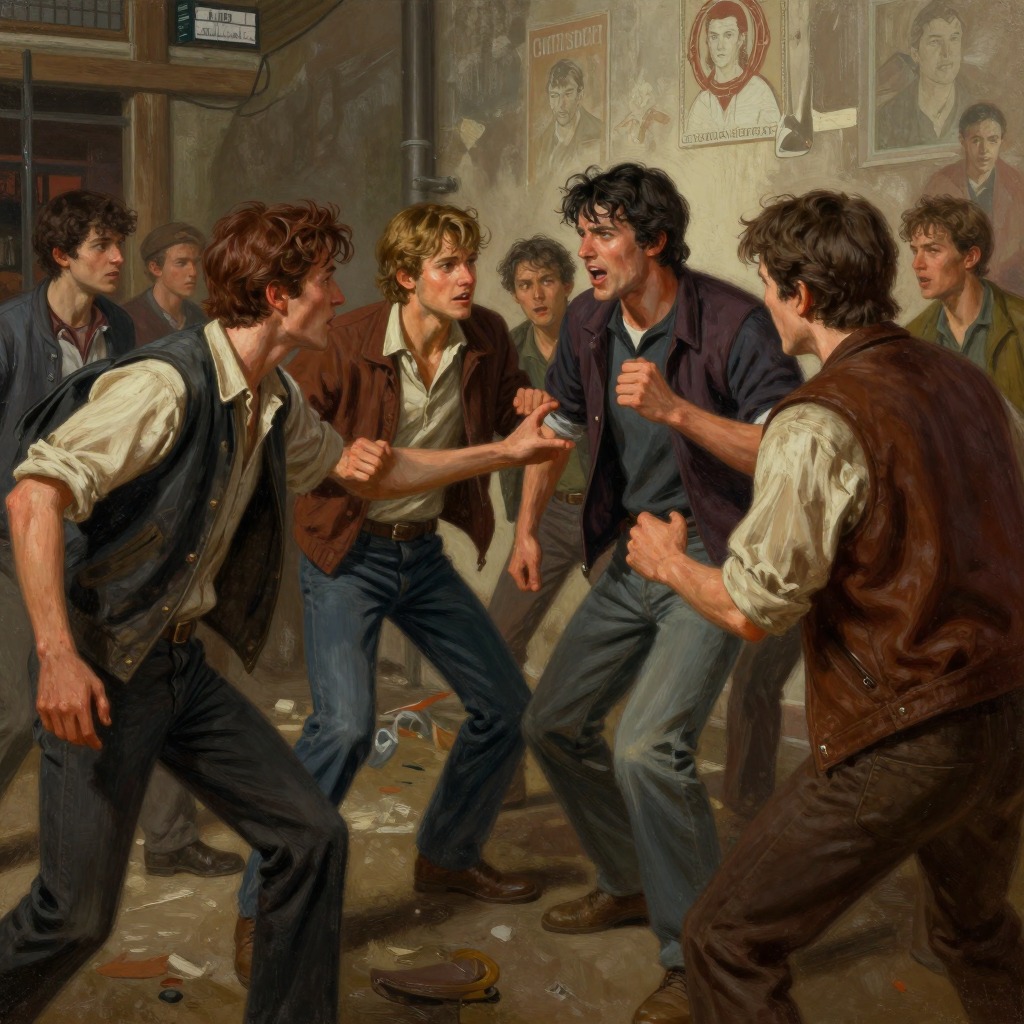
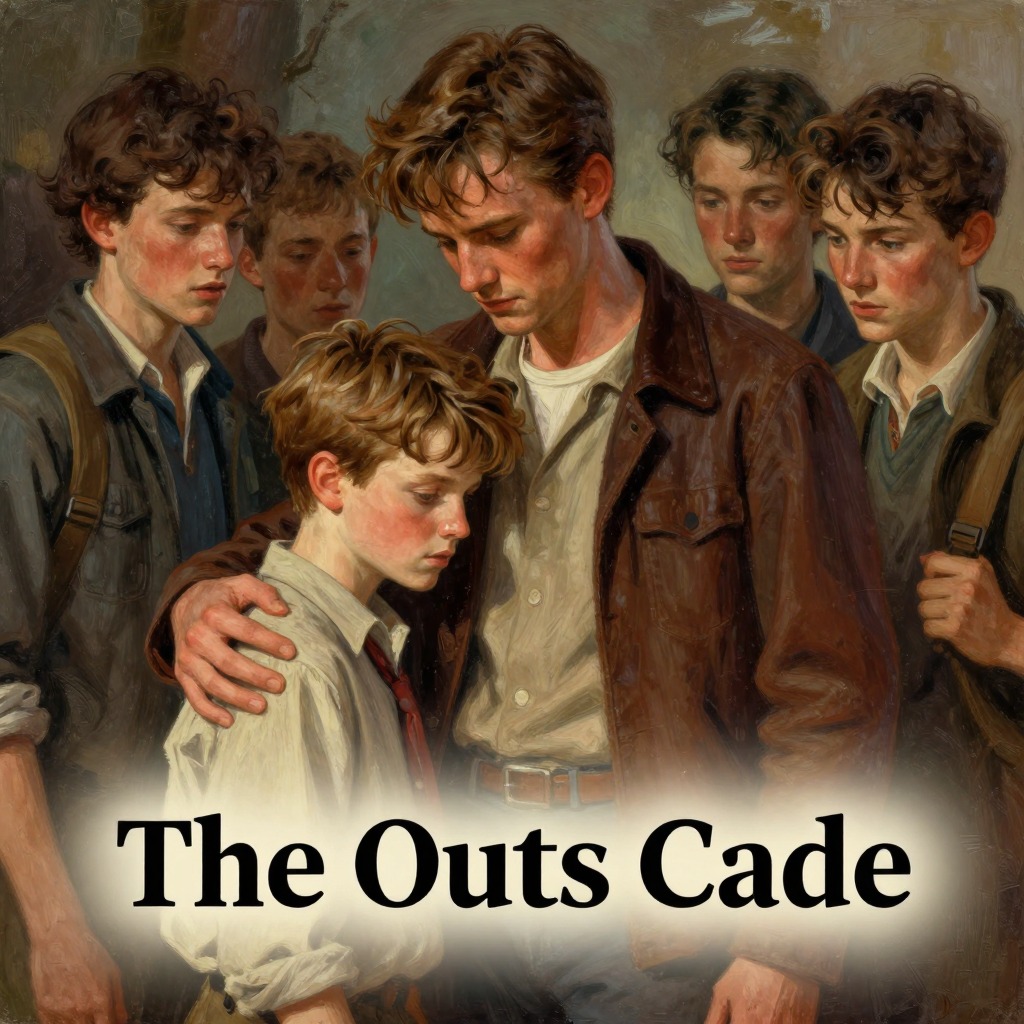
Ponyboy's story begins when he is jumped by five Socs while walking home from the movies, an attack that leaves him bruised and shaken. The gang—including Johnny Cade, Dallas Winston, Keith "Two-Bit" Mathews, and Steve Randle—rescues him. Later, at the Nightly Double drive-in, Ponyboy and Johnny meet two Soc girls, Cherry Valance and Marcia, and Ponyboy forms an unexpected cross-class friendship with Cherry. That night, after Ponyboy comes home late, Darry slaps him in anger, and Ponyboy runs away, taking Johnny with him. In the park, they are confronted by Bob Sheldon, Randy Adderson, and three other Socs. When the Socs try to drown Ponyboy in the fountain, Johnny stabs and kills Bob. The two boys flee to Dally, who gives them money, a gun, and instructions to hide in an abandoned church on Jay Mountain in Windrixville. They spend five days there, cutting and bleaching their hair as a disguise, reading Gone with the Wind, and growing closer. Dally visits and tells them the Socs and greasers are planning a rumble. Johnny decides they should turn themselves in, but before they can, they discover the church is on fire with a group of schoolchildren trapped inside. Ponyboy and Johnny rescue the children, but Johnny is critically injured when a burning timber falls on his back. Ponyboy is hospitalized for smoke inhalation and a concussion. At the hospital, he reconciles with Darry, who breaks down crying. Johnny dies from his injuries, and Dally, unable to cope, robs a grocery store and is shot dead by police in the vacant lot. Ponyboy suffers a concussion and a period of denial and depression, but eventually finds the strength to write his story for his English class, beginning with the same words that opened the novel.
Key Actions and Objectives
Ponyboy's primary objective throughout the novel is to find a place where he belongs and to understand the world around him. He is driven by a desire for safety and stability, both from the violence of the Socs and from the emotional turmoil at home. He acts as a peacemaker within his family, trying to mediate between Darry and Sodapop, and he is fiercely loyal to his friends, especially Johnny. His most significant actions include running away with Johnny after Darry hits him, helping to rescue the children from the burning church, and ultimately deciding to write his story as a way to make sense of the tragedy and to advocate for understanding between greasers and Socs. He also shows courage in the rumble, fighting despite being ill and out of shape, and later standing up to three Socs who confront him at a store, brandishing a broken bottle.
Relationships and Conflict
Ponyboy's relationships are central to his development. He idolizes Sodapop, who is always happy-go-lucky and understanding, and he feels a deep, often painful, tension with Darry, whom he perceives as hard, cold, and unloving. The conflict with Darry drives Ponyboy to run away, but after Johnny's death, Darry's tears reveal his true love and fear, leading to a reconciliation. Ponyboy's friendship with Johnny is the most profound of the novel; they understand each other without words, and Johnny's death devastates him. He also forms a significant cross-class friendship with Cherry Valance, a Soc, who helps him see that "things are rough all over" and that the Socs have their own troubles. His relationship with Dally is more complex—he initially dislikes Dally but comes to respect him, and Dally's death, following Johnny's, deepens his sense of loss. Ponyboy's conflict with the Socs is both physical and ideological; he hates them for their privilege and violence, but through Cherry and Randy, he begins to see them as individuals.
Change and Ending
Ponyboy undergoes a profound transformation over the course of the novel. He begins as a naive, somewhat self-pitying boy who feels misunderstood and victimized. The trauma of Johnny's killing of Bob, the flight to Windrixville, the church fire, and the deaths of Johnny and Dally force him to confront mortality, guilt, and the meaning of loyalty. He initially denies Johnny's death, but after reading Johnny's final note—which urges him to "stay gold" and to tell Dally to look at a sunset—he finds a sense of purpose. He decides to write his story, not just for a grade, but to give a voice to the greasers and to show that there is still good in the world. The novel ends with Ponyboy beginning to write the very words that opened the book, completing a narrative loop that suggests his story is an act of healing and understanding.
Narrative Role and Evaluation
Ponyboy is the first-person narrator of The Outsiders, and his voice—introspective, literary, and emotionally raw—shapes the entire novel. His perspective allows the reader to see the greasers not as stereotypes but as complex individuals with dreams, fears, and humanity. His intelligence and sensitivity make him a reliable but not omniscient narrator; he often misinterprets Darry's motives and struggles with his own emotions. The novel is essentially his attempt to make sense of his experiences, and his growth from a passive observer to an active storyteller is the book's central arc. Through Ponyboy, Hinton explores themes of class conflict, the loss of innocence, the search for identity, and the redemptive power of storytelling. His final decision to write his story is both a personal catharsis and a political act, an effort to bridge the divide between the greasers and the Socs by telling the truth about their lives.