the wife
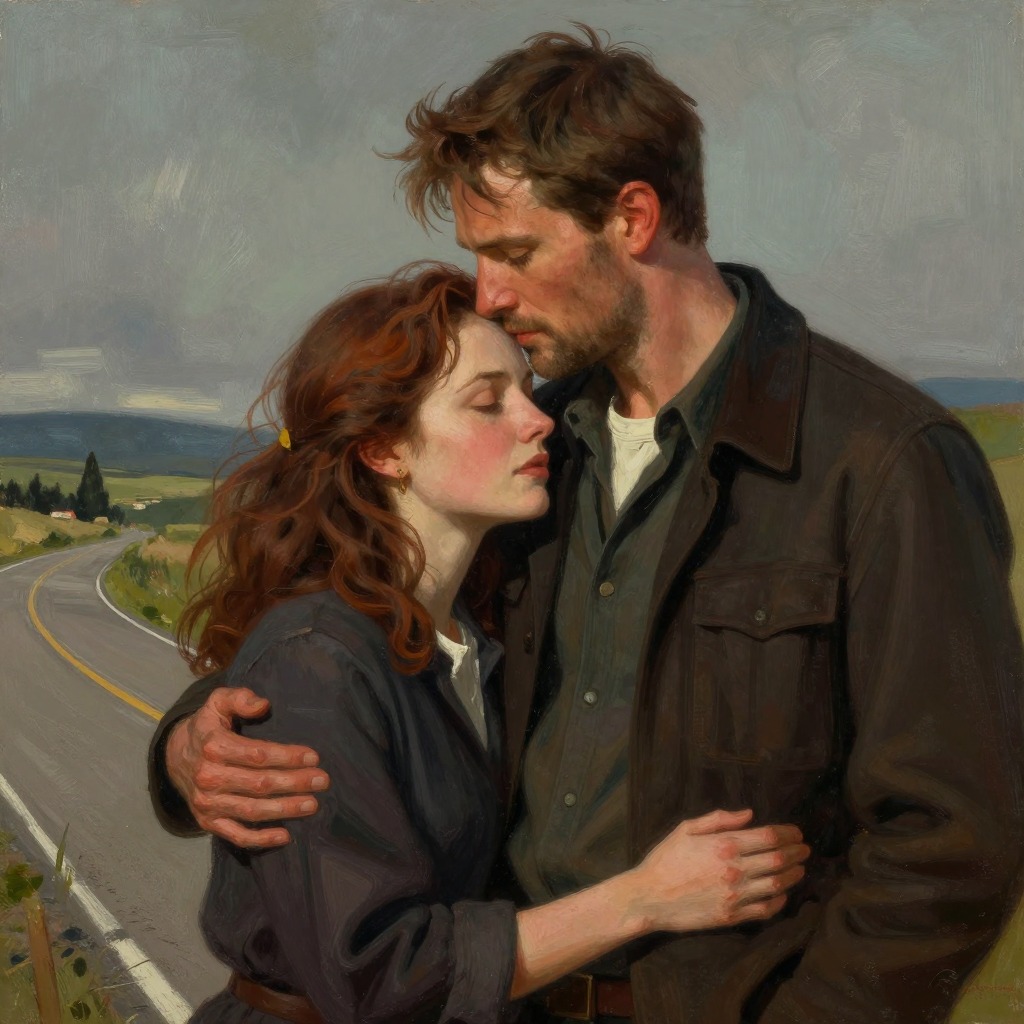
The wife is the man's spouse and the mother of the boy, a character who exists in the narrative almost entirely through memory, dream, and flashback. Her presence is defined by absence: she is the figure who could not bear the world that was, and who chose to leave it rather than endure its horrors. Her decision to abandon her family and take her own life is one of the novel's most devastating events, a choice that haunts the man throughout his journey and shapes the boy's deepest fears of being left alone.
Identity and Background
The wife gave birth to the boy in the early days of the catastrophe, in their bed by the light of a dry-cell lamp, with the man assisting using dishwashing gloves. The birth was a raw, animal event: the small crown of the head streaked with blood and lank black hair, the rank meconium, the cries that meant nothing to the man as he cut the cord with kitchen shears and wrapped his son in a towel. Before the world ended, she was a woman who sat in a theatre leaning forward to listen to music, holding the man's hand in her lap, her summer dress thin enough that he could feel the tops of her stockings. The man could remember everything about her except her scent. In his dreams she came to him out of a green and leafy canopy, her nipples pipeclayed and her rib bones painted white, wearing a dress of gauze, her dark hair carried up in combs of ivory and shell. These dreams were rich in color, a siren world from which he learned to wake himself, knowing that the right dreams for a man in peril were dreams of peril, and all else was the call of languor and of death.
The Decision to Leave
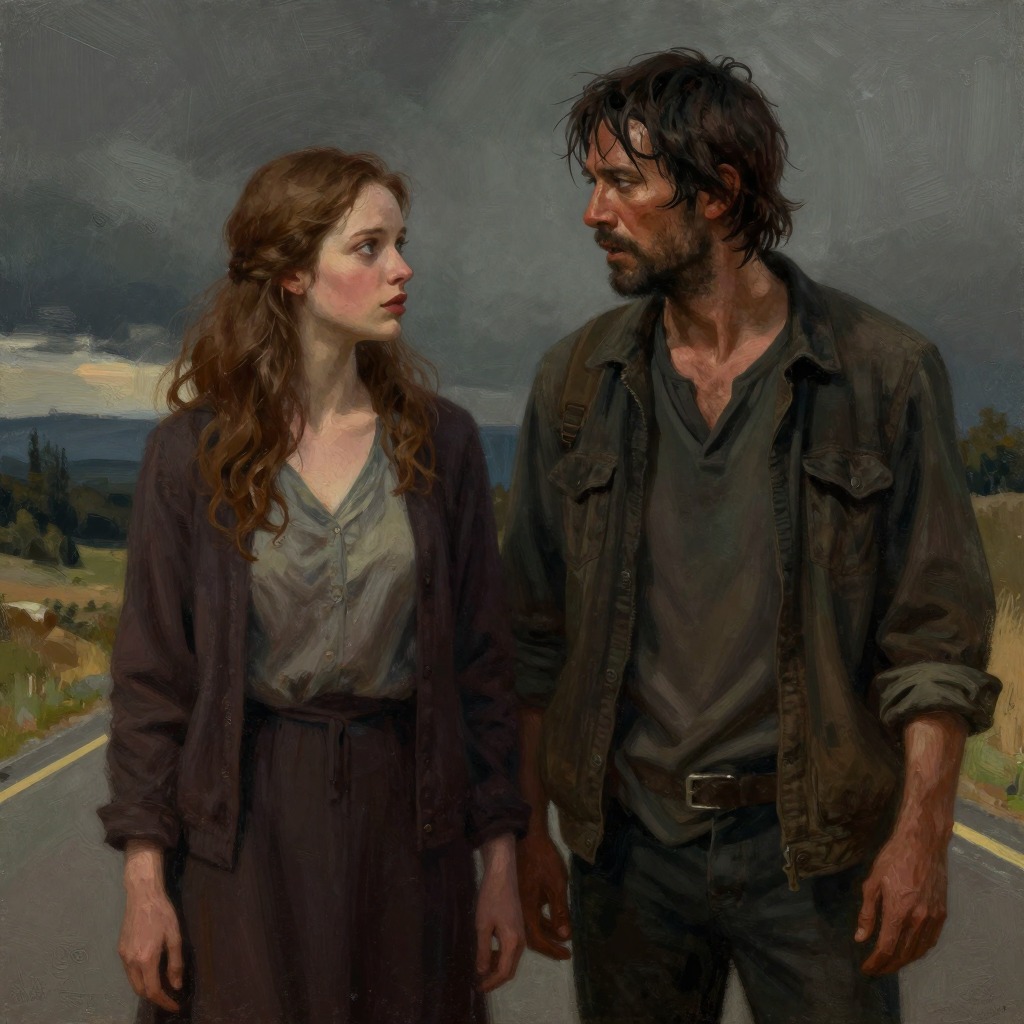
The wife's departure is the subject of a long, agonized argument that the man recalls across the flame of a lamp. She told him they were not survivors but "the walking dead in a horror film." She accused him of refusing to face the truth: that sooner or later they would be caught, raped, killed, and eaten. She said she had taken a new lover — death — and that he could give her what the man could not. She smoked a slender length of dried grapevine as if it were a rare cheroot, holding it with a certain elegance. The man begged her to stay until morning, to say goodbye to the boy, but she refused. "I have to go," she said. "I cannot." She left in the night, and the coldness of her going was her final gift. The man knew she would do it with a flake of obsidian — he had taught her himself, sharper than steel, the edge an atom thick. In the morning the boy said nothing at all, and when they were packed and ready to set out, he turned and looked back at their campsite and said, "She's gone, isn't she?" And the man said, "Yes, she is."
The Argument and Its Aftermath
The wife's argument was not impulsive but the culmination of a long, philosophical debate. The man recalled the hundred nights they had sat up arguing the pros and cons of self-destruction with the earnestness of philosophers chained to a madhouse wall. She told him that a person who had no one would be well advised to cobble together some passable ghost, breathe it into being, coax it along with words of love, offer it each phantom crumb and shield it from harm with your body. But for herself, her only hope was for eternal nothingness, and she hoped for it with all her heart. She said her heart was ripped out of her the night the boy was born, and she had no sorrow left to give. The man had no argument because there was none. Her departure left a wound that never healed. The man thought about the picture of her he had carried in his billfold until it wore a corner-shaped hole in his trousers, and how he had finally laid it down in the road and walked on. He thought he should have tried to keep her in their lives in some way, but he did not know how.
Thematic Significance
The wife embodies the argument for surrender, the seduction of death as a release from unbearable suffering. She is the counterpoint to the man's relentless drive to keep the boy alive, the voice that says the struggle is meaningless and the only sane response is to end it. Her choice haunts the narrative: the man carries the pistol with two bullets, one for the boy and one for himself, a direct echo of her accusation that he should have done it long ago when there were three bullets in the gun instead of two. The boy's recurring nightmare — a penguin toy that comes around a corner without having been wound up, the winder not turning — may be a displaced expression of his mother's abandonment, a world where the mechanism of love and care has stopped. The wife's absence is as present as the ash that covers everything, a constant reminder that the will to live is not a given, but a choice that must be made every day.