Nathaniel
Nathaniel is the central figure of E. T. A. Hoffmann's 'The Sandman', a young student whose life is shattered by a childhood encounter with the terrifying Coppelius and whose subsequent descent into madness, obsession, and suicide forms the story's tragic arc. His fate is a study in the destructive power of unresolved trauma, the blurring of reality and delusion, and the fatal consequences of surrendering to dark inner forces.
Identity and Background
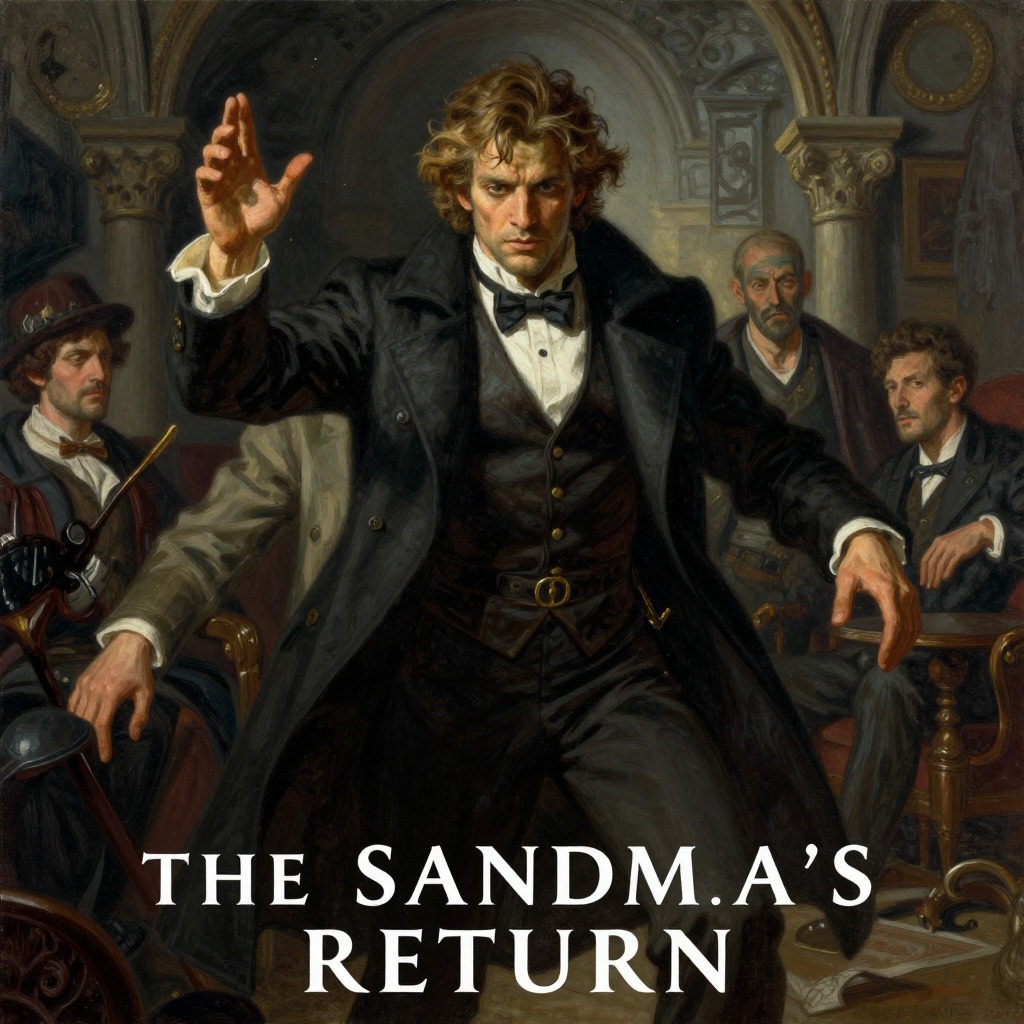
Nathaniel is introduced through a letter to his friend Lothar, in which he describes himself as the son of a reserved, hardworking father and a gentle mother, growing up in a provincial town. His childhood was governed by a strict evening routine: after supper at seven, the family gathered in his father's study until nine o'clock, when his mother would announce that the Sandman was coming and send the children to bed. This domestic order was ruptured by the figure of the Sandman, whom Nathaniel's nurse described as a bad man who throws sand in children's eyes, then carries them off to the half-moon to feed his owl-beaked young. The young Nathaniel, already prone to a vivid imagination, became obsessed with this figure, drawing it on walls and furniture. His burning desire to see the Sandman led him, at age ten, to hide in his father's study, where he discovered that the Sandman was none other than the repulsive barrister Coppelius, a frequent dinner guest. Coppelius, with his ochre-coloured face, greenish cat's eyes, and knotty, hairy fists, was a figure of pure horror to the children, deliberately spoiling their treats and calling them 'little beasts'. Nathaniel's mother hated him, but his father treated him with fearful deference.
Life and Plot Trajectory
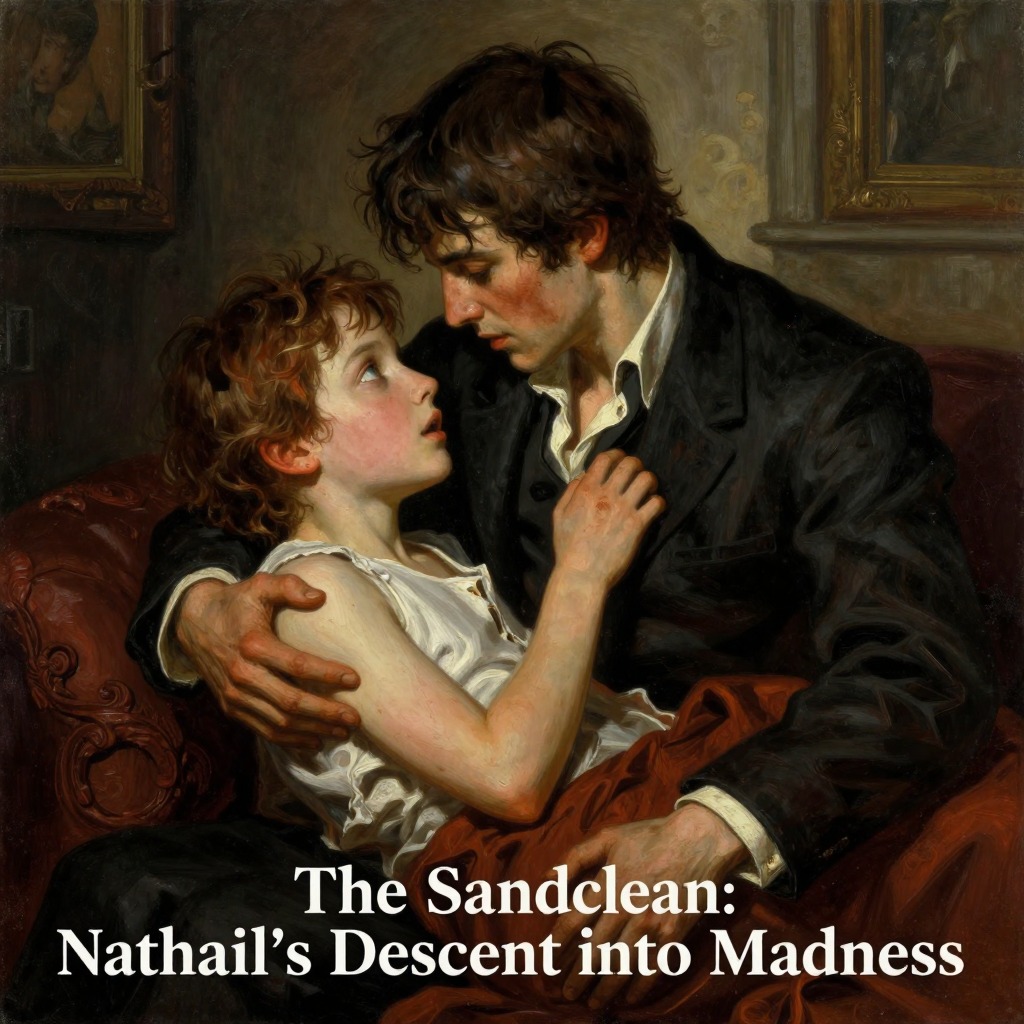
Nathaniel's life follows a trajectory from childhood terror through adolescent trauma to adult catastrophe. The childhood encounter with Coppelius culminated in a violent scene: Coppelius, engaged in alchemical work with Nathaniel's father, grabbed the boy, hurled him at the hearth, and threatened to strew glowing cinders in his eyes. Nathaniel's father pleaded for his son's eyes, and Coppelius instead twisted the boy's limbs, causing him to lose consciousness. Nathaniel awoke in his mother's arms, sick with a high fever for weeks. A year later, Coppelius returned; that night, a terrible explosion killed Nathaniel's father, whose face was burnt black. Coppelius vanished. Years later, as a student in the city of G., Nathaniel encounters a barometer salesman whom he immediately recognizes as Coppelius, now calling himself Giuseppe Coppola. This reappearance reawakens his trauma, and he writes to Lothar of his resolve to avenge his father's death. His fiancée Clara, a sensible and cheerful young woman, writes back, arguing that the horror exists only in his imagination and that he must banish the figure from his mind. Nathaniel, offended by her rationalism, visits home, where a period of happiness is shattered when he reads her a poem he has written, in which Coppelius appears at the marriage altar and tears out Clara's eyes. Clara calls the poem 'raving – senseless – insane' and tells him to throw it in the fire. Nathaniel, enraged, calls her a 'lifeless, accursed automaton' and storms off, leading to a duel with her brother Lothar that is only averted by Clara's intervention. The three reconcile, and Nathaniel returns to G. to complete his studies.
Key Actions and Objectives
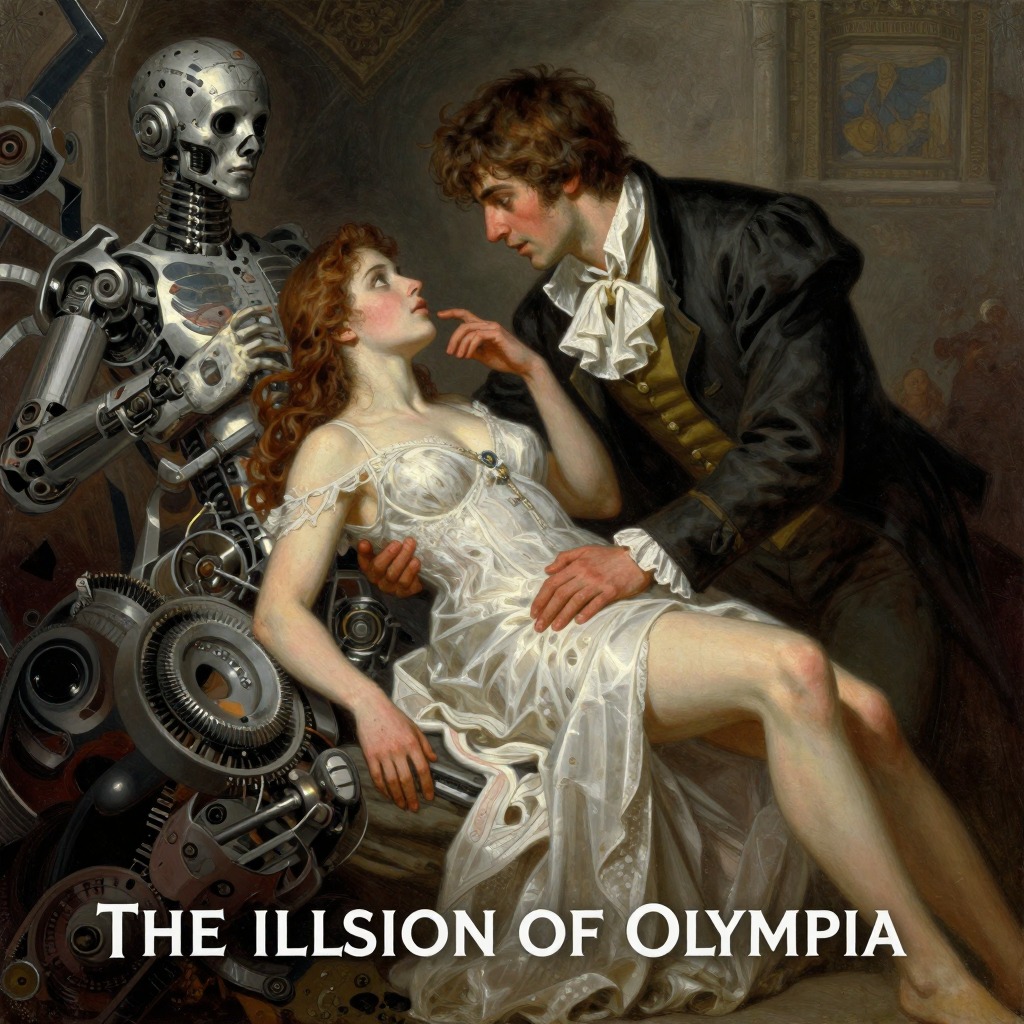
Nathaniel's key actions are driven by a compulsion to confront and understand the dark forces he believes control his life. After returning to G., he discovers that his apartment building has burned down and he moves into a room opposite Professor Spalanzani, where he sees the professor's daughter, Olympia, sitting motionless at a table. When Coppola reappears, Nathaniel initially resists, but is drawn into buying a small pocket looking-glass. Through this lens, Olympia's blank, dead eyes seem to come alive, and Nathaniel becomes utterly captivated. He abandons all thought of Clara, his mother, and Lothar, spending hours every day with Olympia, reading her his poems, fantasies, and stories. She listens without fidgeting, responding only with 'Oh, oh!' and 'Good night, my dear!' Nathaniel interprets this as profound understanding, declaring that only Olympia truly comprehends him. He decides to propose marriage, searching for his mother's ring to give her as a symbol of their union.
Relationships and Conflict
Nathaniel's relationships are defined by conflict and misrecognition. With Clara, his betrothed, he is initially loving, but her rational, cheerful nature clashes with his mystical, brooding temperament. He accuses her of being cold and prosaic, unable to grasp the deep secrets of the universe. Their conflict culminates in the duel with Lothar, after which a temporary reconciliation is achieved, but Nathaniel's heart has already turned away. With Coppelius/Coppola, the relationship is one of pure antagonism: Coppelius is the embodiment of Nathaniel's childhood trauma, the 'evil principle' that he believes has taken hold of him. Yet Nathaniel is also drawn to him, buying the looking-glass that seals his fate. With Olympia, Nathaniel's relationship is a delusion: he projects onto her a profound, poetic spirit, while she is in fact a lifeless automaton. The climactic conflict occurs when Nathaniel bursts into Spalanzani's study to find the professor and Coppola fighting over Olympia, tearing her apart. Coppola yanks the figure free and, swinging her, strikes Nathaniel, who tumbles backwards. Then Coppola flings the figure over his shoulder and races down the steps, her wooden feet banging on the stairs. Nathaniel sees that Olympia's wax face has no eyes, only black hollows. Spalanzani, bleeding, throws a pair of bloody eyes at Nathaniel, crying that Coppola has robbed him of his finest automaton. At this, madness seizes Nathaniel. He screams 'Hopla – hopla – hopla! – ring of fire – ring of fire!' and attacks Spalanzani, trying to strangle him. He is overpowered and taken to the madhouse.
Change and Ending
Nathaniel's change is a descent from a sensitive, imaginative youth into raving madness, followed by a brief, deceptive recovery and a final, fatal relapse. After being confined to the madhouse, he awakens as if from a terrible dream, lying in his bed in his father's house, with Clara, his mother, and Lothar at his side. He is gentle and childlike, recognizing Clara's pure spirit. The family plans to move to a small country estate. But on the day they are to leave, Nathaniel and Clara climb the town hall tower. Clara points out a strange grey bush; Nathaniel mechanically reaches into his pocket and finds Coppola's looking-glass. He turns it sideways and sees Clara in the lens. A spasm seizes him; he turns deathly pale, his eyes roll, and he screams 'Turn, little wooden doll, turn!' He grabs Clara and tries to hurl her off the balcony. Lothar rescues her, but Nathaniel, now raving again, spots Coppelius in the crowd below. With a shrill shriek – 'Ha! Eyes a pretty! Eyes a pretty!' – he leaps over the parapet and smashes his skull on the cobblestones. The story ends with a brief, ambiguous note: some years later, Clara is said to have been seen in a distant town, seated hand in hand with a friendly man, two boys playing at her feet, suggesting she found the quiet domestic bliss Nathaniel could never have given her.
Narrative Role and Evaluation
Nathaniel functions as the tragic protagonist of Hoffmann's tale, a character whose psychological vulnerability and poetic sensibility make him prey to the dark forces he both fears and desires. His story is framed by the narrator's own struggle to tell it, and the narrative is built around the three letters that reveal his inner state. Nathaniel's fate illustrates the story's central themes: the power of childhood trauma to shape adult destiny, the danger of surrendering to irrational fears, and the fatal attraction of the uncanny. His inability to distinguish between the living Clara and the mechanical Olympia, and his final, suicidal leap, mark him as a figure of Romantic tragedy, destroyed by the very imagination that makes him a poet.