Arthur Dimmesdale
Arthur Dimmesdale, the young and eloquent minister of Boston's Puritan community, stands at the heart of Nathaniel Hawthorne's The Scarlet Letter as a figure of tragic concealment. A man of high native gifts and scholar-like attainments, he is described as having a white, lofty, and impending brow, large brown melancholy eyes, and a mouth that, unless forcibly compressed, is apt to be tremulous, expressing both nervous sensibility and a vast power of self-restraint. His voice is tremulously sweet, rich, deep, and broken, capable of affecting listeners like the speech of an angel. Yet this same man is the secret partner of Hester Prynne's sin, and his failure to confess it publicly for seven years transforms him into a living emblem of the torment that arises when outward holiness masks inner corruption.
Identity and Background
Dimmesdale is a young clergyman who came from one of the great English universities, bringing all the learning of his age into the wild forest land of New England. His eloquence and religious fervour have already given earnest of high eminence in his profession. He is described as having an air about him—an apprehensive, startled, half-frightened look—as of a being who feels himself quite astray and at a loss in the pathway of human existence, and can only be at ease in some seclusion of his own. He treads in shadowy by-paths, keeping himself simple and childlike, and coming forth with a freshness, fragrance, and dewy purity of thought that many people say affects them like the speech of an angel. This public persona of saintliness is, however, a carefully maintained facade.
Arc Through the Plot: Concealment and Suffering
From the moment Hester Prynne stands on the scaffold, Dimmesdale is thrust into a position of agonizing duality. When the Reverend John Wilson and Governor Bellingham call upon him to exhort Hester to reveal the name of her fellow-sinner, the trying nature of his position drives the blood from his cheek and makes his lips tremulous. He leans over the balcony, his hand upon his heart, and delivers a speech that is at once a plea for confession and a veiled cry of his own anguish. He tells Hester that if she feels it to be for her soul's peace, she should speak out the name of her fellow-sinner and fellow-sufferer, but she shakes her head. He murmurs, "Wondrous strength and generosity of a woman's heart! She will not speak!"—a remark that reveals his own desperate reliance on her silence.
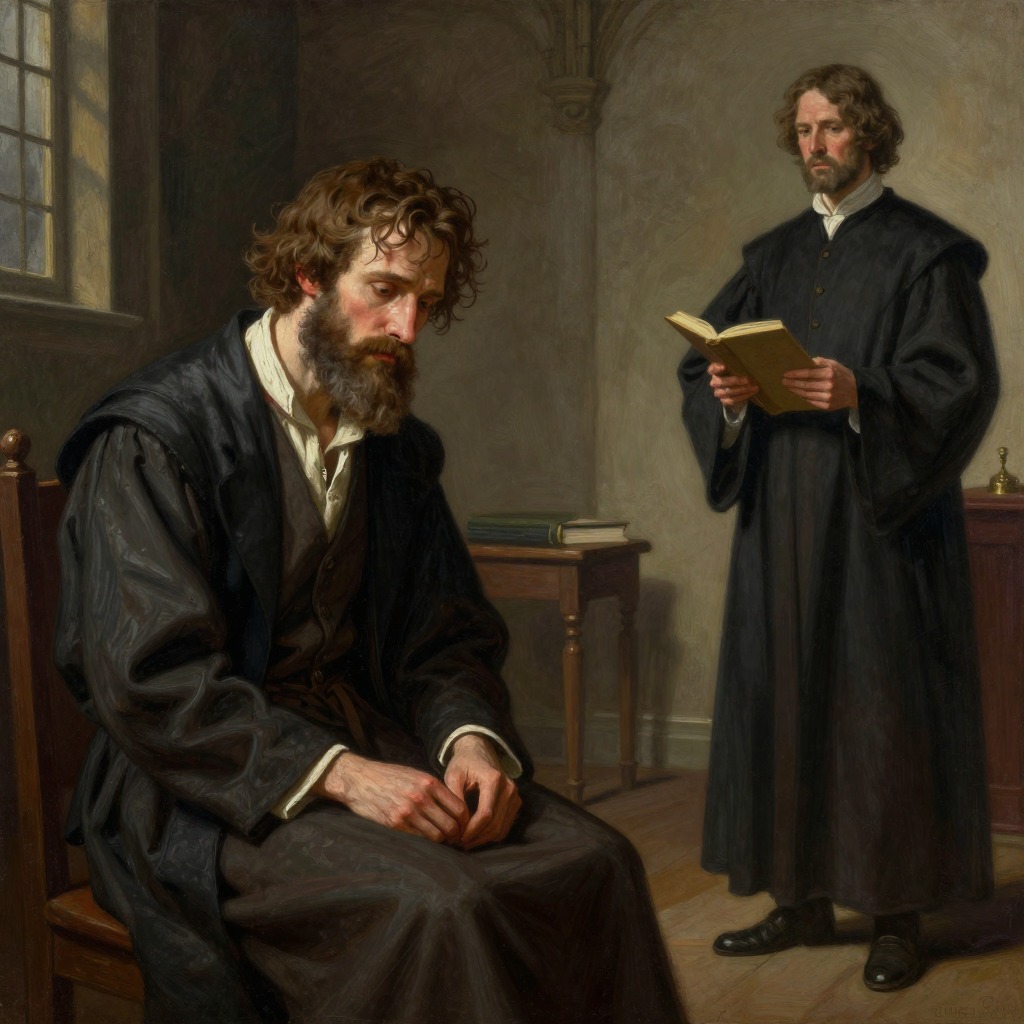
As the years pass, Dimmesdale's health visibly declines. His form grows emaciated; his voice, though still rich and sweet, has a melancholy prophecy of decay in it. He is often observed, on any slight alarm or other sudden accident, to put his hand over his heart with first a flush and then a paleness, indicative of pain. This gesture becomes a constant habit, a physical manifestation of the secret that gnaws at him. He achieves a brilliant popularity in his sacred office, winning it in great part by his sorrows. His intellectual gifts, his moral perceptions, his power of experiencing and communicating emotion, are kept in a state of preternatural activity by the prick and anguish of his daily life. Yet this public veneration tortures him. He longs to speak out from his own pulpit and tell the people what he is, but when he makes vague confessions of being "altogether vile," the people only reverence him the more, interpreting his words as the humility of a saint.
Relationships and Conflict
Dimmesdale's most significant relationships are with Hester Prynne, Roger Chillingworth, and his daughter Pearl. With Hester, he shares a bond of mutual crime and love, but their connection is fraught with the pain of separation and the weight of their shared secret. In the forest, when Hester reveals that Roger Chillingworth is her husband, Dimmesdale's reaction is one of violent passion. He looks at her with a blacker and fiercer frown than she has ever encountered, a dark transfiguration that lasts but a brief space before his enfeebled character sinks him to the ground. He cries out, "I cannot forgive thee!" but eventually does forgive her, acknowledging that Chillingworth's revenge has been blacker than his own sin. He says, "He has violated, in cold blood, the sanctity of a human heart. Thou and I, Hester, never did so!"
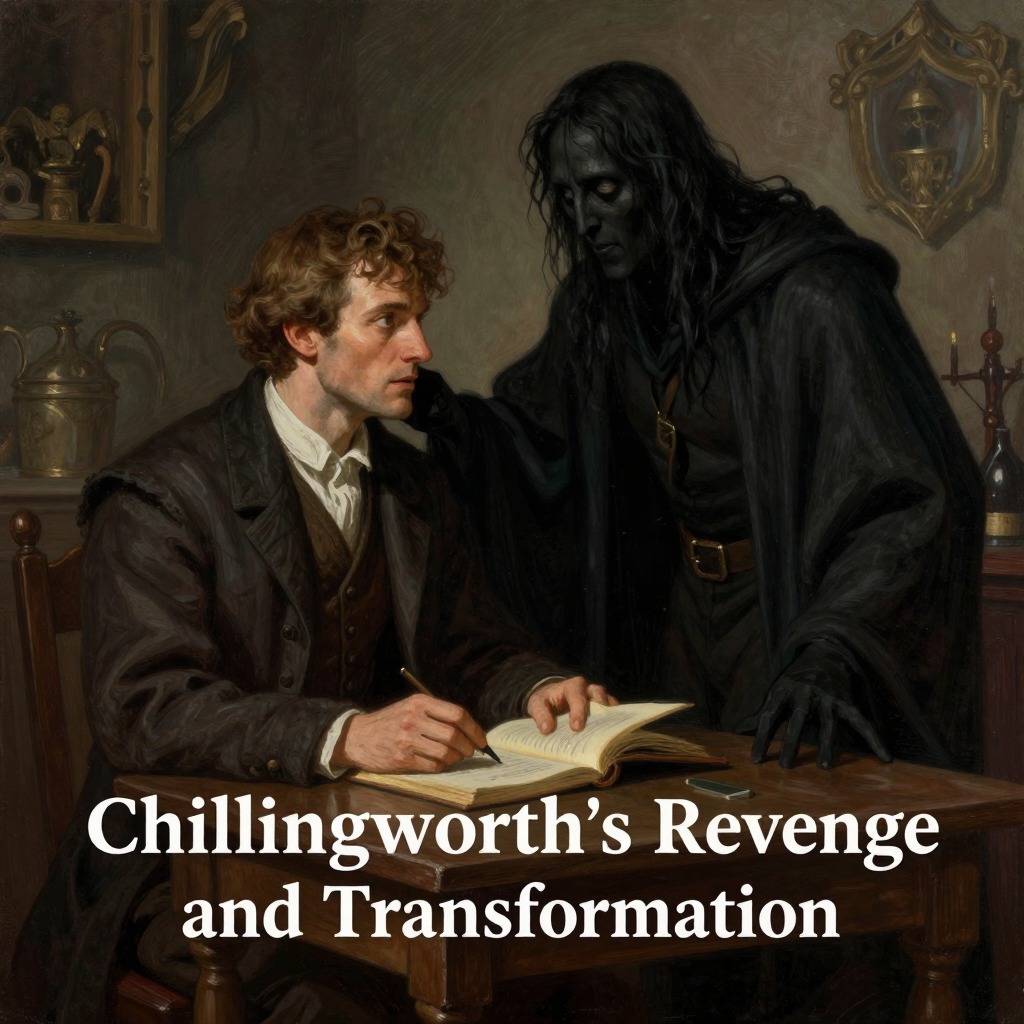
With Roger Chillingworth, Dimmesdale's relationship is one of unsuspecting victim and hidden tormentor. Chillingworth, posing as a physician and friend, moves into the same house as Dimmesdale and systematically probes his soul. Dimmesdale feels a nameless horror of the man, shivering at him and saying, "I hate him, Hester!" Yet he cannot identify the source of his antipathy, attributing it to his own morbid state. Chillingworth eventually discovers Dimmesdale's secret by thrusting aside the minister's vestment while he sleeps, revealing a mark on his breast. From that moment, Chillingworth's power over Dimmesdale is absolute, though the minister remains unaware of the physician's true identity until Hester reveals it.
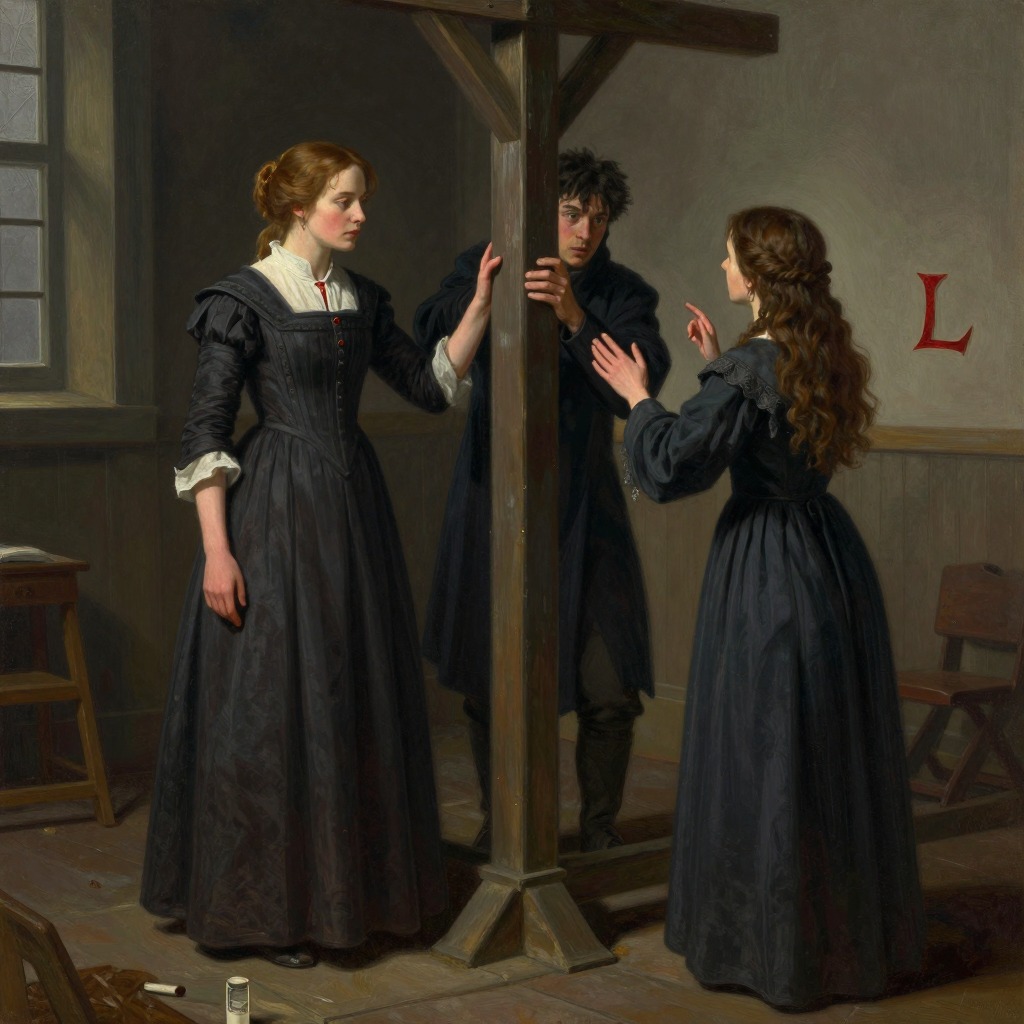
With Pearl, Dimmesdale's relationship is one of tentative, fearful connection. Pearl, with her elfish intelligence, seems to sense the truth. She points her finger at the scarlet letter on her mother's bosom and then at the minister's own breast. During the midnight vigil on the scaffold, she asks him, "Wilt thou stand here with mother and me, to-morrow noontide?" He answers, "Not then, Pearl... but another time," and when pressed, whispers, "At the great judgment day." In the forest, after Hester and Dimmesdale have resolved to flee, Pearl refuses to cross the brook to him until Hester has refastened the scarlet letter. She kisses the letter, and later, when Dimmesdale kisses her brow, she runs to the brook and washes it off. Only at the moment of his public confession does Pearl finally kiss him, and the spell is broken.
Change and Ending: The Public Confession
The climax of Dimmesdale's arc occurs on Election Day, after he has preached the most powerful sermon of his career. As the procession moves through the marketplace, he appears feeble and pale, tottering on his path. He turns towards the scaffold and calls Hester and Pearl to him. When Roger Chillingworth tries to stop him, Dimmesdale cries, "Ha, tempter! Methinks thou art too late!... With God's help, I shall escape thee now!" He ascends the scaffold, supported by Hester, and reveals the scarlet letter imprinted on his own breast. He tears away the ministerial band and declares, "People of New England!... behold me here, the one sinner of the world!" He tells them that the letter on Hester's breast is but the shadow of what he bears on his own, and that even his own red stigma is no more than the type of what has seared his inmost heart. With a convulsive motion, he reveals the mark, and then sinks down upon the scaffold. He dies in Hester's arms, having finally achieved a victory of truth over hypocrisy.
Thematic Significance
Dimmesdale's story embodies the novel's central themes of sin, guilt, and the corrosive power of hidden transgression. His physical and psychological deterioration is a direct consequence of his failure to confess, and his eventual public revelation serves as a powerful testament to the necessity of truth. The novel's final moral, drawn from his miserable experience, is "Be true! Be true! Be true! Show freely to the world, if not your worst, yet some trait whereby the worst may be inferred!" Dimmesdale's tragedy lies in the fact that his very virtues—his sensitivity, his eloquence, his capacity for good—become instruments of his torment when yoked to a lie. He is a man who loves the truth and loathes the lie, yet is trapped in a life of falsehood, and his death is both a judgment and a liberation.