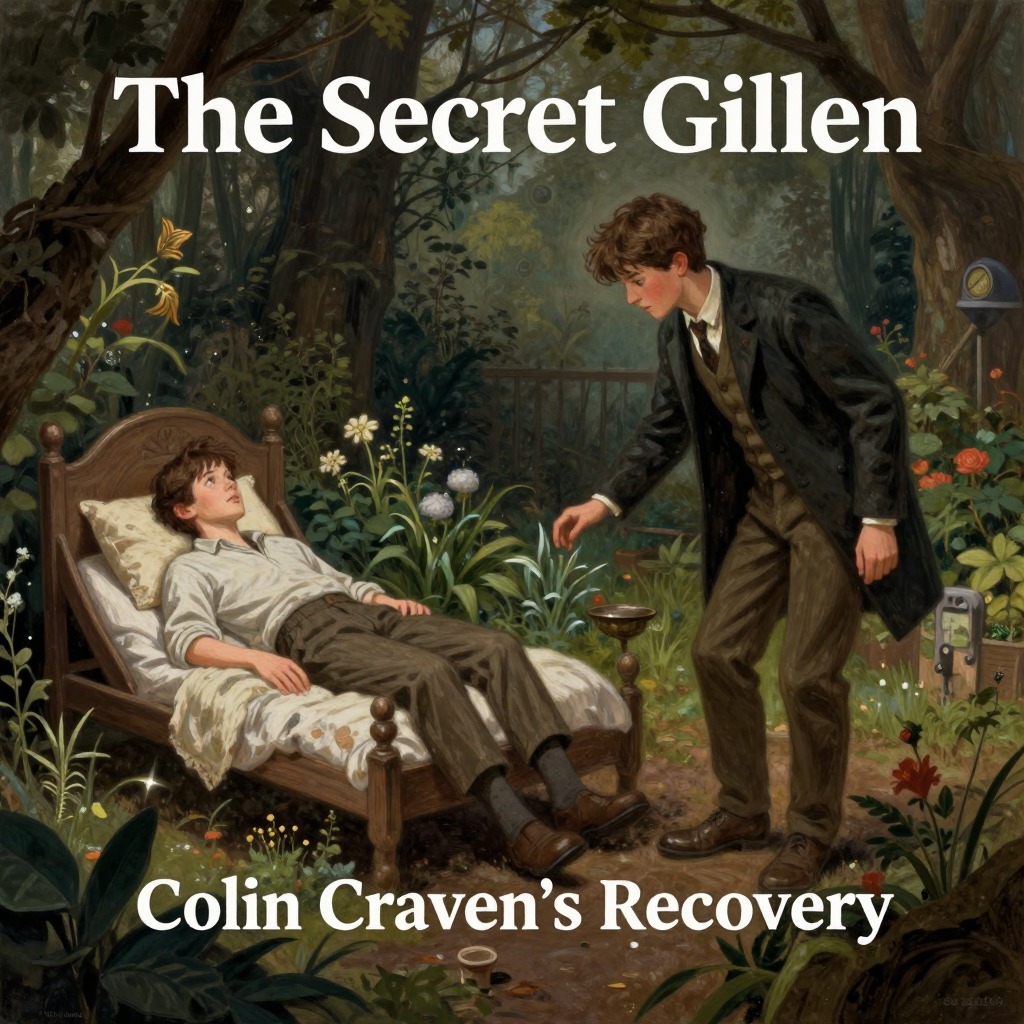
Dr. Craven
Dr. Craven is the physician and cousin of Archibald Craven, and the doctor who has attended Colin Craven since birth. His position at Misselthwaite Manor is shadowed by a direct financial interest: as a poor relation, he would inherit the entire estate if Colin were to die. This conflict of interest makes him a deeply ambiguous figure, one whose medical judgments are perpetually entangled with his own hopes for the future. He is a nervous, weak man rather than a villain, and his reactions to Colin's transformation reveal both his limitations and the story's quiet triumph over the morbid fatalism he represents.
Role and Ambiguous Motives
Dr. Craven's connection to the Craven family is both professional and dynastic. He is Colin's doctor and also his father's cousin, a poor man who, as Colin himself observes, "would get Misselthwaite and be rich instead of poor" if the boy died. Colin notes that the doctor "daren't say so, but he always looks cheerful when I am worse" and that during Colin's typhoid fever "his face got quite fat." These observations, though filtered through a child's suspicious perspective, are never contradicted by the narrative. Dr. Craven himself never acts to harm Colin, but his relief at the prospect of inheritance is an open secret in the household. He is a weak rather than a wicked man, and his nervous, indecisive manner—he is described as "rather a nervous man"—prevents him from taking any decisive action, either for good or ill.
Medical Conservatism and Bafflement
Dr. Craven's medical approach is cautious, conventional, and ultimately helpless. He has long treated Colin as a confirmed invalid, prescribing bromides and rest, and he dreads the boy's hysterical tantrums. When Colin begins to improve, the doctor is utterly perplexed. After Colin's first visit to the secret garden, Dr. Craven warns him not to overexert himself, but Colin simply announces, "I am going," and the doctor cannot stop him. Later, when Colin's appetite fluctuates wildly and his appearance transforms, Dr. Craven is reduced to puzzled observation. He notes that Colin is "gaining flesh rapidly" and that his color is better, but he cannot explain it. He tells Mrs. Medlock that the boy's advance "seems almost abnormal" and that he is "a much puzzled man." His inability to understand the change underscores the novel's central argument: that health comes not from medicine but from nature, freedom, and the "Magic" of living things.
Confrontation with Colin's Transformation
The most revealing encounter occurs when Dr. Craven visits Colin after the boy has begun to eat ravenously and exercise in secret. Colin, to throw off suspicion, claims that his appetite is "unnatural" and that he might be "bloated and feverish." Dr. Craven examines him, feels his arm, and declares, "You are not feverish, and such flesh as you have gained is healthy. If you can keep this up, my boy, we need not talk of dying." This is the closest the doctor comes to genuine hope, but he immediately reverts to caution, warning Colin not to undo the good. When Colin refuses to let his father be told, Dr. Craven backs down, intimidated by the boy's imperious manner. The scene reveals the doctor's fundamental passivity: he can recognize improvement but cannot take credit for it, and he lacks the authority or insight to foster it.
Narrative Significance
Dr. Craven functions as a foil to the novel's regenerative forces. Where the secret garden, Dickon, and Mary work through instinct, joy, and physical activity, Dr. Craven represents the sterile, fearful world of medical orthodoxy that has kept Colin imprisoned in his room. His failure to cure Colin—and his bafflement at the cure that does occur—underscores the book's theme that health is a natural, almost magical process that cannot be prescribed or controlled. His financial stake in Colin's death also adds a subtle moral tension, reminding the reader that the adult world is not always benign. Yet he is not a villain; he is simply a limited man, and his final, grudging acceptance of Colin's improvement—"Let them laugh," he tells Mrs. Medlock—marks his quiet surrender to a power he cannot understand.