John Felton
John Felton is a young English naval officer of Puritan faith, whose rigid moral code and repressed passions make him uniquely vulnerable to Milady's manipulative seduction. He serves as Lord de Winter's trusted lieutenant, guarding Milady in her captivity, but his encounter with her transforms him from a loyal soldier into a fanatical assassin, ultimately leading to the death of the Duke of Buckingham and his own destruction.
Identity and Background
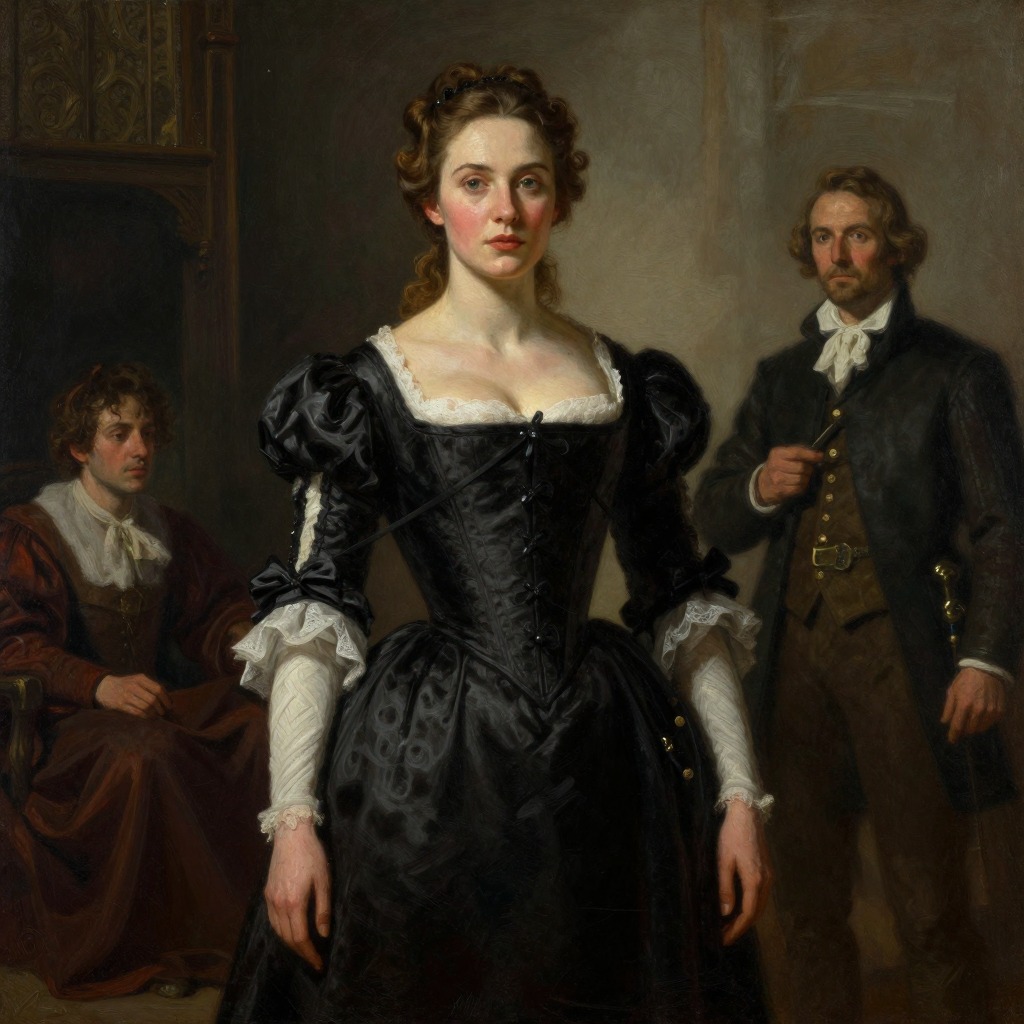
Felton is introduced as a lieutenant in the English navy, a man of about twenty-five or twenty-six years, with a pale complexion, clear blue eyes, and a strongly marked chin that denotes obstinacy rather than strength of will. His brow is slightly receding, "as is proper for poets, enthusiasts, and soldiers," and his hair and beard are a beautiful deep chestnut color. He is described as having a "mild countenance" and a voice of "serenity, coolness, mildness even." Lord de Winter, his benefactor, has known him for four years and considers him a loyal servant, having saved his life on a previous occasion and promoted him to lieutenant. Felton's Puritan faith is central to his character; he is described as "one of those gloomy Puritans" and is deeply religious, with a hatred for the Duke of Buckingham, whom the Puritans execrate as "Satan" and "Antichrist." His religious fervor is so intense that he has "never loved anyone but my benefactor" and has "met with nothing but traitors and impious men." This combination of religious fanaticism, repressed emotion, and gratitude toward Lord de Winter makes him a man of extreme but controlled passions, easily swayed by a skilled manipulator.
Captivity and Seduction
When Milady is imprisoned in Lord de Winter's castle, Felton is placed in charge of her guard. He initially treats her with cold, impassive professionalism, refusing to be swayed by her beauty or feigned illness. Lord de Winter warns him that Milady is a "monster" who will try to seduce or kill him, but Felton insists on treating her with the courtesy due to a woman. Milady, recognizing his Puritan faith, begins a calculated campaign of seduction, feigning religious devotion and claiming to be a fellow Puritan persecuted by the cardinal. She sings psalms in a voice of "immense power and sublime expression," which Felton believes to be the singing of an angel. She tells him a fabricated story of being branded by Buckingham, showing him the fleur-de-lis on her shoulder, and claims that Lord de Winter is complicit in her persecution. Felton, already predisposed to hate Buckingham, is deeply moved. He begins to see Milady as a martyr and himself as her potential savior. His religious fervor and repressed desires become intertwined, and he falls under her spell, declaring, "I no longer loved her; I adored her." He promises to help her escape and to avenge her by killing Buckingham.
Escape and Assassination
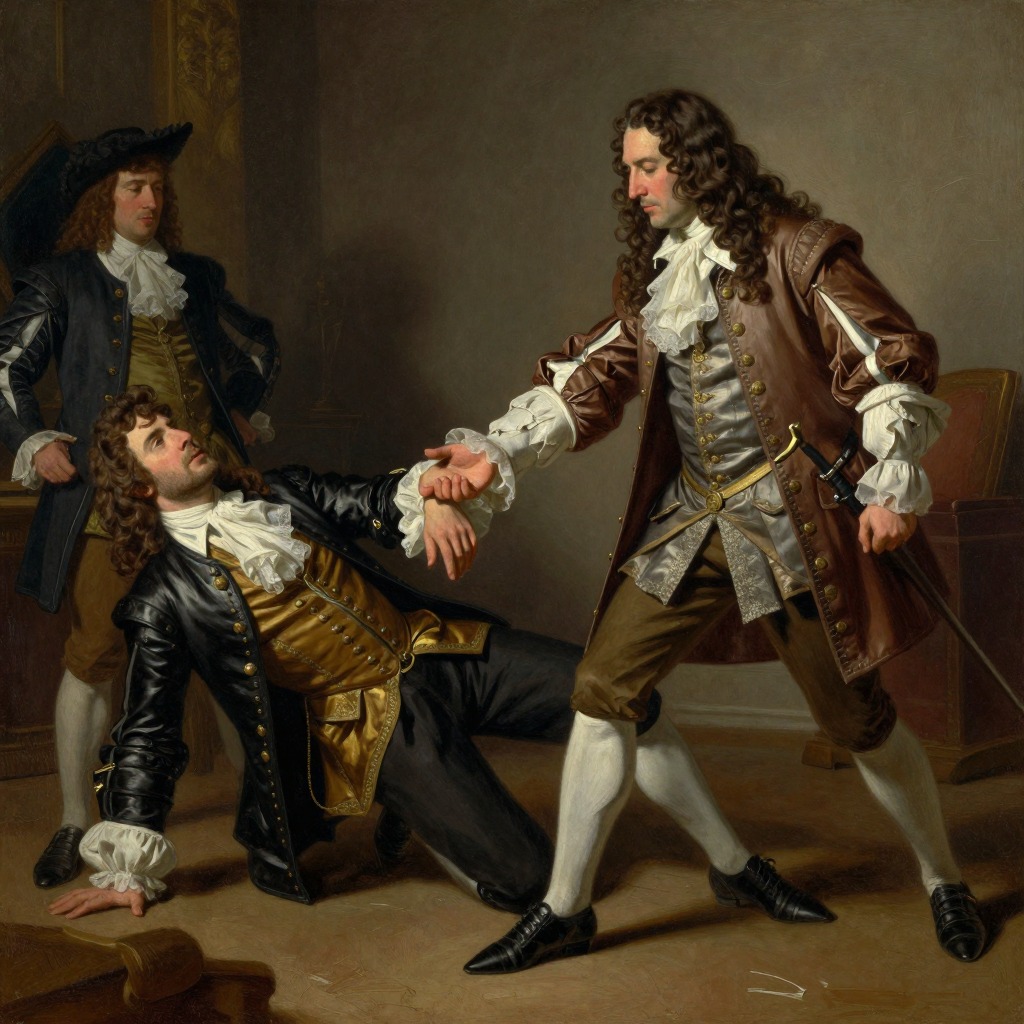
Felton orchestrates Milady's escape from the castle, using a rope ladder to descend from her window during a storm. He then takes her to a waiting boat and sails to a sloop he has chartered. On the sloop, he reveals his plan to go to Portsmouth and assassinate Buckingham, telling Milady, "He need not sail... he will not sail." He leaves her with the captain, instructing him to take her to France, and proceeds to Portsmouth. There, he gains access to Buckingham by claiming to be a messenger from Lord de Winter. In the duke's chamber, he demands that Buckingham sign an order for Milady's liberation, and when the duke refuses, Felton stabs him with the same knife Milady had used in her feigned suicide attempt. As Buckingham dies, Felton is captured by Lord de Winter, who arrives too late to prevent the assassination. Felton shows no remorse, declaring, "I have avenged myself!" and claiming he killed Buckingham because the duke twice refused him a captaincy. He is led away to face execution, but his final act is to gaze at the sea, where he sees Milady's ship sailing away, realizing he has been betrayed.
Consequences and Significance
Felton's assassination of Buckingham has profound consequences for the political landscape of Europe. It removes the primary obstacle to Cardinal Richelieu's siege of La Rochelle, effectively ending English support for the Huguenot rebels. The king of England, Charles I, attempts to conceal the news to prevent discouraging the Rochellais, but the event is a decisive blow to the Protestant cause. For the four Musketeers, Felton's act is the culmination of Milady's vengeance, but it also leads to her own downfall. Lord de Winter, having witnessed Felton's capture, vows to pursue Milady, and the Musketeers, having learned of her crimes, set out to bring her to justice. Felton himself becomes a tragic figure, a fanatic manipulated by a master manipulator, whose religious fervor and repressed desires are exploited for murder. His story serves as a cautionary tale about the dangers of unchecked passion and the ease with which a skilled manipulator can corrupt a seemingly virtuous soul.