Queen Anne of Austria
Queen Anne of Austria, the Spanish-born wife of King Louis XIII, is a central figure in the novel's political and romantic intrigues. Her secret love for the Duke of Buckingham and her strained marriage to the king place her at the mercy of Cardinal Richelieu's machinations, making her both a victim of courtly power struggles and a catalyst for the heroic actions of d'Artagnan and the three Musketeers.
Identity and Background
Anne of Austria was twenty-six or twenty-seven years old at the time of the novel's main events, described as being in the full splendor of her beauty. Her carriage was that of a queen or a goddess, her eyes cast the brilliancy of emeralds, and her skin was admired for its velvety softness. Her hands and arms were of surpassing beauty, sung by all the poets of the time as incomparable. Her hair, light in her youth, had become chestnut, and she wore it curled plainly with much powder. The most fastidious sculptor could only have desired a little more fineness in the nose. She was accompanied by Donna Estafania, the only one of her Spanish women who had not been driven from her by the jealousy of the king or the persecutions of Cardinal Richelieu. The queen was deprived of the confidence of her husband, pursued by the hatred of the cardinal, who could not pardon her for having repulsed a more tender feeling. She had seen her most devoted servants fall around her, her most intimate confidants, her dearest favorites. Her friendship was a fatal sign which called down persecution. Madame de Chevreuse and Madame de Vernet were exiled, and Laporte did not conceal from his mistress that he expected to be arrested every instant.
Life and Plot Trajectory
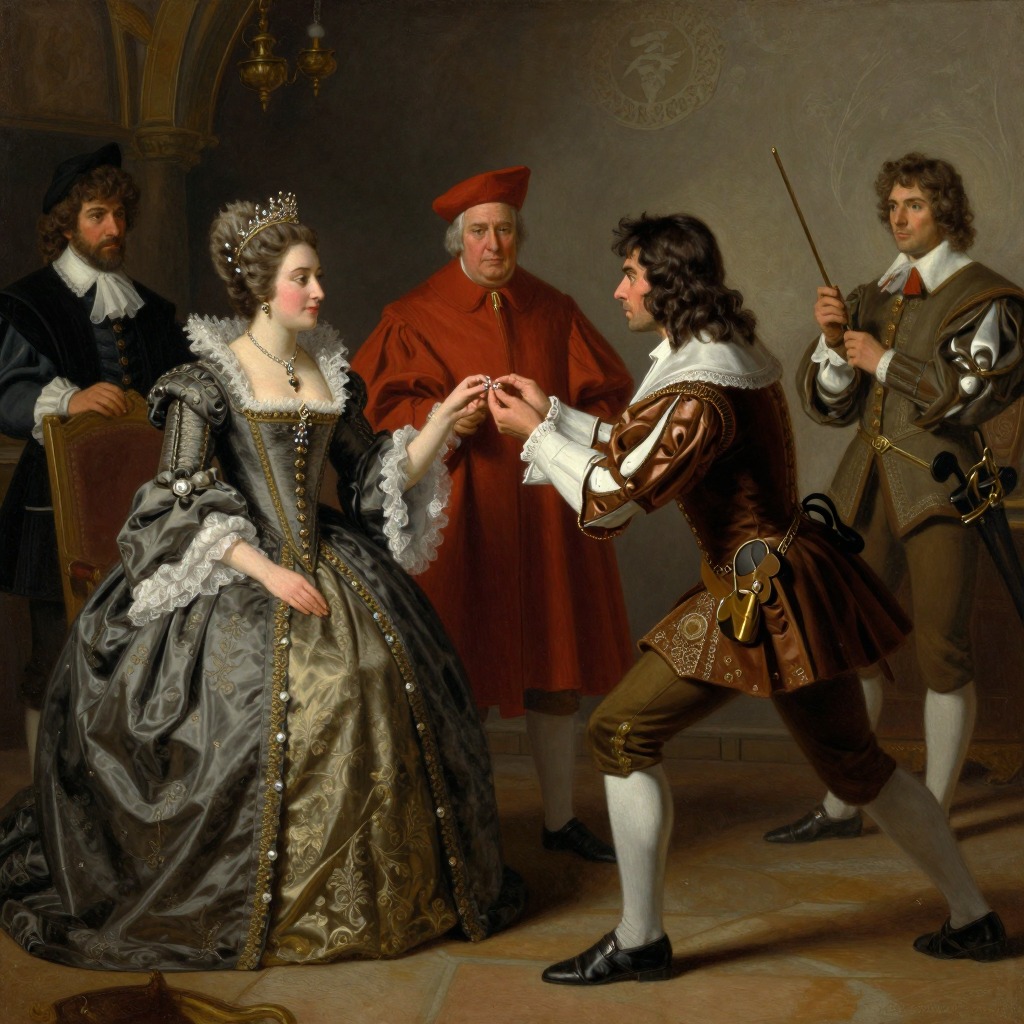
The queen's position was precarious from the start. She was abandoned by the king, watched by the cardinal, and betrayed by everybody. Her only confidante was Madame de Chevreuse, who served the queen not only in her political intrigues but also in her amorous ones. The cardinal, who had loved the queen himself, was a jealous rival of the Duke of Buckingham. The queen's secret correspondence with Buckingham and her gift of the diamond studs to him became the central crisis of the plot. When the king, prompted by the cardinal, demanded that she wear the studs at a ball given by the aldermen of the city, she was thrown into a panic. She believed herself lost, for the cardinal knew all, and it was he who urged on the king. She knelt upon a cushion and prayed, with her head buried between her palpitating arms. It was at this moment of despair that Constance Bonacieux, a young woman given to her by Laporte, offered to help. The queen, after initial hesitation, entrusted her with a letter to Buckingham, along with a valuable ring from her brother, the King of Spain, to raise money for the journey. The success of d'Artagnan's mission to retrieve the studs saved the queen's honor at the ball, a triumph that left the cardinal vexed and the king trembling with joy.
Key Actions and Objectives
The queen's primary objective was to preserve her honor and her secret love for Buckingham. She wrote a letter to the Duke of Buckingham, which was intercepted by the cardinal's agent, Madame de Lannoy. The letter, when seized by the chancellor, Monsieur de Seguier, was found to contain nothing about love but rather a plan of attack against the cardinal, pressing her brother and the Emperor of Austria to declare war on France and insist on the cardinal's dismissal. This discovery delighted the king, who had feared a love affair. The queen also wrote a second, more urgent letter to Buckingham, which Constance Bonacieux carried. In this letter, she begged him to countermand his armaments against France, warning him that his life was menaced. She also charged Laporte to tell the duke that she still loved him. This message, delivered as Buckingham lay dying from Felton's knife, brought him a final, bitter consolation.
Relationships and Conflict
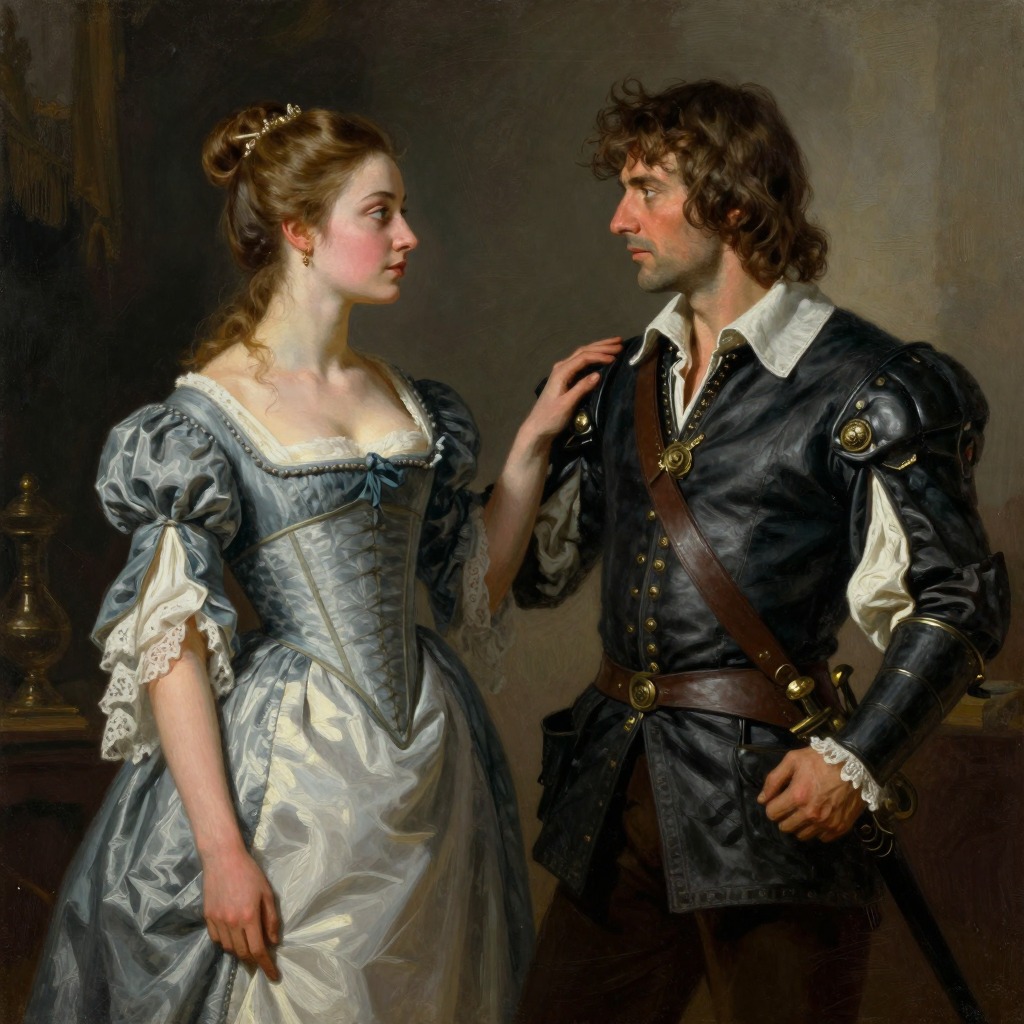
The queen's relationship with King Louis XIII was one of mutual suspicion and coldness. The king, a weak and jealous man, was easily manipulated by the cardinal into believing the queen was unfaithful. He treated her with severity, and she, in turn, felt abandoned and persecuted. Her relationship with Cardinal Richelieu was one of open enmity. The cardinal, who had once loved her, now sought to destroy her through political intrigue and by exposing her love for Buckingham. The queen's love for the Duke of Buckingham was the most passionate and dangerous relationship in her life. She saw him only four times in three years, but each meeting was a moment of intense emotion. She gave him the diamond studs as a token of her love, and when they were threatened, she risked everything to get them back. Her final message to him, delivered through Laporte, was a plea for his safety and a confession of her enduring love.
Change and Ending
The queen's arc is one of survival through the loyalty of others. She was saved from disgrace by the bravery of d'Artagnan and the three Musketeers, who retrieved the diamond studs from Buckingham. She was also saved by the devotion of Constance Bonacieux, who risked her life to carry the queen's letter to London. However, Constance was ultimately poisoned by Milady, a direct consequence of her service to the queen. After the assassination of Buckingham, the queen was forced to accept the loss of her lover. The king, in his joy at finding the queen guilty of a political rather than a romantic crime, was ready to make up all differences with her. The cardinal, ever the politician, advised the king to give a ball to please the queen, knowing she loved dancing. The queen, though still grieving, had to maintain her composure and continue her role as queen. In the end, she was a figure of tragic grandeur, a woman whose personal happiness was sacrificed to the demands of state and the machinations of a powerful minister.
Narrative Role and Evaluation
Queen Anne of Austria functions as the novel's primary damsel in distress, a figure of royal grace whose peril motivates the heroic actions of the protagonists. Her beauty and vulnerability make her a symbol of the endangered monarchy, while her secret love for Buckingham adds a layer of romantic tragedy to the political plot. She is a passive figure in many respects, acted upon by the king, the cardinal, and her own passions, yet her decisions—such as entrusting the studs to Buckingham and writing the fateful letters—set the entire plot in motion. Her character embodies the tension between personal desire and public duty, a theme that resonates throughout the novel. She is ultimately a sympathetic figure, a queen who is more sinned against than sinning, and her survival is a testament to the power of loyal friends and the capricious nature of courtly fortune.