Karl
Karl, a small country landowner, is Josef K.'s uncle and former guardian. He is a man perpetually in a hurry, driven by the unfortunate belief that he must settle a multitude of affairs during his single-day visits to the city, and he cannot forgo any conversation, piece of business, or pleasure that might arise by chance. K. privately refers to him as "a ghost from the country" and feels duty-bound to help him in all his endeavors as well as to offer him a bed for the night. His sudden appearance at the bank one afternoon, pushing his way between two staff members carrying papers, marks a decisive turning point in K.'s trial, as it is Karl who forces K. to engage with the legal apparatus by dragging him to the lawyer Dr. Huld.
Identity and Background
Karl is introduced as a small country landowner who has lived in the countryside for nearly twenty years without a break. He is K.'s former guardian, a role he was proud of until the day he learned of the trial. He is characterized by his perpetual rush and his belief that he has numerous things to accomplish during his brief stays in the city. When he arrives at K.'s office, he is slightly bowed, carries a battered panama hat in his left hand, and extends his right hand over the desk long before he is close enough, rushing carelessly towards K. and knocking over everything in his way. He is always in a hurry, and his visits are only ever for one day.
Role in the Trial
Karl learns of K.'s trial through a letter from his daughter Erna, who had heard about it from a bank clerk. Upon receiving the letter, he immediately travels to the city and confronts K. in his office. He is deeply agitated by the news, shouting that K. must think about himself, his family, and their good name, and that up till now K. had been their pride and must not become their disgrace. He insists that K. account to the family for what he does. Karl's intervention is the primary catalyst for K.'s decision to seek legal representation, as he takes K. directly to see his old school friend, Dr. Huld, a lawyer with a reputation for defending the poor. Karl's rushed and urgent manner in dealing with the matter makes K. uneasy, as he feels it is not very encouraging for the accused to be taken to a lawyer for poor people.
Relationship with Josef K.
Karl's relationship with K. is defined by his role as a former guardian and his concern for the family's reputation. He is visibly shocked by K.'s calm demeanor regarding the trial, accusing him of being indifferent and of losing his astuteness. He warns K. that losing the trial would mean being destroyed and that everyone he knows would be pulled down with him or at the very least humiliated and disgraced. Despite his aggressive approach, Karl is genuinely trying to help, suggesting that K. take a holiday in the country to gain strength and to get away from the court. K., however, finds his uncle's methods and his belief that the trial is a great disgrace to be a burden, and he feels that being completely open with him is the only way to protest against this view.
Key Actions and Consequences
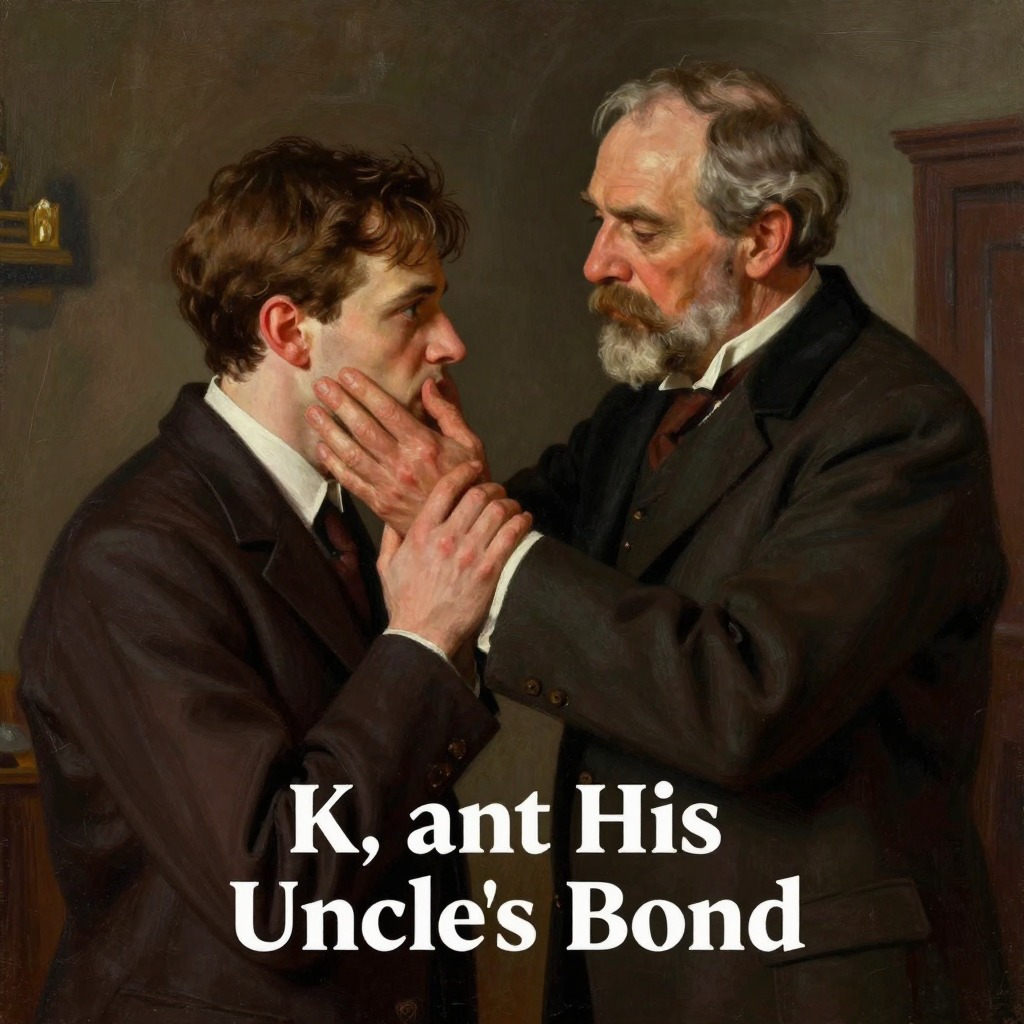
Karl's most consequential action is forcing K. to visit Dr. Huld. During this visit, Karl's behavior is disruptive; he is rude to the lawyer's carer, Leni, and his loud knocking and shouting disturb the lawyer, who is ill. While K. is absent from the meeting, having been lured away by Leni, Karl is left to manage the situation with the lawyer and the office director, a very important gentleman who is in direct command of K.'s affair. Karl later confronts K. outside the building, shoving him against the door and shouting that K. has caused terrible damage to his case by sloping off with Leni and leaving him to wait in the rain for hours, sick with worry. This confrontation highlights the tension between Karl's desire to control the situation and K.'s growing independence and his own, often misguided, attempts to navigate the trial.
Thematic Significance
Karl embodies the conventional, worldly perspective that K. is increasingly alienated from. He represents the values of family, social standing, and practical action, all of which prove useless against the opaque and irrational machinery of the court. His frantic attempts to solve the problem through personal connections and established legal channels only serve to entangle K. further, demonstrating the inadequacy of ordinary social and professional networks when confronted with the court's logic. Karl's character underscores the theme of isolation, as even his well-intentioned interference ultimately fails to help K. and instead adds to his burdens.