Myra Gaunt
Myra Gaunt, later known as Mrs. Selfridge, is the pivotal figure in John Rowland's emotional life, the woman whose rejection of his love and her subsequent marriage to George Selfridge set the tragedy of the novella in motion. She is first encountered on the deck of the Titan, where Rowland, now a common sailor, recognizes her among the passengers. Her presence reawakens in him the "dying flutter of a starved love" and the "heart-hunger and helplessness" that have haunted him for five years. Myra, for her part, is equally affected, her "pretty, but rather weak face" registering "mingled surprise and terror" at the sight of him. She is the mother of a small child, also named Myra, and her protective instincts, her fear of Rowland's supposed vengefulness, and her eventual gratitude for his heroic rescue of her daughter shape the central relationships of the narrative.
Identity and Background
Myra Gaunt is introduced as a young woman with "sunny-haired" looks and "the blue of the sea in her eyes," a description that emphasizes her beauty and her connection to the maritime setting. She is married to George Selfridge, a military-looking gentleman whom she addresses as "George," and she is the mother of a little girl named Myra. Her maiden name, Gaunt, is revealed through Rowland's memories and through her father, Mr. Gaunt, who later appears as a prosecuting witness. Before her marriage, Myra had been courted by Rowland, then a naval lieutenant, but she rejected him. Her reasons, as she later explains to her husband, were rooted in his atheism: he "actually denied the existence of God," which she, a "professing Christian," found intolerable. She also mentions his drinking and his violent temper, recalling that he "was so violent, and headstrong, and so terribly angry" when she broke with him. Rowland, in turn, accused her of "leading him on, and playing with him," and spoke of an "immutable law of chance" and a "governing balance of events," predicting that "for all the suffering we inflict on others, we receive an equal amount ourselves." This prophecy of cosmic retribution hangs over their entire relationship.
Life and Plot Trajectory
Myra's life takes a dramatic turn when she boards the Titan for a transatlantic voyage with her husband and child. Her encounter with Rowland, now a degraded sailor, fills her with fear and revulsion. She tells her husband that Rowland "seems to have fallen --- so low" and that she has "always been afraid of him," imagining that he might seek revenge by stealing their daughter. When Rowland, in an innocent moment, holds the child over the rail in jest, Myra springs "toward him like a tigress," snatches the baby, and stares at him with "dilated eyes" before disappearing. This incident leads her to complain to the captain, who, believing Rowland to be a dangerous enemy, considers putting him in irons. Myra's fear, however, is misplaced; Rowland's love for her has not turned to hatred, but to a painful, self-destructive longing.
The shipwreck of the Titan separates Myra from her child. As the ship sinks, Rowland, drugged and on the bridge, hears her agonized voice crying, "Myra, --- Myra, where are you? Come back." He later learns that she was rescued in Lifeboat No. 24, pulled from the bridge steps by the first officer, Mr. Austen. In the boat, she is described as "a moaning, praying woman, who cried and screamed at intervals, for husband and baby, and would not be comforted." She is the only woman saved from the wreck, and she is taken to New York, where she mourns the loss of her husband and child. Her grief is compounded by the belief that Rowland, the "only man on earth who would harm" her child, has taken her daughter.
Relationships and Conflict
Myra's relationship with Rowland is the central conflict of her life. She once liked him, but his atheism and drinking repelled her, and she gave him up, feeling "as though in the presence of something unclean." She even tried to convert him, hoping to "save him to God," but he ridiculed her beliefs and refused to be a hypocrite. After their breakup, she married George Selfridge, a man who, in Rowland's bitter view, "did not need to love her" and "stepped coolly and easily into my heaven." Myra's fear of Rowland persists for years; she has met him three times since their separation, and each time he puts "such a frightful look in his eyes." She imagines he will take revenge by stealing her child, a fear that proves unfounded. Her relationship with her daughter, Myra, is one of deep maternal love, but it is also marked by her inability to protect the child from the dangers of the voyage. After the wreck, her grief and anxiety are so intense that she cannot be comforted, even when told her child is safe with Rowland.
Change and Ending
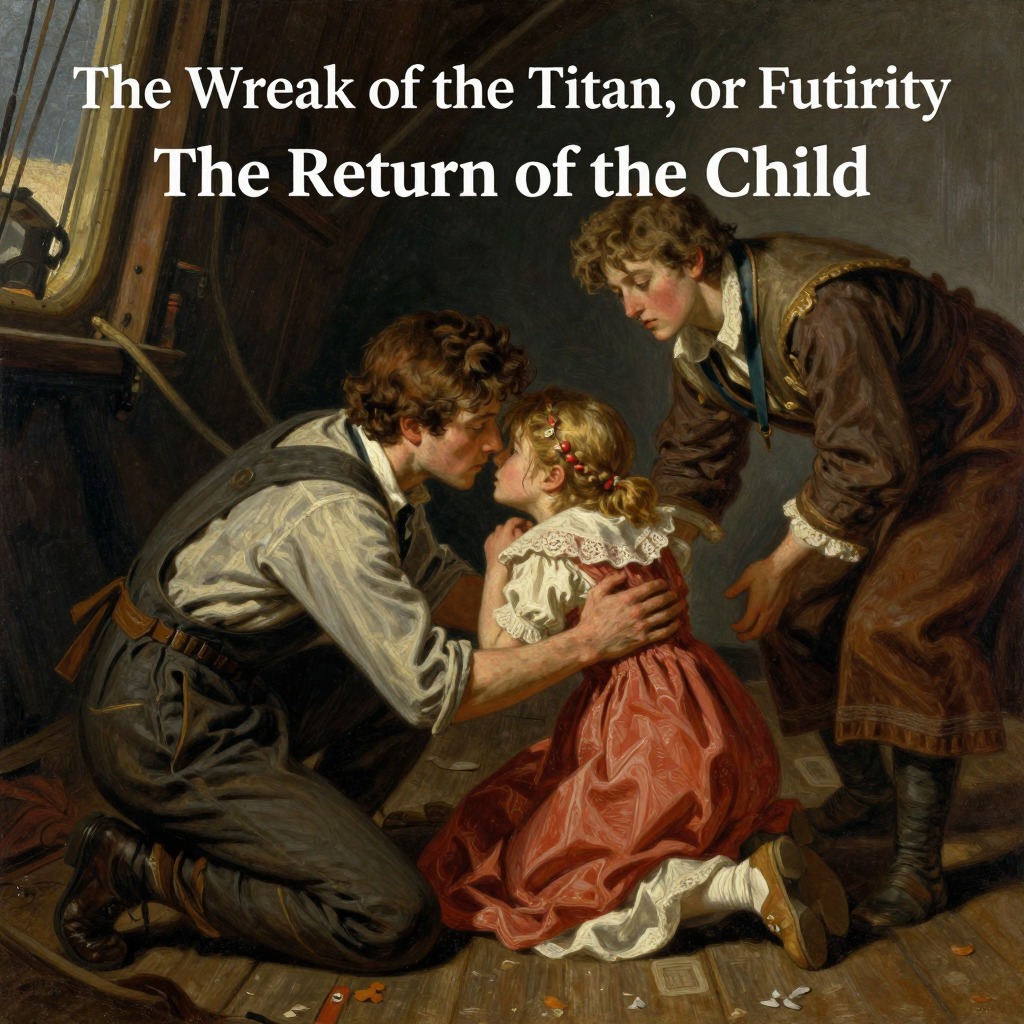
Myra's story culminates in a dramatic reunion on Broadway. Rowland, having rescued her daughter from the iceberg and brought her to New York, is stopped by a policeman who suspects him of kidnapping. As he is being led back to the store, Myra, now dressed in black, emerges with her father and friends. She sees Rowland with the child and utters a piercing shriek, crying, "Myra! Give me my baby --- give her to me." She snatches the child, hugs and kisses her, and then faints in the arms of her father, Mr. Gaunt. In her joy and relief, she does not recognize Rowland's role as her daughter's savior; instead, she accuses him of having "mutilated --- tortured" the child, pointing to the wounds on her back and the "bad word" she has learned. At the trial, she testifies against Rowland, repeating the false story of his attempted murder and his theft of the child. The magistrate, however, reads the newspaper account of Rowland's heroism and discharges him, telling Myra that "this man has merely saved your child's life." Myra leaves the court "with a mystified and rather aggrieved expression of face," still unable to comprehend the truth. Her final appearance in the narrative is through a letter she sends to Rowland years later, in which she admits, "Myra will not let me rest. She asks for you continually and cries at times. I can bear it no longer. Will you not come and see Myra?" This letter, which Rowland answers by going to see Myra, suggests a belated recognition of his goodness and a desire for reconciliation, though the full nature of their renewed relationship is left open.
Narrative Role and Evaluation
Myra Gaunt functions as the catalyst for Rowland's tragedy and redemption. Her rejection of him, based on his atheism and drinking, sets him on a path of self-destruction, while her child becomes the means of his salvation. She is portrayed as a weak, fearful, and somewhat shallow woman, whose "pretty, but rather weak face" reflects her inability to see beyond her own prejudices. Her fear of Rowland is ironic, given that he risks his life to save her daughter, and her accusations against him at the trial reveal her capacity for self-deception. Yet her final letter, with its plea for Rowland to visit, suggests a softening and a recognition of her debt. In the larger narrative, Myra represents the conventional, religious society that rejects Rowland, but she also embodies the possibility of grace and forgiveness. Her story is intertwined with the novella's themes of love, loss, and the "governing balance of events," as her initial cruelty to Rowland is balanced by her eventual gratitude and his ultimate selflessness.