Mr. Avery
Mr. Avery is a stout, pink-faced neighbor of the Finch family in Maycomb, a figure who looms larger in the children's imagination than his actual role in the community might warrant. He is first described as having a "pink face and a big stomach below his belt," a physique that Jem Finch later exploits when he builds a snowman modeled on Mr. Avery's shape. Jem's creation, which he calls an "Absolute Morphodite," is so recognizable that Atticus Finch insists it be disguised to avoid offending the neighbor. Mr. Avery's most notable trait, however, is his superstitious and self-important belief that he can read cosmic signs. When an unseasonable snowfall arrives in Maycomb—the first since 1885—Mr. Avery declares that it is "written on the Rosetta Stone" that bad children cause the seasons to change, directly blaming Jem and Scout for the aberration. He accosts them on the sidewalk, saying, "See what you've done?... It's bad children like you makes the seasons change." This pronouncement, delivered with utter seriousness, cements his role as a neighborhood oracle of folk wisdom, one whose authority the children find both amusing and vaguely troubling.
Role in the Snowfall and the Snowman
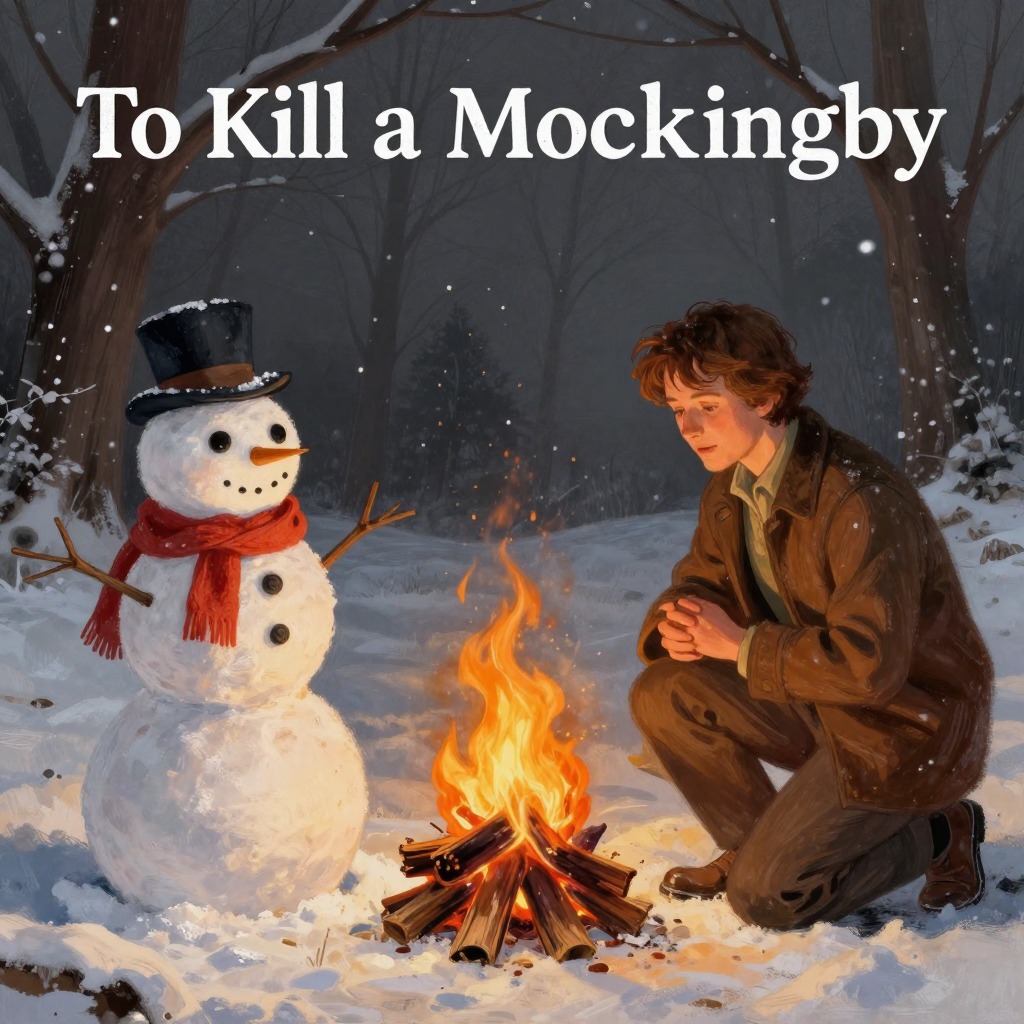
The snow that Mr. Avery blames on the Finch children becomes the occasion for his most memorable comic appearance. When Jem and Scout set out to build a snowman, they find that the meager snow must be supplemented with dirt. Jem, with a mischievous glint, deliberately shapes the mud-and-snow figure to resemble Mr. Avery's stout form, complete with a big stomach. He tells Scout, "Mr. Avery's sort of shaped like a snowman, ain't he?" The finished creation, with bits of wood for eyes, nose, mouth, and buttons, and a stick of stovewood completing the picture, is so accurate that Atticus calls it "a near libel" and insists on modifications. Miss Maudie Atkinson, seeing the snowman from across the street, calls it an "absolute morphodite" and laughs. Mr. Avery himself never sees the caricature, but the episode reveals how the children—and the neighborhood—view him as a figure of fun, a walking embodiment of portly self-importance.
Actions During Miss Maudie's House Fire
Mr. Avery's most dramatic moment comes during the fire that destroys Miss Maudie's house. As the blaze spreads, he appears in an upstairs window of the burning building, pushing a mattress out into the street and throwing down furniture. Men below shout, "Come down from there, Dick! The stairs are going! Get outta there, Mr. Avery!" He attempts to climb through the window but becomes wedged tightly, prompting Jem to gasp, "Scout, he's stuck... Oh God..." After freeing himself, Mr. Avery crosses the upstairs porch, swings his legs over the railing, and begins sliding down a pillar. He slips, falls, and hits Miss Maudie's shrubbery. The incident is both terrifying and absurd, a moment of genuine danger that ends in a pratfall. Miss Maudie later notes that Mr. Avery will be "in bed for a week—he's right stove up. He's too old to do things like that and I told him so." His reckless attempt to save furniture, followed by his clumsy fall, underscores his role as a figure who is more comic than heroic, a neighbor whose efforts are well-intentioned but ultimately futile.
Narrative Significance and Thematic Role
Mr. Avery functions primarily as a comic and grotesque figure within the children's world, a representative of the superstitious, small-town mentality that Atticus Finch quietly opposes. His pronouncements about the Rosetta Stone and the seasons are a parody of folk wisdom, and his physical appearance makes him an easy target for Jem's artistic satire. Yet his presence during the fire also reveals a certain courage, however clumsily expressed. He is not a villain or a major influence on the plot, but he contributes to the novel's rich texture of minor characters who embody the quirks and contradictions of Maycomb life. His fall from the pillar, his stove-up recovery, and Miss Maudie's promise to bake him a Lane cake all reinforce the sense of a community where even the most ridiculous members are cared for and remembered. Mr. Avery is, in the end, a figure of the neighborhood's collective identity—a man whose faults are visible, whose efforts are flawed, but who is nonetheless part of the fabric of the town.