Mrs. Henry Lafayette Dubose
Mrs. Henry Lafayette Dubose is one of the most complex and morally instructive figures in Maycomb, a woman whose terrifying exterior and vicious tongue conceal a battle of will that Atticus Finch later holds up as the truest example of courage his children will ever see. She lives alone, two doors up from the Finches, in a house with steep front steps and a dog-trot hall, attended only by a Negro girl named Jessie. Very old and largely confined to her bed or a wheelchair, she is rumored to keep a Confederate Army pistol concealed among her numerous shawls and wraps, a detail that lends a tangible menace to her already fearsome reputation. For Scout and Jem Finch, she is an object of pure hatred, a daily torment they must endure on their way to and from town.
Identity and Appearance
Mrs. Dubose is a figure of almost Gothic grotesquerie, her physical decay mirroring the moral decay she perceives in the world around her. Her face is the color of a dirty pillowcase, and the corners of her mouth glisten with wet that inches like a glacier down the deep grooves enclosing her chin. Old-age liver spots dot her cheeks, and her pale eyes have black pinpoint pupils. Her hands are knobby, with cuticles grown up over her fingernails. Her bottom plate is not in, causing her upper lip to protrude; from time to time she draws her nether lip to her upper plate, carrying her chin with it and making the wet move faster. This horrifying visage is the first thing Jem and Scout confront each afternoon when they enter her sickroom, a space filled with an oppressive odor of coal-oil lamps, water dippers, and unbleached domestic sheets that Scout associates with rain-rotted gray houses and a pervasive sense of fear.
Conflict with Jem and the Camellia Incident
The central conflict between Mrs. Dubose and the Finch children erupts on the day after Jem's twelfth birthday. As Jem and Scout walk to town to spend his birthday money, Mrs. Dubose, stationed on her porch, harangues them with a stream of abuse. She accuses Jem of breaking down Miss Maudie Atkinson's scuppernong arbor, a lie, and then turns her venom on Scout, demanding to know why she is wearing overalls and predicting she will grow up waiting tables at the O.K. Cafe. The attack culminates in a direct insult to Atticus Finch: "Your father's no better than the niggers and trash he works for!" This final provocation, after Jem has endured weeks of her taunts about Atticus "lawing for niggers," pushes him past his breaking point. On the way home, Jem snatches Scout's new twirling baton and, forgetting Atticus's injunction to be a gentleman, runs into Mrs. Dubose's front yard and flails wildly, cutting the tops off every camellia bush she owns until the ground is littered with green buds and leaves. He then snaps the baton over his knee and throws it down. Atticus, upon discovering the destruction, forces Jem to go to Mrs. Dubose's house to apologize and make amends. Her punishment is severe: Jem must come to her house every afternoon after school and on Saturdays for a month and read aloud to her for two hours.
The Reading Sessions and the Hidden Battle
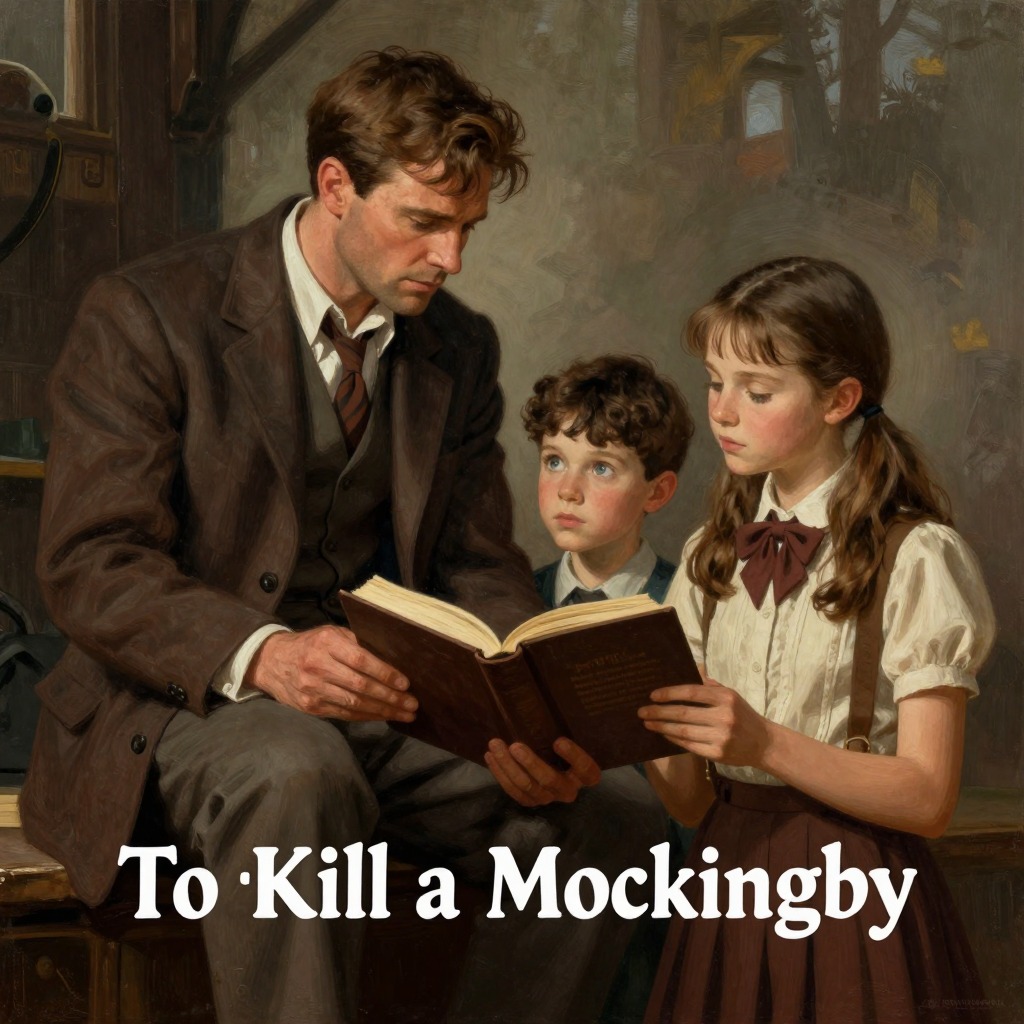
The reading sessions become a grueling ordeal that reveals the true nature of Mrs. Dubose's illness. Jem, armed with a copy of Ivanhoe, reads while Mrs. Dubose corrects him on every word he skips. As the sessions progress, a pattern emerges: she begins by hounding Jem on her favorite subjects—her camellias and Atticus's "nigger-loving" propensities—but then grows increasingly silent. During these silences, she suffers what appear to be fits. Her head moves slowly from side to side, her mouth opens wide, and cords of saliva collect on her lips. The alarm clock on her marble-topped washstand, set for a specific time, is the signal for their release. Unbeknownst to Jem and Scout, these fits are not a natural illness but the violent withdrawal symptoms of a morphine addiction. Mrs. Dubose, who has been taking morphine as a painkiller for years on a doctor's prescription, has resolved to break herself of the habit before she dies. She has used Jem's reading sessions as a distraction, a way to focus her mind on something other than the clock and her own suffering. Atticus later reveals that Dr. Reynolds had told her she had only a few months left, and she was determined to leave the world "beholden to nothing and nobody."
Death, the Camellia, and the Lesson of Courage
Mrs. Dubose dies a few minutes after Atticus visits her one evening, having successfully completed her withdrawal. She leaves Jem a candy box containing a single white, waxy, perfect Snow-on-the-Mountain camellia. Jem, initially enraged, throws the box in the fire but keeps the flower, fingering its wide petals. Atticus then delivers the novel's most explicit definition of courage, using Mrs. Dubose as its embodiment. He tells Jem that real courage is not a man with a gun in his hand, but "when you know you're licked before you begin but you begin anyway and you see it through no matter what." He declares that Mrs. Dubose, all ninety-eight pounds of her, was the bravest person he ever knew, because she won her battle against addiction according to her own views, dying beholden to nothing and nobody. This recontextualizes her entire character: her viciousness was not pure malice but the cantankerousness of a woman in immense pain and struggle, and her seemingly cruel punishment of Jem was, in Atticus's design, a lesson in seeing what real courage looks like. The camellia, a symbol of her victory and her strange, backhanded gratitude, becomes a lasting emblem of this lesson.
Thematic Significance
Mrs. Dubose serves as a crucial counterpoint to the more obvious forms of courage in the novel, such as Atticus's defense of Tom Robinson. She demonstrates that courage can be a private, internal battle fought in a sickroom, invisible to the world. Her story also complicates the novel's moral landscape: she is a racist, a bigot, and a cruel old woman, yet she is also capable of extraordinary self-discipline and moral victory. Atticus's insistence that she was "a great lady" forces Jem and the reader to separate a person's character from their politics, to see the human struggle beneath the ugly exterior. Her death and the lesson she imparts mark a turning point for Jem, accelerating his maturation and his understanding of the complex, often contradictory nature of human goodness and bravery. She is, in her own way, as much a teacher to the Finch children as Atticus himself, demonstrating that the truest courage is often found in the most unlikely places.