Captain Nemo
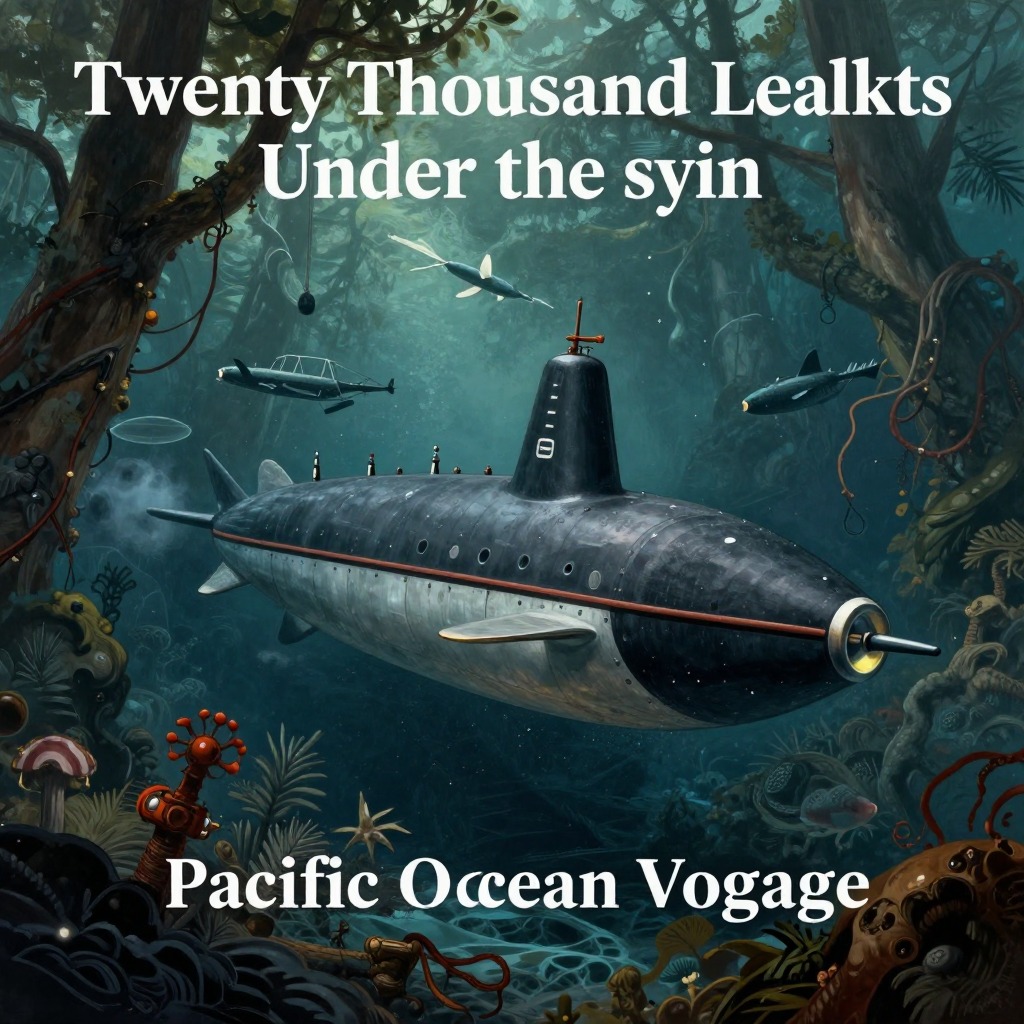
Captain Nemo is the mysterious and commanding figure at the heart of Jules Verne's Twenty Thousand Leagues Under the Sea, the brilliant creator and absolute master of the submarine Nautilus. A man of immense intellect, wealth, and sorrow, he has deliberately exiled himself from human society, living in the ocean depths to pursue a life of independence, scientific discovery, and, ultimately, a terrible personal vengeance. His character is a complex fusion of the enlightened scientist, the romantic rebel, and the implacable avenger, making him one of literature's most enduring and ambiguous antiheroes.
Identity and Background
Captain Nemo's true identity and past are shrouded in deliberate mystery, revealed only in fragments. He is a polyglot who speaks French, English, German, and Latin with equal fluency . He studied in London, Paris, and New York before retreating from the world . He is an engineer of world-class ability, having designed and built the Nautilus from parts sourced secretly from across Europe and assembled on a deserted island (E00966-E00968). He is also immensely wealthy, claiming he could pay off the French national debt . His name, Latin for "no one," signals his desire for anonymity and his self-imposed separation from humanity . His personal quarters are austere, almost monastic, contrasting sharply with the luxurious lounge and library he provides for his guests . A portrait of a young woman with two children in his stateroom, before which he later collapses in sobs, hints at a lost family . His hatred is directed at a specific, unnamed oppressor—a nation he calls "accursed"—which he holds responsible for the destruction of everything he loved .
Life and Philosophy Aboard the Nautilus
Nemo has created a completely self-sufficient world within the Nautilus. He has renounced terrestrial food, clothing himself and his crew entirely from the sea's resources: fabrics from seashell filaments, perfumes from marine plants, and ink from cuttlefish . His table is supplied by the ocean, serving turtle loin, dolphin liver, and sea-cucumber preserves . He generates his own electricity from sodium extracted from seawater, which powers the ship's lights, heat, and propulsion . He views the sea as a living entity, a source of supreme tranquility and independence, famously declaring, "The sea is the be all and end all!" . He believes that thirty feet below the surface, the dominion of tyrants ceases, and he is truly free . He has amassed a vast library of 12,000 volumes and a priceless collection of art and natural history specimens, gathered from his own underwater explorations (E00804, E00822-E00838). He is a musician, playing the organ with melancholy expressiveness, especially at night .
Key Actions and Objectives
Nemo's primary objective is to explore the ocean's depths and live a life free from human laws. He conducts scientific experiments on water temperature, salinity, and density (E01746-E01751). He leads his guests on extraordinary excursions: hunting in the underwater forests of Crespo Island , visiting the pearl fisheries of Ceylon where he risks his life to save a poor Indian diver from a shark (E02125-E02137), and discovering the lost continent of Atlantis (E02696-E02698). He navigates the Nautilus through the dangerous Torres Strait and discovers a secret underwater passage, the Arabian Tunnel, connecting the Red Sea to the Mediterranean (E02251-E02263). His most audacious feat is reaching the South Pole, where he plants a black flag bearing a gold "N" and claims the territory in his own name . However, his actions are also driven by a darker purpose: vengeance. He retrieves treasure from the sunken galleons in the Bay of Vigo, not for personal wealth, but to fund oppressed peoples (E02621-E02633). This culminates in the deliberate ramming and sinking of a warship, an act he justifies as a tribunal's judgment against his oppressors .
Relationships and Conflict
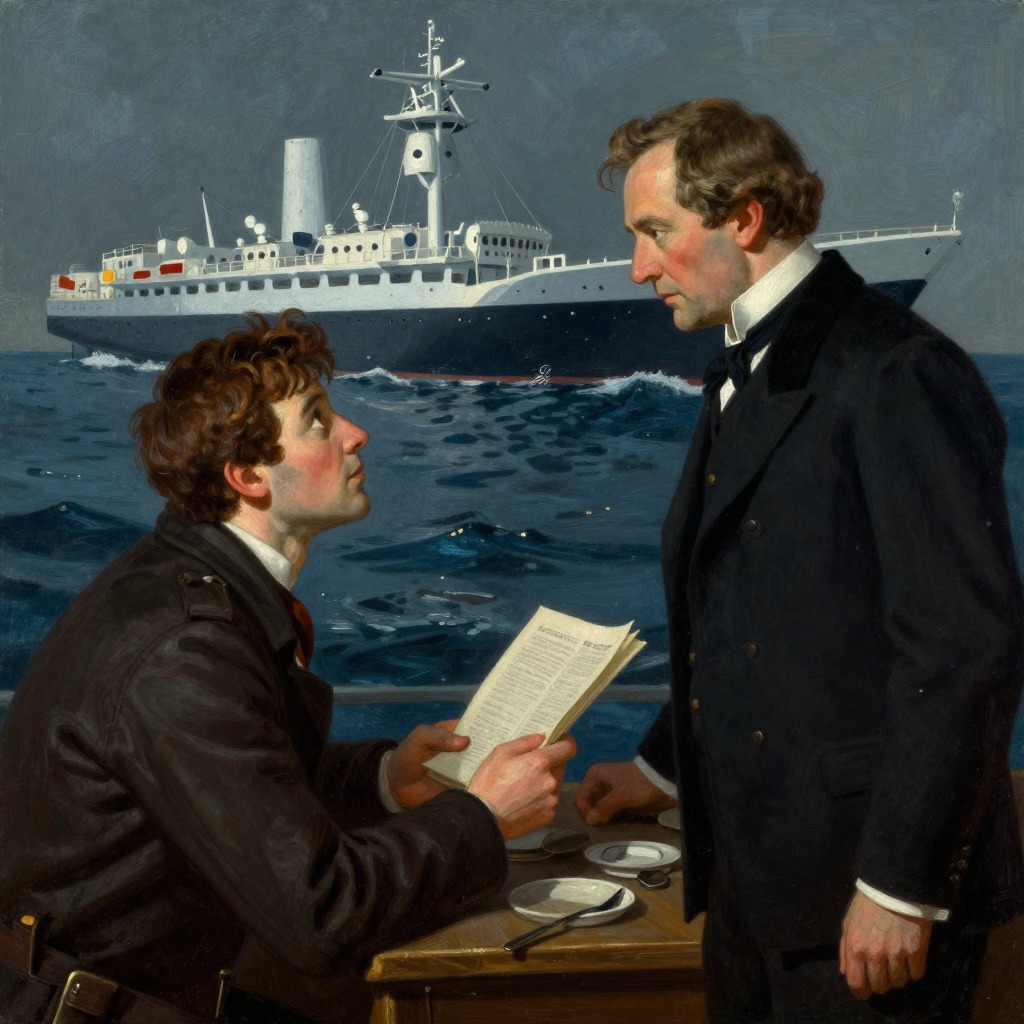
Nemo's relationships are defined by his isolation and authority. He treats Professor Aronnax with a degree of respect, allowing him freedom to study and even making him a "fellow student" of the ocean's wonders . Yet he refuses any personal bond, never offering his hand . He views Ned Land and Conseil as prisoners of war, bound to the Nautilus for life . This creates a constant, simmering conflict, especially with the hot-tempered harpooner, Ned Land, who longs for freedom and clashes with Nemo's authority . Nemo's relationship with his own crew is one of absolute loyalty, forged through shared purpose and sacrifice. He mourns a crewman killed in an accident, burying him in a coral cemetery to protect him from "sharks and men" . He is capable of great compassion, as shown when he saves the Indian diver, but also of cold, ruthless violence, as seen in the slaughter of the sperm whales and the sinking of the warship .
Change and Ending
Nemo undergoes a profound psychological decline over the course of the novel. After the mass execution of the warship, he becomes increasingly withdrawn, gloomy, and haunted . He retreats into his stateroom, and the Nautilus drifts aimlessly . In his final moments observed by Aronnax, he is heard murmuring, "O almighty God! Enough! Enough!" , suggesting a crisis of conscience or a plea for release from his own hatred. The Nautilus is ultimately caught in the Maelstrom off the Norwegian coast, and Nemo's fate is left ambiguous (E03858-E03864). The novel concludes with Aronnax hoping that the captain's hate has been appeased and that he continues his peaceful exploration of the seas .
Narrative Role and Evaluation
Captain Nemo is the central enigma and driving force of the novel. He is the embodiment of the Romantic hero—a genius, a rebel, and a tragic figure, whose immense capabilities are ultimately consumed by his own obsessive quest for vengeance. He serves as a foil to the scientific curiosity of Aronnax and the brute physicality of Ned Land. His character allows Verne to explore themes of freedom, justice, technology, and humanity's relationship with nature. Nemo's creation, the Nautilus, is an extension of his will, a symbol of both human ingenuity and the potential for that ingenuity to be turned towards destructive ends. He remains one of the most compelling and influential figures in science fiction, a prototype for the brilliant, tormented, and morally ambiguous genius.