Catherine Earnshaw
Catherine Earnshaw is the emotional vortex of Wuthering Heights, a woman whose wild, untamable spirit and absolute, soul-deep bond with Heathcliff make her both the novel's heart and the primary agent of its tragedy. Her choice to marry Edgar Linton, a decision she herself recognizes as a betrayal of her own nature, fractures her identity and sets in motion a cycle of revenge and grief that consumes two families across two generations. She is not merely a victim of circumstance but an active, passionate force whose desires and contradictions shape every major event of the story.
Identity and Early Life
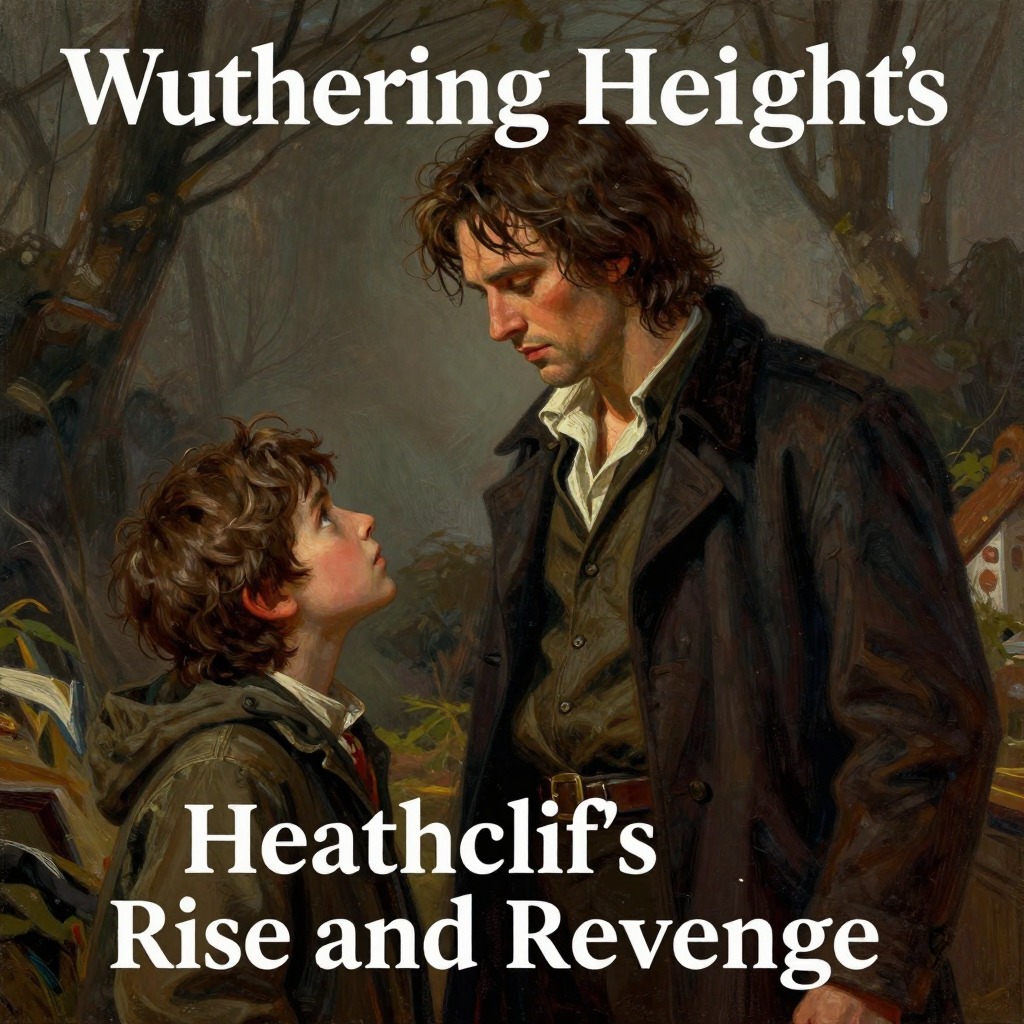
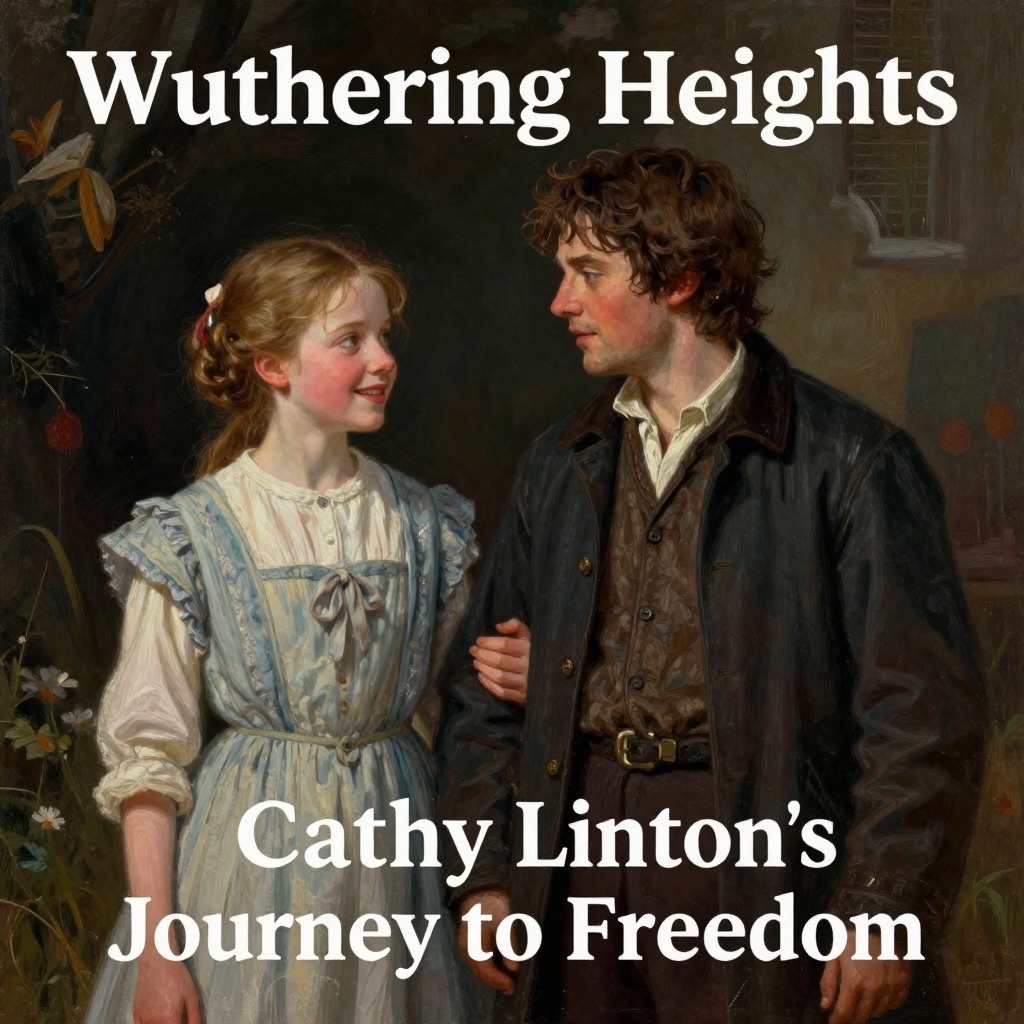
Catherine is introduced to the reader through the ghostly name scratched into the paint of a window-ledge at Wuthering Heights: "Catherine Earnshaw," varied to "Catherine Heathcliff" and "Catherine Linton" . These three names encapsulate the warring identities that define her life. She is the daughter of Mr. Earnshaw, the master of Wuthering Heights, and from childhood she is described as a "wild, wicked slip" with "the bonniest eye, the sweetest smile, and lightest foot in the parish" . Her spirit is always at "high-water mark," her tongue perpetually singing, laughing, and plaguing everyone . She is fiercely attached to Heathcliff from the moment her father brings the dark, ragged orphan home from Liverpool, and the two become inseparable, "very thick" from the start . Their bond is forged in shared rebellion against the tyranny of her brother Hindley, who, after their father's death, degrades Heathcliff to a servant and forbids Catherine from playing with him .
The Divided Heart: Love, Ambition, and Betrayal
Catherine's defining crisis arrives when she must choose between her profound, almost metaphysical love for Heathcliff and the social advancement offered by Edgar Linton. She accepts Edgar's marriage proposal, but immediately confesses to Nelly Dean that she is "convinced I'm wrong" . In a famous confession, she explains that her love for Edgar is like "the foliage in the woods," subject to change, while her love for Heathcliff "resembles the eternal rocks beneath: a source of little visible delight, but necessary" . She declares, "I am Heathcliff! He's always, always in my mind: not as a pleasure, any more than I am always a pleasure to myself, but as my own being" . Yet, she simultaneously admits that "it would degrade me to marry Heathcliff now" , revealing the class-consciousness that poisons her integrity. This internal split—between her authentic self and her social ambition—is the engine of the tragedy. Heathcliff overhears her saying it would degrade her to marry him, and he flees Wuthering Heights that very night, disappearing for three years .
Marriage, Return, and Destruction
Catherine marries Edgar Linton and moves to the refined, peaceful Thrushcross Grange, but she is never at home there. When Heathcliff returns, transformed into a wealthy, gentlemanly figure, she is ecstatic, throwing her arms around him and laughing "like one beside herself" . Her husband's jealousy and Heathcliff's calculated revenge—which includes seducing and marrying Edgar's sister Isabella—create an unbearable tension. Catherine, caught between the two men, descends into a violent, self-destructive illness. During a feverish delirium, she longs to be "a girl again, half savage and hardy, and free" , and she imagines herself back at Wuthering Heights, her true home. In her final, agonizing meeting with Heathcliff, they accuse each other of breaking one another's hearts. He cries, "You have killed yourself. Yes, you may kiss me, and cry; and wring out my kisses and tears: they'll blight you—they'll damn you" . She dies shortly after giving birth to her daughter, Catherine Linton, never fully regaining consciousness .
Relationships and Conflict
Catherine's relationships are defined by extremity. With Heathcliff, she shares a bond that transcends ordinary love; they are, in her words, made of the same soul-stuff . With her brother Hindley, she is locked in a cycle of conflict, as he becomes a tyrannical drunkard who degrades Heathcliff and neglects his own son . Her marriage to Edgar Linton is a study in incompatibility: he represents the civilized, orderly world she aspires to but cannot inhabit authentically. She dominates him, and he, in his mildness, is unable to contain her fierce spirit. Her relationship with her daughter is cut short by her death, but her legacy—both her name and her tempestuous nature—haunts the next generation.
Change and Ending
Catherine's trajectory is one of radical transformation and tragic stasis. She begins as a wild, free child of the moors, becomes a conflicted, ambitious young woman, and ends as a broken, dying wife. Her death does not bring her peace; her ghost, as Heathcliff later reveals, has haunted him for eighteen years, appearing at the window of her childhood bedroom and driving him to the brink of madness . She is buried not in the Linton chapel but on a green slope in the churchyard, where the heath and bilberry plants climb over the low wall from the moor , a final, symbolic return to the wild landscape she loved.
Thematic Significance
Catherine Earnshaw embodies the novel's central conflict between nature and civilization, passion and social convention. Her famous declaration, "I am Heathcliff," articulates a vision of identity as something shared and elemental, a radical challenge to the individualistic, property-based order of the Lintons and the Earnshaws. Her tragedy is that she cannot reconcile this authentic self with the world she must inhabit. She is the source of the novel's most intense love and its most devastating pain, and her ghostly presence—both literal and figurative—lingers over the moors and the story long after her death, ensuring that her passionate, unresolved spirit remains the novel's enduring force.