Hindley Earnshaw
Hindley Earnshaw, the only son of Mr. Earnshaw and elder brother of Catherine Earnshaw, is the figure whose unchecked jealousy, violent temper, and eventual self-destruction drive much of the suffering at Wuthering Heights. From the moment his father brings home a foundling from Liverpool, Hindley's life becomes a story of displaced resentment, calculated degradation, and a final, desperate collapse into drink and debt that leaves his son Hareton a beggar in his own house.
Identity and Background
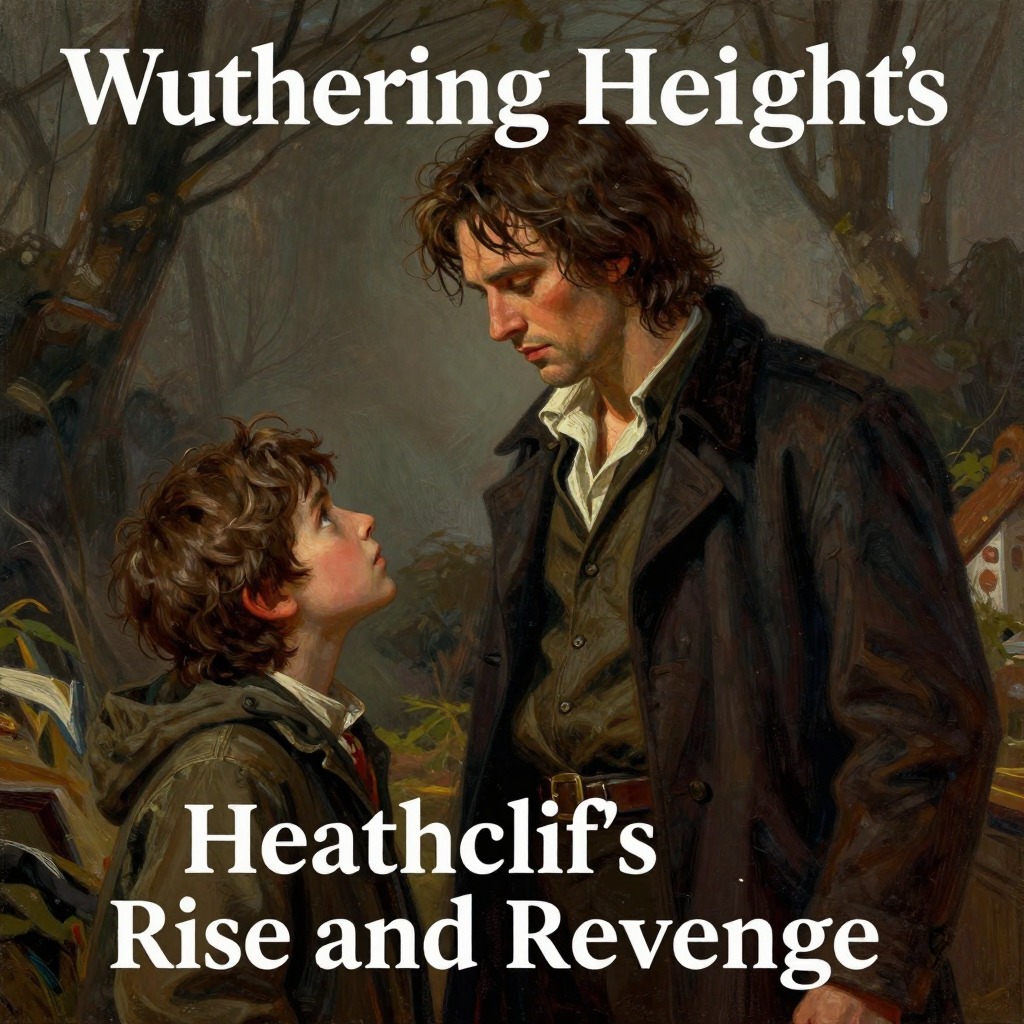
Hindley is introduced as a boy of fourteen when his father returns from a sixty-mile walk to Liverpool carrying a dirty, ragged, black-haired child found starving in the streets. The old master asks what present his son would like; Hindley names a fiddle, but the instrument is crushed to morsels in the great-coat during the journey, and the boy blubbers aloud. From the very beginning, Hindley hates the newcomer, christened Heathcliff after a son who died in childhood. He plagues and goes on with him shamefully, standing his blows without winking or shedding a tear, a patience that only makes old Earnshaw furious when he discovers his son persecuting the fatherless child. At Mrs. Earnshaw's death, less than two years later, the young master has learned to regard his father as an oppressor rather than a friend, and Heathcliff as a usurper of his parent's affections and his privileges. He grows bitter with brooding over these injuries.
Arc Through the Plot
Sent to college on the advice of the curate, Hindley returns for his father's funeral bringing a wife with him—a woman of neither money nor name, whom he had kept secret from his father. He is altered considerably: sparer, colourless, dressed and speaking differently. On the very day of his return he tells Joseph and Nelly Dean they must quarter themselves in the back-kitchen and leave the house for him. His wife Frances, a thin, young, fresh-complexioned woman with a cough and a terror of black, dies within months of giving birth to Hareton, and Hindley's grief turns to reckless dissipation. He neither weeps nor prays; he curses and defies, execrates God and man, and gives himself up to drinking and gambling. The curate drops calling, and nobody decent comes near the house. Hindley's treatment of Heathcliff becomes enough to make a fiend of a saint: he drives him from their company to the servants, deprives him of instruction, insists he labour out of doors, and threatens to turn him out of the house if he breaks orders. He becomes a tyrant who demolishes the first who puts him out of temper, and his conduct to Heathcliff is atrocious.
Key Actions and Objectives
Hindley's central objective is to reduce Heathcliff to his right place—a vagabond, a servant, a creature beneath notice. He forbids Heathcliff to sit with or eat with the family, threatens to turn him out, and blames his father for treating H. too liberally. When Heathcliff and Catherine are caught spying at Thrushcross Grange, Hindley is furious; Mr. Linton pays a visit and reads him a lecture on how he guides his family, stirring him to look about him in earnest. Hindley's violence escalates: he seizes Heathcliff by the collar and hurls him into the back-kitchen, he shoves him back with a sudden thrust when he appears clean and cheerful, and he locks him in the garret. In one drunken frenzy he holds a carving-knife to Nelly's teeth, threatens to kill some of them, and dangles Hareton over the banister, nearly dropping the child. Heathcliff arrives underneath just at the critical moment and arrests the descent, an act that fills Heathcliff with the intensest anguish at having made himself the instrument of thwarting his own revenge.
Relationships and Conflict
Hindley's relationship with his sister Catherine is marked by contempt and neglect. He allows her to grow up in absolute heathenism, as Mr. Linton puts it, and when she falls ill after Heathcliff's departure he lavishes scornful abuse on her. His marriage to Frances is the one bright spot: he dotes on her and adores her, and when she dies he becomes desperate. His son Hareton falls wholly into Nelly's hands; Hindley, provided he sees the child healthy and never hears him cry, is contented as far as regards him. But he treats the boy with wild beast's fondness or madman's rage—squeezing and kissing him to death one moment, flinging him into the fire or dashing him against the wall the next. Hareton learns to swear at him, and Heathcliff becomes the boy's protector, paying his father back what he gives to him. Hindley's hatred of Heathcliff is obsessive: he sits up all night with him playing dice and drinking, borrowing money on his land, and yet he cannot resist the temptation to kill him. He shows Nelly a curiously-constructed pistol with a double-edged spring knife attached to the barrel, confessing that he goes up with it every night and tries Heathcliff's door.
Change and Ending
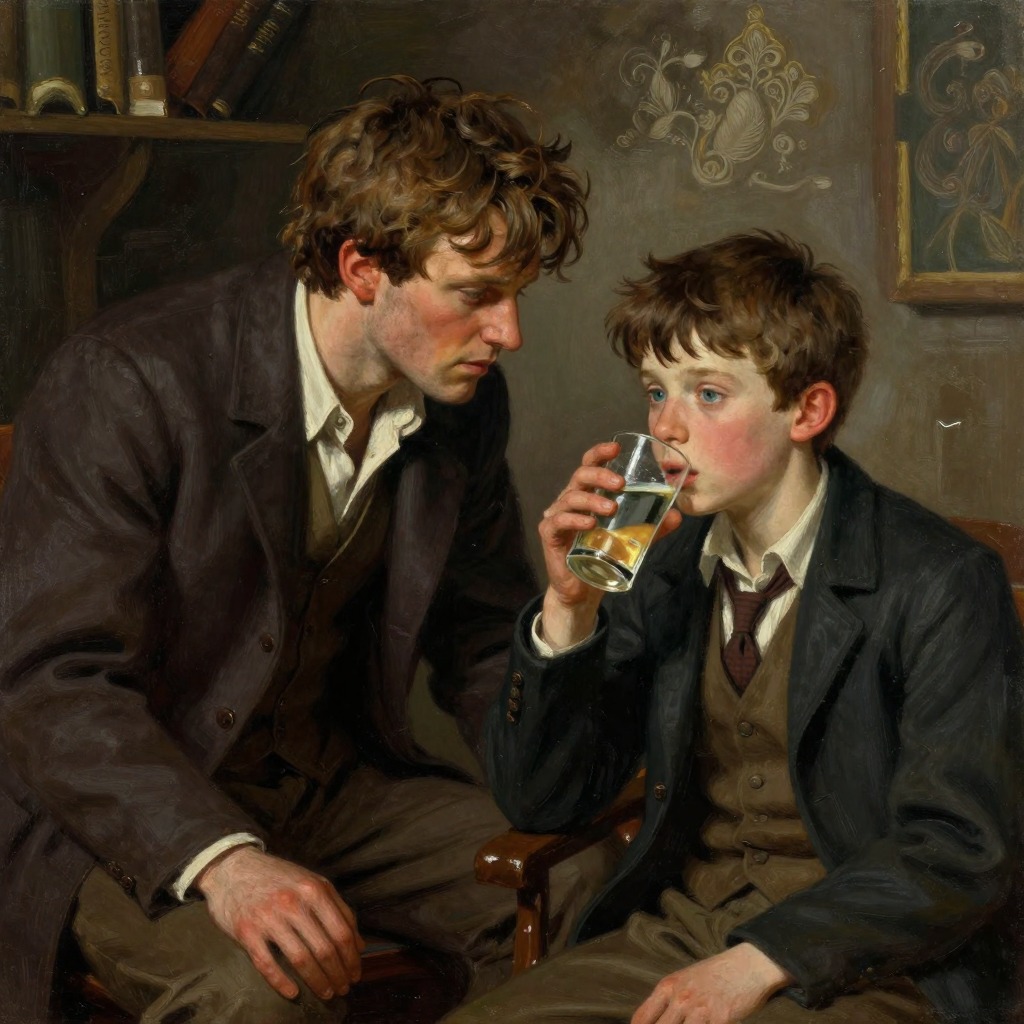
Hindley's end follows fast on his sister's: scarcely six months between them. He dies drunk as a lord, barely twenty-seven years old. Heathcliff reports that he fastened the two doors of the house against him and spent the night drinking himself to death deliberately. By that time Hindley has mortgaged every yard of land he owned for cash to supply his mania for gaming, and Heathcliff is the mortgagee. Hareton, who should now be the first gentleman in the neighbourhood, is reduced to complete dependence on his father's inveterate enemy, living in his own house as a servant, deprived of wages, friendless, and ignorant that he has been wronged. Nelly Dean, who had been his foster-sister, weeps for him as for a blood relation, and wonders whether he had fair play.
Thematic Significance
Hindley embodies the destructive power of unchecked resentment and the self-consuming nature of hatred. His cruelty to Heathcliff is the original injustice that sets the entire revenge plot in motion, and his own ruin—drink, debt, death—is the pattern that Heathcliff will later force on others. He is also a study in failed fatherhood: his neglect and violence produce in Hareton a boy who swears, cannot read, and takes pride in his brutishness, yet who remains capable of loyalty and affection. Hindley's tragedy is that he had room in his heart for only two idols—his wife and himself—and when one was taken, he had nothing left but to destroy everything else.