Lockwood
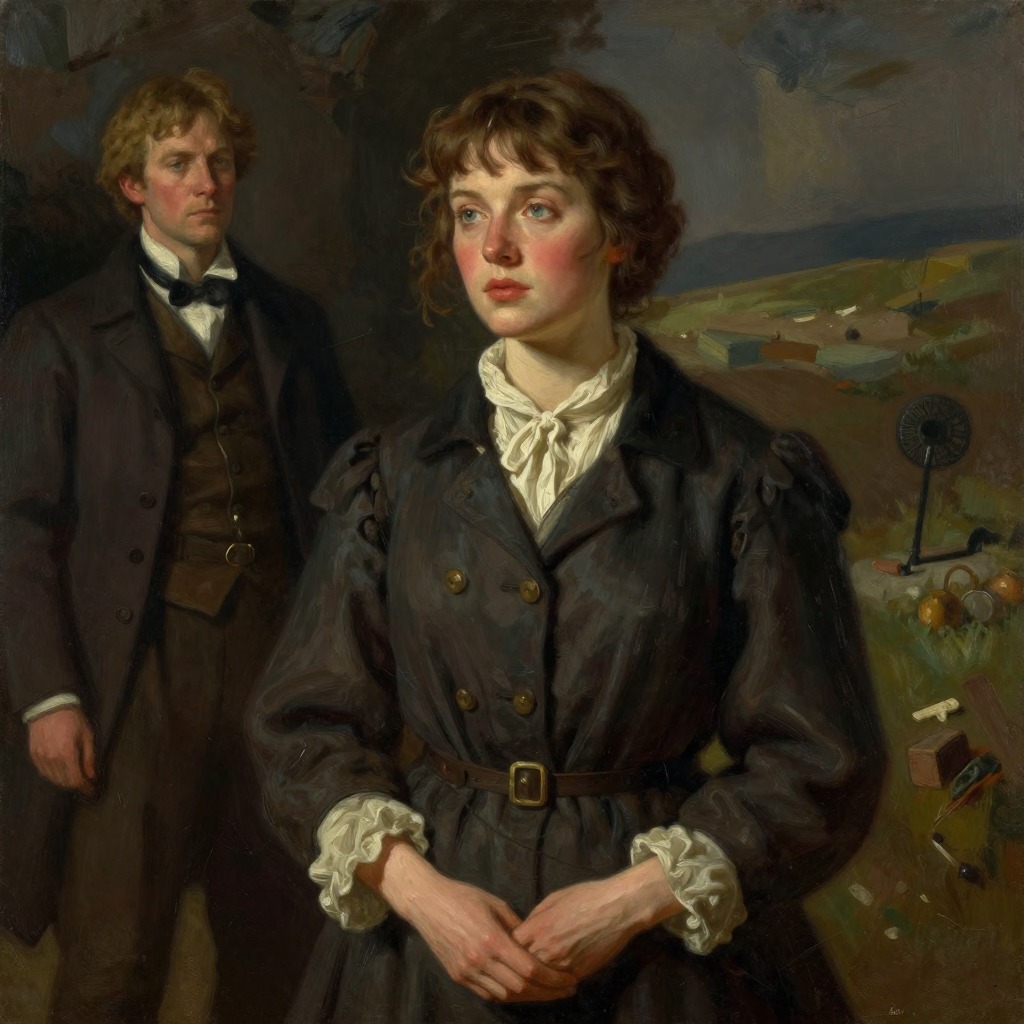
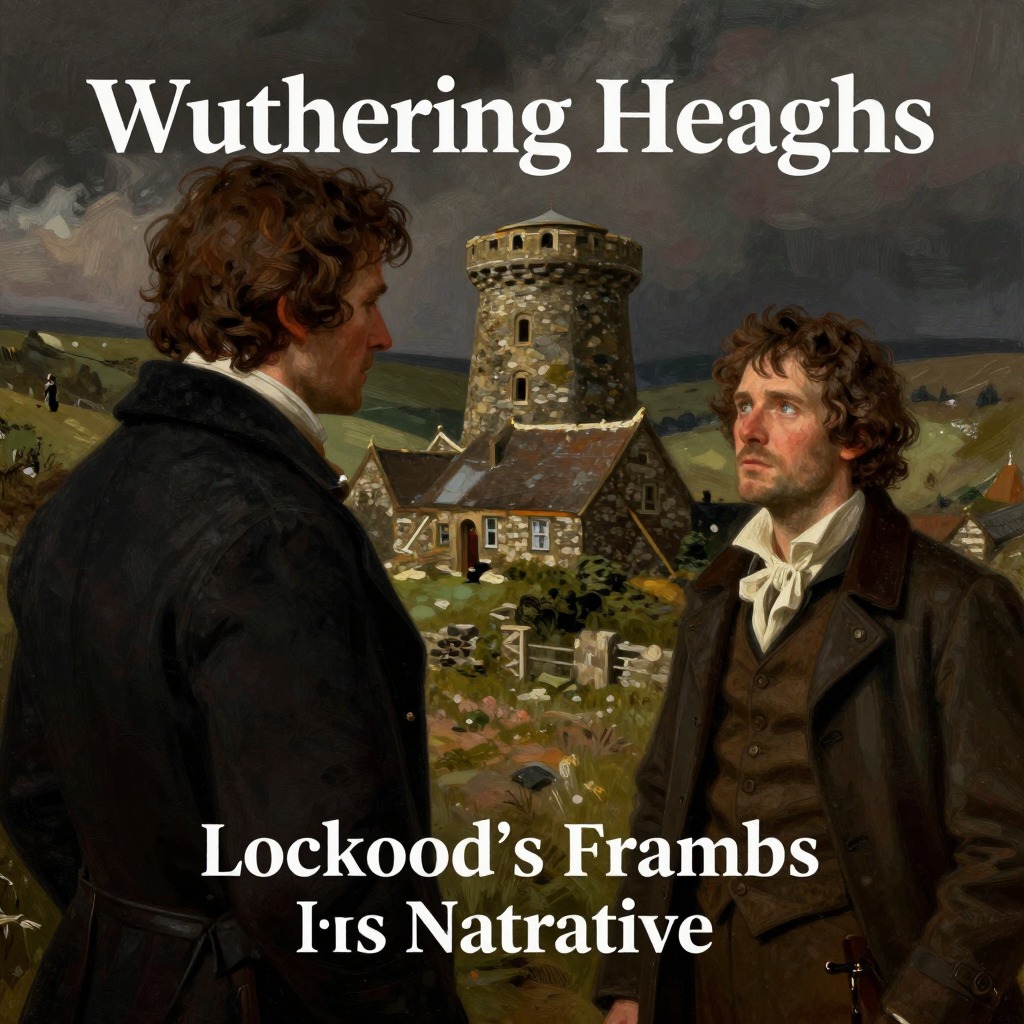
Lockwood, a wealthy, self-regarding gentleman from London, arrives in the remote Yorkshire moors in 1801 as the new tenant of Thrushcross Grange, a property owned by the reclusive Heathcliff. His initial visit to his landlord's dwelling, Wuthering Heights, is a study in comic misadventure and social awkwardness that rapidly curdles into something far more sinister. Lockwood's narrative voice frames the entire novel, providing the urbane, skeptical perspective of an outsider who stumbles into a world of ferocious passions he can barely comprehend. He is the reader's surrogate, a man of the fashionable world whose complacent self-regard is gradually stripped away by the raw, elemental forces he encounters.
First Impressions and the Stranger's Gaze
Lockwood's first description of Heathcliff reveals as much about himself as about his landlord. He finds Heathcliff a "capital fellow" precisely because of his exaggerated reserve, a quality Lockwood claims to share, though his own self-analysis—confessing he once "shrunk icily" from a reciprocated romantic advance—suggests a man more comfortable with the idea of misanthropy than its practice. He is struck by the "singular contrast" Heathcliff presents: a "dark-skinned gipsy in aspect" yet a gentleman in dress and manners, a description that immediately marks Heathcliff as an exotic and troubling figure within the settled social order Lockwood represents. The house itself, Wuthering Heights, with its grotesque carvings, the date "1500," and the name "Hareton Earnshaw" over the door, presents a world of ancient, unyielding lineage that Lockwood, a man of the transient city, can only superficially admire.
The Nightmare and the Threshold
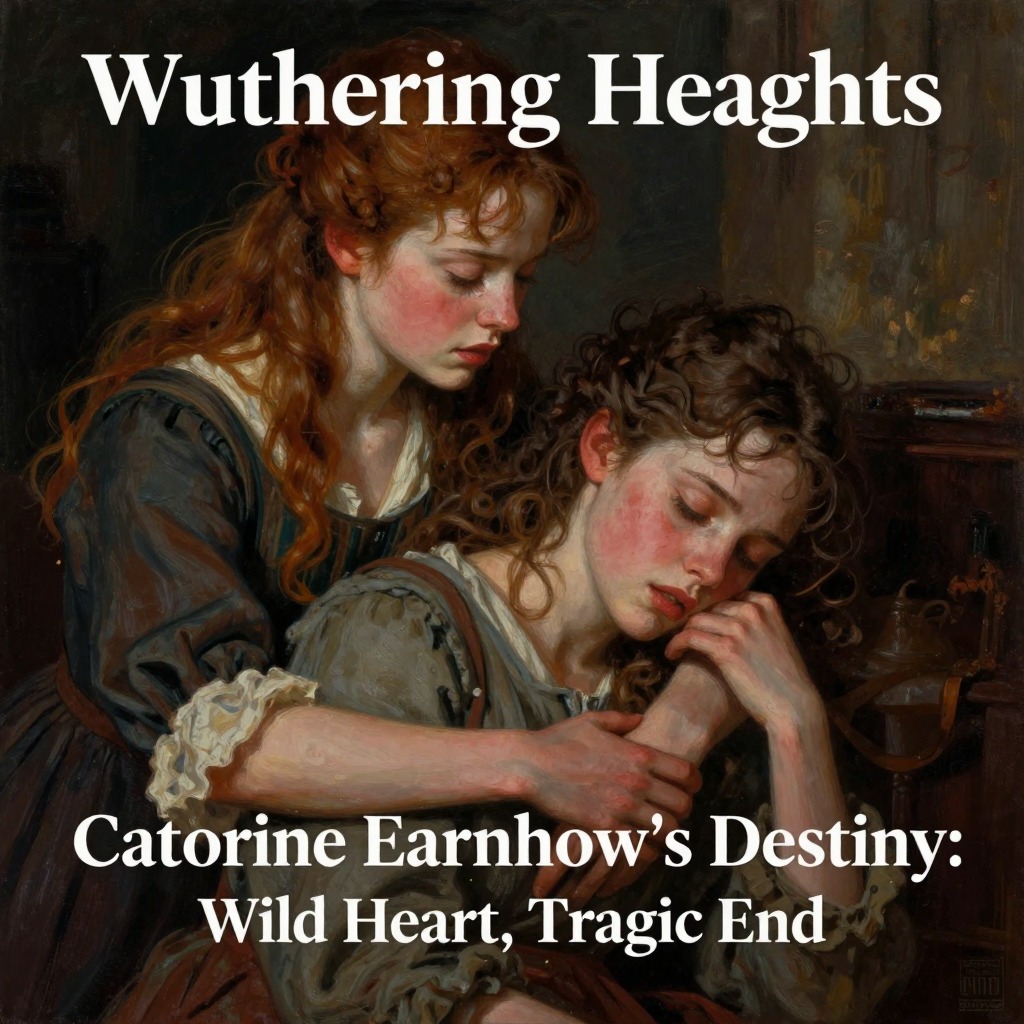
Lockwood's second visit, during a snowstorm, plunges him into the heart of the house's haunted atmosphere. Forced to stay the night, he is given a chamber whose window-ledge is covered with the scratched names "Catherine Earnshaw," "Catherine Heathcliff," and "Catherine Linton." This discovery, along with a diary written in a child's hand, ignites his curiosity about the unknown Catherine. His subsequent nightmare, in which the ghost of Catherine Linton begs to be let in through the window, is the novel's first supernatural intrusion. Lockwood's terrified reaction—rubbing the ghost's wrist on the broken glass until blood runs—is a moment of visceral cruelty that foreshadows the violence simmering beneath the surface of the Heights. His scream brings Heathcliff, whose anguished response—"Come in! come in!" he sobs, "Cathy, do come. Oh, do—once more!"—reveals a depth of grief that utterly transforms Lockwood's perception of his landlord from a mere churl into a figure of tragic, almost unbearable, passion.
The Reluctant Audience
Convalescing at Thrushcross Grange after his ordeal, Lockwood, bored and intellectually curious, compels the housekeeper Nelly Dean to tell him the full history of the inhabitants of Wuthering Heights. He is a self-conscious listener, interrupting her narrative to insist on minute detail, declaring himself "interested in every character you have mentioned." His role is that of the passive, receptive frame, a device that allows the story to unfold through Nelly's intimate, first-hand account. Yet Lockwood is not a neutral vessel; his own judgments color the telling. He reflects on the "deeper attraction" of life in these regions, where people "live more in earnest, more in themselves," a romanticized view that contrasts with his own world of "frivolous external things." His presence as an audience also provides a subtle commentary on the story's power, as he finds himself increasingly drawn into its emotional gravity.
The Return and the Resolution
Lockwood returns to the moors in September 1802, a year after his initial visit, driven by a "sudden impulse." He finds a transformed Wuthering Heights. The gate yields to his hand, and the air is fragrant with flowers. Inside, he witnesses the final, peaceful scene: Hareton Earnshaw, now respectably dressed, is learning to read under the tutelage of a smiling Catherine Linton, their heads bent together over a book. This image of domestic harmony and mutual affection is the novel's resolution, a stark contrast to the stormy passions Lockwood first encountered. He learns from Nelly Dean of Heathcliff's strange, tormented death and the local legend that his ghost, along with Catherine's, still walks the moors. Lockwood's final act is to visit the three headstones on the slope—Edgar Linton's, Catherine's, and Heathcliff's—and to reflect on the quiet earth, wondering "how any one could ever imagine unquiet slumbers for the sleepers." His journey from bewildered outsider to a man who has glimpsed the profound, destructive, and ultimately redemptive power of love and loss is complete, and he departs, leaving the story to settle into the peace he has finally come to understand.