
Language and Nonsense
Alice's Adventures in WonderlandThe book plays with language through poems, puns, and riddles, revealing the arbitrary nature of words and meaning.
increasing Bearing strength in each event
 decreasing
Bearing strength in each eventdecreasingThe Mock Turtle's Parodies
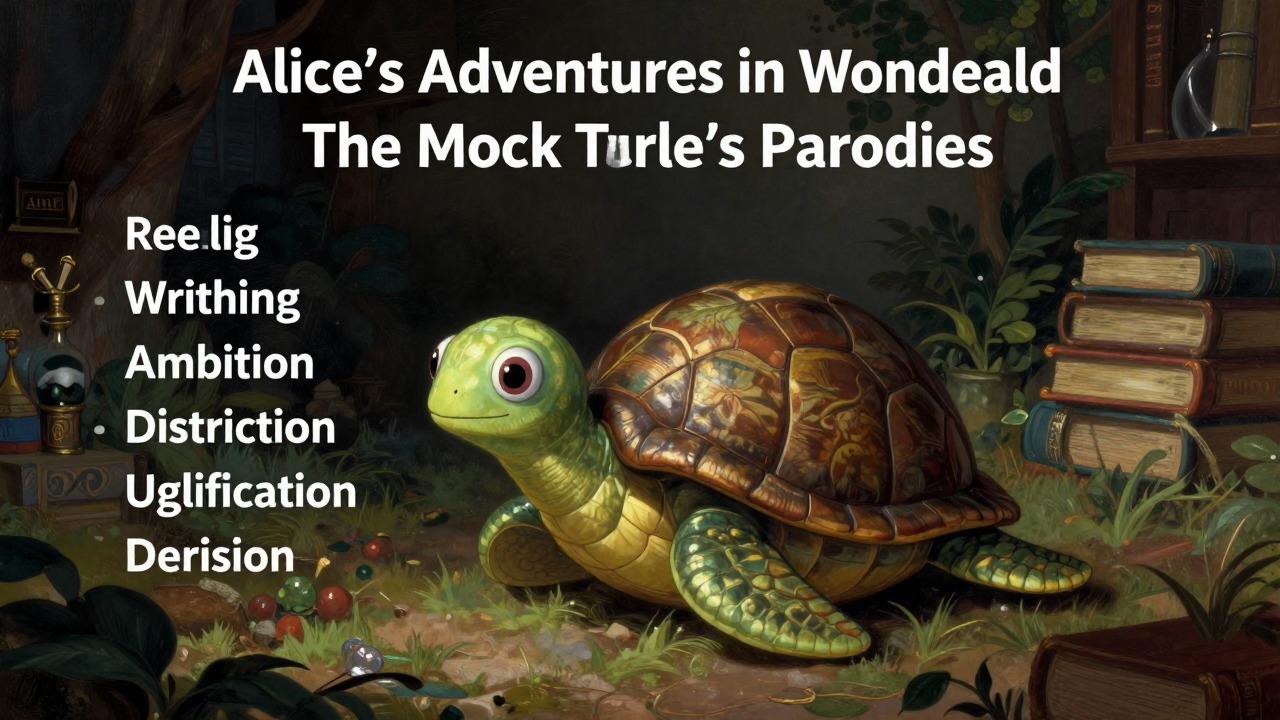
Educational Parodies
The School Subjects
The Mock Turtle's list of subjects—Reeling, Writhing, Ambition, Distraction, Uglification, Derision—are puns on real subjects. They undermine the seriousness of education by turning it into a game of words. The puns are nonsensical, but they also critique the rote learning of Victorian schools.
The Poem Recitations
Alice's recitations of "You are old, Father William" and "'Tis the voice of the Lobster" are parodies of didactic poems. The altered words show how language can be distorted to produce new meanings. The Caterpillar's criticism of Alice's recitation highlights the importance of getting the words right, but the book itself celebrates the inventive misuse of language.
The Riddle Without an Answer
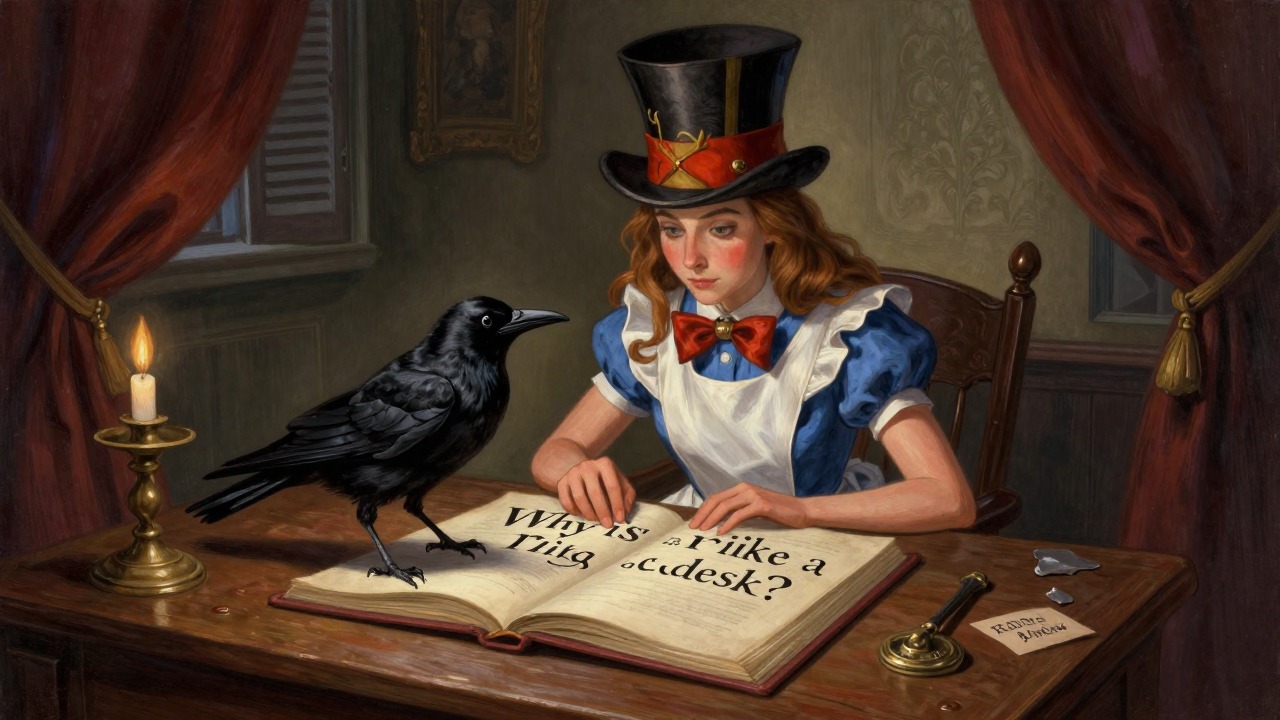
The Unanswerable Question
The Hatter's Riddle
The Hatter's riddle "Why is a raven like a writing-desk?" is famously unanswered. It represents a breakdown of the expected function of language—to convey meaning. The riddle is a puzzle with no solution, a pure exercise in absurdity.
The Wordplay
The conversation at the tea-party is full of wordplay, such as the debate about "I mean what I say" vs. "I say what I mean." The Hatter and March Hare demonstrate that the order of words can change meaning, but also that meaning can be entirely arbitrary. The scene is a celebration of linguistic play, where communication is a game rather than a tool.
The Trial's Language
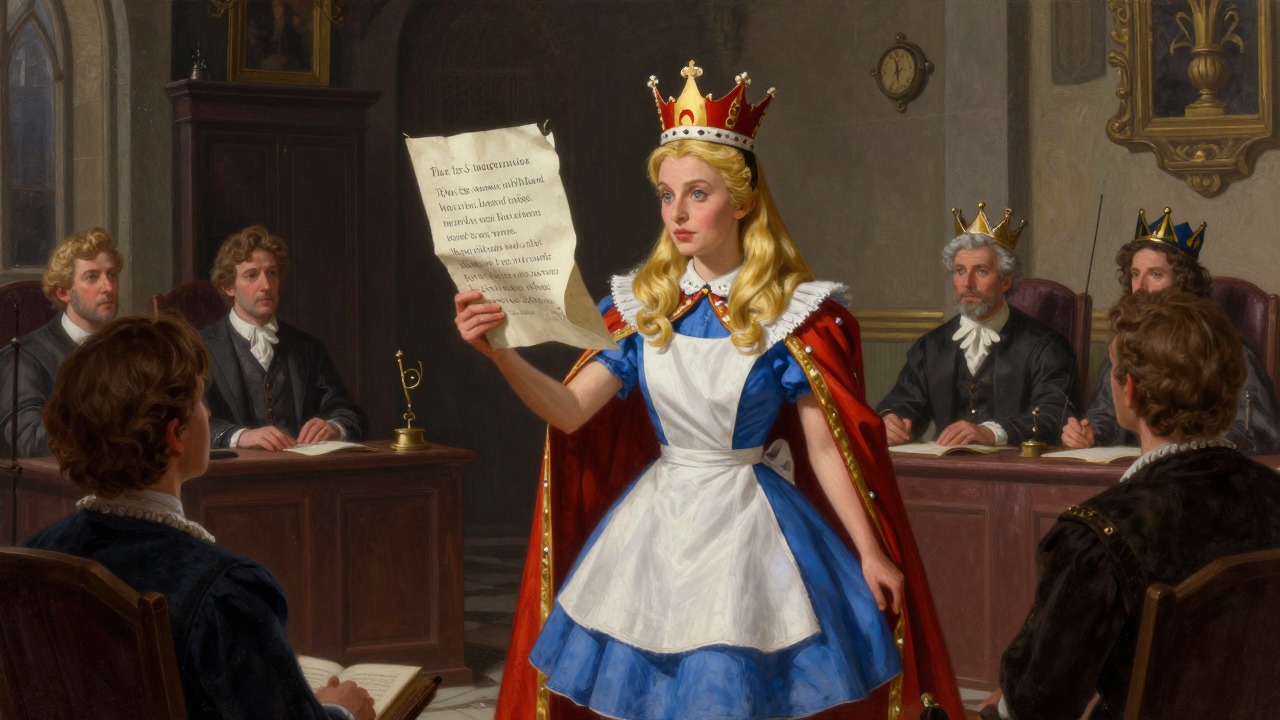
The Misuse of Words
The King's Interpretation
The King's misreading of the verses is a demonstration of how language can be twisted to fit a narrative. He takes every word as evidence, ignoring the context. The jury's literal-mindedness further satirizes the legal system's reliance on text.
The Verses as Nonsense
The verses themselves are a jumble of pronouns and non sequiturs, defying interpretation. Alice's claim that they have no meaning is a challenge to the court's authority, which depends on the belief that language can be interpreted. The scene suggests that meaning is not inherent in words but is constructed by readers, and that this construction can be arbitrary.
during the Mock Turtle's story, on the sea-shore
at the Mad Tea-Party
during the trial, near the end
