
Alice's Identity Crisis
Alice's Adventures in WonderlandThroughout her adventures, Alice repeatedly questions her identity, struggling to maintain a stable sense of self amid constant physical and psychological changes.
increasing Bearing strength in each event
 decreasing
Bearing strength in each eventdecreasingThe First Doubt
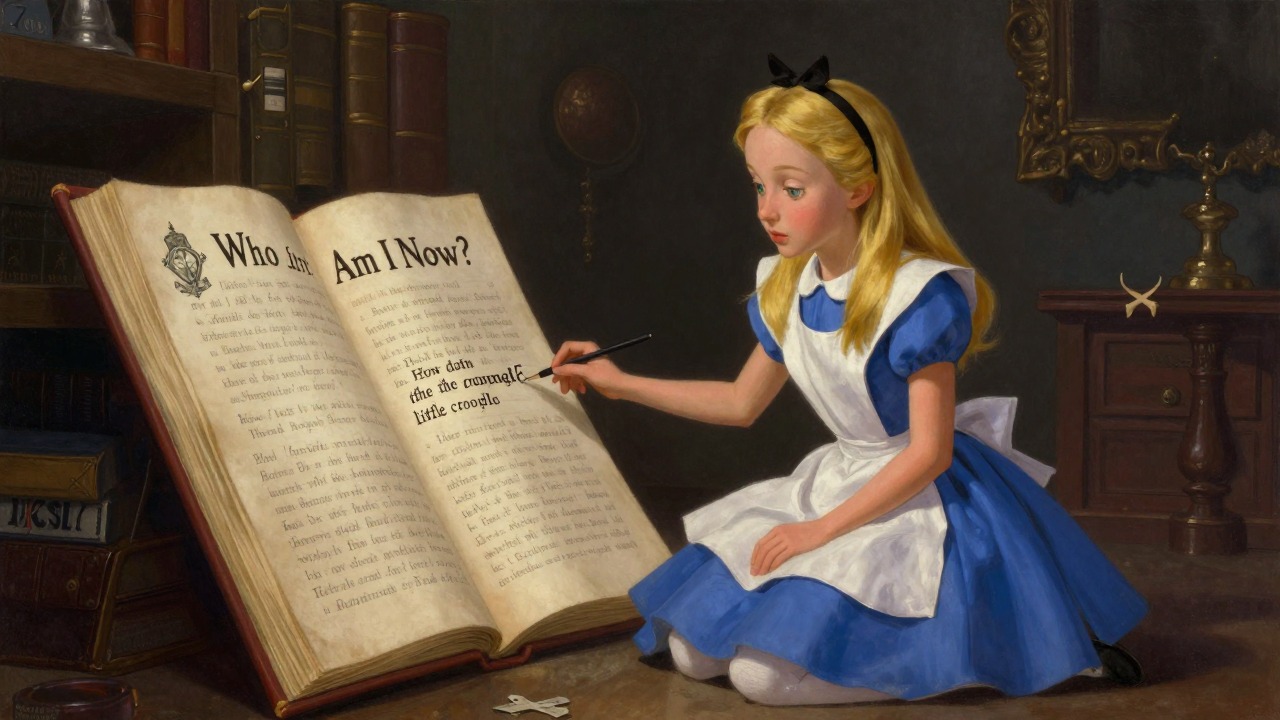
Who Am I Now?
The Great Puzzle
After shrinking and growing, Alice begins to wonder if she is the same person she was when she woke up that morning. She tries to recall her multiplication tables and geography, but they come out wrong. She recites "How doth the little crocodile" instead of the proper poem, confirming her suspicion that she has been changed into Mabel, a girl she knows who knows very little. Alice decides that if she is Mabel, she will stay down in Wonderland rather than return to a life of lessons.
The Tears of Loneliness
Alice's thoughts turn to her loneliness. She wishes someone would put their head down and tell her who she is. She cries, feeling very tired of being alone. This emotional turmoil is the first of many identity crises she will face in Wonderland, where the rules of logic and selfhood are constantly upended.
The Caterpillar's Question
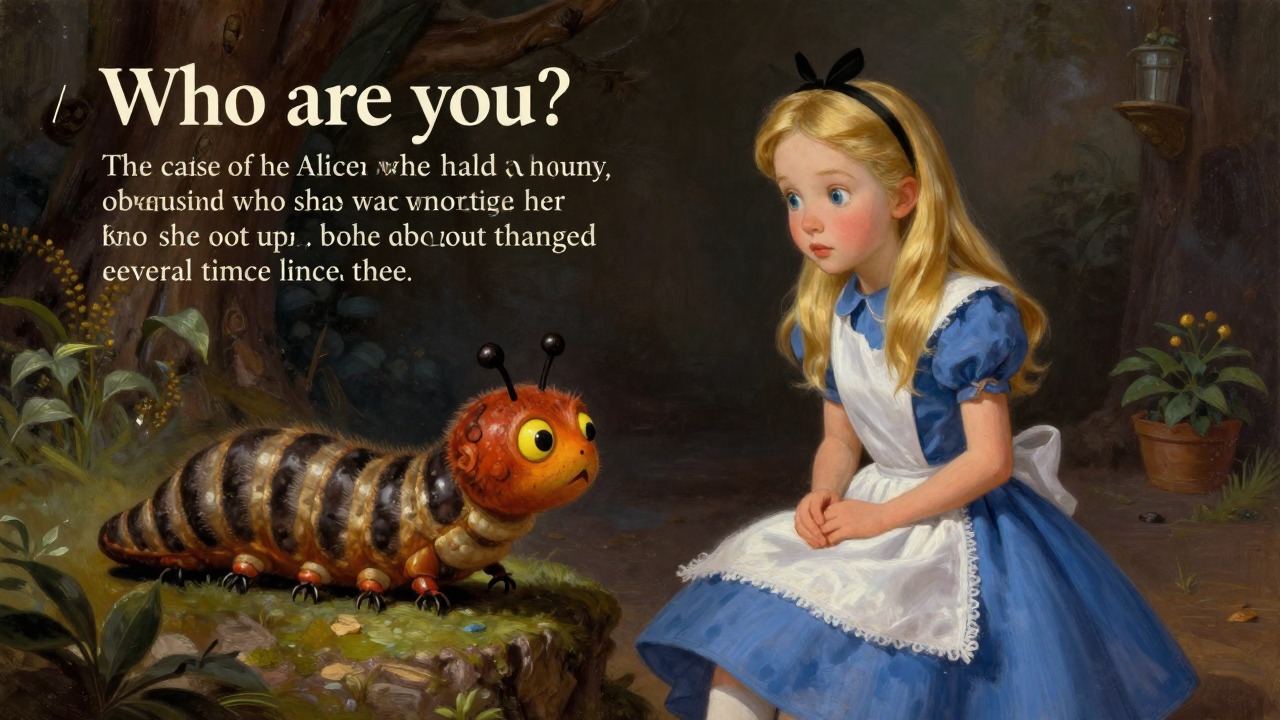
A Stern Interrogation
The Caterpillar's Challenge
The Caterpillar asks Alice, "Who are you?" Alice cannot give a coherent answer. She explains that she knows who she was when she got up, but she has changed several times since then. The Caterpillar demands that she explain herself, but Alice cannot, because she is not herself. This circular logic frustrates her, and the Caterpillar's refusal to accept her confusion deepens her sense of dislocation.
The Recitation Test
The Caterpillar tests Alice's identity by asking her to repeat "You are old, Father William." Alice recites it, but the words come out different from the original. The Caterpillar declares it wrong from beginning to end. This failure confirms her feeling that she has lost her former self. The Caterpillar offers no comfort but gives her the means to control her size, which is a step toward regaining some agency.
The Pigeon's Accusation
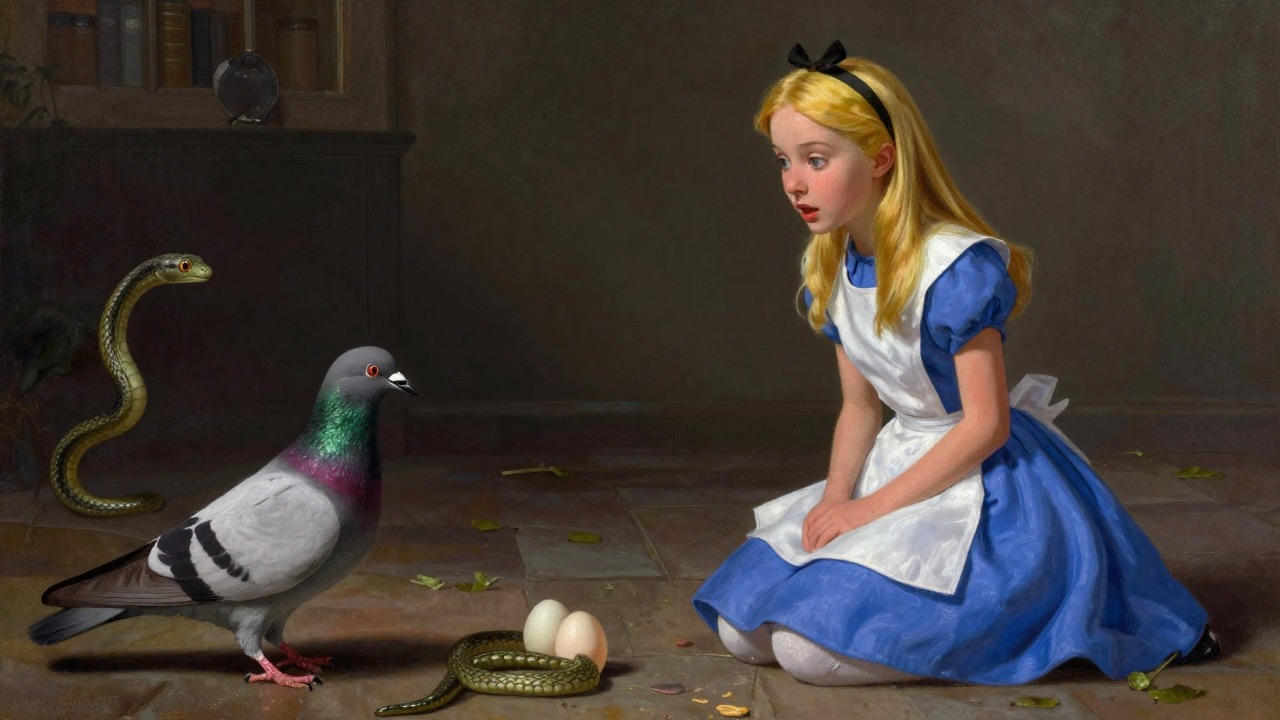
Mistaken for a Serpent
The Pigeon's Fear
Alice's neck grows to an immense length, and a Pigeon mistakes her for a serpent, accusing her of seeking eggs. Alice insists she is a little girl, but the Pigeon is not convinced, having seen many little girls but never one with such a neck. The Pigeon's logic—that if little girls eat eggs, they are a kind of serpent—forces Alice to confront the relativity of identity in Wonderland.
A New Idea
Alice is silent for a moment, considering the idea that categories are not fixed. She realizes that the Pigeon's perspective is valid in its own context. This encounter highlights the theme that identity is not inherent but is defined by perception. Alice must navigate these shifting definitions as she continues her journey, never sure what she will be next.
The Cheshire Cat's Madness
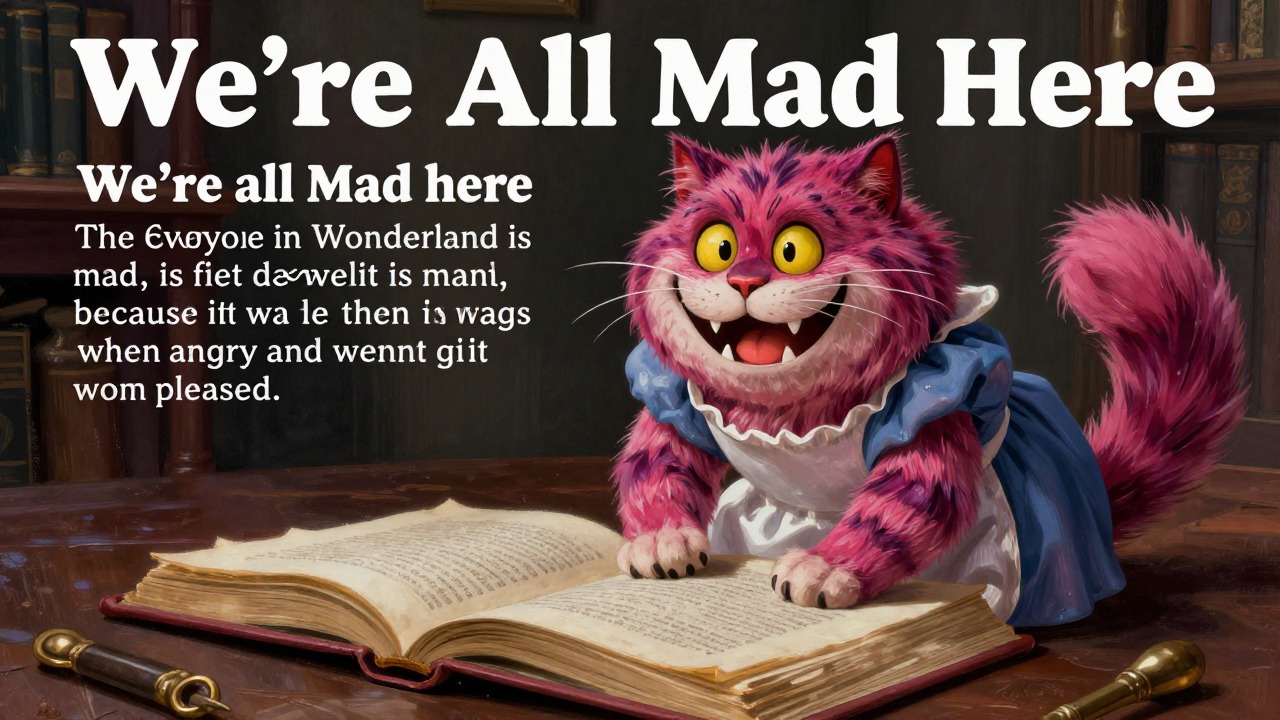
We're All Mad Here
The Cat's Logic
The Cheshire Cat tells Alice that everyone in Wonderland is mad, including her. To prove it, the Cat argues that a dog is not mad because it growls when angry and wags its tail when pleased, whereas the Cat wags its tail when angry and growls when pleased. Therefore, the Cat is mad. Alice, who is present in Wonderland, must also be mad. This syllogism leaves Alice uneasy, as it implies that her own sanity is questionable.
The Grin Without a Cat
The Cat's gradual disappearance, leaving only its grin, symbolizes the elusive nature of identity in Wonderland. Alice reflects that she has often seen a cat without a grin but never a grin without a cat. This paradox underscores the absurdity of the world she has entered, where even the boundaries of existence are fluid. Alice's identity becomes a matter of context rather than fixed essence.
The Trial's Revelation
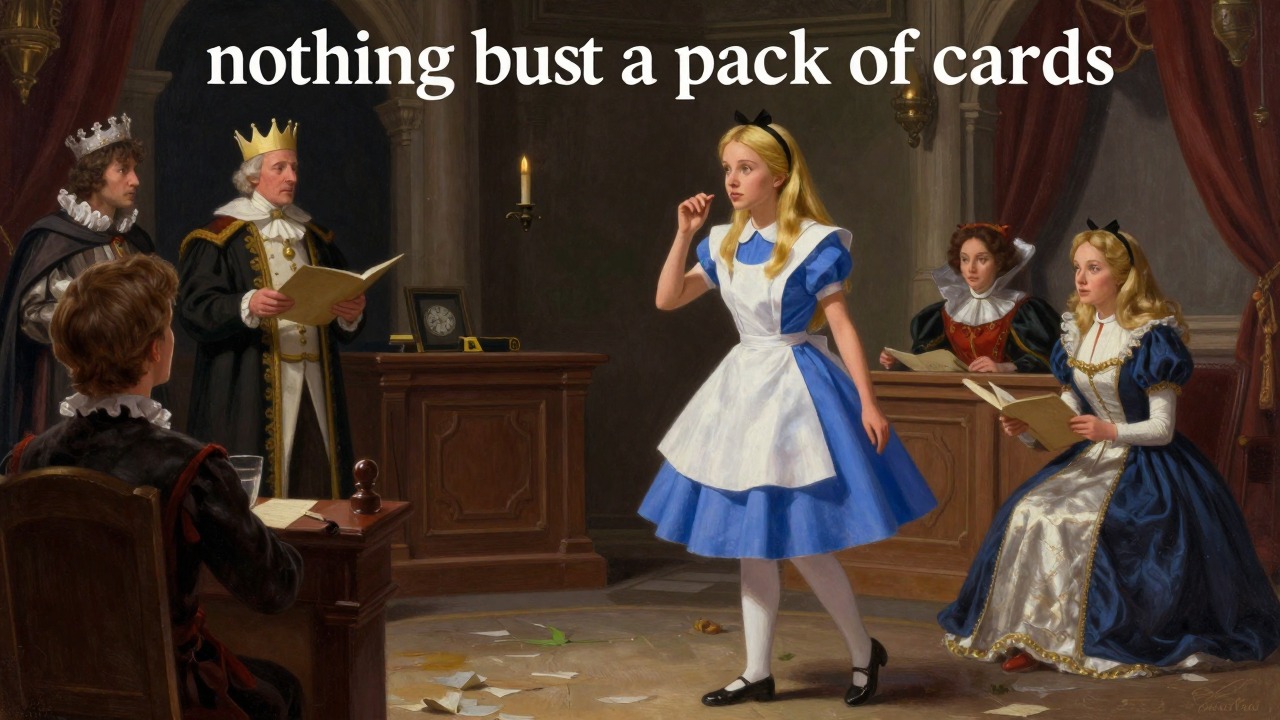
Growing into Defiance
Alice's Growth in the Court
During the trial, Alice grows larger and larger, both physically and in confidence. She challenges the King's rules, argues with the Queen, and finally declares that the court is "nothing but a pack of cards." This assertion of her own identity and power marks a turning point. She is no longer the confused girl who wondered who she was; she has become the one who defines the game.
The Dream's End
Alice's defiance triggers the collapse of the dream world. The cards fly at her, and she wakes up on the riverbank. Her sister's subsequent dream envisions Alice as a grown woman preserving her childlike wonder. The identity crisis is resolved not by finding a fixed self but by embracing the capacity to change and to dream. Alice's adventure becomes a formative experience that shapes her character.
after the first size change, in the hall
at the mushroom, with the Caterpillar
after the mushroom, in the wood
after the pig-baby, in the wood
at the trial, near the end
