Ender Wiggin
Ender Wiggin, born Andrew Wiggin, is the central figure of Orson Scott Card's Ender's Game, a child prodigy whose exceptional intellect and empathy make him the International Fleet's last hope against the alien Buggers. His story is a harrowing bildungsroman that traces his transformation from a vulnerable six-year-old Third—a third child born under government sanction—into the most brilliant military commander in human history, only to discover that his greatest victory was an act of genocide. Ender's significance lies not only in his tactical genius but in his profound moral struggle: he is a killer who hates killing, a savior who destroys an entire species, and ultimately a voice for the dead he has wronged.
Identity and Background
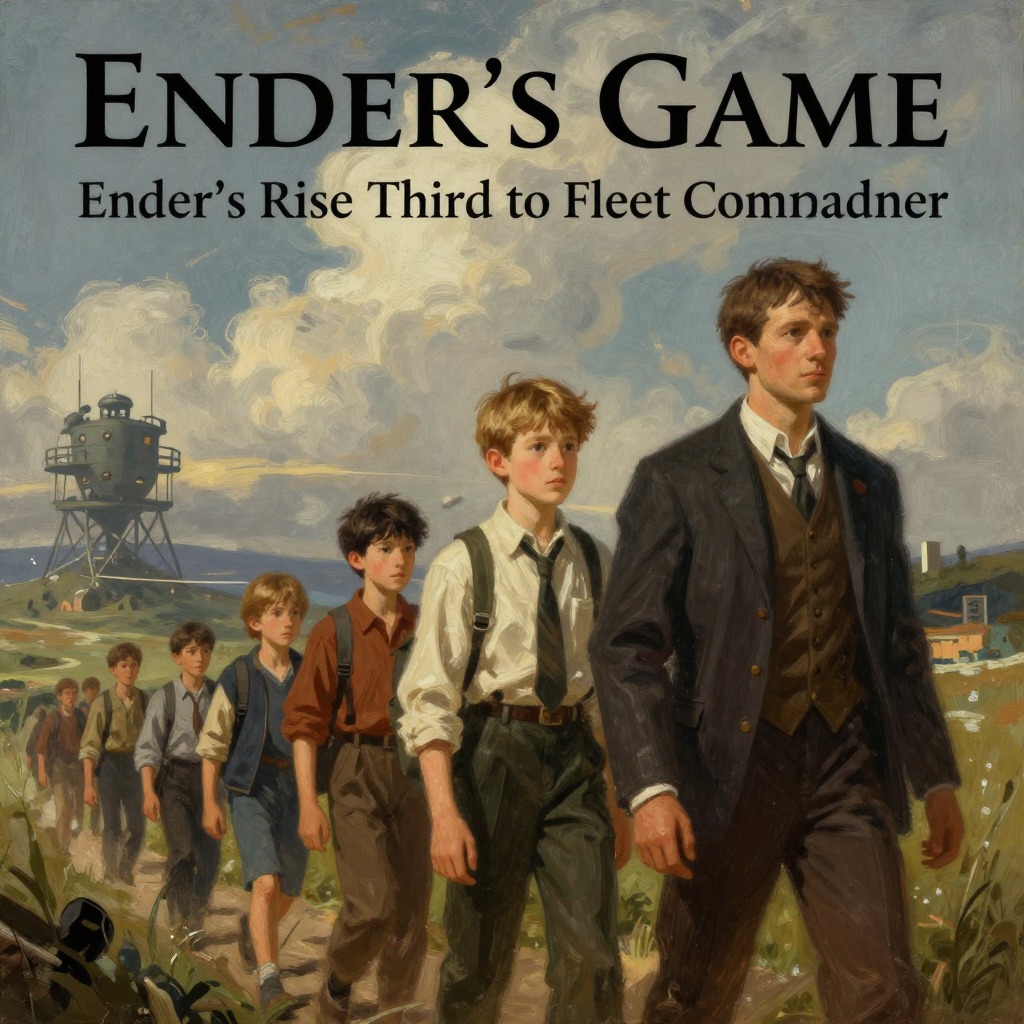
Ender is the third child of John Paul and Theresa Wiggin, born under the government's authorization because his older siblings, Peter and Valentine, had shown exceptional promise. As a Third, he is a social outcast, subject to legal discrimination and the target of bullies like Stilson. From birth, he wears a monitor on his neck that allows the International Fleet to observe his every thought and action. His sister Valentine is his only true ally, while his brother Peter, a sadistic genius, torments him. Ender's early life is defined by his fear of Peter and his desperate desire to be normal, a desire that is shattered when the monitor is removed and he is recruited to Battle School.
Life and Plot Trajectory
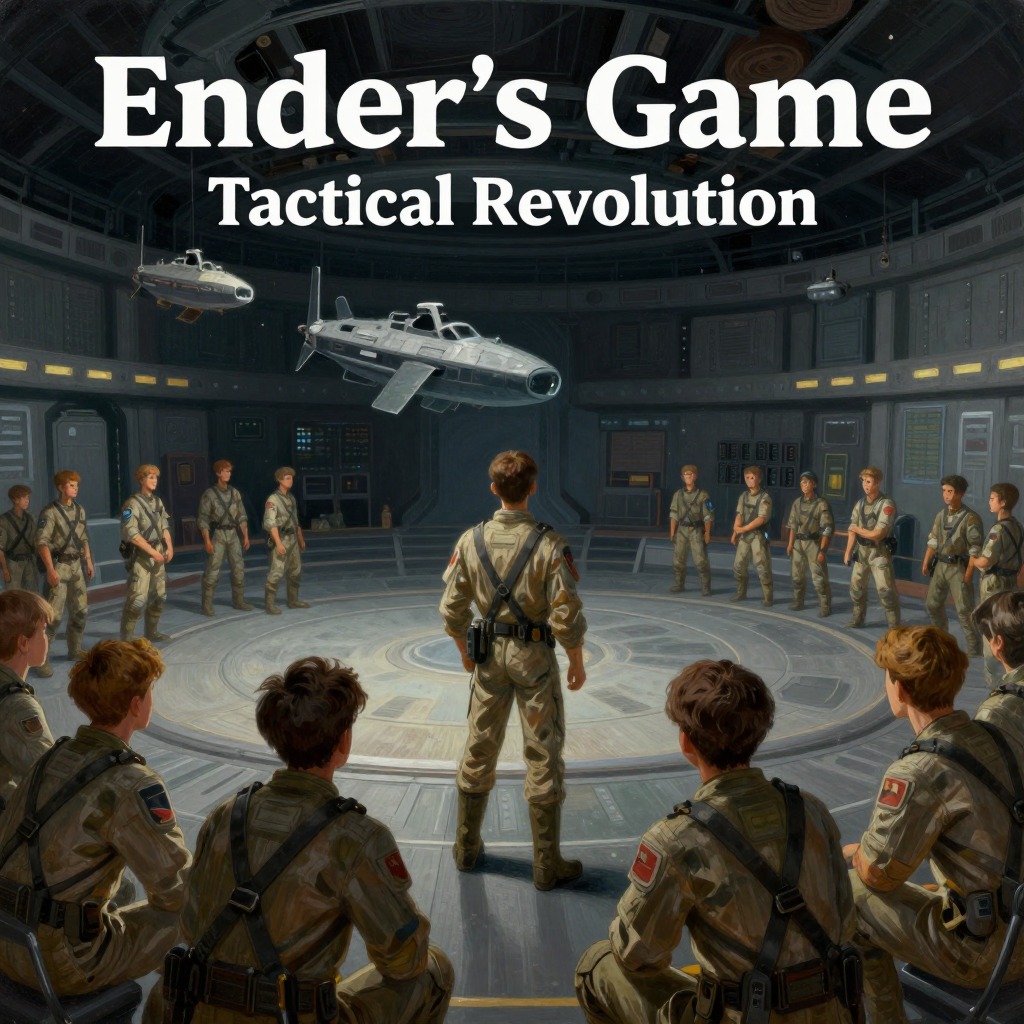
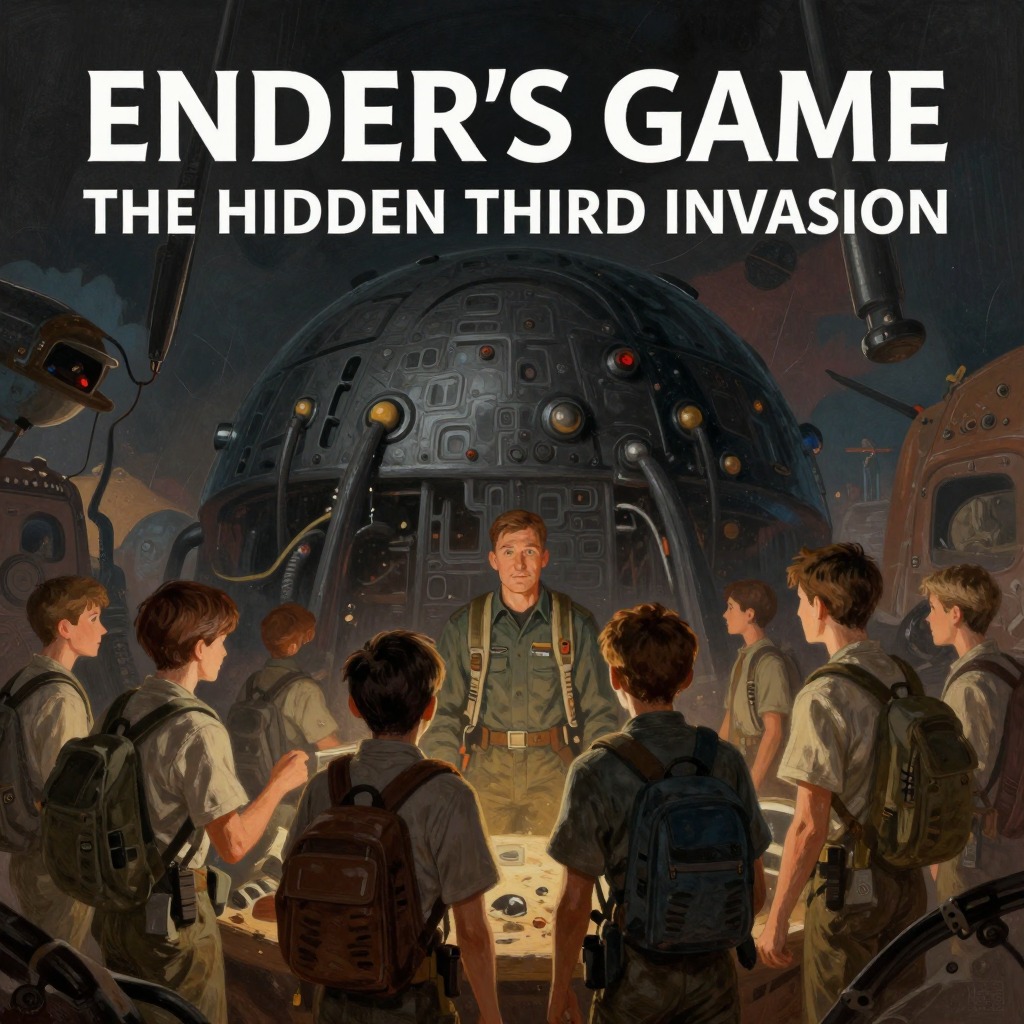
Ender's life follows a relentless trajectory of escalating challenges, each designed by the International Fleet to push him to his limits. After a brutal fight with Stilson, in which he kicks the boy repeatedly to ensure he will never be attacked again, Ender is visited by Colonel Graff, who offers him a place at Battle School. Ender accepts, driven by a sense of duty and a desire to escape Peter. At Battle School, he is deliberately isolated by Graff, who makes him the target of other boys' hatred to force him to excel. Ender's rise is meteoric: he breaks Bernard's arm on the shuttle, defeats older boys in the game room, and is promoted to commander of the newly revived Dragon Army at the age of nine. His innovative tactics, such as the feet-first attack and the use of a five-toon structure, revolutionize the Battle Room game. He wins battle after battle, even when the teachers stack the odds against him, culminating in a victory against two armies simultaneously. His final act at Battle School is a brutal fight with Bonzo Madrid, who dies from his injuries, an event that haunts Ender. He is then sent to Command School, where he trains under Mazer Rackham, the legendary hero of the Second Invasion. Unbeknownst to Ender, his simulator battles are real, and he is actually commanding the human fleet in the Third Invasion. His final battle, against an enemy force a thousand times his size, ends with him destroying the Bugger homeworld, an act he believes is a game until he is told the truth.
Key Actions and Objectives
Ender's primary objective, imposed by the International Fleet, is to become the commander who can defeat the Buggers. His key actions are all in service of this goal, though he is often unaware of the true stakes. He learns to think in null gravity, mastering the Battle Room's three-dimensional combat. He develops a flexible, decentralized command style, training his soldiers to act on their own initiative. He studies the Bugger war videos, learning their tactics and, crucially, their weaknesses. His most significant action is his decision to attack the Bugger homeworld directly, ignoring the enemy fleet and focusing his forces on the planet itself. This act, which he believes to be a desperate gamble in a game, results in the complete destruction of the Bugger species. Ender's objective is not merely to win but to understand his enemy, a trait that leads him to empathize with the Buggers even as he destroys them.
Relationships and Conflict
Ender's relationships are shaped by the isolation imposed on him by the International Fleet. His bond with Valentine is his emotional anchor, but it is used against him when Graff forces her to write a letter that manipulates his feelings. His friendship with Alai, sealed with a kiss and the word "Salaam," is one of the few genuine connections he forms, but it is severed when Ender becomes a commander. His relationship with Bean, a brilliant underage soldier, is initially antagonistic but evolves into mutual respect and trust. Ender's conflicts are numerous: with Peter, who represents the cruelty he fears in himself; with Bonzo, whose honor leads to a fatal confrontation; and with the teachers, who manipulate him at every turn. His greatest conflict, however, is internal—he struggles with the knowledge that he is a killer, that he enjoys winning, and that he is becoming like Peter. This conflict reaches its peak when he learns that he has committed genocide, and he must reconcile his compassion with his actions.
Change and Ending
Ender undergoes a profound transformation over the course of the novel. He begins as a frightened child, desperate for approval, and ends as a weary, guilt-ridden young man who has saved humanity but lost his innocence. After the Third Invasion, he is celebrated as a hero but is also a pawn in the political machinations of Earth. He is kept on Eros, unable to return home, and is eventually persuaded by Valentine to join the first colony on a Bugger world. There, he discovers the Hive-Queen's cocoon, left for him by the Buggers, and learns that they had come to understand him and regret their attacks. He takes the cocoon with him, vowing to find a world where the queen can be reborn. He writes the Speaker for the Dead, a book that tells the Buggers' story and becomes the foundation of a new religion. Ender's ending is not one of simple triumph but of exile and penance. He becomes an itinerant speaker for the dead, carrying the cocoon across the galaxy, seeking redemption for his actions. His final act is to speak for the Buggers, giving voice to the species he destroyed, and in doing so, he finds a measure of peace.
Narrative Role and Evaluation
Ender Wiggin is the archetypal hero of the monomyth, but his journey subverts the traditional narrative. He is the chosen one, the child prodigy, but his victory is a tragedy. Card uses Ender to explore themes of empathy, manipulation, and the ethics of war. Ender's ability to understand his enemies is both his greatest strength and his greatest curse, as it forces him to love them even as he destroys them. His story is a critique of the military-industrial complex and the ways in which children can be weaponized. Ender is a sympathetic figure, but he is also a killer, and Card does not shy away from the moral ambiguity of his actions. The novel's ending, in which Ender becomes the Speaker for the Dead, suggests that even the most terrible acts can be redeemed through understanding and forgiveness. Ender's legacy is not the war he won but the peace he seeks to create, and his character remains one of the most complex and enduring in science fiction.